Quadrotor endurance is ultimately limited by battery behavior, yet most energy-aware planning treats the battery as a simple energy reservoir and overlooks how flight motions induce dynamic current loads that accelerate battery degradation. This work presents an end-to-end framework for motion-aware battery health assessment in quadrotors. We first design a wide-range current sensing module to capture motion-specific current profiles during real flights, preserving transient features. In parallel, a high-fidelity battery model is calibrated using reference performance tests and a metaheuristic based on a degradation-coupled electrochemical model.By simulating measured flight loads in the calibrated model, we systematically resolve how different flight motions translate into degradation modesloss of lithium inventory and loss of active materialas well as internal side reactions. The results demonstrate that even when two flight profiles consume the same average energy, their transient load structures can drive different degradation pathways, emphasizing the need for motion-aware battery management that balances efficiency with battery degradation.
Reinforcement learning in real-world systems often involves delayed feedback, which breaks the Markov assumption and impedes both learning and control. Canonical augmentation-based approaches cause state-space explosion, which imposes a severe sample-complexity burden. Despite recent progress, state-of-the-art augmentation-based baselines either mainly alleviate the burden on the critic or rely on non-unified treatments for the actor and critic. In this study, we propose delayed homomorphic reinforcement learning (DHRL), a framework grounded in MDP homomorphisms that defines a belief-equivalence relation over the augmented state space to collapse control-redundant augmented states. In principle, this yields exact abstraction under deterministic dynamics and approximate abstraction under stochastic dynamics, enabling both the actor and critic to benefit from a structured abstraction mechanism. In finite domains, exact abstraction preserves optimality and recovers the delay-free sample-complexity order, whereas approximate abstraction admits a value-loss bound on the resulting policy. For continuous domains, we introduce deep delayed homomorphic policy gradient (D^2HPG), a deep actor-critic instantiation of the DHRL framework. Experiments on continuous-control tasks in MuJoCo show that D^2HPG outperforms strong augmentation-based baselines.
Real-world reinforcement learning applications are often subject to unavoidable delayed feedback from the environment. Under such conditions, the standard state representation may no longer induce Markovian dynamics unless additional information is incorporated at decision time, which introduces significant challenges for both learning and control. While numerous delay-compensation methods have been proposed for environments with constant delays, those with random delays remain largely unexplored due to their inherent variability and unpredictability. In this study, we propose a robust agent for decision-making under bounded random delays, termed the conservative agent. This agent reformulates the random-delay environment into a constant-delay surrogate, which enables any constant-delay method to be directly extended to random-delay environments without modifying their algorithmic structure. Apart from a maximum delay, the conservative agent does not require prior knowledge of the underlying delay distribution and maintains performance invariant to changes in the delay distribution as long as the maximum delay remains unchanged. We present a theoretical analysis of conservative agent and evaluate its performance on diverse continuous control tasks from the MuJoCo benchmarks. Empirical results demonstrate that it significantly outperforms existing baselines in terms of both asymptotic performance and sample efficiency.
Time-of-flight (ToF) cameras provide cost-effective 3-D depth sensing but are constrained by limited dynamic range, hindering reliable performance in scenes with large variations in distance and reflectance. To overcome this limitation, this study proposes a deep learning-based high dynamic range (HDR) approach, DeepToF-HDR. The method combines two key neural networks: an exposure-time selection network (ESN) that dynamically adjusts scene-dependent exposure times, and a depth fusion network (DFN) that integrates multi-exposure-ToF measurements. A composite loss function with end-to-end joint training is employed to ensure stable and synergistic optimization of both networks. Under identical exposure-time configurations, experiments on a real multi-exposure ToF dataset show that DeepToF-HDR achieves a 54.1% reduction in the mean absolute error (MAE) of the depth compared with conventional baselines. Comparable accuracy is also achieved with less than half the number of captures and only 28% of the total exposure time, demonstrating superior accuracy and efficiency.
Overestimation bias is a long-standing problem in reinforcement learning, often leading to unstable training and suboptimal policies. We present uncertainty-based overestimation correction (UBOC), a framework grounded in order statistics that formally addresses this challenge. UBOC provides a provable generalization of clipped double Q-learning, preserving the same expected Q-value while achieving substantially reduced variance. This reduction in estimator variance improves training stability and, consequently, yields significant gains in sample efficiency. Building upon UBOC, we introduce UD7, which integrates this variance-reduced generalization with state-of-the-art optimization techniques in reinforcement learning. Extensive evaluations on standard benchmarks demonstrate that UD7 delivers strong early-stage learning efficiency and competitive long-term performance. These findings highlight the suitability of UBOC and UD7 for domains such as robotics, healthcare, and industrial applications, where data collection is risky, costly, or time-consuming.
High-quality 3D reconstruction of unknown small objects with complex surface details is important in applications such as digital preservation and cultural heritage archiving. In practice, such scanning procedures rely heavily on skilled human experts, but the high cost of expert training and the large number of objects requiring digitization make this process difficult to scale. This motivates the need to construct expert demonstration datasets as a foundation for future automated view planning. However, available scan data often contain only frame-level geometry without per-frame sensor poses. To address this issue, we propose a hierarchical grid-based method for extracting sensor poses from frame-based scan data. The proposed method progressively refines candidate poses through coarse-to-fine grid search and selects poses that effectively observe the target surface. Experimental results show an average coverage of 0.85, demonstrating the practicality of the proposed approach for expert demonstration dataset construction.
Accurate localization in autonomous driving is critical for successful missions including environmental mapping and survivor searches. In visually challenging environments, including low-light conditions, overexposure, illumination changes, and high parallax, the performance of conventional visual odometry methods significantly degrade undermining robust robotic navigation. Researchers have recently proposed LiDAR-inertial-visual odometry (LIVO) frameworks, that integrate LiDAR, IMU, and camera sensors, to address these challenges. This paper extends the FAST-LIVO2-based framework by introducing a hybrid approach that integrates direct photometric methods with descriptor-based feature matching. For the descriptor-based feature matching, this work proposes pairs of ORB with the Hamming distance, SuperPoint with SuperGlue, SuperPoint with LightGlue, and XFeat with the mutual nearest neighbor. The proposed configurations are benchmarked by accuracy, computational cost, and feature tracking stability, enabling a quantitative comparison of the adaptability and applicability of visual descriptors. The experimental results reveal that the proposed hybrid approach outperforms the conventional sparse-direct method. Although the sparse-direct method often fails to converge in regions where photometric inconsistency arises due to illumination changes, the proposed approach still maintains robust performance under the same conditions. Furthermore, the hybrid approach with learning-based descriptors enables robust and reliable visual state estimation across challenging environments.
Although deep reinforcement learning is a promising technique for robotic applications, the considerable amount of data required through interactions with the environment hinders the large-scale adoption of this method. Collecting extensive real-world training data for robots is challenging due to safety concerns, periodic battery replacements, and actuator wear. In this study, we propose a novel strategic, data-efficient modeling scheme based on a transformer to effectively replicate a real-world environment and ensure that policies learned in the transformer-based simulation can operate effectively in real-world scenarios without significant performance degradation. The proposed transformer-based modeling scheme was demonstrated using a quadrotor. The transformer-based quadrotor model was first trained to approximate real-world dynamics accurately and subsequently used to train a low-level controller for the target quadrotor.The Soft Actor-Critic algorithm was utilized for policy training. To facilitate training of the dynamic model, both simulated and real flight data were used together in the pretraining step, while only real flight data were used in the fine-tuning step. The proposed method outperformed conventional policies trained using domain randomization. The proposed transformer-based quadrotor model facilitates smooth sim-to-real policy transfer by significantly reducing the time and effort required for additional tuning tasks.
This paper presents a 3D LiDAR-based autonomy-transferring platform designed to enable autonomy for legacy non-autonomous robots and to address difficulties encountered at industrial systems. The proposed platform integrates essential hardware and core software modules for perception, decision-making, and control, ensuring adaptability across various industrial applications. It primarily consists of three key hardware components: perception sensors, a computation board, and a protective case, providing a comprehensive turnkey solution that facilitates seamless integration into existing navigation-free robots. The software architecture processes synchronized sensor data to support perception, planning, and control functionalities, ultimately generating velocity commands for autonomous navigation. By enabling real-time intelligence, the proposed system contributes to scalable smart city applications and industrial IoT deployments. Comparative evaluations with existing commercial solutions highlight the limitations of current autonomy platforms and demonstrate how the proposed platform effectively addresses these constraints. The platform's interoperability was validated across diverse robotic and cyber-physical environment in industry, logistics, research, and retail. And then, to systematically assess its performance, two types of evaluations were conducted: one focused on harsh environments and another across four fields and practical industrial applications in smart retail, logistics hubs, and urban mobility systems. The results confirm the platform's scalability, flexibility, and effectiveness, establishing it as a viable solution for real-world autonomy implementation. The proposed autonomy-supporting platform serves as a valuable reference for implementing autonomy in non-autonomous robotic systems, advancing the transformation toward cyber-physical environment across smart infrastructure.
Rotationally symmetric patterns are common in manufacturing scenarios; therefore, effectively leveraging such symmetry is crucial for robust visual processing. However, most current methods for achieving rotational invariance modify the network backbone, which limits reuse of pretrained models and often requires extensive hyperparameter tuning. To address this issue, we propose Radon Averaging, a simple and effective method that achieves rotational invariance without modifying the backbone architecture. Radon Averaging computes a rotationally invariant representation of each image at the preprocessing stage by leveraging the Radon transform. Consequently, the original architecture remains unchanged. This substantially reduces the effort required to build rotation-invariant models, and enables use of pretrained backbones. Experiments on handwritten-digit, semiconductor wafer-map, and remote-sensing aircraft datasets show that Radon Averaging matches or outperforms strong baselines. These results suggest that Radon Averaging is a practical and broadly applicable method for building rotation-invariant models.
Object reconstruction utilizes multi-view information to capture the 3-D geometry of objects. High-precision scanners used in object reconstruction face challenges, including a narrow field of view, shallow sensing depth, and self-occlusion. Hence, this study proposes a novel next-best-view (NBV) selection algorithm called a Poisson-informed transformer for NBV (PIT-NBV). The algorithm combines the strengths of both Poisson reconstruction-based and deep learning-based approaches. Our framework introduces a 6-degree of freedom (DOF) NBV selection mechanism, designed to enhance surface detail capture and mitigate self-occlusion, unlike previous deep learning approaches that operate within 2-DOF spherical view spaces. The proposed method incorporates a view constraint block (VCB) to ensure collision-free 6-DOF viewpoint selection and high-quality data for sensors with limited sensing depths. In addition, we introduce point cloud transformer-view (PCT-V), an enhanced PCT specifically tailored for efficient NBV search. Experimental evaluations conducted on the ShapeNet, Stanford, and MIT CSAIL datasets demonstrate the superior performance of our approach. The proposed method achieved reconstruction quality comparable to Poisson reconstruction-based approaches, offering inference speeds more than 50 times faster. In addition to synthetic benchmarks, real-world experiments using a high-precision structured light scanner and robotic manipulator demonstrate the feasibility of deploying PIT-NBV in real-world applications. These results suggest that PIT-NBV has the potential for applications in robotic vision, automated inspection, and digital archiving, where rapid and accurate 3-D reconstruction is essential.
This study evaluates the tracking performance of structural damages in disaster environments by combining YOLOv8 detection with the BoT-SORT tracker. Cracks and exposed rebar, characterized by fine and irregular structures, showed high sensitivity to viewpoint changes, with camera motion compensation (CMC) improving IoU by +19.63% and +20.23%. For exposed rebar, the joint use of CMC and re-identification (Re-ID) further increased IDF1 by +37.73%, emphasizing the effectiveness of appearance-based matching. In contrast, delamination and concrete debris, with stable morphology and clear boundaries, exhibited limited benefits from CMC, improving IoU by +11.17% and +3.28%. Analysis of MOTA, IDF1, and HOTA confirms that fine-grained damages require motion- and appearance-based strategies, while stable types maintain high performance through detection consistency. These results highlight the importance of tailored tracking strategies for enhancing disaster-response robots and structural monitoring systems.
For field robotic missions such as inspection, search-and-rescue, and exploration, light detection and ranging (LiDAR)-inertial odometry (LIO) can serve as a core component of autonomy by providing localization and mapping in GNSS-denied or unstructured environments. However, transitions between confined and open spaces, which are commonly encountered in field deployments, can induce substantial changes in scan density and local geometric structure, thereby reducing the robustness and computational efficiency of LIO. To address these issues, we present GenZ-LIO, a generalizable LIO framework designed to adapt to variations in spatial scale across confined and open environments. GenZ-LIO comprises three components: (i) scale-aware adaptive voxelization for regulating scan downsampling across spatial scale changes, (ii) hybrid-metric state update for combining point-to-plane and point-to-point residuals under varying geometric structure, and (iii) voxel-pruned correspondence search for efficient point-to-point matching. We conduct a comprehensive evaluation using 42 sequences from nine public datasets and our newly collected NarrowWide dataset to analyze LIO performance under spatial scale variations across diverse field scenarios. Across the evaluated sequences, GenZ-LIO maintains stable odometry estimation without divergence, indicating practical robustness under the tested field conditions. The source code and collected dataset will be made publicly available upon publication.
Reinforcement learning (RL) has achieved remarkable success in a wide range of tasks. However, unavoidable errors in value estimation can lead to suboptimal policy performance, particularly in challenging continuous control tasks. To address this challenge, we propose the distributional normalized actor-critic (DNAC) framework. A central idea of DNAC is the introduction of an approximate upper bound on the estimation error between the estimated Q-values and the optimal values. This upper bound allows us to reshape the loss function, which scales and shifts the estimated Q-value distribution toward the optimal value, effectively normalizing it. With this normalization, DNAC is expected to improve both the stability of training and the final policy performance in RL. Simulation results on six MuJoCo benchmarks show that DNAC consistently achieves higher-performing policies compared to other popular RL baselines. Moreover, by tuning its key parameters - capable of reproducing some existing RL algorithms - we identify key factors that influence RL policy performance.
Accurate classification of wafer bin maps is essential for improving yield, reducing waste, and optimizing manufacturing processes in semiconductor fabrication. Practical wafer bin map recognition is challenging because defect mechanisms can appear at different orientations, multiple defect patterns may coexist on a single wafer, and random defect noise and long-tail imbalance degrade robustness and deployment reliability. To address these constraints, we propose a deployment-oriented artificial intelligence workflow for wafer bin map classification that unifies architecture benchmarking, systematic-defect emphasis, and model compression. The implemented artificial intelligence methods include modern convolutional neural networks, vision transformer-based models, hybrid vision backbones, a convolutional variational autoencoder for emphasized Radon-pattern generation, and multi-label knowledge distillation from a high-capacity teacher model to lightweight student models. Experiments on single-pattern and mixed-pattern wafer bin map datasets show that the Radon domain consistently improves performance across backbone families, and that the emphasized Radon patterns generated by the convolutional variational autoencoder further improve accuracy and F1 scores, particularly for underrepresented classes. The distilled student models achieve competitive accuracy with reduced computational cost, demonstrating that the proposed end-to-end workflow provides a practical and reproducible artificial intelligence application for fabrication-ready wafer bin map classification.
High-performance deep reinforcement learning faces tremendous challenges when implemented on cost-effective low-end embedded systems due to its heavy computational burden. To address this issue, we propose a policy distillation method called Bayesian Policy Distillation (BPD), which effectively retrains small-sized neural networks through an offline reinforcement learning approach. BPD exploits Bayesian neural networks to distill already designed high-performance policy networks by adopting value optimizing, behavior cloning, and sparsity-inducing strategies. Simulation results reveal that the proposed BPD successfully compresses the policy networks, making them lighter and achieving faster inference time. Furthermore, the proposed approach is demonstrated with a real inverted pendulum system and reduced the inference time and memory size by 78% and 98%, respectively.
Odometry estimation using light detection and ranging (LiDAR) and an inertial measurement unit (IMU), known as LiDAR-inertial odometry (LIO), often suffers from performance degradation in degenerate environments, such as long corridors or single-wall scenarios with narrow field-of-view LiDAR. To address this limitation, we propose ALIVE-LIO, a degeneracy-aware LiDAR-inertial odometry framework that explicitly enhances state estimation in degenerate directions. The key contribution of ALIVE-LIO is the strategic integration of a deep neural network into a classical error-state Kalman filter (ESKF) to compensate for the loss of LiDAR observability. Specifically, ALIVE-LIO employs a neural network to predict the body-frame velocity and selectively fuses this prediction into the ESKF only when degeneracy is detected, providing effective state updates along degenerate directions. This design enables ALIVE-LIO to utilize the probabilistic structure and consistency of the ESKF while benefiting from learning-based motion estimation. The proposed method was evaluated on publicly available datasets exhibiting degeneracy, as well as on our own collected data. Experimental results demonstrate that ALIVE-LIO substantially reduces pose drift in degenerate environments, yielding the most competitive results in 22 out of 32 sequences. The implementation of ALIVE-LIO will be publicly available.
Drones, like most airborne aerial vehicles, face inherent disadvantages in achieving agile flight due to their limited thrust capabilities. These physical constraints cannot be fully addressed through advancements in control algorithms alone. Drawing inspiration from the winged flying squirrel, this letter proposes a highly maneuverable drone with agility-enhancing foldable wings. The additional air resistance generated by appropriately deploying these wings significantly improves the tracking performance of the proposed "flying squirrel" drone. By leveraging collaborative control between the conventional propeller system and the foldable wings-coordinated through the Thrust-Wing Coordination Control (TWCC) framework-the controllable acceleration set is expanded, allowing for the production of abrupt vertical forces unachievable with traditional wingless drones. The complex aerodynamics of the foldable wings are captured using a physics-assisted recurrent neural network (paRNN), which calibrates the angle of attack (AOA) to align with the real-world aerodynamic behavior of the wings. The model is trained on real-world flight data and incorporates flat-plate aerodynamic principles. Experimental results demonstrate that the proposed flying squirrel drone achieves a 13.1% improvement in tracking performance, as measured by root mean square error (RMSE), compared to a conventional wingless drone.
The increasing frequency of extreme weather events driven by climate changes underscores the urgent need for real-time urban pluvial flood prediction methods that leverage artificial intelligence (AI) technologies. However, these data-driven approaches often encounter significant challenges due to data scarcity and dynamic environments. To enable accurate predictions even in data-poor and environmentally changing scenarios, this study proposes a local patch regression-based generative model (LPR-GM) that strategically achieves a fit-for-purpose implementation and high prediction accuracy with available datasets through two primary methodologies: local patch analysis and latent space regression. Local patch analysis facilitates accurate prediction of flood depths in specific flood-prone areas, even under data-poor conditions. In addition, regression-based sampling, referred to as latent space regression, enhances robustness to potential outliers in the training dataset, which can severely hinder the learning process, particularly under data-poor conditions. The proposed LPRGM was evaluated in three distinct flood-frequent urban areas, and the results demonstrate that LPR-GM outperformed other baseline algorithms across several quantitative criteria. We believe that LPR-GM offers a practical and realistic solution for early warning systems in urban pluvial flood management, particularly in data-poor conditions.
This paper presents a cost-effective autonomous valet parking system utilizing around view monitoring (AVM) cameras to establish a closed-loop system encompassing perception, decision, and control. First, to perceive the surrounding environment, top-view images from the AVM system are processed to perform RANSAC-based parking slot detection (PSD) and vehicle pose estimation (VPE). Next, a mechanically feasible parking path to an empty slot is planned, considering the constraints of the AVM system and a steering actuator. Finally, a kinematic-based vehicle controller is proposed to accurately track the planned parking path. For practical validation, the system’s control variables are experimentally quantified using raw data obtained from the steering system, brake, and transmission lever. The results demonstrate that the proposed AVM-based autonomous valet parking system can effectively guide and control a vehicle within a parking environment using only AVM cameras. Additionally, the limitations and potential enhancements of the proposed approach are discussed to support the advancement of future autonomous parking technologies.
 Wook Hyun Kwon合作论文数Engineering Research Center for Advanced Control and Instrumentation, Seoul National University;School of Electrical and Computer Engineering, Seoul National University;Department of Electrical and Computer Engineering, Seoul National University42
 Sekyung Han合作论文数Department of Information Science and Technology, The University of Tokyo19
 Huiyong Chun合作论文数Department of Convergence IT Engineering, Pohang University of Science and Technology18
 Joon Heo合作论文数School of Civil and Environmental Engineering;Yonsei University;School of Civil and Environmental Engineering, Yonsei University18
 Jongchan Baek合作论文数Department of Convergence IT Engineering, Pohang University of Science and Technology16
 Minho Kim合作论文数Korea Electronics Technology Institute16
 Choon Ki Ahn (安春基)合作论文数Advanced Control Systems Laboratory, School of Electrical Engineering, Korea University15
 Kwangrae Kim合作论文数14
 Jungsoo Kim合作论文数Samsung Advanced Institute of Technology14
 Woo-Kyong Kwon合作论文数Grad. Inst. of Ferrous Technol., POSTECH;c;Grad. Inst. of Ferrous Technol., POSTECH14
 Jaemin Baek合作论文数Gangneung-Wonju National University13
 ki yun yu合作论文数11
 Young Sam Lee合作论文数School of Electrical Engineering;Inha University;School of Electrical Engineering, Inha University11
 Bo Kyu Kwon合作论文数11
 Seungmin Baek合作论文数Department of Convergence IT Engineering (CiTE),, Pohang University of Science and Technology10Zhong-Hua Quan合作论文数10
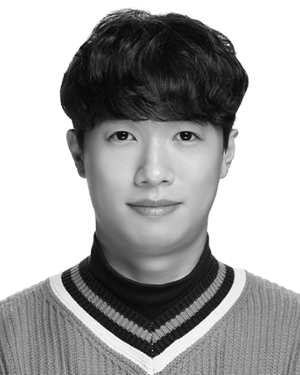 Kwanwoong Yoon合作论文数9
 Hyoung-Woong Lee合作论文数9Junwoo Jason Son合作论文数8
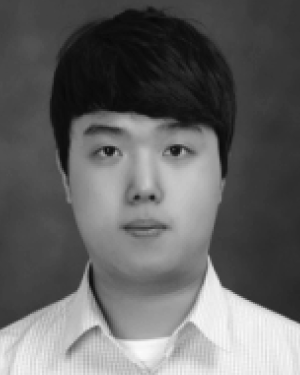 Jungwook Yu合作论文数8
 Seongwon Yoon合作论文数Department of Electrical Engineering and Convergence IT Engineering, Pohang University of Science and Technology (POSTECH),8
 Jung Hun Park合作论文数8
 Hakjun Lee合作论文数Polaris 3D, R&D Team7
 Changjae Kim合作论文数College of Engineering, Myongji University7
 Kaoru Sezaki合作论文数University of Tokyo7
 Hong-Gyoo Sohn合作论文数7
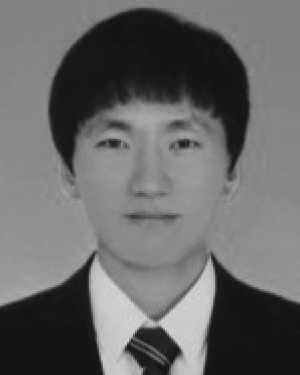 Jinsuk Choi合作论文数6
 Youngbin Son合作论文数6Jong-Hyeok Park合作论文数6
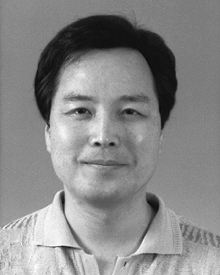 Hong Seong Park合作论文数6Bo-Kyu Kwon合作论文数5
 Jaehoon Jung合作论文数5hyungsig cho合作论文数5
 Soo Jeon合作论文数University of Waterloo5Jeongho Lee合作论文数5
 Yong-Il Kim合作论文数5J. W. Hong合作论文数4
 Jang-Woo Lee合作论文数System Development Team, Samsung SDI Company, Ltd., Yongin-si, South Korea4S. -H. Kim合作论文数4
 Sangchul Won合作论文数4
 Hirohisa Aki合作论文数National Institute of Advanced Industrial Science and Technology (AIST),4
 Ilsuk Park合作论文数3Hoyong Lee合作论文数3Chaewon Park合作论文数3
 Yoonsu Jang合作论文数3Jonghyuk Park合作论文数3
 Soonwan Cho合作论文数3
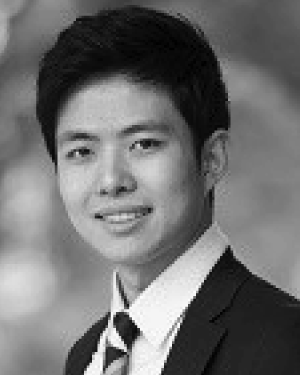 Taegyun Kim合作论文数3
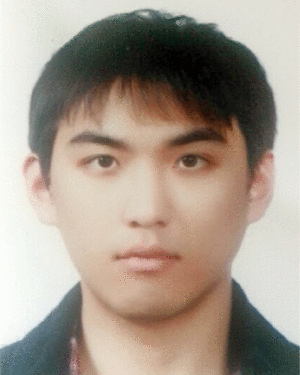 Beomsu Kim合作论文数3




