Integrated STEM activities are espoused as appropriate for enhancing student learning in relation to statistical concepts; however, a greater understanding of the way in which students’ ideas about those concepts develop is needed to maximise the learning potential offered by engagement in STEM activities. For this study, plant growth was chosen as a topic from the Year 6 Australian Science Curriculum as an appropriate context to employ aspects of the four STEM disciplines to explore students’ developing ideas about variation. Sixty-four Year 6 students across three school terms worked in groups of four to trial various treatments and their effects on the growth of radish or wheat seeds. This report considers two aspects of student learning related to this topic based on (i) the formative assessment of features of students’ workbook entries specifically related to variation during the part of the classroom activity based on their TinkerPlots graphs and (ii) the later summative evidence of learning in responses to end-of-year questions on the activity for 56 of the students. The workbook entries are presented via a qualitative analysis to provide evidence of the forming of understanding of variation in a STEM context, with the SOLO Taxonomy being employed to assess the longer-term evidence and developmental nature of that learning. Overall, a broader picture has emerged of the potential for developing appreciation of variation in a STEM context in primary school.
School and community interaction is an important topic in education, as evidence suggests that communities that value their local schools engender more positive long-term outcomes and a strengthening of the social capital for the students from those schools. Although school and community interaction has been explored from the school's perspective, less research has occurred from the perspective of the key stakeholders and leaders of a community, particularly in rural, regional, and disadvantaged areas. The context for this exploration is the Australian state of Tasmania, and the research findings may have implications for policy makers, school leaders, and teachers both nationally and internationally. Eighty-six community leaders and community members from rural, regional, and disadvantaged areas of the state responded to a survey, which included indicating the level and type of involvement they and their organisations had with local schools. The evidence from their comments suggests that community, business, and social leaders can play an important role in building social capital and as advocates for their local schools, as well as being a source of information, advice, and service to schools. In particular, this paper provides a foundation for future research with community members on their involvement in schooling and the impact of this involvement on students' social capital.
STEM learning experiences at the school level provide both opportunities and challenges for exploring students’ understanding of statistical concepts. This report focuses on data handling and informal inference embedded in a STEM context, that is, of testing, adjusting, and retesting catapults. In particular, the learning goal was for Grade 4 (aged 9–10 years) students to build on their developing understanding of variation while learning about the science topic of force as demonstrated by two configurations of catapults causing ping pong balls to be launched different distances. This report focuses on the students’ experiences of variation that were associated with the activity from a structural perspective during implementation. The analysis, employing various aspects of the Structure of Observed Learning Outcomes, points to the potential contribution of multimodal functioning in identifying and characterizing understanding of variation in a new context. The activity took place with 50 students in two classes with data collected from student workbooks. Results suggest that meaningful engagement with context can provide support for developing understanding of the concept of variation.
This report focuses on the ways in which 36 Grade 4 students recognized, explained, described, and employed variation during interviews conducted 1 month after participating in STEM-based activities in which they tested, adjusted, and re-tested catapults. An inductive thematic methodology was used for analysis of the interview transcripts to capture the ways in which students discussed their analyses and justified their conclusions from the activity. The results were based on 1080 instances of variation in student responses to the interview questions, which evidenced three ways students characterized variation: contextual variation, specific variation, and general variation. Findings point to the essential nature of context in building statistical understanding in relation to both specific and general aspects of variation as well as decision-making in that context.
School completion to the end of Year 12 in rural, regional, and disadvantaged communities is an acknowledged challenge in Australia and internationally. This research reports the beliefs of 86 rural and regional community leaders in the Australian state of Tasmania. A survey on issues associated with students' school completion was designed specifically for community members, and responded to by the study participants. Findings that emerged from the data analysis included that participants were on average quite positive about the capability of students in the community and the potential for business/organisation links with schools. Some concern was expressed, however, about bullying in schools and students having well-formed plans for their futures after finishing school. This study provides a benchmark for future research with community members on their beliefs about issues related to students' educational aspirations and students' continuation in school. It has implications for policy makers, school leaders, and teachers at a national and international level.
Life as we know it would not be possible without plants. Plants supply food to many organisms (including people), produce oxygen, absorb carbon dioxide from the air, provide products for human use, and homes for many other living things. It is not surprising, therefore, that plant growth is a familiar topic in the primary school science curriculum. This paper describes an extension of the topic of plant growth for Year 6 students to include elements from the mathematics, in particular, statistics, and technologies curricula. In doing so, the importance of carefully collecting and analysing data to make decisions illustrates the way in which the practice of statistics supports learning outcomes in science. In the activity described here, students decide on the details for their science inquiry about plant growth to answer the question What makes plants grow best?, collect and analyse data over time using digital technology, and present a report of their findings to their class.
Inspiring children to pursue a career in science is a worthy pursuit for many reasons. One way to achieve this is to actively engage children in STEM learning from an early age. However, it is not always possible to integrate all the STEM fields in one activity. Rather, careful consideration of the discrete disciplines of science, technology, engineering and mathematics and their appropriateness for the given activity may be preferable to full, transdisciplinary integration. This report describes a research project designed to support primary school children in their appreciation of scientific research through use of the 5E Instructional Model - Engagement, Exploration, Explanation, Elaboration, and Evaluation - while applying the complementary elements of a mathematics-based statistical investigation to pose questions, collect data, represent, analyse, and interpret the data, as well as reach informed conclusions. The overwhelmingly positive response from the children and the insights shown when making data-driven decisions suggests this multidisciplinary approach has merit for future science teaching and learning.
As STEM education becomes more prominent at the school level, many possibilities could be suggested for beginning experiences to create a foundation for young students as they begin their journeys with respect to STEM learning. The research reported here is based on the premise that building statistical understanding will enhance young students' learning as they engage with STEM learning experiences. This paper hence reports on an activity created to introduce students in Year 3 to the concept of statistical variation with data in a STEM-related context where variation occurs in an easily measured and realistic fashion. Students' capabilities to appreciate the fundamental nature of statistical variation and use it for comparison in a STEM context were assessed through responses in student workbooks, to questions on an end-of-year survey, and in individual interviews. The results illustrate the beginning stages of student thinking about variation and the use of data when learning is embedded within a STEM context. They show that students can take on the idea of variation and use it in explaining their experiences with the hands-on activity, which involved comparisons of a hand-made and machine-made product.
The intersection of the world and mathematics when dealing with uncertainty can present challenges for beginners. At one extreme, in the real world we talk about the informal chance of many kinds of events, such as our team winning a game, going to the movies on the weekend, getting the flu, or going shopping. At the other extreme, mathematics provides us with a way of precisely calculating theoretical probabilities for specific events. Between these two extremes there are opportunities to plan activities and carry out trials to give estimates of the chances of a particular outcome of a real-world event, or to find out if a particular random-generator reflects the theoretical probability we expect from mathematics. A series of activities using 2- and 4-colour spinners with equally likely outcomes was trialled on a Year 4 student. Concrete, hands-on materials were first introduced before moving to a computerised random-generator. Of interest was the student’s understanding of chance-related concepts and her development across the activities.
Integrated STEM learning experiences provide the opportunity for students to make connections among the various disciplines. The outcomes for many STEM activities, however, are only reported for one discipline and provide little guidance for taking an integrated approach to learning in the classroom. This paper reports on a Year 5 STEM activity based on designing, making, and trialling seed dispersal devices. A focus on the data collected by the class and the subsequent graphical representations created during follow- up interviews, illustrates the way in which the students made connections to multiple STEM disciplines. The results indicate that Year 5 students have the capacity to use graphical representations of data to describe the performance of seed dispersal devices and base informal inferences about the performance of the devices on their knowledge of design, construction, materials, and flight from the various STEM disciplines.
This study reports on the capabilities of 53 Year 4 students as they completed the final stages of their first complete statistical investigation. In the context of becoming acquainted with students in a sister school in another city, students in both schools wrote and refined questions, which were answered by all students in an on-line survey. Using data from both schools, students chose at least one question to analyse and present their findings comparing the two cities and/or groups of students. Of interest are the representations created for the questions chosen, the conclusions drawn, the variation observed, the certainty about the conclusion, and the comments about what had been learned about writing survey questions.
STEM education is becoming more common in schools and provides a range of exciting real-world contexts in which students can engage. However, a gap in most approaches to STEM remains the collection and use of data that can be used concurrently to develop statistical literacy and science literacy. This paper describes a STEM activity carried out with Year 5 students. The context originated in science and asked students to collect data to find the answer to a question, then present and interpret their data using TinkerPlots software. Elements of the same activity were also carried out by 4th-year Bachelor of Education (primary) pre-service teachers (PSTs) as part of a unit in science education. The activity provided the opportunity for the PSTs to experience an authentic STEM activity that had been conducted with primary students.
This research used the responses of 187 Tasmanian teachers to a questionnaire comprising 52-Likert-type items, two multiple-choice items, and two open-response items to investigate differences in teachers’ beliefs about aspects of schooling related to students’ secondary school completion. Exploratory factor analysis of responses to the Likert-type items identified 3 factors underpinning teachers’ responses. These were (1) Student and parent aspirations, (2) Teacher and school quality and support, and (3) Expectations for continuing education. Two-way ANOVAs showed that primary school teachers scored higher on average than secondary teachers for student and parent aspirations, and that there was an interaction between level of schooling and Index of Community Socio-Educational Advantage (ICSEA) for this factor. Descriptive statistics were used to compare responses to the multiple-choice items of teachers at different levels of ICSEA and schooling. Open-response items were categorised in two ways (1) as related to pastoral, academic, or engagement matters, and (2) as negative or positive in relation to each of students, parents, and teachers. The results highlighted less academic and more pastorally focussed cultures in Year 7–10 schools compared with Year 11–12 schools and relatively low expectations for university study across the levels of schooling. The findings implicate teachers’ beliefs about students and their families as crucial to influencing educational aspirations and attainment.
This paper reports on the views of key members of the educational community about student engagement and retention in rural, regional and disadvantaged areas of the Australian state of Tasmania. It provides insights into the attributed reasons for the longstanding low levels of student retention in Tasmania, and the possible ways to militate against the widely censured problem of students leaving school too soon. The paper draws from principles of Bronfenbrenner's model of ecology to situate the 25 participants who formed the sample of the study in the exosystem of the environment of the young people whose educational attainment and retention in schools is the focus of this work. Data analysis generated three major themes: families and the socio-cultural environment; teachers and teaching; and the school system. The study's findings play an important role in prompting us to question when, and if, the dire situation of student dropout in the state and in similar contexts worldwide will begin to be reversed. Implications of the work include the need to develop and sustain a strong policy environment in which high-quality education and schooling success are contextualised as key features to which members across the systems and sections of society can contribute.
When working within a meaningful context quite young students are capable of working with sophisticated data. Year 3 students investigate thermal insulation and the transfer of heat in a STEM inquiry, developing skills in measuring temperature by conducting a statistical investigation, and using a stylised graph to interpret their data.
Student-school connectedness and parent–child connectedness have been identified as important factors in predicting students’ level of educational progress, aspirations and psychosocial wellbeing, but much of this research has been conducted from the students’ perspective and not their parents’ perspective. A 50 item schooling survey was designed for parents, with parent–child connectedness measured using the frequency of conversations between the parent and the child about education. Based on a sample of 53 parents across 25 schools, significant differences were identified by level of parent–child connectedness about schooling across the three factors of students’ general educational experience; students’ school ability/performance; and students’ educational goals/aspirations. Low parent–child connectedness about schooling was also linked with expectations of students’ early school leaving. Parent–child connectedness about schooling was found to be a stronger differential factor than Socio Economic Status in the parents’ responses. This study supports the notion that parent–child relationships directly and indirectly influence students’ school progress. Implications for educational practice are discussed in the paper.
There has been considerable discussion about retention of students in education beyond Year 10 in Tasmania reflective of the fact that the state has the lowest retention rates for young people continuing in some type of formal education or training beyond Year 10 in Australia. Importantly, the challenges for Tasmania are shared by other educational jurisdictions nationally and internationally, particularly those that share similar economic and demographic characteristics (Lamb et al., 2015). This article reports on a series of in-depth case studies as one aspect of a three-year Australian Research Council Linkage project undertaken in collaboration with the Tasmanian Department of Education (DoE) examining issues associated with retention, especially for students in rural, regional, and disadvantaged areas. Three inter-related themes (viz. sociocultural; structural; curriculum, teaching and learning) are identified that seem collectively and interdependently to play key roles in determining whether many young people continue their education beyond Year 10. The three themes are conceptualised and discussed as a wicked problem: a highly complex educational, social and cultural problem, involving issues that require ‘thinking that is capable of grasping the big picture, including the full range of causal factors underlying them’ (Australian Public Service Commission (APSC), 2007, p. iii). The research suggests that the challenges to effecting positive changes in retention rates in the future are highly complex. Structural solutions alone are not sufficient. Responses, at leadership, policy and practice levels, will also need to address curriculum issues as well as deeply held cultural views and practices evident across various sectors of society, including families, communities and educators themselves.
Student retention in school until the successful completion of Year 12 is an acknowledged challenge in many parts of Australia, particularly rural and regional areas (e.g., Alloway & Dalley-Trim, 2009). This is concerning, given the compelling evidence that the completion of school to Year 12 has long term positive economic and social consequences for the individual students and their communities (OECD, 2013). The research reported here focuses on community involvement in rural and regional schooling and student retention. The qualitative data were collected as part of a three-year ARC Linkage study of issues associated with completion of school education to Year 12 in rural, regional and disadvantaged parts of Tasmania. In-depth interviews (≥ 45 minutes) were conducted with 11 rural and regional community leaders across Tasmania. A descriptive account of the 20 themes covered by the interviewees in relation to school retention was reported in Watson et al. (2015). This paper reports on two other aspects of the research: the type of involvement of the organisation that the interviewees represented and the motivation for the involvement that took place. A two-dimensional framework (Sanders, 2001) was used to classify the 108 activities in which the 11 participants reported being involved. One dimension documented the type of organisation that the participant represented: local/national government, consultancies/boards, and non-profit groups. The second dimension focused on the type of activity in which participants were involved: student-centred, family-centred, school-centred, and community-centred. The range of specific activities was broad, as was the range of reasons that motivated the involvement. Apart from Gregoric’s (2013) work in South Australia, this study reports the only other known data about community involvement with schools in Australia reported by the community members themselves. The outcomes of the research provide benchmarks for other studies in similar Australian or international rural and regional communities where student retention is an issue.
Based on a sample of over 3000 primary and secondary school students located in regional and rural schools in Tasmania (Australia) this research had three aims: to identify (1) students' self-perceptions of schooling with a focus on high school completion (referred to as school retention); (2) if gender, socio-economic factors, level of school absenteeism, and school setting (primary or secondary) influenced the students' responses; and (3) which factors had the greatest influence on the students' aspirations to continue their schooling. A 42-item survey produced eight factors: (1) Teacher Support, (2) Aspirations, (3) School Organisation, (4) English Ability, (5) Maths Ability, (6) Friends, (7) Other Activities, and (8) Career Goals. Higher levels of absenteeism, lower socio-economic status, and transitioning to secondary school reduced scores on the factors. Girls had higher scores for three factors: (1) Teacher Support, (2) English Ability, and (3) Aspirations. Regression analysis identified Friends, English and Mathematics Ability, Other Activities, and Teacher Support as the 'best predictors' of students' aspiration to continue schooling. The implications of the significant findings for school practice are discussed with recommendations for interventions.
 Jane Watson合作论文数University of Tasmania37
 Noleine Fitzallen合作论文数Fac Educ, Univ Tasmania15
 Kim Caroline Beswick合作论文数School of Education, Faculty of Arts, Design & Architecture, The University of New South Wales12
 Jeanne Allen合作论文数Faculty of Education, University of Tasmania12
 Natalie Brown合作论文数9
 Neil Cranston合作论文数8
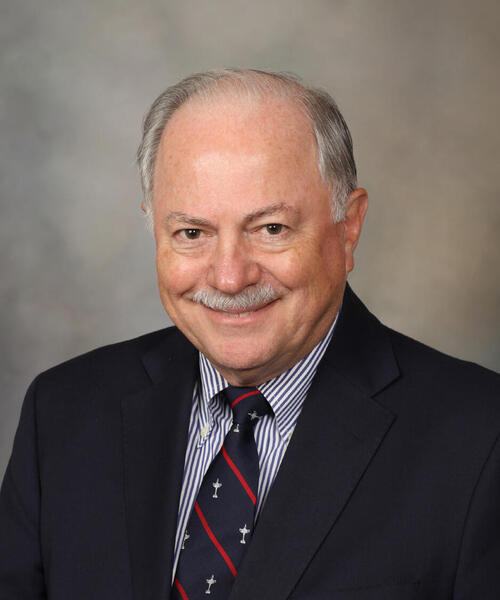 Ian D. Hay合作论文数 Mayo Foundation for Medical Education and Research;Department of Development, College of Medicine, Mayo Clinic;Division of Endocrinology, Diabetes, Metabolism, and Nutrition, Mayo Clinic7
 Jane Skalicky合作论文数6Je Keeffe合作论文数3
 Ben A. Kelly合作论文数3
 Caroline Smith合作论文数Translational Health Research Institute, Western Sydney University2
 Catherine McCarty合作论文数Department of Family Medicine and Biobehavioral Health, Medical School, University of Minnesota2Kenneth I Taylor合作论文数2Rob Mckay合作论文数2maureen innes合作论文数1Megan Lang合作论文数1l kidd合作论文数Univ Tasmania1
 Lyn English合作论文数Queensland University of Technology1
 Becky Shelley合作论文数Department of Premier1
 Rosemary Callingham合作论文数University of New England1Barbara Kameniar合作论文数1




