A method was developed to sample molten salts by sparging to generate and transport aerosols to an isolated instrument for compositional analysis by laser-induced breakdown spectroscopy (LIBS). Real-time monitoring of molten salt composition is critical to developing molten salt nuclear reactors, which offer enhanced safety and efficiency. In this article, the sparge sampling method is described and compared with sampling using a Collison nebulizer. The size distribution and transport of aerosols produced from molten eutectic NaNO3-KNO3 salt were compared for multiple gas flow rates (75-1200 mL min-1) and transport distances (0.68-2.61 m). Both methods produced aerosols ranging from 0.5 to 5.0 μm determined using a cascade impactor. Aerosols were effectively transported without pre- or trace-heating of gas lines, but transport efficiency was reduced by the formation of agglomerates. Sparge sampling was found to use less sample and less gas than a Collison nebulizer while producing a more concentrated aerosol stream (up to 5 μg L-1). The effects of laser energy and delay time on the signal quality of LIBS measurements of these aerosols were also studied. High energy and short delay times were found to enhance signal and repeatability, whereas signal-to-background and signal-to-noise ratios were highest at low energy and longer delay times. The capabilities of this system for online monitoring of molten salts were demonstrated with calibrations for Sr and Li with relative standard deviations of 2.6% and 1.5% and limits of detection of 380 and 180 μg g-1, respectively.
The use of molten salts as coolants, fuels, and tritium breeding blankets in the next generation of fission and fusion nuclear reactors benefits from furthering the characterization of the molecular structure of molten halide salts, paving the way to predictive capability of chemical and thermo-physical properties of molten salts. Due to its neutronic, chemical, and thermo-chemical properties, 2LiF−BeF2 is a candidate molten salt for several fusion and fission reactor designs. We perform neutron and X-ray total scattering measurements to determine the atomic structure of 2LiF−BeF2. We also perform ab-initio and neural network molecular dynamics simulations to predict the structure obtained by neutron and X-ray diffraction experiments. The use of machine learning provides improvements to the efficiency in predicting the structure at a longer length scales than is achievable with ab-initio simulations at significantly lower computational expense while retaining near ab-initio accuracy. The comparison among experimental and modeling results at a higher resolution and efficiency than previous measurements provides the opportunity to explore the structural determination of 2LiF−BeF2 beyond the first-nearest neighbor analysis that had been previously achieved with X-ray diffraction measurements of a FLiBe melt. This work may serve as a reference for future studies of salt structure and macroscopic properties with and without the addition of solutes.
This Review summarizes a range of analytical techniques that can be used to detect, quantify, and/or distinguish between isotopes of iodine (e.g., long-lived 129I, short-lived 131I, stable 127I). One reason this is of interest is that understanding potential radioiodine release from nuclear processes is crucial to prevent environmental contamination and to protect human health as it can incorporate into the thyroid leading to cancer. It is also of interest for evaluating iodine retention performances of next-generation iodine off-gas capture materials and long-term waste forms for immobilizing radioiodine for disposal in geologic repositories. Depending upon the form of iodine (e.g., molecules, elemental, and ionic) and the matter state (i.e., solid, liquid, and gaseous), the available options can vary. In addition, several other key parameters vary between the methods discussed herein, including the destructive vs nondestructive nature of the measurement process (including in situ vs ex situ measurement options), the analytical data collection times, and the amount of sample required for analysis.
There is currently no strategy for the permanent waste disposal or recycling for used nuclear fuels from research reactors. For this reason, low-temperature reactions have been developed for the chlorination of the Al alloys and subsequent separation from used nuclear fuels to reduce the volume of high-level waste in storage. Three sulfur chloride reagents - S2Cl2, SOCl2, and SO2Cl2-were tested, and two were found to quantitatively chlorinate Al metal and Al alloys under mild conditions. These low-temperature reactions proceed between 298 and 411 K, and up to 5 g of metal is chlorinated in 1-3 h. Preliminary results indicate that the reactivity and exothermicity of the reaction between the Al and sulfur chloride reagents is highly dependent on the surface area-to-volume ratio of the metal and the volume of solvent. Elemental S is produced as a by-product during the chlorination with S2Cl2 but can be quantitatively rechlorinated under mild conditions to regenerate the initial chlorination reagent. Therefore, in this case, chlorine is the only element consumed in the reaction, thus minimizing the waste generated during the chlorination process. The AlCl3 may then be separated from other materials present in Al 6061 or Al 8001 because of its high solubility in the sulfur chloride reagents. This process may also be extended to chlorinate Al from research reactor fuels.
Using neutrons and x-rays, along with large-scale molecular dynamics simulations that incorporate machine learning, the authors report the liquid structure of 2LiF-BeF${}_{2}$, a molten salt for next-generation nuclear reactors.
The effectiveness of High Gradient Magnetic Filtration (HGMF) in capturing uranium oxide particles from suspensions was investigated in this study. Two sets of experiments were performed to evaluate the importance of size on the capture of uranium oxide particles. The first considered two batches sieved into size bins of< 5, 5–10, 10–15, and 15–20 µm, while the second was performed using two suspensions with diameters smaller than 1.0 µm and between 1.0 and 1.5 µm. Iron oxide experiments, with particles between 0.3 and 0.8 µm, were performed for calibration purposes. In all experiments, a surfactant (Triton-X100 or sodium dodecyl sulfate) was used to prevent particle aggregation and limit the influence of non-magnetic capture mechanisms. A magnetic field of approximately 1.1 Tesla was generated using a water cooled electromagnet. HGMF was performed using tubular filters packed with ferromagnetic stainless-steel wool. Of the initial four uranium oxide particle sizes, magnetic capture was only observed for particles with a diameter of less than 5 µm, while larger particles experienced no magnetic and minimal total capture. For particles with diameters smaller than 1.0 µm and between 1.0 and 1.5 µm, capture efficiencies increased by 39 ± 9% and 34 ± 6% respectively, solely due to the magnetic field. Although the magnetic force is proportional to particle diameter, the capture efficiency decreased as diameter increased. These results suggest that Brownian diffusion, which is influential for micron sized particles and increases with decreasing particle size, is acting in conjunction with the magnetic force to influence the efficacy of HGMF for uranium oxide. This important finding underscores the effectiveness of Brownian diffusion in increasing the rate of collision between particles and collector fibers. A stochastic trajectory model was developed to incorporate the influence of Brownian motion on particle behavior and filter removal efficiency. Modeling results are discussed and compared for uranium and iron oxide particles.
A potential new zirconium recycling protocol has been demonstrated using unirradiated Zircaloy-based claddings and depleted uranium oxide for the chemical removal of zirconium alloy cladding in used nuclear fuel (UNF) rods from light water reactors. This protocol is based on the application of three new scientific findings. First, a new lower temperature chlorination reaction of zirconium with sulfur monochloride is described. Second, the high solubility of zirconium chloride in thionyl chloride is used to separate it from uranium oxide fuel and fission and activation contaminants. Finally, in the third step, the zirconium chloride is purified by simple recrystallization from thionyl chloride. Utilizing sulfur chlo-ride solvents for a lower temperature liquid-based chemical digestion and purification of zirconium alloy claddings reduces technical complications experienced by current high temperature gas phase chlorina-tion strategies, such as contamination of product streams. This novel protocol has been demonstrated on a 3-50 g scale of unirradiated zirconium alloy, with no significant change in the time required for com-plete chlorination (3-4 h). This zirconium chlorination protocol has also been performed in the presence of depleted uranium oxide pellets. The depleted fuel pellets do not affect zirconium chlorination, and the chlorination protocol does not chemically or physically alter the fuel pellets. A preliminary description of an industrial protocol to recycle nuclear grade zirconium from UNF rods is presented.(c) 2023 Published by Elsevier B.V.
Abstract Technitium-99m (99mTc), a widely used radioisotope, is used in tens of millions of medical diagnostic procedures annually. However, it is hard to store and must be immediately used upon production due to its short half-life (i.e., 6 h); thus, it is currently produced from 99Mo, which itself is a result of 235U fission. The majority of 99Mo supplies to U.S. patients are currently provided by foreign producers and produced using highly enriched uranium (HEU). In order to minimize the proliferation risks of HEU-based medical isotope production, the U.S. Department of Energy’s National Nuclear Security Administration has funded a program to accelerate the development of technologies to produce 99Mo without the use of HEU. Today, the global supply of 99Mo depends on a limited number of nuclear reactors, and production has been interrupted unexpectedly since 2009 due to the fleet’s advanced age. Alternative options for 99Mo production are discussed in this paper, and one potential option is to obtain 99mTc from molten salt reactors (MSRs). A MSR is a nuclear fission reactor that can operate at or close to atmospheric pressure with liquid fuel, which allows for producing isotopes in a timely manner. In this paper, the past and current production of 99Mo via nuclear reactors is described, and the future of 99Mo production by MSRs is discussed. The behavior and chemical properties of molybdenum in fluoride salts in MSRs and the possible extraction methods are also examined in addition to the limitation of current studies.
Online monitoring is a key challenge for the continued development of molten salt reactor (MSR) technology. Laser-induced breakdown spectroscopy (LIBS) has previously been demonstrated to be a viable tool for monitoring aerosolized species and noble gases in real time, but the ability to discern varying isotopes in these streams has not yet been investigated for MSR applications. Tritium will form in MSRs from ternary fission and from (n,α)-reactions occurring in lithium-containing salts. This study compares three spectrometers of varying resolutions and types for measuring hydrogen isotope shifts in LIBS spectra of wetted filter paper. For each spectrometer, multivariate models were built (i.e., principal component regression, partial least squares regression, and multivariate curve resolution) to quantify the isotope ratio. The top models were then modified and corrected to apply the models to aerosol samples with varying isotope ratios. This novel calibration strategy offers an 82% reduction in volume of the calibration samples needed and is a more viable pathway for calibrating deployable LIBS systems. Lastly, this calibration model was compared with an all-aerosol trained model for monitoring hydrogen isotopes during a real-time test where the protium/deuterium ratio, along with representative salt species (i.e., lithium, sodium, and potassium) were adjusted dynamically. Results of this test validated the predictive capabilities of the transferred model and highlighted the capabilities of LIBS for real-time monitoring of MSR effluent streams.
The behavior of fission gases in molten fuel salt reactors governs activity transport from the reactor and can also affect the performance of the reactor itself. The gas solubility can be described thermodynamically by Henry’s law. However, the coupling of the condensed and gas phases depends on the interfacial area, which is difficult to measure or even to estimate. Surfaces of materials in the reactor will include disperse phases in the salt and porosity within the structural materials, covering a range of compositions and sizes. These attributes can affect measurements of fundamental properties such as gas solubility. Methods to obtain gas solubility, surface tension, interfacial energies, and bubble gas transport are reviewed. Recent data from manometric experiments are interpreted based on xenon sorption onto salt-wetted quartz.
Fiber-reinforced ceramic matrix composites are attractive for high-temperature nuclear applications due to excellent thermal and mechanical properties as well as reasonable-to-outstanding radiation resistance. Over the past 20 years, the use of ceramic matrix composite applications expanded to many commercial non-nuclear industries as fabrication and application of the technologies mature.The ASME Boiler Pressure Vessel Code, under Section III Division 5, provides the design and construction rules for High Temperature Reactor components. It published the first rules for ceramic matrix composites to be used for reactor core components. The rules lay out the quality requirements together with the design and materials criteria for the use and application of silicon carbide- and carbon-based matrix material technologies. As with the established graphite rules, the ceramic composite material rules are structured in Subsection HH (from Section III), that addresses the criteria for class SN nonmetallic core components. The code rules rely heavily on the development and publication of standards for composite specification, classification, and testing of mechanical, thermal, and other properties. These test methods are developed in ASTM Committee C28 on Advanced Ceramics, with a current focus on ceramic composite tubes. This article describes the detail of the composites code, the design methodology and similarities to the graphite code, the guidance for the development of specifications for ceramic composites (for nuclear applications) including recent standard developments, and it mentions the next steps to support licensing aspects by validating the code with benchmarking data
Dataset from the paper entitled "Complex structure of molten FLiBe (2 LiF – BeF2) examined by experimental neutron scattering, X-ray scattering, and deep neural network-based molecular dynamics". These data include experimental total scattering measurements and molecular dynamics simulations on the molten structure of FLiBe.
The charging of various airborne particles was investigated using single-particle levitation and charge-balance equations. Though radioactive decay and triboelectrification can induce charging, it is typically assumed that the aerosols in a radioactive plume will not carry significant charge at steady state since atmospheric particles can have their charge neutralized through the capture of adjacent counter-ions (i.e., diffusion charging). To assess this assumption, we directly measured the surface charge and charge density of various triboelectrically charged aerosols including radioactive uranium oxide (<1 μm), urban dust, Arizona desert dust, hydrophilic and hydrophobic silica nanoparticles, and graphene oxide powders using an electric field-assisted particle levitator in air. Of these particles, uranium oxide aerosols exhibited the highest surface charge density. Charge balance equations were employed to predict the average charge gained from radioactive decay as a function of time and to evaluate the effects of diffusion charging on triboelectrically charged radioactive and non-radioactive particles in the atmosphere. Simulation results show that particles, initially charged through triboelectrification, can be quickly discharged by diffusion charging in the absence of radioactive decay. Nevertheless, simulation results also indicate that particles can be strongly charged when they carry radionuclides. These experimental and simulation results suggest that radioactive decay can induce strong particle charging that may potentially affect atmospheric transport of airborne radionuclides.
This study with surrogate materials shows that laser-induced breakdown spectroscopy (LIBS) is a robust tool with promising capability toward monitoring gaseous (Xe and Kr) and aerosol (Cs and Rb) species in an off-gas stream from a molten salt reactor (MSR). MSRs will continually evolve fission products into the cover gas flowing across the reactor headspace. The cover gas entrains Xe and Kr gases, along with aerosol particles, before passing into an off-gas treatment system. Univariate models of Xe and Kr peaks showed a strong correlation to concentration indicated by their coefficients of determination of 0.983 and 0.997, respectively. Multivariate models were built for all four analytes using partial least squares regression coupled with preprocessing steps including normalization, trimming, and/or genetic algorithm derived filters. The models were evaluated by predicting the concentrations of the analytes in four validation samples, in which all calibration models were successfully validated at a confidence interval of 99.9%. Lastly, pressure controllers were used to regulate the mass flow rate of Kr flowing into the measurement cell in sinusoidal and stepwise waveforms to test the real-time monitoring capabilities of the regression models. Both univariate and partial least squares Kr models were able to successfully quantify the gas concentration in the real-time evaluation. The root mean squared error of prediction (RMSEP) values for these real-time tests were calculated to be 0.051, 0.060, and 0.121 mol% demonstrating the measurement systems' capability to perform online monitoring with acceptable accuracy.
We demonstrate effects of Cs ions on the melting transition and molecular structure of molten FLiNaK (a eutectic mixture of LiF-NaF-KF). FLiNaK is a commonly studied multi-component model system, which represents the physical and chemical behavior of fluoride salts for nuclear energy applications. Dissolution of nuclear fuels leads to the formation of fission products directly in the molten salt. Cs is one of the most important fission products, due to its relative abundance, long half life, and potential environmental and health effects. Here, we determine the molecular structure and phase equilibria of dissolved Cs in FLiNaK by a combination of X-ray diffraction, X-ray total scattering, ab initio molecular dynamics calculations, and computational thermodynamics. Although Cs ions have a relatively large size, we did not find significant evidence that they disrupt the existing molecular structure of the liquid. We found good agreement between our simulated and measured structure factors, and calculated that the coordination number of Cs is close to 10. X-ray diffraction in combination with computational thermodynamics demonstrates that upon freezing Cs ions are captured into a CsLiF2 compound, with a lower melting temperature than the FLiNaK mixture and much higher than that predicted for CsLiF2 by computational thermodynamics. We also demonstrated a novel sample environment that we developed to X-ray measurements of molten fluoride or fuel salts.
efficiency of the calcination process, but they also share some operating disadvantages. However, coke calcination in an electrothermal fluidized bed (EFB) opens up a number of potential benefits for the production enhancement, while reducing the capital and operating costs. The increased usage of heavy crude oil in recent years has resulted in higher sulfur content in green coke produced by oil refinery process, which requires a significant increase in the calcinations temperature and in residence time. The calorific value of the process off-gas is quite substantial and can be effectively utilized as an “opportunity fuel” for combined heat and power (CHP) production to complement the energy demand. Heat recovered from the product cooling can also contribute to the overall economics of the calcination process. Preliminary estimates indicated the decrease in energy consumption by 35-50% as well as a proportional decrease in greenhouse gas emissions. As such, the efficiency improvement of the coke calcinations systems is attracting close attention of the researchers and engineers throughout the world. The developed technology is intended to accomplish the following objectives: - Reduce the energy and carbon intensity of the calcined coke production process. - Increase utilization of opportunity fuels such as industrial waste off-gas from the novel petroleum coke calcination process. - Increase the opportunity of heat (chemical and physical) utilization from process off-gases and solid product. - Develop a design of advanced CHP system utilizing off-gases as an “opportunity fuel” for petroleum coke calcinations and sensible heat of calcined coke. A successful accomplishment of the aforementioned objectives will contribute toward the following U.S. DOE programmatic goals: - Drive a 25% reduction in U. S. industrial energy intensity by 2017 in support of EPAct 2005; - Contribute to an 18% reduction in U.S. carbon intensity by 2012 as established by the Administration’s “National Goal to Reduce Emissions Intensity.” 8
Fiber-reinforced ceramic matrix composites have many desirable properties for high-temperature nuclear applications, including excellent thermal and mechanical properties and reasonable to outstanding radiation resistance. Over the last 20 years, the use of ceramic composite materials has already expanded in many commercial nonnuclear industries as fabrication and application technologies mature. The new ASME design and construction rules under Section III, Subsection HH, Subpart B lay out the requirements and criteria for materials, design, machining and installation, inspection, examination, testing, and the marking procedure for ceramic composite core components, which is similar to the established graphite code under Section III, Subsection HH, Subpart A. Moreover, the general requirements listed in Section III, Subsection HA, Subpart B are also expanded to include ceramic composite materials. The code rules rely heavily on the development and publication of standards for composite specification, classification, and testing of mechanical, thermal, and other properties. These test methods are developed in the American Society for Testing and Materials Committee C28 on Advanced Ceramics with a current focus on ceramic composite tubes. Details of the composites code, design methodology, and similarities to the graphite code, as well as guidance for the development of specifications for ceramic composites for nuclear application and recent standard developments, are discussed. The next step is to “close the gap” to support licensing aspects by validating the code with benchmarking data.
 Cristian I. Contescu合作论文数Materials Science and Technology Division;Oak Ridge National Laboratory;Materials Science and Technology Division, Oak Ridge National Laboratory27
 James W. Klett合作论文数Ceramics Division;Oak Ridge National Laboratory;Ceramics Division, Oak Ridge National Laboratory22
 Lance Snead合作论文数Department of Materials Science and Chemical Engineering, College of Engineering and Applied Sciences, Stony Brook University;Massachusetts Institute of Technology17
 Nidia C. Gallego合作论文数Carbon Materials Technology Group;Oak Ridge National Laboratory;Carbon Materials Technology Group, Oak Ridge National Laboratory15
 Roddie R. Judkins合作论文数14
 Yutai Kato合作论文数Materials Science and Technology Division, Oak Ridge National Laboratory;Department of Nuclear Engineering, University of Tennessee12
 Hunter Andrews合作论文数Radioisotope Science and Technology Division, Oak Ridge National Laboratory10
 Kristian Myhre合作论文数Oak Ridge National Laboratory9
 Costas Tsouris合作论文数School of Civil and Environmental Engineering, College of Engineering, Georgia Institute of Technology;Computational Sciences and Engineering Division, Computing and Computational Sciences Directorate, Oak Ridge National Laboratory9J.P. Strizak合作论文数8
 William Windes合作论文数7
 Audrey L Qualls合作论文数7P.J. Pappano合作论文数7
 Joel Mcduffee合作论文数Oak Ridge National Laboratory6
 N. Dianne Bull Ezell合作论文数Oak Ridge Natl Lab, Electrificat & Energy Infrastruct Div, 1 Bethel Valley Rd, Oak Ridge, TN 37831 USA5
 Victoria H Distefano合作论文数Oak Ridge Natl Lab5Amanda M Lines合作论文数Pacific Northwest Natl Lab5
 José David Arregui-Mena合作论文数Oak Ridge National Laboratory5
 Sotira Z. Yiacoumi (Sotira Yiacoumi)合作论文数School of Civil and Environmental Engineering, College of Engineering, Georgia Institute of Technology;Strategic Energy Institute, Georgia Institute of Technology5
 Boris Khaykovich合作论文数Weizmann Institute of Science5
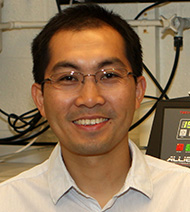 Guiqiu Zheng合作论文数Nuclear Reactor Laboratory, Massachusetts Institute of Technology5
 Lawrence M Anovitz合作论文数Oak Ridge National Laboratory;Bredesen Center, The University of Tennessee5
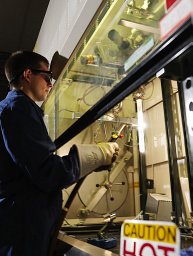 Brian J. Riley合作论文数Pacific Northwest National Laboratory5
 David Eugene Holcomb合作论文数5
 David J. Sprouster合作论文数Department of Materials Science and Chemical Engineering, College of Engineering and Applied Sciences, Stony Brook University5
 Frederick Baker合作论文数5M.R. Rogers合作论文数4R.L. Bratton合作论文数4Heather M. Felmy合作论文数4Wp Eatherly合作论文数4Charles F. Weber合作论文数4Josina W. Geringer合作论文数Oak Ridge National Laboratory4
 Stephen T. Lam合作论文数Chem Engn, Univ Massachusetts Lowell4
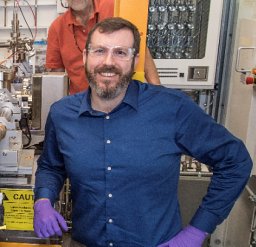 Olds Daniel P合作论文数Department of Physics and Astronomy, Michigan State University4
 Theodore Martin Besmann合作论文数Department of Mechanical Engineering, College of Engineering and Computing, University of South Carolina4Jacob Eapen合作论文数4g r romanoski合作论文数4
 Ken Littrell合作论文数Oak Ridge National Laboratory, United States Department of Energy4
 Robert Mee合作论文数Haslam College of Business, University of Tennessee, Knoxville4
 Samuel Bryan合作论文数Pacific Northwest National Laboratory3Alexander I. Wiechert合作论文数3Breanna Vestal合作论文数3
 Rajni Chahal合作论文数Chem Engn, Univ Massachusetts Lowell3
 Sean Fayfar合作论文数3Andrea Hwang合作论文数University of California Berkeley3
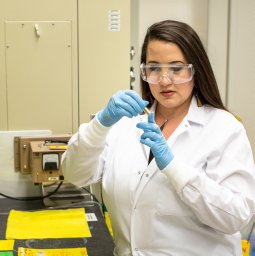 Tyler L. Spano合作论文数Dept Civil & Environm Engn & Earth Sci, Univ Notre Dame3
 Raluca O. Scarlat合作论文数Department of Nuclear Engineering, University of California, Berkeley3
 Jang Gyoung Gug合作论文数Ralph E. Martin Department of Chemical Engineering, University of Arkansas3
 Craig E. Barnes合作论文数3




