This study presents a quantitative framework to analyze the engagement of four Asian sub-regions with global issues through their participation in multilateral treaties across various policy areas. The research addresses key questions regarding the speed of Asian states’ involvement in multilateral treaties and their adaptation to these treaties within the United Nations system over time. The approach combines empirical data and conceptualization to ensure a robust evidentiary basis. A dataset comprising 600 major multilateral treaties deposited in the United Nations system, covering diverse global issues, was collected. Additionally, ratification actions from twenty-eight Asian countries were categorized into four sub-regions: East Asia, South Asia, Southeast Asia, and Central Asia. To quantitatively measure states’ engagement with multilateral treaties, the study developed and calculated the Treaty Participation Index for each Asian country and sub-group. In an area predominantly characterized by qualitative research, this paper contributes to the existing literature by providing quantitative and metric findings for comparative analyses of multilateral treaty participation among the four Asian sub-regions, as well as comparisons between Asia and the rest of the world. By analyzing the results, the paper offers an evidence-based assessment of the feasibility of these four regionalisms in Asia, particularly in the context of the transition from international politics to the paradigm of global politics.
The typology proposed in this book come from a bottom-up perspective and evidence-based approach. In this chapter, I discuss the strength and weakness of the proposed typology.
Entering the Third Millennium, hyperdemocratization and hyperglobalization are visible. Hyperdemocratization is driven by keener awareness of the self in society either in an alienated direction (anarchism) or a state-centrically affected direction (nationalism). Hyperglobalization is driven by the sharper consciousness of a globalizing planet in either neo-protectionist or neo-liberalizing directions. Societal types are a patterned practice in a society. The society's equilibrium is built on Maslow's argument and further theorized by Inglehart. Not only survival and social relations dimensions but also the public policy prevalence dimension carries an important dimension. My methodological innovation is to listen to Fog (Cross-Cultural Research, 55(1), 29–57. Retrieved from https://doi.org/10.1177/1069397120956948 , 2021), who argues that factor analyzing similar data such as happiness or trust or daily satisfaction yields the superfactor, which carries the predominant eigenvalues, yielding ambiguous dimensions for interpretation. Societal Type: Abc, Acb, Bac, Bca, Cab, Cba are of six societal types: The dimension capitalized and the dimension noncapitalized are polar opposites on the same dimension. Societal Type consists of three dimensions: (1) survival (materialist vs nonmaterialist), (2) social Relations (post-materialist vs nonpost materialist), and (3) public policy preponderance (public policy prepomdderence vs nonpublic policy prechallenge). Legislative Type: abc, aBC, aBc, abC, Abc, AbC, ABc, ABC are of eight legislative types: These words capitalized denote the left-hand side of the same dimension, whereas those words noncapitalized denote the right-hand side of the same dimension. Legislative Type consists of three dimensions: (1) speed (cautious vs agile), (2) angle (global commons vs individual interested) and (3) strategy (aspirational bonding vs mutual bonding).
World War II immensely impacted colonized Asia. Central Asia was a de facto colonized area with the name of constitutive republics of the Union of Soviet Socialist Republics. South Asia was mostly a British colony. Until 1858, the British East India Company did rule British India as a side business. With the bankruptcy of the Company by the Sepoy Mutiny (1857–1858), the British state took it over with Delhi set as its capital. The British state inherited the East India Company's policy of keeping small army and small colonial government. India, Pakistan and Bangladesh were born out of massive suffering of internal division and relocation. Southeast Asia was mostly colonized by Western powers, the American Philippines, Dutch Indonesia, French Indochina, and British Malaya. Indonesia and Vietnam in Southeast Asia obtained independence by liberation. East Asia was mostly colonized and semicolonized amidst civil strifes for long by Western powers. Taiwan and Korea and Manchuria were long colonized by Japan. Manchuria was annexed by Japan. In China itself, there are internal strifes among military cliques, the Nationalist Party and the Communist Party. They got civil-cum-international wars. After World War II, Korea experienced civil-cum-international war, the animosity therebetween has been prolonged until today. Taiwan was kept isolated after major powers recognized the People's Republic of China in 1971–1972. East Asia has been aloof or apart to one another, although its nongovernmental business connectivity has been dense among them.
The results of typologizing Asian societies through factor-analyzing human daily life satisfactions in 28 Asian societies are shown in alphabetical order, one by one: Afghanistan, Bangladesh, Bhutan, Brunei, Cambodia, China, Hong Kong, India, Indonesia, Japan, Kazakhstan, Kyrgyzstan, Laos, Malaysia, the Maldives, Mongolia, Myanmar, Nepal, Pakistan, the Philippines, Singapore, South Korea, Sri Lanka, Taiwan, Tajikistan, Thailand, Uzbekistan, and Vietnam. Turkmenistan was not included in this analysis because the “don't know” responses numbered too many on the key question of “Please tell me how satisfied or dissatisfied you are with the following aspects of your life.”
How each of Asian states and societies to carve out one of the important mechanisms of global politics with evidence-based perspective and bottom-up approach in their attempt to achieve domestic stability in the tide of hyperdemocratization and the global adaptability in the tide of hyperglobalization. On these bases, our task is now to “predict” the future of global politics, i.e., four Asian regions and regionalisms, and furthermore to “predict” the futures of global politics, i.e., which states and societies help shape global politics with domestic stability, thus gaining trust and with global adaptability, thus developing global cooperative solutions. States and societies must cope with the human penchant to conserve the ways in which survival, social relations and/or public policy can be managed even amidst hyperdemocratization and hyperglobalization. The worst of human follies is to conserve catastrophe accumulatively, followed by the decline and demise of states and societies, and no worse is to invite citizens to kill the globe, whether it is by wars, by the deterioration of nutrition, hygiene and health, by infectious diseases, by leaving global temperature steadily increasing approximately 1.5 °C, by not respecting the dignity and rights of citizens, and by shutting out global cooperative solutions. Our predictions of futures deploy the multiple scenarios approach in terms of feasibility in the shorter and longer terms. Future scenarios of four Asian regions and regionalisms are as follows: Horseback Scenarios for Central Asia, Sangham Scenarios for South Asia, Panchasila Scenarios for Southeast Asia, and Zhonghua Scenarios for East Asia.
Joining multilateral treaties, sovereign states manifest their priorities in six policy domains: human rights, peace and disarmament, commerce, trade and communications, the environment, intellectual property, labor and health. Central Asians are relatively recent in joining the United Nations (1992) and its multilateral treaty system. Thus, their joining it has been relatively infrequent and their participation is passive. They are often rich in mineral and fossil resources. They are busy reading global mineral resource price trends and yet vigilant not to be taken advantage of by foreign investment partners. Mongolia and Afghanistan are somewhat different. South Asians have been continuing their old instincts and institutions of small government, small army, continuing British India. India has been inheriting the Indian National Congress Party, protectionism at home and nonalignment in diplomacy, and in Arundhati Roy's words, ordinary people are “kings of small things” helped by the de facto division by region, language, ethnicity, caste, until recently. Southeast Asia started as an influx of regional antagonism among most founding members of the ASEAN. In the fiftieth anniversary in 2018, it was determined to make its slogan real, not rhetorical, i.e., ASEAN centrality and noninterference in internal affairs. Southeast Asians’ hexagonal profiles are mostly both small and passive. East Asia's tri-powers, China, Japan, and South Korea, occupy world No. 2, No. 3 and No. 10 in terms of GDP. Their hexagonal profiles do not seem to give the impression of relying on the UN multilateral treaty system.
The standard practice of empirical validation requires at least one more piece of corroborative or reinforcing empirical evidence (International Encyclopedia of the Social & Behavioral Sciences, edited by Neil J. Smelser and Paul B. Baltes, 2001). To meet this request, the AsiaBarometer Survey asks the question about five top lifestyle priorities, country by country: “Of the following lifestyle aspects of life circumstances, please select five that are important to you.”
 Lien Thi Quynh Le合作论文数38jean blondel合作论文数13Seiji Fujii合作论文数11
 G. John Ikenberry合作论文数School of Public and International Affairs, Princeton University;Department of Politics, Princeton University9Yasuharu Tokuda合作论文数7
 Benjamin E. Goldsmith合作论文数School of Politics and International Relations, College of Arts and Social Sciences, Australian National University4
 Yusaku Horiuchi合作论文数CRAWFORD SCHOOL OF ECONOMICS AND GOVERNMENT, ANU COLLEGE OF ASIA & THE PACIFIC4
 Yoichiro Sato合作论文数3ian marsh合作论文数3Muthiah Alagappa合作论文数3Satoru Mikami合作论文数3Doh Chull Shin合作论文数University of Missouri3ZEN-U LUCIAN HOTTA合作论文数2Frank Langdon合作论文数2
 Edward Newman合作论文数Sch Polit & Int Studies, Univ Leeds2Masamine Jimba合作论文数2
 Tsuneo Akaha合作论文数Center for East Asian Studies, Monterey Institute of International Studies2
 Michael Cox合作论文数College of Computing;Georgia Institute of Technology;College of Computing, Georgia Institute of Technology2
 Jean Blondel合作论文数EUI2Haruhiro Fukui合作论文数2
 Purnendra Jain合作论文数University of Adelaide2
 Robert Chung合作论文数1Richard Leitch合作论文数1Martin E. Weinstein合作论文数1Akira Kato合作论文数1Hideaki Uenohara合作论文数1paul bacon合作论文数1
 Sanjay Kumar合作论文数1Alan James合作论文数1
 tassanee krirkgulthorn合作论文数1
 Ho Quoc Dung合作论文数1
 miguel basanez合作论文数ISR, UNIV MICHIGAN1
 Yuichi Kubota合作论文数Fac Int Studies & Reg Dev, Univ Niigata Prefecture1chinghsin yu合作论文数1
 Syed Arabi Idid合作论文数Monash University, International Islamic University1
 Shaun Wilson合作论文数Inst Publ Policy & Governance, Univ Technol1
 Philip G. Alston合作论文数School of Law, New York University1Yingrengreung Siritorn合作论文数1
 Kheokao Jantima K合作论文数School of Communication Arts, University of the Thai Chamber of Commerce1
 Osamu Takahashi合作论文数1
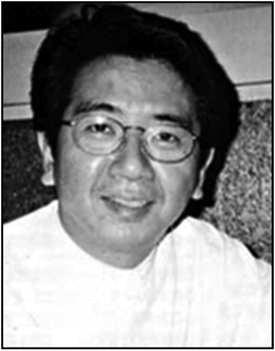 Yoshiki Mikami合作论文数Laboratory of Anatomic Pathology, Kyoto University Hospital1
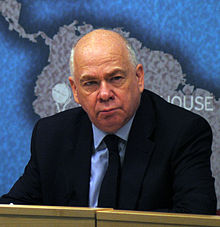 Lawrence Freedman合作论文数Iraq Inquiry1
 Tsuguya Fukui合作论文数Tokyo Medical University Ibaraki Medical Center;Kyoto University1Ray Christensen合作论文数1
 James P. Butler合作论文数Department of Environmental Health, Harvard T.H. Chan School of Public Health, Harvard University1
 Baohua Zhou (周葆华)合作论文数Shanghai Key Laboratory of Data Science, Fudan University;School of Journalism, Fudan University1
 Baogang He (何包钢)合作论文数School of Humanities and Social Sciences, Faculty of Arts and Education, Deakin University1
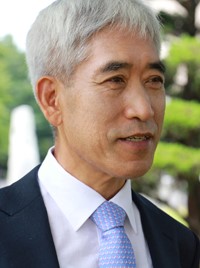 Sung Kyum Cho合作论文数Department of Communication, Chungnam National University1




