It is challenging to scale parallel applications to modern supercomputers because of load imbalance, resource contention, and communications between processes. Profiling and tracing are two main performance analysis approaches for detecting these scalability bottlenecks. Profiling is low-cost but lacks detailed dependence for identifying root causes. Tracing records plentiful information but incurs significant overheads. To address these issues, we present ScalAna, which employs static analysis techniques to combine the benefits of profiling and tracing - it enables tracing's analyzability with overhead similar to profiling. ScalAna uses static analysis to capture program structures and data dependence of parallel applications, and leverages lightweight profiling approaches to record performance data during runtime. Then a parallel performance graph is generated with both static and dynamic data. Based on this graph, we design a backtracking detection approach to automatically pinpoint the root causes of scaling issues. We evaluate the efficacy and efficiency of ScalAna using several real applications with up to 704K lines of code and demonstrate that our approach can effectively pinpoint the root causes of scaling loss with an average overhead of 5.65% for up to 16,384 processes. By fixing the root causes detected by our tool, it achieves up to 33.01% performance improvement.
The Dynamical Density Functional Theory (DDFT) algorithm, derived by associating classical Density Functional Theory (DFT) with the fundamental Smoluchowski dynamical equation, describes the evolution of inhomogeneous fluid density distributions over time. It plays a significant role in studying the evolution of density distributions over time in inhomogeneous systems. The Sunway Bluelight II supercomputer, as a new generation of China’s developed supercomputer, possesses powerful computational capabilities. Porting and optimizing industrial software on this platform holds significant importance. For the optimization of the DDFT algorithm, based on the Sunway Bluelight II supercomputer and the unique hardware architecture of the SW39000 processor, this work proposes three acceleration strategies to enhance computational efficiency and performance, including direct parallel optimization, local-memory constrained optimization for CPEs, and multi-core groups collaboration and communication optimization. This method combines the characteristics of the program’s algorithm with the unique hardware architecture of the Sunway Bluelight II supercomputer, optimizing the storage and transmission structures to achieve a closer integration of software and hardware. For the first time, this paper presents Sunway-Dynamical Density Functional Theory (SW-DDFT). Experimental results show that SW-DDFT achieves a speedup of 6.67 times within a single-core group compared to the original DDFT implementation, with six core groups (a total of 384 CPEs), the maximum speedup can reach 28.64 times, and parallel efficiency can reach 71%, demonstrating excellent acceleration performance.
High-performance computing is crucial for complex nuclear energy simulations, and the Monte Carlo method is one of the most precise methods among them. Based on the Sunway Bluelight II supercomputer, the general heterogeneous two-level parallel optimization method is proposed for the open-source Monte Carlo neutron transport code (OpenMC). Thread-level parallel optimization includes direct parallel optimization, computational data optimization and load balancing optimization. In process-level optimization, a communication optimization method suitable for Sunway chip hardware architecture is proposed. Subsequently, comprehensive tests are conducted on two different test models, B W 1484 Core 1 and BEAVRS, using different data scales. Results demonstrate significant performance improvements: the optimized code achieves sustained floating-point performance up to 5.34 TFLOPS. Within a single-core group, neutron transport simulations of the B W 1484 Core 1 model and the BEAVRS model achieve speedups of 25.12 and 20.29 times, respectively. Particularly, when the two-level parallel optimization program is expanded to 2048 processes (2048 MPE + 131,072 CPE), the strong scalability of the B W 1484 Core 1 model reaches 82.68
Nowadays, convolutional neural networks are representative of deep learning algorithms. With the development of convolutional neural networks, their network structures become more complex, and the number of parameters for training becomes larger and larger. The parallelization of convolutional neural network algorithms on multicore or many-core processors is essential for training convolutional neural networks. In this paper, we propose a parallel algorithm of LeNet-1 based on the Sunway Bluelight II supercomputer, named SW-LeNet. Moreover, we propose a two-level parallelization scheme, including thread-level optimization and process-level optimization. In thread-level optimization, the following optimization methods are used, including CPEs parallelism, hybrid scheme and DMA optimization, register optimization, and SIMD data parallelism. Data parallelism optimization and parameter packing optimization are used in process-level optimization. Compared with the original LeNet, SW-LeNet can achieve 4.94x speedups in a single core group. Moreover, SW-LeNet can be scaled up to 2,048 processes, with 133,120 cores, and achieves 84.93% parallel efficiency.
In multi-group deterministic neutron transport simulations for nuclear reactors, anisotropic scattering between neutrons and light nuclides is a common issue causing errors in eigenvalue and power distributions. Transport correction is the main approach for mitigating this error and it has advantages over high-order scattering due to higher efficiency in computational time and storage. The research on transport correction for light water reactors, in which hydrogen is the main nuclide for neutron slowing down, has been underway for more than 40 years. However, there is a lack of effort on transport correction for nuclear reactors using graphite as moderators, in which carbon is the main nuclide for neutron slowing down. Although neutron scattering with carbon is less anisotropic compared to hydrogen, previous tests have demonstrated significant errors resulting from anisotropic scattering. In this article, we focus on the transport correction for graphite-moderated reactors using the Cumulative Migration Method (CMM). Anisotropy in neutron scattering with graphite is examined and multi-group transport correction ratios for C-12 are evaluated using CMM with Monte Carlo code OpenMC. Numerical simulations are performed on the MIT Graphite Exponential Pile (MGEP) and HTR-10 models. The test results demonstrate that CMM achieves higher accuracy in computing the effective multiplication factor for transport cross sections on nuclear reactors involving graphite.
With the development of nuclear energy technology, the numerical simulation of magnetic confinement fusion has higher requirements for accuracy and speed. It is an inevitable trend to use high-performance computers to meet the requirements of numerical simulation for accuracy and speed. As an important part of tokamak research, the plasma single particle simulation program describes the motion process of plasma particles in the tokamak and the numerical simulation study of related physical quantities. This paper analyses and summarizes the challenges of porting and parallelization of plasma single particle simulation programs on the Sunway Bluelight II supercomputer. To address these challenges, this paper proposes an efficient, general, and scalable two-level parallelization method, including thread-level parallelization and process-level parallelization. The solution optimises the memory access mode and data transmission mode, which significantly improves the efficiency of program execution. In process-level parallelization, this paper fully integrates the hardware architecture of Sunway Bluelight II supercomputer and proposes an optimization scheme based on spatial region decomposition. The scheme progressively refines the parallel granularity and achieves mass parallelization of program. Two-level parallelization can achieve up to 16.8x speedup compared to the original program. The optimised program has good strong and weak scaling and can run stably on 2028 processes of Sunway Bluelight II supercomputer.
At present, high-performance computing plays a crucial role in enhancing the national economy, advancing science and technology, and strengthening national defence. Sunway Bluelight II Supercomputer, as a leading example of high-performance computing, has been extensively employed in scientific applications. Due to the specificity of the architecture of sunway many-core processor, the problem of load imbalance during the process of resource scheduling. This paper proposes a parallel acceleration method for adjusting the number of CPEs and a computation scheduling method for MPE-CPE monitoring interactions. These methods are based on a new generation of sunway many-core processor and have been evaluated for both critical and non-critical resource applications. The result shows that, the speedups of using these methods are much higher than without using these methods.
At present, China has reached the world-class level in the research and development of high-performance processors and supercomputers, such as the sunway many-core processor, which is the representative of Chinese high-performance processors. However, the hardware upgrade is difficult to bring about the improvement on the software performance in proportion, and its powerful computing resources cannot be used well at present. In general, sunway many-core processor uses MPE-CPE parallel optimization for hotspot. This paper improves the MPE-CPE parallel optimization, and research a set of new optimization methods, which includes a synchronous mechanism between the MPE (Management Processing Element) and CPE (Computing Processing Element) cluster and an acceleration method of multi-data partition in the CPE cluster. These methods solve the problem of insufficient utilization of CPEs' computing resources and insufficient coordination between MPE and CPEs to a certain extent. By employing the Sunway Taihulight supercomputer, the evaluation measures the execution times and speedups of the comprehensive parallel optimization and MPE-CPE parallel optimization. The result shows that, with different number of processes, the speedups of comprehensive parallel optimization are much higher than those of MPE-CPE parallel optimization, from 23.42% to 36.41%.
With the development of nuclear energy technology, reactor physical calculations have higher requirements for calculation accuracy and speed, and it has become an inevitable trend to use high-performance computers for reactor simulation calculations. The method of characteristics (MOC) is currently recognized as the preferred method for simulating neutron transport in the nuclear reactor core. Based on the architecture of Sunway many-core processor and Sunway Bluelight II supercomputer, this paper proposes a fine grained and universal two-level parallelization, including thread-level parallelization and process-level parallelization. In the thread-level parallelization, the methods such as job pipeline optimization, load balancing across CPEs, and I/O optimization are proposed for acceleration. In the process-level parallelization, a mapping method from software to hardware is proposed. This method can make full use of the hardware of Sunway supercomputers and improve the computing efficiency and data transmission efficiency. For the first time, the OpenMOC program is transplanted and parallelly optimized on the Sunway supercomputers, which enriched the application ecology of Sunway supercomputers. Compared with the original program, the two-level parallelization can achieve up to 18.6x speedup. Moreover, our parallelization is capable to run on more than 3750 processes of Sunway Bluelight II supercomputer with good strong and weak scalability.
The simulation of three-dimensional stress and strain is a research hot spot of computational structural mechanics. As the complexity of the project increasing, the size of the matrix generated increases during the simulation. Therefore, a fast and efficient solver is needed. In this paper, we present swParaFEM, a highly efficient parallel finite element solver on Sunway many-core architecture. It is based on preconditioned conjugate gradient iteration algorithm. We launch a master–slave acceleration model to exploit the computational power of Sunway supercomputer. The kernel aggregation optimization scheme is proposed to deal with the problem that threads’ frequent creation and destruction waste computing resources. Moreover, we improve the data transfer speed from the slave core to the master core through memory access optimization. Using several optimizations, we achieve a speedup of 10.5 $$\times$$ compared to the naive implementation on one compute group of an SW26010-Pro processor and a strong scaling efficiency of 62.8% on 512 compute groups.
Achieving microsecond-scale tail latency poses an extreme challenge to the conventional architecture of “NIC-OS-Application” in the face of high concurrent requests. Existing kernel-bypass network systems improve this situation significantly. Still, they cannot achieve load-aware in-server requests distribution, which in turn not only harms resource efficiency but, more importantly, beats the goal of squeezing tail latency. This paper proposes iBalancer, an in-server proactive load balancer for the kernel-bypass system, which aggressively handles NIC-side flow scheduling according to the load of threads on the processor-side. Furthermore, we propose a novel metric, “polling time interval (PTI),” to quantify the load of worker threads, which not only indicates utilization of the core bound to the worker thread but also reflects the differences in the processing time of different flows. By scheduling flows according to the metric PTI, iBalancer tends to average the queueing latencies of different flows, such as Set & Get operations for an in-memory key-value store. In addition, by decoupling flow scheduling from packet steering, iBalancer achieves a tail latency aware flow-to-core binding and preserves hardware-based request distribution among cores. The proposed system is evaluated and compared to mTCP and Shenango using two representative microsecond-scale network applications: Memcached KVS and a real-time deep-learning-based financial fraud identification application. Experimental results show that iBalancer can process up to 4.75$ \times $× and 1.55$ \times \ $× higher load over mTCP and Shenango under 500μs 99th percentile tail latency limit on Memcached. For the financial fraud identification application, iBalancer is able to process 4.56$ \times $× and 1.16$ \times $× higher load than mTCP and Shenango considering 900μs tail latency.
Sparse LU factorization is essential for scientific and engineering simulations. In this work, we present swSuperLU, a highly scalable sparse direct solver on Sunway manycore architecture based on sparse LU factorization. To improve the parallelism of sparse LU factorization, we introduce the hierarchical scheme to exploit the hierarchy of Sunway manycore architecture in process-level parallelism between MPEs and thread-level parallelism between the CPE arrays. A task-based hierarchical scheme and a series of highly optimized computation kernels are designed to map processor loads and memory access well to this hierarchy. Moreover, we compared various ordering strategies and several machine-dependent parameter settings to find the most suitable ordering strategies and parameter settings for Sunway manycore architecture. We present performance and scalability experiments of swSuperLU on Newest Generation Sunway Supercomputer and Sunway TaihuLight. swSuperLU achieves 9.02 × speedup on average compared to state-of-the-art packages and strong scalability from 10 thousand cores to million cores.
For the self-developed three-dimensional whole-core High-fidelity NEutron Transport calculation program HNET, although the numerical acceleration algorithms can improve the computation performance of high-fidelity neutron transport in terms of algorithms and models, it still faces some critical issues such as long computing time and enormous memory requirement. The rapid development of high-performance clusters provides a foundation for the application of massively parallel computing. Most current MOC programs are based on a single-type variable to achieve efficient parallelism, and spatial domain decomposition methods are the most common parallel schemes. However, its parallelism is limited and cannot fully utilize the current state-of-the-art computer resources. To solve this problem, hybrid parallel strategies are implemented in HNET to further expand the parallel degree, improve the speed of computation, and reduce the memory requirement. A hybrid MPI/OpenMP method based on domain decomposition and characteristic rays is proposed for the method of characteristics (MOC). For domain decomposition, the simulation domain is divided into spatial subdomains, with each subdomain handled by different processes. On this basis, the characteristic ray parallelism is implemented taking advantage of the inherent parallelism of the characteristic rays. Meanwhile, the optimization of the hybrid parallel strategy further improves the computation speed by eliminating atomic operations and using private pointer arrays and other techniques. In addition, in the framework of generalized equivalence theory (GET) based two-level coarse mesh finite difference method (CMFD), there is also a certain time consumption in solving CMFD linear system. Hence, for CMFD, a hybrid MPI/OpenMP method based on domain decomposition and secondary domain decomposition can be used. Using the secondary domain decomposition method, each subdomain is divided into sub-subdomains, with each sub-subdomain handled by threads, which allows CMFD to utilize the resources of characteristic ray parallelism in MOC, and also increases the speed of CMFD computation. Numerical results show that for both steady-state and transient calculations, the hybrid MPI/OpenMP in HNET can further expand the parallelism and accelerate the computation. It can take full use of parallel resources and achieve large-scale parallelism.
With the development of electromagnetic simulation technology and the increasing demand for simulation, simulation verification based on numerical simulation has received extensive attention from various research fields at home and abroad. Solving the linear sparse matrix equation generated in the electromagnetic simulation process is the biggest bottleneck restricting the running time of the program. Parallel computing, as an effective means to improve the calculation speed and processing capacity of computer systems, can further expand the scale of problem solving and shorten the calculation time. Next, this paper studies the parallel solution method of large-scale sparse linear equations based on the Multifrontal method. We port our program to SW26010-pro and utilizing the powerful heterogeneous computing units of the new-generation Sunway supercomputer. After extensive experiments, the results show that the hotspot functions of the resulting sparse matrix equation gain an 81x speedup compared to the master version, the computation time of overall computational performance gain an 64x speedup.
This paper proposes a new intelligent window based on multi-sensor fusion. The intelligent window is controlled by ARDUINO UNO development board. It has the functions of “Automatic Control” “Manual Control” and “Close”. In the automatic control mode, the window will be controlled based on parameters such as humidity, temperature, light intensity, wind speed and air quality. This project is based on the arduino MCU, PM2.5 detection, air temperature and humidity detection technology to design, mainly in “safety, intelligent, practical, market-oriented” four unity as the objective concept, combining technology and humanized function, under the full consideration the user demand for Windows made intelligent Windows system can easy life.
Nowadays, the ocean numerical models are gradually developing towards multi-physical process and high resolution, with the increment of measured ocean data and more in-depth research in ocean field. Therefore, general computing capability is no longer able to meet these models’ needs. It is necessary to utilize more powerful hardware and parallel software to process the ocean numerical model programs. China has made great process in the research and development of homegrown high performance processors, and sunway sw26010 many-core processor is the most outstanding representative. This paper focuses the lag of the ocean numerical model software matched with homegrown processors, and makes parallel implementation and optimization to regional ocean modeling system (ROMS) based on sunway sw26010 many-core processor for the first time. Furthermore, three kinds of programming methods are utilized in this paper, including OpenACC*, athread with fortran and athread with C. The comparison among these programming methods has been made, from programming method, workload and execution efficiency, which has a practical guiding significance for the programmers that use sunway sw26010 many-core processors. The evaluation measures the execution times and speedups of model kernel and total ROMS with different optimizations, input datasets and numbers of computing processing elements (CPEs). The result shows that, to compare with original ROMS, the speedup of optimized hotspot program can be up to $3.69\times$ .
 jingshan pan (潘景山)合作论文数11
 Min Tian合作论文数7
 Zhaoyuan Liu (刘召远)合作论文数Massachusetts Institute of Technology5YANG Mei-hong (杨美红)合作论文数4
 Xiao-Ming Wu (伍晓鸣)合作论文数Multimedia Laboratory, College of Computing and Data Science, Nanyang Technological University3Zenghui Ren合作论文数3Renjiang Chen合作论文数2Li Wang合作论文数2
 Dawei Zhao (赵大伟)合作论文数Qilu University of Technology1Ying Guo合作论文数1Jinyang Yu合作论文数1Lu Hongqian合作论文数1
 Qi Zhang合作论文数1Du, Wei合作论文数1Wenbin Wu合作论文数1Junjie Wang合作论文数School of Mathematics and Statistics, Qilu University of Technology1
 Yunhui Zeng合作论文数1Peijun Li合作论文数1Haojie Wang (王豪杰)合作论文数1zanjun zhang (张赞军)合作论文数1
 Jingang Liang (梁金刚)合作论文数Institute of Nuclear and New Energy Technology, Tsinghua University1
 Chen Hao (郝琛)合作论文数College of Nuclear Science and Technology, Harbin Engineering University1
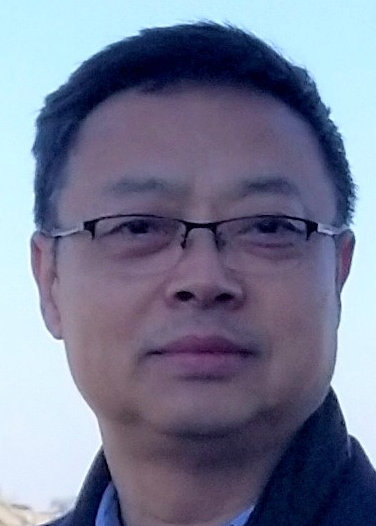 Yaqian Zhao (赵亚乾)合作论文数Xi'an University of Technology1
 Xu Liu (刘旭)合作论文数Department of Computer Science, North Carolina State University;Oak Ridge National Laboratory1
 Yi Liu (刘轶)合作论文数Sino-German Joint Software Institute, School of Computer Science and Engineering, Beihang University1
 Han Zhang (张菡)合作论文数Tsinghua University1
 Torsten Hoefler合作论文数Scalable Parallel Computing Lab, Computer Science Department, ETH Zürich1
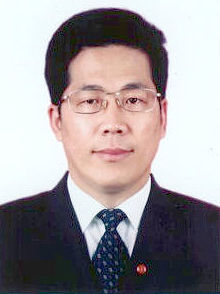 Yinglong Wang (王英龙)合作论文数Faculty of Computer Science and Technology, Qilu University of Technology;Shandong Computer Science Center;Shandong Provincial Key Laboratory of Computer Networks1
 Zhenhua Guo (郭振华)合作论文数Shenzhen International Graduate School, Tsinghua University1
 Jidong Zhai (翟季冬)合作论文数Institute of High Performance Computing, Department of Computer Science and Technology, Tsinghua University;School of Computer Science and Technology, Qinghai University1
 Xiongchao Tang合作论文数Tsinghua University1




