Through an analysis of arXiv papers, we report several shifts in word usage that are likely driven by large language models (LLMs) but have not previously received sufficient attention, such as the increased frequency of "beyond" and "via" in titles and the decreased frequency of "the" and "of" in abstracts. Due to the similarities among different LLMs, experiments show that current classifiers struggle to accurately determine which specific model generated a given text in multi-class classification tasks. Meanwhile, variations across LLMs also result in evolving patterns of word usage in academic papers. By adopting a direct and highly interpretable linear approach and accounting for differences between models and prompts, we quantitatively assess these effects and show that real-world LLM usage is heterogeneous and dynamic.
The widespread use of large language models (LLMs) raises an important question: how do texts evolve when they are repeatedly processed by LLMs? In this paper, we define this iterative inference process as Markovian generation chains, where each step takes a specific prompt template and the previous output as input, without including any prior memory. In iterative rephrasing and round-trip translation experiments, the output either converges to a small recurrent set or continues to produce novel sentences over a finite horizon. Through sentence-level Markov chain modeling and analysis of simulated data, we show that iterative process can either increase or reduce sentence diversity depending on factors such as the temperature parameter and the initial input sentence. These results offer valuable insights into the dynamics of iterative LLM inference and their implications for multi-agent LLM systems.
We present our submission to the LLM track of the 2026 Computational Models of Reference, Anaphora and Coreference (CRAC 2026) shared task. With an average CoNLL F1 score of 74.32 on the official test set, our system ranked first in the LLM track, and third overall. Our system is based on the Gemma-3-27b model, fine-tuned using a two-stage strategy with a multilingual base adapter followed by dataset-specific adapters. We represent mention spans by their headword using an XML-inspired format with local reindexing and annotate documents iteratively. These design choices proved effective across languages, document lengths, and annotation guidelines.
This research explores the evolution of the detective archetype in French detective fiction through computational analysis. Using quantitative methods and character-level embeddings, we show that a supervised model is able to capture the unity of the detective archetype across 150 years of literature, from M. Lecoq (1866) to Commissaire Adamsberg (2017). Building on this finding, the study demonstrates how the detective figure evolves from a secondary narrative role to become the central character and the "reasoning machine" of the classical detective story. In the aftermath of the Second World War, with the importation of the hardboiled tradition into France, the archetype becomes more complex, navigating the genre's turn toward social violence and moral ambiguity.
This data paper introduces MajinBook, an open catalogue designed to facilitate the use of shadow libraries-such as Library Genesis and Z-Library-for computational social science and cultural analytics. By linking metadata from these vast, crowd-sourced archives with structured bibliographic data from Goodreads, we create a high-precision corpus of over 539,000 references to digitally mediated English-language books. Spanning three centuries and reflecting a contemporary selection bias, these entries are enriched with first publication dates, genres, and popularity metrics like ratings and reviews. Our methodology prioritises natively digital EPUB files to ensure machine-readable quality, while addressing biases in traditional corpora like HathiTrust, and includes secondary datasets for French, German, and Spanish. We evaluate the linkage strategy for accuracy, release all underlying data openly, and discuss the project's legal permissibility under EU and US frameworks for text and data mining in research.
Language Style Matching (LSM)-the subconscious alignment of linguistic style between conversational partners-is a key indicator of social coordination in human dialogue. We present the first systematic study of LSM in Large Language Models (LLMs) focusing on two primary objectives: measuring the degree of LSM exhibited in LLM-generated responses and developing techniques to enhance it. First, in order to measure whether LLMs natively show LSM, we computed LIWC-based LSM scores across diverse interaction scenarios and found that LSM scores for text generated by LLMs were either below or near the lower range of such scores observed in human dialogue. Second, we show that LLMs' adaptive behavior in this regard can be improved using inference-time techniques. We introduce and evaluate an inference-time sampling strategy-Logit-Constrained Generation-which can substantially enhance LSM scores in text generated by an LLM while preserving fluency. By advancing our understanding of LSM in LLMs and proposing effective enhancement strategies, this research contributes to the development of more socially attuned and communicatively adaptive AI systems.(1)
This study investigates differences in linguistic accommodation-changes in language use and style that individuals make to align with their dialogue partners-in human and LLM communication. Specifically, it contrasts semantic and stylistic alignment within question-answer pairs in terms of whether the answer was given by a human or an LLM. Utilizing embedding-based measures of linguistic similarity, we find that LLM-generated answers demonstrate higher semantic similarity-reflecting close conceptual alignment with the input questions-but relatively lower stylistic similarity. Human-written answers exhibit a reverse pattern, with lower semantic but higher stylistic similarity to the respective questions. These findings point to contrasting linguistic accommodation strategies evident in human and LLM communication, with implications for furthering personalization, social attunement, and engagement in human-AI dialogue.
 Anna Korhonen合作论文数Language Technology Lab, Faculty of Modern and Medieval Languages and Linguistics, University of Cambridge17
 Frederique Melanie-Becquet合作论文数13
 Clément Plancq合作论文数12
 Pablo Ruiz Fabo合作论文数Univ Strasbourg, Lab LiLPa, Strasbourg, France12Cédric Messiant合作论文数10Adeline Nazarenko合作论文数Institut Galilee
Universite Paris-Nord10Mylène Maignant合作论文数9
Pablo Ruiz Fabo合作论文数Univ Strasbourg, Lab LiLPa, Strasbourg, France12Cédric Messiant合作论文数10Adeline Nazarenko合作论文数Institut Galilee
Universite Paris-Nord10Mylène Maignant合作论文数9 Olga Seminck合作论文数Cognition UMR 8094, Laboratoire Langues9
 Jean Philippe Cointet合作论文数9Aurélien Bossard合作论文数Université Paris9
 Elisa Omodei合作论文数9
 Niko Partanen合作论文数University of Helsinki;The National Library of Finland8Thierry Hamon合作论文数LIPN8
 Kyungtae Lim合作论文数8
 Sophie Aubin合作论文数INRAE7
 Davy Weissenbacher合作论文数Cedars-Sinai6
 Michel Genereux合作论文数6
 Gilles Col合作论文数6Mathilde Roussel合作论文数5Matthieu Raffard合作论文数5
 Mika Hämäläinen合作论文数Helsinki Metropolia University of Applied Sciences5
 Mokha Alnajjar合作论文数Infinitypp;University of Helsinki5
 Claire Nedellec合作论文数MIG, INRA, centre de Jouy-en-Josas5
 Laura Rimell合作论文数Computer Laboratory, University of Cambridge5Amanda Bouffier合作论文数5Yufan Guo合作论文数Amazon5
 Alessandro Lenci合作论文数Department of Philology, Literature, and Linguistics, University of Pisa;Computational Liguistics Laboratory, University of Pisa5Dominique Dutoit合作论文数5Mathilde Saurat合作论文数4
 Joakim Nivre合作论文数Department of Linguistics and Philology, Faculty of Languages, Uppsala University;Research Institutes of Sweden4
 Daniel Luzzati合作论文数Université du Maine;Université d'Avignon et des Pays de Vaucluse;Université du Maine, Université d'Avignon et des Pays de Vaucluse4Julien Deriviere合作论文数4Pierre Marchal合作论文数4Dominique Legallois合作论文数4
 Benjamin Fagard合作论文数4
 Anne Condamines合作论文数Univ . Paris Nord4Prokopis Prokopidis合作论文数3
 T. (Tommaso) Caselli合作论文数Center for Language and Cognition Groningen, Faculty of Arts, University of Groningen3Clara Isabel Martínez Cantón合作论文数3Karim Lasri合作论文数The World Bank3Frédérique Mélanie合作论文数3
 Michael Rießler合作论文数Sch Humanities, Univ Eastern Finland3
 Mohamed Amine Boukhaled合作论文数3
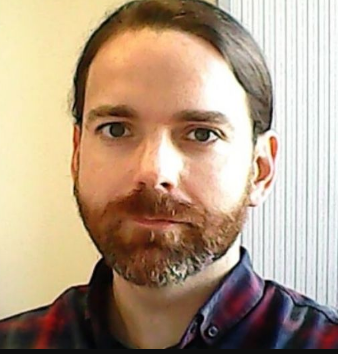 Barry Devereux合作论文数School of Electronics, Electrical Engineering and Computer Science, Faculty of Engineering and Physical Science, Queen's University Belfast;Institute of Electronics, Communications & Information Technology, Queen's University Belfast3
 Leila Kosseim合作论文数CLaC Laboratory;Department of Computer Science and Software Engineering;Concordia University;CLaC Laboratory, Concordia University3
 Horacio Saggion合作论文数Department of Information and Communication Technologies, Universitat Pompeu Fabra3
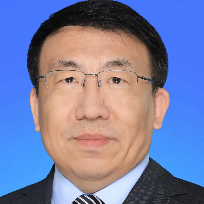 Ting Liu (刘挺)合作论文数Faculty of Computing, Harbin Institute of Technology3
 Rossana De Angelis合作论文数3Jack Rueter合作论文数University of Helsinki3




