ContextInterest is growing among farmers in the Midwestern US region in the potential benefits of establishing cereal rye (Secale cereale L.) as a cover crop. However, they are concerned about the implications and potential trade-offs due to this practice.ObjectiveWe aimed to evaluate the effects of cereal rye cover crop termination at or before soybean planting on soybean (Glycine max [L.] Merr.) seed yield.MethodsField experiments were conducted from 2019 to 2021 across 28 location-years in the Midwestern US. Treatments consisted of no cereal rye, cereal rye termination before soybean planting, and termination at planting. Cereal rye was chemically terminated at each termination timing. Cereal rye biomass and soybean yield were assessed.ResultsDelaying cereal rye termination in soybean systems increased rye biomass, but its impact on soybean yield was inconsistent. Results showed that delayed termination did not reduce soybean seed yield in 25 of 28 location-years compared to a no cover crop treatment. There was no clear evidence indicating that a threshold level of cereal rye biomass accumulation reduced soybean seed yield.ConclusionsOur results suggest that farmers who adopt cereal rye as a winter cover crop in the examined region have a flexible management window for terminating cereal rye, as the timing of termination had minimal effect on soybean seed yield. However, there were no significant soybean seed yield benefits that would justify the associated cost with the use of cover crops. Therefore, conducting long-term studies in the future is highly recommended to better understand how cereal rye cover crops can influence soybean seed yield and soil quality properties over time. Further studies should also investigate the aspect of non-chemical rye management to assess its potential cost-saving effects for farmers adopting this system.ImplicationsThese findings hold several implications for farmers, agronomists, and stakeholders. The increased cereal rye biomass due to delayed termination could offer greater soil benefits. While the inconsistent effects on soybean yield imply flexible termination options for cover crop adoption, the absence of substantial yield benefits underscores the importance of considering both short-term costs and long-term sustainability goals.
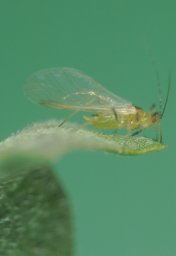
Soybean aphid, Aphis glycines Matsumura (Hemiptera: Aphididae), is an important pest that can cause significant economic damage to soybean. Synthetic insecticides are currently employed as the main management strategy to control A. glycines; however, over-use of these products has stimulated research in the development of alternative management methods, including botanical derivatives. In this study, we evaluated the bioactivity of Annona mucosa and A. muricata seed extracts and a formulation based on acetogenins (Anosom (R) 1 EC, 10,000 ppm) compared to the pyrethroid insecticide lambda-cyhalothrin (Warrior II (R)) on A. glycines. Initially, the insecticidal effect was assessed in vial bioassays and the concentration-response curves were estimated (LC50/LC90 for A. muricata 305.721 ppm/1290.3 ppm and A. mucosa 134.229 ppm/487.890 ppm, respectively). In the systemic effect bioassay, the same extracts were used (at 100, 500, 1,000, 5000 and 10,000 ppm), showing a reduction in the number of insects on the trifoliates. Both extracts at LC50 and LC90 were used in a behavior test, indicating that they are repellent and Warrior II (R) was attractive for the insects. The LC90 rates were also used in lethal time (LT) and in greenhouse bioassays. The LT50 for A. mucosa and A. muricata extracts was around 20 h. All treat- ments showed insect mortality rates above 65%, reaching 100% for Warrior II (R), followed by the LC90 of A. mucosa (92.1%). The results demonstrate the potential of Annona spp. derivatives for the management of A. glycines in soybean, and these Annonaceae-derived seed extracts could likely serve as an additional IPM tool to improve A. glycines control strategies in organic farming systems.
Exposure of lepidopteran pests to Bacillus thuringiensis (Bt) proteins has been shown to affect the behavior of larvae, including increased movement and avoidance of Bt-expressing plants or diet. Therefore, we hypothesized that the behavior of western bean cutworm, Striacosta albicosta (Smith) (Lepidoptera: Noctuidae), an important pest of maize, could be affected when exposed to Bt plants. To test this hypothesis, we conducted a series of artificial arena and on-plant experiments to determine S. albicosta neonate behavior when exposed to Bt and non-Bt plant tissue. Video tracking experiments presented neonate larvae with the choice of Bt or non-Bt pollen in a Petri dish for 15 min while being video recorded for analysis with EthoVision software. This study showed an increase in mean velocity and total time spent moving for larvae in the presence of Cry1F vs. non-Bt when compared with Vip3A vs. non-Bt or Cry1F vs. Vip3A. However, there was no difference in total distance moved or time spent in the food zone for all scenarios. Maize tissue choice experiments allowed neonatal larvae the choice of feeding on Bt or non-Bt tassel or leaves for 9 h in Petri dish arenas. This experiment showed that larvae preferred tassel tissue over leaves but did not indicate that larvae could distinguish between Bt and non-Bt tissue. In contrast, on-plant experiments (including a whole plant neonate dispersal study under controlled conditions and an in-field silking behavior experiment) indicated that the presence of Cry1F and Vip3A Bt toxins increased plant abandonment, suggesting that larvae are able to detect and avoid Bt toxins. The discrepancy of these results is likely due to the on-plant studies providing more field-realistic environmental conditions and a longer duration of exposure to Bt toxins for the behavioral experiments. Our results represent the first steps in understanding the complex behavior of S. albicosta when exposed to Bt plants. A better understanding of the response of larvae when exposed to Bt traits can aid in the management of this pest, particularly for the design of resistance management strategies and refuge design.
Overwintering success is an important determinant of arthropod populations that must be considered as climate change continues to influence the spatiotemporal population dynamics of agricultural pests. Using a long-term monitoring database and biologically relevant overwintering zones, we modeled the annual and seasonal population dynamics of a common pest, Helicoverpa zea (Boddie), based on three overwintering suitability zones throughout North America using four decades of soil temperatures: the southern range (able to persist through winter), transitional zone (uncertain overwintering survivorship), and northern limits (unable to survive winter). Our model indicates H. zea population dynamics are hierarchically structured with continental-level effects that are partitioned into three geographic zones. Seasonal populations were initially detected in the southern range, where they experienced multiple large population peaks. All three zones experienced a final peak between late July (southern range) and mid-August to mid-September (transitional zone and northern limits). The southern range expanded by 3% since 1981 and is projected to increase by twofold by 2099 but the areas of other zones are expected to decrease in the future. These changes suggest larger populations may persist at higher latitudes in the future due to reduced low-temperature lethal events during winter. Because H. zea is a highly migratory pest, predicting when populations accumulate in one region can inform synchronous or lagged population development in other regions. We show the value of combining long-term datasets, remotely sensed data, and laboratory findings to inform forecasting of insect pests.
Soybean aphid, Aphis glycines Matsumura (Hemiptera: Aphididae), is an important pest that can cause significant economic damage to soybean. The synthetic insecticides are currently employed as the main management strategy to control A. glycines; however, over-use of these products has stimulated research in the development of alternative management methods, including botanical derivatives. In this study, we evaluated the bioactivity of Annona mucosa and A. muricata derivatives and a formulation based on acetogenins (Anosom® 1EC, 10,000 mg.L-1) compared to the pyrethroid insecticide lambda-cyhalothrin (Warrior II®) on A. glycines nymphs. Initially, the nymphicidal effect was assessed in vial bioassays and the concentration-response curves were estimated, reaching values of LC50 and LC90 for A. muricata (305.721 mg.L-1 and 1290.3 mg.L-1) and A. mucosa (134.229 mg.L-1 and 487.890 mg.L-1). In the systemic effect bioassay, the same extracts were used (at 100, 500, 1,000, 5,000 and 10,000 ppm), showing a reduction in the number of nymphs on the petioles. Both extracts at LC50 and LC90 were used on a behavior test, indicating that they are repellent and Warrior II® was attractive for the insects. The LC90 were also used in the lethal time (LT) and in the greenhouse bioassays. The LT50 for A. mucosa and A. muricata extracts was around 20 h. All treatments showed nymphal mortality rates above 65%, reaching 100% for Warrior II®, followed by A. mucosa CL90 (92.1%). The results demonstrate the potential of Annona spp. derivatives for the management of A. glycines in soybean, and these Annonaceae-derived extracts could likely serve as an additional IPM tool to improve A. glycines control strategies in organic farming systems.
Abstract Integrated pest management (IPM) and insect resistance management (IRM) in a cropping system demands a comprehensive understanding of insect behavior, including larval movement. We evaluated the larval movement of velvetbean caterpillar, Anticarsia gemmatalis (Hübner), in a non-Bt soybean cultivar. Third to fifth instars were infested in different combinations in vegetative and reproductive soybean stages, and on-plant movement was characterized across select time points. The dispersion among plants in different positions and orientations was assessed by releasing 24-h-old larvae on the central plant of field plots. Results indicated that A. gemmatalis larvae are consistent in their movement during the day, regardless of plant section or leaf position. Over the time period of assessment, larvae gradually moved down and left the plant. Although there was not significant difference in the distance traveled by A. gemmatalis between orientations and positions, long distances were covered indicating that this species has nondirectional movement. This study provides relevant information regarding the movement of the velvetbean caterpillar, which can be used to improve insecticide spraying efficacy, improve probabilistic model predictive ability, and help design insect resistance management strategies.
Cost-effective and reliable sampling procedures are crucial for integrated pest management. Sweep net sampling is commonly used for stink bugs (Hemiptera: Pentatomidae) in soybean, with sample size being the number of sets of sweeps, and sample unit size the number of sweeps in each set. Sample unit size has received little attention, but can affect sampling parameters. Here, two sample unit sizes (10 vs. 25 sweeps) were compared for the sampling of stink bug taxa. On average, sampling for stink bugs took 3.6 more minutes with the 25-sweep than with the 10-sweep sample unit size. Generally, estimates of the mean number of stink bugs per sweep were similar between the two sample unit sizes for Euschistus spp. and Chinavia hilaris combined ("combined herbivores") and Euschistus spp. The 25-sweep sample unit size had a higher probability of detecting combined herbivores, Euschistus spp. and Podisus spp., lower standard errors and relative variance for combined herbivores and Euschistus spp., lower standard errors for C. hilaris, and higher relative net precision [which accounts for sampling cost (i.e., time)] for combined herbivores and Euschistus spp. Taken together, the better probability of detection, precision and efficiency of the 25-sweep sample unit size support the continued use of sampling plans developed for that sample unit size. The optimization of sample unit sizes is an important factor that should be accounted for in the development of sampling plans.
Stink bugs represent an increasing risk to soybean production in the Midwest region of the United States. The current sampling protocol for stink bugs in this region is tailored for population density estimation and thus is more relevant to research purposes. A practical decision-making framework with more efficient sampling effort for management of herbivorous stink bugs is needed. Therefore, a binomial sequential sampling plan was developed for herbivorous stink bugs in the Midwest region. A total of 146 soybean fields were sampled across 11 states using sweep nets in 2016, 2017, and 2018. The binomial sequential sampling plans were developed using combinations of five tally thresholds at two proportion infested action thresholds to identify those that provided the best sampling outcomes. Final assessment of the operating characteristic curves for each plan indicated that a tally threshold of 3 stink bugs per 25 sweeps, and proportion infested action thresholds of 0.75 and 0.95 corresponding to the action thresholds of 5 and 10 stink bugs per 25 sweeps, provided the optimal balance between highest probability of correct decisions (≥ 99%) and lowest probability of incorrect decisions (≤ 1%). In addition, the average sample size for both plans (18 and 12 sets of 25 sweeps, respectively) was lower than that for the other proposed plans. The binomial sequential sampling plan can reduce the number of sample units required to achieve a management decision, which is important because it can potentially reduce risk/cost of management for stink bugs in soybean in this region.
The soybean gall midge (Resseliella maxima Gagné) was recently identified as a new species causing injury to soybean in the Midwestern United States. Although this insect was only recently identified, it has likely been present in soybean fields for at least the last 8 yr based on anecdotal reports. The soybean gall midge has historically been observed late in the season on soybean plants that were believed to have been previously compromised by a plant pathogen or mechanical damage with little to no concern for economic losses. In late June 2018, dead and dying plants were found to be associated with the soybean gall midge across four midwestern states. The distribution of plant injury in the field, larval feeding within the stem, and timing of infestation indicate that it is likely an important pest of soybean. Yield losses in soybean gall midge infested fields can be up to 100% for the first 30 meters from the field edge, with losses of 17–31% further into the field. The rapid development of the soybean gall midge as an important pest of soybean has left large gaps in the knowledge necessary to develop an integrated pest management program.
Injury by herbivores is a major biotic stress that limits soybean [Glycine max (L.) Merrill] crop production. Among the main soybean insect pests, Anticarsia gemmatalis Hübner is responsible for causing significant economic damage in soybean. The primary management strategy for this insect is chemical control and use of Bt transgenic soybean. Alternative strategies, such as host plant resistance, are considered an efficient and less-aggressive method, especially in association with other strategies as part of an integrated pest management (IPM) approach. In this study, we evaluated 30 soybean genotypes to verify antixenosis expression through oviposition, attractiveness, and food consumption tests. From this, we selected 13 promising genotypes to verify the possible presence of antibiosis. Our results suggest that antixenosis was found in genotypes 'TMG 133' RR, 'TMG 1179' RR, 'IAC 19', 'IAC 17', 'IAC 100', D75-10169, and IAC 78-2318. By influence on behavior and negative impact on larval viability, antixenosis and antibiosis were indicated for the genotypes IAC 74-2832, 'IAC 19', 'IAC 17', 'IAC 100', and PI 274454. 'TMG 7062' IPRO was found to provide antibiosis resistance by negatively affecting larval development and viability. Because of reduced food consumption by larvae, antixenosis was indicated for 'IAC 24'. These genotypes should be considered in soybean breeding programs focusing on soybean resistance to A. gemmatalis.
BACKGROUND:Crop pest management requires an understanding of the complex interactions among species that potentially impact crop yield. In soybean, the velvetbean caterpillar, Anticarsia gemmatalis (Hübner), and the soybean looper, Chrysodeixis includens (Walker), are described as key pests, sharing the same feeding guild. We assessed the intraguild interactions of these species under laboratory conditions. Fitness cost study was conducted to examine the influence of competition on insect development. A video tracking system was used to evaluate behavioral parameters during larval interactions in scenarios with and without food availability.RESULTS:In the fitness cost assay, pupal weight was not significantly affected, regardless of sex. However, larval and pupal survival were influenced by the competition, especially in third versus fifth instar scenarios. We detected 40.00% cannibalism and 46.67% predation when A. gemmatalis and C. includens third instars competed with A. gemmatalis fifth instar, respectively. Distance moved, distance between larvae, body contact (food available) and frequency in food of C. includens larvae were negatively affected by interactions. Anticarsia gemmatalis larvae showed highly active behavior, moving twice or more the distance compared to C. includens larvae, and A. gemmatalis spent more time in body contact with food.CONCLUSION:Our results suggest that A. gemmatalis has a competitive advantage over C. includens. This study provides important information regarding lepidopteran behavior in soybean. We recommended that additional studies are necessary to understand the effects of interactions, especially in field conditions. © 2021 The Authors. Pest Management Science published by John Wiley & Sons Ltd on behalf of Society of Chemical Industry.
Early infestations of Diceraeus melacanthus in maize during vegetative stages can cause substantial economic loss. Currently, there are no objective decision-making criteria that can be used to manage the pest during these stages. Also, there is a lack of information regarding efficacy of insecticides registered to control the pest. Hence, the goal of this study was to estimate decision-making indexes for D. melacanthus infesting maize during different vegetative periods (VE-V2, VE-V4 and VE-V6) and to evaluate if insecticides registered for seed treatment and foliar application avoid economic loss caused by the pest. Trials with varying insect densities (0, 3, 6, 12 and 24 insects per plot) were performed, where damage rating and yield were measured. These estimations, together with the control cost and production value, were used to calculate economic injury levels (EILs) and economic thresholds (ETs) based on the number of insects and damage rating. We also tested insecticides recommended for seed treatment and foliar application, and analyzed their residues in selected scenarios. Economic thresholds for D. melacanthus infesting maize during vegetative stages should be based on the number of insects found on the plants, as damage rating-based thresholds are so low as to be difficult to determine. Economic thresholds are 3–46 insect 100 plants−1, depending on the stage of the plants and maize market value. Decision-making to control D. melacanthus, disregarding market value, should occur when 1.4, 0.5 and 0.2 adult row m−1 is found infesting maize in VE-V2, VE-V4 and VE-V6, respectively. Insecticides registered for foliar application and seed treatment do not prevent economic loss caused by the pest. This is likely the result of a significant reduction in insecticide concentrations (up to 440x) after only 14 days post-treatment. Hence, other effective D. melacanthus management methods should be explored.
The widespread use of transgenic technologies has led to the emergence of insect populations resistant to Bt toxins. Some lepidopteran pest species also appear to naturally have some level of tolerance to certain proteins, such as some species of Spodoptera to Cry1Ac. One of the main strategies to manage resistance is the use of refuge areas, the success of which is in part dependent on larval movement of the target pest. Thus, in order to assess the viability of a refuge strategy addressing Spodoptera eridania Stoll (Lepidoptera: Noctuidae) in Bt soybean, it was evaluated the larval movement across plants in Bt and non-Bt soybean, as well as the larval development and mortality on Bt and non-Bt soybean cultivars. We concluded that apparent S. eridania incomplete resistance resulting from high larval mortality and low adaptability on Bt plants, high larval dispersal, nondirectional larval movement, and random larval spatial dispersion suggest that structured refuge is more suitable than mixed refuge for managing resistance in S. eridania populations.
Soybean is considered one of today’s most important crops. Planted on millions of hectares worldwide, the management of soybean pests usually requires large amounts of chemicals. However, a key component to meet the increasing demand for food due to the rapidly growing global population is protecting crops from pests while maintaining environmental quality through ecologically and economically sound integrated pest management (IPM) practices. Not only can IPM result in more profitable agriculture due to the reduction of pest control costs but also assures equitable, secure, sufficient, and stable flows of both food and ecosystem services. Despite those ecological and economic benefits, the vast areas of cultivated soybean as well as the convenience of spraying insecticides are encouraging the adoption of prophylactic pest control as a relatively inexpensive safeguard compared to IPM practices. Thus, in this forum, we discuss the reasons for soybean IPM not reaching its potential. We give examples of how we can revive this once successful pest management program with a focus on experiences in Brazil and the USA. We analyze IPM case studies to illustrate the need for growers to have easy and fast access to IPM information on its medium- and long-term benefits. Overall, this forum highlights the importance of IPM for agricultural sustainability including ecological and financial benefits.
Feltia subterranea (Fabricius), commonly known as the granulate cutworm, is a common species of owlet moths (Noctuidae) of major agricultural importance, widely distributed in Nearctic and Neotropical regions. This study was conducted to determine the species biological parameters, gather information about its larval host plants, and assess the agricultural significance of this species in the Americas. The viability of the egg, larval, pupal stages, and prepupal period was 98, 98, and 100%, respectively, under laboratory conditions. The average duration of the egg, larval, pupal stages, and prepupal period was 3, 17, 4, and 13 d, respectively. All laboratory-reared larvae developed through five instars. The growth ratio was 1.93 for females and 1.85 for males. The duration of the larval stage was significantly longer in females than in males from the fourth instar. The duration of the pupal stage was significantly shorter in females than in males. When larval and pupal stage durations were combined, there were no significant differences in total development time as a function of sex. In total, 159 botanical taxa belonging to 41 families were recorded as host species for F. subterranea. The families with the greatest number of host species were Fabaceae (22), Poaceae (19), Asteraceae (16), Brassicaceae (13), Solanaceae (12), Amaranthaceae (7), Cucurbitaceae (7), and Malvaceae (5). It is noteworthy that the large number of native weeds used by F. subterranea as host plants could represent a significant source of infestation of crops in the agricultural landscape.
The western bean cutworm (WBC), Striacosta albicosta (Lepidoptera: Noctuidae), can be a severe pest of transgenic corn in the western Plains and Great Lakes regions of North America, including on hybrids expressing the Bacillus thuringiensis (Bt) Cry1F toxin. The level and geographic distribution of Cry1F resistance are not completely known. Neonate S. albicosta from 10 locations between Nebraska and New York state were subjected to dose-response trypsin-activated native Cry1F toxin overlay bioassays. In 2017, the mean estimated lethal concentration causing 50% larval mortality (LC50) ranged from 15.1 to 18.4 µg Cry1F cm-2, and were not significantly different among locations. In 2018, LC50 estimates at Scottsbluff, NE (22.0 µg Cry1F cm-2) and Watertown, NY (21.7 µg Cry1F cm-2) were significantly higher when compared to locations in Michigan (15.8 µg Cry1F cm-2). Significantly lower 14-day larval weight among survivors was correlated with higher Cry1F dose. Results from this study indicate that S. albicosta survivorship on purified Bt Cry1F toxin shows a relatively even distribution across the native and range expansion areas where seasonal field infestations typically occur.
Stink bugs (Hemiptera: Pentatomidae) are agricultural pests of increasing significance in the North Central Region of the United States, posing a threat to major crops such as soybean. Biological control can reduce the need for insecticides to manage these pests, but the parasitism of stink bugs by Tachinidae (Diptera) is poorly characterized in this region. The objective of this study was to evaluate the rate of parasitism of stink bugs by tachinids over 2 yr from nine states across the North Central Region. Parasitism was assessed by quantifying tachinid eggs on the integument of stink bug adults. Parasitism rates (i.e., percent of adult stink bugs with tachinid eggs) were compared across stink bug species, states, stink bug sex, and years. The mean percent parasitism of stink bugs by tachinids was about 6% across the region and did not differ among stink bug species. Mean percent parasitism was significantly higher in Missouri than in northern and western states. In addition, male stink bugs had significantly higher mean percent parasitism than females. Stink bug species commonly found in soybean in the region showed some parasitism and are therefore potentially vulnerable to oviposition by these parasitoids. This is the first study to characterize the level of parasitism of stink bugs by tachinids across the North Central Region.
Tomato is known to be among the most affected crops for several Frankliniella schultzei transmitted tospoviruses that cause extensive economic losses worldwide. Despite the importance of this insect as a vector in tomato, no research-based economic thresholds or sampling plans have been developed for use in integrated pest management (IPM) programs for this pest on tomato. Here, six sampling schemes and the sampling distribution of F. schultzei on tomato were investigated. We also developed and evaluated eight sampling plans for F. schultzei on tomato using nominal thresholds, numerous field data sets and computer simulation. Beating the tomato plant apical section over a white plastic tray was the best sampling method to assess F. schultzei density. In addition, F. schultzei had an aggregated sampling distribution in tomato fields. Both sequential and conventional plans resulted in similar decision-making outcomes; however, depending on the nominal threshold adopted, the economy of time when using the sequential sampling plans in relation to conventional sampling plans ranged from 30% to 80%. The beating tray sampling method used in this study provided the best accuracy and was most cost-effective for F. schultzei sampling. The nominal thresholds associated with the binomial sequential sampling plans developed are an efficient and time-saving option for managing F. schultzei and the associated tospovirus complex in tomato, contributing toward improved integrated pest management programs for this economic pest of tomato.
Striacosta albicosta is a crop pest that causes economic damage in the United States and Canada. Only maize and dry beans are shown to be suitable hosts, since larval development is incomplete on other hosts. The objective of this study was to describe the developmental parameters of immature stages of S. albicosta feeding on dry beans, non-Bt, Cry1F, and Vip3A maize. For Vip3A, mortality was 100% after 24 h. Larvae feeding on non-Bt maize had the highest larval survival (70.6%) compared to the other hosts. Maize expressing Cry1F had higher survival (31.3%) than dry beans (26.0%). Larvae feeding on dry beans had a significantly faster total development time (74.8 days), compared to 92.5 days for non-Bt and 96.2 days for Cry1F. All larvae developed through seven instars. Pupae from larvae that had fed on non-Bt maize were significantly heavier than pupae from other hosts. An understanding of S. albicosta immature development on various host plants is needed to improve recommendations for effective scouting, treatment timing, and economic thresholds. Differential development can result in an extended adult emergence period, and possibly result in assortative mating between Bt susceptible and resistant populations, which violates the assumption of random mating necessary for current resistance management strategies for Bt maize. Therefore, understanding the impact of host plant and transgenic traits on aspects of pest biology will aid in developing effective integrated pest management and insect resistance management strategies for this pest.
 Logan A. Dana合作论文数26
 Silvana Paula-Moraes合作论文数19
 Edson L. L. Baldin合作论文数17
 K. J. Jarvi合作论文数16
 Montezano Débora Goulart合作论文数Instituto de Biotecnologia, Universidade de Caxias do Sul13
 Tiffany M Heng-Moss合作论文数13
 Julie A. Peterson合作论文数Dept Entomol, Univ Nebraska Lincoln11Wright Robert J合作论文数11
 William D Hutchison合作论文数Department of Entomology;University of Minnesota;Department of Entomology, University of Minnesota11
 Blair Siegfried合作论文数Pennsylvania Agricultural Experiment Station, College of Agricultural Sciences, Penn State University10
 Robert J. Wright合作论文数Department of Plant and Soil Science, Texas Tech University9Alexandre Specht合作论文数8
 Daniela T Pezzini合作论文数Dept Entomol & Plant Pathol, North Carolina State Univ8
 John Foster合作论文数Department of Aerospace Engineering, College of Engineering, University of Michigan Ann Arbor;Michigan Institute for Plasma Science and Engineering, University of Michigan Ann Arbor;Nuclear Engineering and Radiological Sciences Department, University of Michigan8
 Christina D. Difonzo合作论文数Department of Entomology;Michigan State University;Department of Entomology, Michigan State University7
 Lia Marchi-Werle合作论文数Dept Agron, Univ Wisconsin6
 Jose Paulo Franco Bentivenha合作论文数6
 Ana Maria Velez合作论文数Department of Entomology, University of Nebraska6
 Robert L. Koch (Robert Koch)合作论文数Department of Entomology, College of Food, Agricultural and Natural Resources Sciences, University of Minnesota6
 Steven Skoda合作论文数ewworm Research Unit, Scr;Efeitos de Condições de Laboratório na Reprodução e Mortalidade de Cochliomyia hominivorax Coquerel;Screwworm Research Unit|Efeitos de Condições de Laboratório na Reprodução e Mortalidade de Cochliomyia hominivorax Coquerel6Gerald W. Echtenkamp合作论文数5
 Tiroesele Bamphitlhi合作论文数Department of Entomology, University of Nebraska-Lincoln5Vânia F Roquespecht合作论文数5
 Adam J. Varenhorst合作论文数Department of Entomology, Iowa State University5
 Janet J. Knodel合作论文数5
 Gary L Hein合作论文数University of Nebraska;Department of Entomology;Panhandle Research and Extension Center;Panhandle Research and Extension Center, University of Nebraska5Jaime Molina-Ochoa合作论文数Facultad de Ciencas Biológicas y Agropecuarias5Andrew P. Michel合作论文数5
 Christian H Krupke合作论文数Department of Entomology;Purdue University;Department of Entomology, Purdue University5
 Leon G. Higley合作论文数School of Natural Resources, University of Nebraska5Erin E. Blankenship合作论文数5
 Odair Aparecido Fernandes合作论文数- Lab5Luiz E. R. Pannuti合作论文数4
 Philips Christopher R合作论文数4
 Daniel Ricardo Sosa Gomez合作论文数Centro Nacional de Pesquisa de Soja, Empresa Brasileira de Pesquisa Agropecuária;Universidade Estadual de Ponta Grossa;Universidade Federal do Paraná4John C. Reese合作论文数4
 S.Z. Knezevic合作论文数Northeast Research and Extension Center, University of Nebraska4Eric C Burkness合作论文数Department of Entomology;University of Minnesota;Department of Entomology, University of Minnesota4Elis Cristine Vilarinho合作论文数4
 Deborah L. Finke合作论文数Department of Entomology, University of Maryland4
 Erin W Hodgson合作论文数Department of Entomology;University of Minnesota;Department of Entomology, University of Minnesota4
 Brian P McCornack合作论文数4L Marchi-Werle合作论文数3l m pierson合作论文数3Keith Jarvi合作论文数3Sabrina Ongaratto合作论文数3
 Tamiris Alves de Araujo合作论文数Centro de Ciências da Natureza, Universidade Federal de São Carlos3
 Cristina S. Bastos合作论文数3




