Spatio-temporal data of objects are crucial for scientific research and technical analysis in various dynamic applications. Particularly relevant is the measurement of deformations by photogrammetric deformation analyses, which are carried out in a dense and non-intrusive manner. However, the observation of fast-moving phenomena, such as in wind tunnel experiments, is often affected by kinematics and specific experimental circumstances, which can reduce the quality of the results. In addition, acquired sensor data, which provide information about rotational velocities and accelerations, are often not sufficiently integrated into the photogrammetric analysis. This paper presents a generic framework to integrate kinematic information into the photogrammetric deformation analysis. Based on this, we extend object-based image matching to a sub-pixel accurate spatio-temporal matching method, integrating kinematic data as prior knowledge and simultaneously determining unknown (geometric and kinematic) parameters. We applied the approach in wind tunnel tests with a miniaturized wind turbine, where additional kinematic information about the rotation was acquired. The results demonstrate that the new method generates highly accurate and dense information about blade deformation using photogrammetric and kinematic data. The approach is applicable to a variety of dynamic photogrammetric applications.
This paper presents two automated correspondence-search algorithms for stereo laser triangulation in multimedia (refractive) environments, enforcing coplanarity through forward ray tracing without iterative back-projection. By shifting computations from image to object space, the methods directly minimize either the skew distance between refracted rays or the distance between their intersections with a laser plane, yielding strict refractive geometry within a single optimization loop. The methods are validated on an automated wood conservation monitoring system, where a stereo camera system with a line laser operates over a water-filled conservation tank. This application provides the environment for both algorithmic efficiency and accuracy requirements, demanding sub-millimeter precision over extended monitoring periods. Both algorithms reconstruct timber structures with high quality with the added planar constraint substantially reducing noise and edge outliers while slightly lowering point density. Water-surface estimation achieves plane-fit RMS of about 0.2 mm with a similar ground sample distance (GSD) and agrees with independent ruler measurements within 2 mm, enabling water-level monitoring over 14 epochs and cross-validation with calibration-derived plane parameters. Reference measurements on a 230 & times; 230 mm plane and three 50 mm spheres yield sub-millimeter residuals, with the plane constraint providing higher precision and fewer outliers. Finally, the computational efficiency is evaluated, showing favorable results for one of the algorithms compared to a standard procedure for correspondence search. Results demonstrate efficient, accurate, and transferable stereo laser triangulation through water and straightforward extensibility to multi-camera systems or non-perpendicular laser-water incidence angles.
Bundle adjustment in multimedia environments, such as underwater or through refractive interfaces, poses unique challenges for parameter estimation due to increased correlations between interior orientation and refractive parameters. This contribution investigates the estimability and correlation of these parameters in object-invariant multimedia bundles by presenting both a simulated and a real-world dataset. Using a strict ray tracing bundle adjustment approach, we analyze how water depth, surface tilt, and parameter set selection influence correlations and numerical stability. Statistical metrics - including correlation matrices, parameter significance tests, and variance inflation factors (VIF) - are evaluated for their effectiveness in diagnosing problematic configurations. Results show that while traditional metrics like sigma(0) may not reveal instability, VIF and correlation analysis provide practical additional procedures for identifying robust parameter estimations. The findings offer a workflow for practitioners, highlighting optimal parameter configurations and the limitations of statistical diagnostics in multimedia photogrammetry.
This study addresses the challenges inherent in preserving archaeological waterlogged wood, which is prone to deformation and decay if not stabilized immediately after recovery. Conventional preservation methods, such as impregnation with polyethylene glycol (PEG) solutions, often result in undesirable dimensional changes. To obtain exact spatio-temporal information on the deformations during the conservation process, a photogrammetric monitoring system, utilizing a stereo camera facing from air into the liquid, attached to an automated biaxial measurement unit is proposed. Special target heads were developed and attached to the wood to provide deformation points. Refraction correction was applied to the imaging model by ray tracing, and indirect flat lighting was used to mitigate turbidity. The system observed logs from a wooden track from the first century, subject to conservation. Subject of investigation were the influence of refraction negligence and scale definition in a bundle geometry, similar to bathymetric aerial setups. Results show that refraction correction is imperative for good results. Furthermore, scale definition with highly accurately determined scale bars and inclusion of relative orientation constraints provide further accuracy improvements.
The negatively charged nickel vacancy center (NiV^{-}) in diamond is a promising spin qubit candidate with predicted inversion symmetry, large ground state spin-orbit splitting to limit phonon-induced decoherence, and emission in the near infrared. Here, we experimentally confirm the proposed geometric and electronic structure of the NiV defect via magneto-optical spectroscopy. We characterize the optical properties and find a Debye-Waller factor of 0.62. Additionally, we engineer charge state stabilized defects using electrical bias in planar all-diamond p-i-p junctions. We measure a vanishing static dipole moment and no spectral diffusion, characteristic of inversion symmetry. Under bias, we observe stable transitions with lifetime-limited linewidths as narrow as 16 MHz and convenient frequency tuning of the emission via a second-order Stark shift. Overall, this Letter provides a pathway toward coherent control of the NiV^{-} and its use as a spin qubit and contributes to a more general understanding of charge dynamics experienced by defects in diamond.
Rubber production is a labour-intensive process. In order to reduce the needed number of workers and the waste of material, the level of digitalisation should be increased. One part of the production is the extrusion to produce gaskets and similar objects. An automated observation of the continuous rubber extrudate enables an early intervention in the production process. In addition to chemical monitoring, the geometrical observation of the extrudate is an important aspect of the quality control. For this purpose, we use laser triangulation sensors (LTS) at the beginning and the end of the cooling phase of the extrudate after the extrusion. The LTS acquire two-dimensional profiles at a constant frequency. To combine these profiles into a three-dimensional model of the extrudate, the movement of the extrudate has to be tracked. Since the extrudate is moved over a conveyor belt, the conveyor belt can be tracked by a stereo camera system to deduce the movement of the extrudate. For the correct usage of the tracking, the orientation between the LTS and the stereo camera system needs to be known. A calibration object that considers the different data from the LTS and the camera system was developed to determine the orientation. Afterwards, the orientation can be used to combine arbitrary profiles. The measurement setup, consisting of the LTS, the stereo camera system and the conveyor belt, is explained. The development of the calibration object, the algorithm for evaluating the orientation data and the combination of the LTS profiles are described. Finally, experiments with real extrusion data are presented to validate the results and compare three variations of data evaluation. Two use the calculated orientation, but have different tracking approaches and one without any orientation necessary.
The DAAD funded project VRscan3D focuses on the development of a terrestrial laser scanner simulator as a teaching tool for laser scanning processes. The virtual system based on a Game Engine enables users to create realistic data in the absence of a real scanning device in a modeled real environment (digital twin). Real buildings, urban or industrial environments can be scanned, modeled and integrated into the simulator. Different professional laser scanners are included with their relevant functional specifications and user interfaces. This article describes the VRscan3D project, the technical functions for static laser scanning as wel as new developments for capturing dynamic scenes and the use of mobile scanners.
Abstract. Reflectance Transformation Imaging (RTI) is a common technique used in different cultural heritage applications. Images of an object or a part of an object are captured using a fixed camera position but changing lighting directions. With this technique small details can be captured, revealed by their shadows, even if the camera resolution would not resolve them. In this contribution we used RTI to support the detection of wooden knots in heritage timbers. We developed a handheld low-cost RTI dome that fits to create RTI models of wooden beams. To locate the knots in the context of their surroundings, 3D models were created via Structure from Motion (SfM) based on the RTI images. We used three different subsamples of the RTI images to optimize our workflow and analyse the possibilities of using different illumination setups. The models then were compared with a model that was created using common camera equipment. The models were compared based on geometry and colour. Our two case studies are addressed to a historic roof framework in a church in Bamberg (Germany) and, in addition, to more accessible newer wooden beams.
Knee arthroplasty benefits significantly from computer-assisted navigation, which improves the accuracy of prosthesis placement. However, current methods require invasive optical locators to track the position of the knee, which carries risks such as infection and prolonged healing times. To address these limitations, this work uses markerless trinocular SLAM to achieve accurate 3D reconstruction of the knee during surgery. The approach integrates SuperGlue for robust feature matching and incorporates segmentation to mask the knee, improving reconstruction accuracy despite challenges such as low-texture surfaces, reflections and spotlight illumination. The accuracy of the handheld trinocular camera system is evaluated under dynamic conditions, simulating camera movement during surgery to ensure accurate reconstruction during real-time surgery. In addition, a robot-guided dataset will be used to assess the repeatability and robustness of the SLAM approach. This research focuses on positional accuracy in motion and aims to advance real-time, non-invasive navigation solutions for knee arthroplasty, contributing to safer and more efficient surgical outcomes.
Dynamic photogrammetry is an established method for acquiring 3D information of deforming objects or dynamic scenes in various close-range applications. A crucial impact has occlusions caused by object deformations, obstacles or camera movements. Temporal occlusions are highly application-specific and sometimes difficult to predict, resulting in a significant reduction of reconstruction quality or the aborting of image sequence processing. Previous approaches usually model such occlusions as semantic information and consider them using image masks. However, generating these image masks requires complex methods and extensive training data. Due to the unpredictability of the complexity and movements of dynamic scenes, generating training data is challenging in many applications. Therefore, this paper proposes an alternative modelling approach, which can be part of a spatio-temporal matching process. Based on the characteristic high redundancy, occlusions can be detected using robust estimation methods and considered in the optimisation. Therefore, no information about the occlusions and further processing steps are necessary. We evaluate our approach with synthetic and real data of an industrial application regarding the accuracy and ability to detect occlusion simultaneously. The evaluation of the proposed approach shows that the impact of occlusion can be eliminated, and the quality of the results is comparable to conventional methods.
The extrusion process is one of the most important methods for continuous processing of rubber compounds. An extruder is used to give the rubber compound a geometrically defined shape as an extrudate. To ensure that product-specific requirements are fulfilled, the extrusion process and the resulting extrudate are currently monitored using various sensor technologies. Nevertheless, a certain amount of scrap material is produced during the extrusion process, often as a result of unstable process conditions. In this context, one solution for enhancing resource efficiency is the digitalization of the production chain. The aim of this work is to demonstrate an approach for the digitalization of an extrusion line that combines the use of innovative measuring methods for process monitoring and algorithms from the field of artificial intelligence (AI) for process control. For the validation of the individual measuring systems and the process control, various production scenarios in the extrudate production are considered. The results show that the measurement systems for process and extrudate monitoring can directly detect changes in the extrusion process and extrudate quality. Furthermore, the generated data can be used to automatically adjust the extrusion process by the developed AI-based control system.
In industrial vision metrology, precise spatial measurement is vital for quality control and complex manufacturing, traditionally relying on target arrays for sub-pixel accuracy (0.05-0.1 pixels) and precision to beyond 1:200,000. However, target design, placement and measurement are often time-consuming and challenging for large-scale projects. Automated, markerless methods, generally called Structure-from-Motion (SfM), based on handcrafted algorithms or deep learning-based pipelines, offer greater flexibility but are not widely adopted due not only to concerns about reliability and precision, but also because in many industrial photogrammetry applications targets highlight particular feature points of interest, e.g. tooling points, holes and edges. This study reviews the differences between target-, handcrafted- and learning-based approaches, explores hybrid methods combining targets and natural features, and tests learning-based or handcrafted approaches against the traditional target-based method. Two end-to-end learning-based pipelines based on SuperPoint+LightGlue and KeyNet+AffNet+HardNet are evaluated. Results show that deep learning pipelines for tie point extraction provide enhanced automation but inferior triangulation precision, while being comparable to handcrafted methods.
Stability of historic wooden constructions is changing with time and should be inspected appropriately for risk assessment and prevention. The stability or strength values of built-in historic timber are difficult or even impossible to be derived without invasive investigation, but this is particularly problematic for the monitoring of heritage objects. Luckily there are some visible timber surface features, like knots and cracks, which can act as individual evidence to estimate the wood strength as well as to adjust its grade class indicator. In the final project, we aim to compare different approaches for 3D digital documentation of historic wood timbers and focus on automatic knot detection using AI techniques. A first feasibility study reported here provides a scientific baseline for the development of an automated method to analyse historic timber stability using 3D surveying and recognised surface features. First results about texture and resolution properties are discussed here.
Maximising the efficiency of wind turbines is crucial for sustainable development of renewable energy. In this context, monitoring and optimising rotor blade performance is becoming increasingly important, especially rotor blade deformation and torsion. We developed an approach for marker-free and contactless measurement of rotor blades during operation. Deformations of rotor blades can be recorded, with focus on torsion measurement. An innovative measuring system, named the fan-shaped distance meter system (FDMS), uses a combination of multiple laser scanners and photogrammetry. The focus of this work is to analyse the suitability of the FDMS for torsion measurement. We designed a torsion simulator to assess the achievable accuracy. Computer simulations and initial laboratory tests have demonstrated precise torsion measurements are possible using this method with an accuracy of 0.3°. Measurements can be carried out during operation of the wind turbine without the need to apply markers or sensors on rotor blades. By precisely recording the deformation and, in particular, torsion of rotor blades, targeted optimisation measures can be obtained in order to maximise performance of wind turbines. This innovative approach to measure the torsion of rotor blades in operation might offer great potential to increase the efficiency and life cycle of wind turbines.
The practical use of whole-body vibration training (WBVT) and such research may be negatively influenced by generated vibrations with amplitudes, frequencies, and/or patterns that deviate from preset adjustments on WBVT devices. This study examined whether prolonged regular use can generate respective deviations. Four WBVT devices, used for 19 months in a research project on the effects of WBVT, were analyzed using photogrammetry before start of the research project and after 19 months. Divergences between preset and measured amplitudes and frequencies were calculated for all measurements. To quantify how well the output of devices correlates with the target setting, the vibration characteristics were calculated. In particular, exact long-term measurements related to the vibration amplitude is conducted and analyzed for the first time, which has been found as an important measure of the device functional quality. One device had a significantly (p<0.01) larger machine run time than the other three. This one showed the most pronounced signs of functional impairments concerning instantaneous amplitudes, frequencies and the mode of vibration after prolonged use. These results based on photometric measurements underline again that prolonged use can result in divergences between preset and actual applied amplitudes, frequencies, mode of vibration and other accuracy measurement metrics.
Image-based 3D reconstruction has been successfully employed for micro-measurements and industrial quality control purposes. However, obtaining a highly-detailed and reliable 3D reconstruction and inspection of non-collaborative surfaces is still an open issue. Photometric stereo (PS) offers the high spatial frequencies of the surface, but the low frequency is erroneous due to the mathematical model's assumptions and simplifications on how light interacts with the object surface. Photogrammetry, on the other hand, gives precise low-frequency information but fails to utilize high frequencies. As a result, in this research, we present a fusion strategy in Fourier domain to replace the low spatial frequencies of PS with the corresponding photogrammetric frequencies in order to have correct low frequencies while maintaining high frequencies from PS. The proposed method was tested on three different objects. Different cloud-to-cloud comparisons were provided between reference data and the 3D points derived from the proposed method to evaluate high and low frequency information. The obtained 3D findings demonstrated how the proposed methodology generates a high-detail 3D reconstruction of the surface topography (below 20 µm) while maintaining low-frequency information (0.09 µm on average for three different testing objects) by fusing photogrammetric and PS depth data with the proposed FFT-based method.
Understanding and considering refraction effects are important parts of the demanding task of multimedia photogrammetry, especially with planar interfaces, so-called ”flat ports”. Yet, it remains challenging to determine reliable calibration results that are both quickly acquired and physically interpretable. In this contribution, a novel object-based optimization algorithm, relying on ray tracing methods, is introduced. It enables calibrating physical parameters of all involved refractive properties with reduced computational effort, compared to other standard algorithms in ray tracing. We show that this solution produces equally accurate results as other ray tracing approaches while improving processing speed by a factor of approximately ten and providing a statistical metric in object space. Furthermore, we show in a laboratory investigation that explicit calibration of refractive properties is crucial even with orthogonally aligned bundle-invariant interfaces for highest accuracy, as accuracy in object space is decreased by about 10% with implicit calibration. With deviation from orthogonality by about ten degrees this decreases even further to almost no useful results and accuracy loss of more than 50% compared to explicit calibration results.
 Robin Rofallski合作论文数20
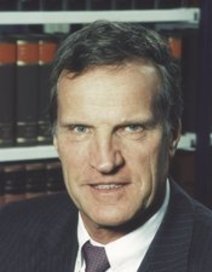 Frank Steglich合作论文数TU Dresden;Center for Correlated Matter, Zhejiang University;Max-Planck-Institute for Chemical Physics of Solids17
 Werner Tecklenburg合作论文数13Heidi Hastedt合作论文数12
 Maria Chizhova合作论文数11Folkmar Bethmann合作论文数11
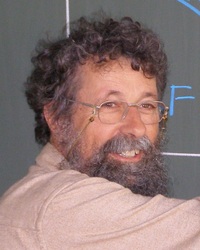 Geibel, Christoph合作论文数Max Planck Institute for Chemical Physics of Solids11
 Philipp Gegenwart合作论文数Max-Planck Institute for Chemical Physics of Solids10
 Denys Gorkovchuk合作论文数Kyiv National University of Construction and Architecture8
 Hans Gerd Maas合作论文数Institute of Photogrammetry and Remote Sensing, Department of Geosciences, Technische Universitat Dresden7
 Mona Hess合作论文数7
 Christian Jepping合作论文数6
 Oliver Kahmen合作论文数6
 Paul Kalinowski合作论文数6
 Niklas Conen合作论文数Jade Univ Appl Sci, Inst Appl Photogrammetry & Geoinformat, Ofener Str 16-19, D-26121 Oldenburg, Germany6
 Stuart Robson合作论文数Department of Civil, Environmental and Geomatic Engineering, Faculty of Engineering Sciences, University College London6S. Nietiedt合作论文数5Simon Nietiedt合作论文数5
 Apostolos Langidis合作论文数5
 Tom T. B. Wester合作论文数5
 Stephen Kyle合作论文数Department of Civil, Environmental and Geomatic Engineering, Faculty of Engineering Sciences, University College London5Mathias Richter合作论文数Physikalisch-Technische Bundesanstalt5Peter Zimmermann合作论文数5Darius Popovas合作论文数5j piechel合作论文数4M. Lang合作论文数4Ch. Gerth合作论文数4
 Dirk Rieke-Zapp合作论文数Universität Bern Institut für Geologie4Heribert Wilhelm合作论文数4M. Groen合作论文数3Julia Gorkovchuk合作论文数3
 Lars Kroger合作论文数3Martina Goering合作论文数3
 Jean Louis Tholence合作论文数3T. Ekkel合作论文数3M. Weiden合作论文数3P.H.P. Reinders合作论文数3Tamara Radu合作论文数3
 Carley Paulsen合作论文数CNRS3
 Fabio Remondino合作论文数3D Optical Metrology Research Unit, FBK Trento3Christina Schank合作论文数3
 Joachim Peinke合作论文数Institut fur Physik;Carl-von-Ossietzky Universitat Oldenburg;Institut fur Physik, Carl-von-Ossietzky Universitat Oldenburg3S. Takahashi合作论文数2Heinrich Wigger合作论文数2S. Pane合作论文数2J Beuthan合作论文数2F. Menna合作论文数2
 Heinz-Jurgen Przybilla合作论文数2




