Introductory college chemistry courses are required by a wide range of science curricula. This fact has tended to frame the courses as places where core, fundamental ideas are taught, so that a foundation of knowledge might be called upon by students when they are in subsequent courses. Unfortunately, the preponderance of compartmentalized fundamental topics bolsters learning that has challenges in terms of transfer of knowledge to other science settings. One method that has been proposed to help alleviate this concern is to incorporate systems thinking and rich contexts that directly connect foundational chemistry ideas to larger systems. One area that shows strong potential for such efforts is the science of pharmaceuticals. Adding examples related to the chemistry of drugs, both within the large lecture setting of general chemistry and within smaller discussion groups. The role of example problems, student writing projects and group construction of systems thinking related visualizations of the context of pharmaceutical chemistry are reported.
A key challenge for students in science classrooms is learning how to use multiple external representations (MERs) properly; when the information depicted by a representation is misunderstood, or understood correctly but misapplied, students can make improper conclusions and predictions when problem-solving. To better understand students' rationale when interacting with MERs, 16 chemistry and geology undergraduates from a large public research university in the midwestern United States completed a card sorting activity. The activity asked each student a set of discipline-specific questions. For each question, they were given a set of 15 note cards depicting different representations and asked to select any pertinent representations for the question. As representations were selected, participants explained aloud their rationale for each. A mixed-methods analysis of the activity revealed that participants from each discipline used a standard set of five reasons for using representations: recall, visual, discipline-specific knowledge, pairing-up, and compare-and-contrast. Descriptions of each reason, along with how their usage compared between chemistry and geology students, are shared. The results from these activities suggest improvements that can be made to the assessment of students' knowledge of MERs.
Abstract The editorial team of the Journal of Chemical Education has begun to grow as the number of submitted manuscripts and published articles have grown. This editorial takes a look at the team in place for 2025 as a way to consider the editorial process for authors and their manuscripts.
The editorial team of the Journal of Chemical Education regularly considers the suite of manuscript types available for authors who are interested in publishing in the Journal. Therefore, changes occur occasionally to the available manuscript types. As the year 2025 gets started, there are two new manuscript types available, Tutorial and Perspective manuscripts. This editorial introduces these new options and includes the initial author guidelines.
Technological tools, like virtual assistants (aka chatbots), have been ubiquitous in people's day to day. The challenge becomes how educators leverage digital omnipresence to benefit the learning environment. Using a curated chatbot allows educators to reach more students with instructor-approved information, particularly in large classrooms. Students can receive direct responses and guidance toward course materials, and educators may have less to manage by automating routine queries to a chatbot. Data from the 293 collected logs from 232 unique student users provide insight into the information students are interested in when tasked to complete an essay assignment contextualizing chemistry through a sustainability lens. Using process mining to show how students seek information, 5185 events were extracted from the logs which created 204 unique pathways from students' actions in the curated chatbot. Additional text mining was done on the 116 freeform queries students typed into the curated chatbot. Results from both analyses showed that students were primarily sought information on the sustainability context of the writing assignment in their queries and that the curated chatbot can provide personalized assistance, responding to students' unique pathways of seeking help. A selection of subsets of student users' chatbot interactions, limitations of the study, and extension of the curated chatbot use in other classroom tasks and settings were discussed.
Open educational resources (OER), identified as such, began to emerge early in the 21st century. The impact of these resources might best be described as mixed, with notable success in some locations and very little awareness of the existence of these resources in others. Journals that focus on the dissemination of educational innovation may find themselves in unusual quandaries, such as publishing articles about OER that end up behind a paywall for some who may be interested in the information. At the same time, articles about educational resources, such as laboratory exercises published in the Journal of Chemical Education, have been a source of information for many years. The Journal has put together a collection of articles that highlights aspects of OER in chemistry to help elucidate, and perhaps raise awareness, of the concept of this movement in education in terms of chemistry education.
Highlighting the number of ways that chemical education has thrived with publication in the Journal of Chemical Education outpaced the available space in the 100th volume celebration, published in 2023. Thus, one key aspect of learning chemistry, outreach about the nature and applications of chemistry, remains to be highlighted now, in the 101st volume. The creativity and innovation of chemistry educators in devising and staging such outreach is as enduring as any subfield of chemistry. A new collection of over 50 articles from the past century (plus one year) has been gathered and posted here (https://pubs.acs.org/page/jceda8/vi/outreach2024) as a look at the evolution of outreach efforts in chemical education.
Over time there have been occasional gatherings of intentionally broad sets of stakeholders to discuss the state of Chemistry Education and contemplate a future course for the field. The American Chemical Society has resources and networks that have been leveraged quite often in the planning of such events, and a recent meeting sought to "Empower Tomorrow's Chemistry Innovators". This gathering focused on issues of sustainability and the role of Green Chemistry in helping achieve it. Considering this summit in light of the history of such efforts over time is contemplated here.
The emergence of generative artificial intelligence has precipitated a wide range of predictions for its impact on science and the teaching and learning of science. Chemists and chemistry educators have been exploring the possibilities of this new technology, essentially as soon as it was broadly released for use. Because this technology is rapidly developing, the insights that can be gained from the work of early adopters and investigators can play a particularly important role in shaping the future of how chemistry education adapts to, and perhaps embraces, this new technology. This Special Issue provides a snapshot at this relatively early moment in the evolution of this technology for use in teaching and learning chemistry. The interplay between technology development and implementation in the classroom will always be important, but seldom more so than in the early stages of work. The set of articles presented in this Special Issue (https://pubs.acs.org/page/jceda8/vi/genai2024) shows a robust range of options for use, and potentially for misuse, and can help guide those interested in finding ways to enhance the emerging learning opportunities afforded by this new tool.
April is the month when the American Chemical Society's Chemists Celebrate Earth Week (CCEW) activities are held, and for 2024, the theme is "Get a Charge out of Chemistry". The core chemistry associated with the theme is batteries and their role in sustainability. Electrochemistry and batteries have presented challenges for student learning for many years, so perhaps this year's emphasis on the topic will bring renewed energy into finding ways to help students gain understanding of the topic.
In the field of education, ChatGPT has become a topic of debate for its usefulness as a learning tool. This article focuses on non-science majors' (n = 29) perceptions of a ChatGPT enabled final exam, where, prior to the exam, students wrote papers on science and sustainability and, during the final exam, students were asked to compare their paper to one produced on the same topic by ChatGPT. Thus, the underlying chemistry, its broader impacts, and connection to sustainability and writing styles were compared. Students' perceptions were analyzed through a developed coding framework that enabled the visualization of emerging themes. The most common themes revealed that students believed the ChatGPT essay did not read as "human-like", used more intricate words, and often did not include enough science to support its arguments. Students also noted that their essays provided more chemistry details and were easier to read as they focused on connecting chemistry concepts to their essay topic as well as sustainable policies and practices. Students were impressed, however, by ChatGPT's ability to discuss various sustainability solutions, policies, and practices. The final exam inspired self-reflection for the students to improve not only their writing but also their analysis of sustainability responses. Overall, students rated the comparative activity as a final exam to be favorable and remarked on the importance of analyzing AI generated work for the future of learning.
The place of chemistry as a central science naturally leads to intersections with other scientific disciplines. One quite prominent sister science is biology, where the role of chemistry is most often expressed through biochemical impacts. This connection has been recognized both early and often in the history of the Journal of Chemical Education, as compactly summarized in a virtual issue of articles published in the Journal highlighting 100 years of the efforts of educators who teach biochemical content to students in chemistry courses.
The Journal of Chemical Education announces a call for papers for an upcoming virtual special issue on studies about the emerging applications of generative artificial intelligence (AI). Predictions abound about the expected impacts of this new technology, and as increasing numbers of chemistry educators consider ways to incorporate it in their classrooms, the need for scholarly investigations grows. The virtual special issue will collect reports on such work and seek to establish early baselines of understanding the potential presented by tools such as ChatGPT and others. The timing for the collection's release is designed to gather information by August 2024 to help instructors contemplating use of these tools by the start of the 2024-2025 academic year in North America.
In a technology-centric world, leveraging digital tools such as chatbots allows educators to engage students in ways that may be more accessible for both parties, particularly in large lecture classrooms. This report details the development of an interactive web-based chatbot to curate content for writing about chemistry in context. Students were assigned a 500-word paper where they discuss general chemistry concepts through the lens of a timely, sustainability-related topic, i.e., water footprint, carbon footprint, or embodied carbon. Discussed herein are the development of the decision tree, the chatbot's components, and results from the initial implementation in a large lecture general chemistry classroom. Over 78% of the 347 enrolled students (271) used the chatbot over 350 times in the 3 weeks leading up to the assigned due date of the paper. Eighty-three percent of the interactions were captured for further analysis, which showed that 22% of students used the chatbot more than once. Forty-six percent of recorded interactions were used to aid students in developing or refining their idea for the assignment. The curated chatbot technology reported here for writing assignments in chemistry can be readily adapted to other aspects of coursework in chemistry.
Chemical Education Research (CER) is perhaps the most recent addition to the corpus of educational innovation within the teaching and learning of chemistry. Nonetheless, the richness and diversity of the scholarly work within CER has blossomed impressively in the (relatively speaking) short time it has been part of the larger chemistry education enterprise. While setting the stage in historical context, the areas of emphasis captured in a new Virtual Issue about the publication of CER articles in the Journal over the past 100 volumes are summarized.
The ingenuity of chemistry educators in addressing the needs of students of chemistry since the emergence of SARS-CoV-2 has been quite remarkable. The Journal of Chemical Education has endeavored to provide a platform for communication of the efforts that have emerged in the chemistry education community in response to the pandemic. This editorial describes a new phase of these efforts, the collection of the first Virtual Special Issue of the Journal consisting of articles related to efforts to understand the impact of COVID-19 and the responses of the community on chemistry education. A link to the VSI can be found here: https://pubs.acs.org/page/jceda8/vi/teaching-after- covid?ref=vi_collection.
Articles in the virtual issue about teaching and learning chemistry in high school that have appeared in the Journal over the past 100 volumes are summarized. The role of the Journal in fostering discussion of the chemistry content that comprises the high school curriculum is noted, along with changes in pedagogical approaches that have emerged over the years. Several specific articles serve as examples within this editorial, and the entire virtual issue can be accessed at this link: https://pubs.acs.org/page/jceda8/vi/JCE100yr-HSC.
The arrival of the Journal at a milestone of publishing its 100th volume presents the opportunity to consider how it has helped shape and document the historical development of the teaching and learning of chemistry. A series of Virtual Issues (VIs) will be curated throughout the year to explore both archival and current articles describing educational innovation over the past century. The first such VI on the topic of teaching and learning analytical chemistry is described as a template for this project celebrating the 100th year of the Journal of Chemical Education.
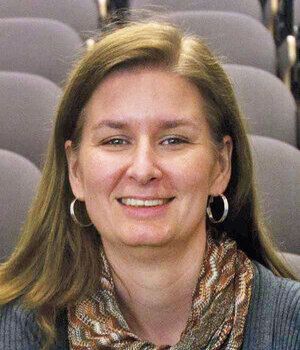 Kristen Murphy合作论文数Department of Chemistry and Biochemistry, College of Letters & Science, University of Wisconsin-Milwaukee43
 Jeffrey R. Raker合作论文数22
 Mary Emenike合作论文数Dept Chem & Chem Biol, Rutgers State Univ13
 Jessica Reed合作论文数Dept Chem & Biochem, Univ Wisconsin12
 Cynthia J. Luxford合作论文数Dept Chem & Biochem, Texas State Univ11
 Peter Mahaffy合作论文数8
 Jack D. Polifka合作论文数7
 John S. Hutchinson合作论文数Department of Chemistry, Wiess School of Natural Sciences, Rice University7
 Kimberly Linenberger Cortes合作论文数Department of Chemistry and Biochemistry, Kennesaw State University6
 Karen Knaus合作论文数Dept Chem, Univ Colorado6
 Megan Grunert Kowalske合作论文数Dept Chem, Western Michigan Univ6John Picione合作论文数6
 Marcy Towns合作论文数Department of Chemistry, College of Science, Purdue University6Christopher F. Bauer合作论文数Department of Chemistry, University of New Hampshire6Alexandra Brandriet合作论文数5Stephen Matlin合作论文数5
 Melanie M. Cooper合作论文数Department of Chemistry, College of Natural Science, Michigan State University;CREATE for STEM Institute, Michigan State University5
 John Baluyut合作论文数4jacob schroeder合作论文数4Heather Caruthers合作论文数4Jiwoo An合作论文数4
 Jaclyn Trate合作论文数4Anna Prisacari合作论文数Human-Computer Interaction Program, Iowa State University4Ashley Versprille合作论文数3
 Annabelle Lolinco合作论文数Department of Chemistry, Iowa State University3
 Raphael D Levine合作论文数Institute of Chemistry, The Hebrew University of Jerusalem;Fritz Haber Center for Molecular Dynamics, The Hebrew University of Jerusalem;David Geffen School of Medicine, University of California Los Angeles3Lallie C. Mckenzie合作论文数3Brian Martin合作论文数3Ron Stevens合作论文数2Chamila Chandima De Silva合作论文数2Sandra Raysor合作论文数2Christina Kindle合作论文数2
 Elizabeth Yuriev合作论文数2
 Laila-Parvin Poly合作论文数Microelect Res Ctr, Iowa State Univ2Allie Brandriet合作论文数2
 Pratibha Varma-Nelson合作论文数School of Science, Indiana University Indianapolis;STEM Education Innovation and Research Institute, Indiana University-Purdue University Indianapolis2
 Jaclyn J. Stewart合作论文数Department of Chemistry, Faculty of Science, The University of British Columbia2
 Kenneth R. Koedinger合作论文数Human-Computer Interaction Institute, School of Computer Science, Carnegie Mellon University;Carnegie Learning, Inc.2
 Donald Wink合作论文数Department of Chemistry, University of Illinois at Chicago2
 Jonathan Sewall合作论文数Human-Computer Interaction Institute, Carnegie Mellon University, Pittsburgh, PA2
 Mary Kirchhoff合作论文数American Chemical Society2Jerry L. Sarquis合作论文数2
 Joseph Marc Whalen合作论文数2
 Pamela L Paek合作论文数2
 Cinzia Cervato合作论文数Iowa State University2
 Norbert J. Pienta合作论文数The University2
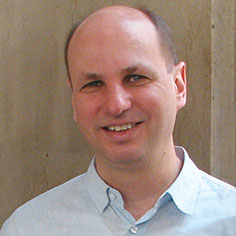 David Yaron合作论文数Department of Chemistry, Mellon College of Science, Carnegie Mellon University2
 Jennifer MacKellar合作论文数2April Zenisky合作论文数Center for Educational Assessment, University of Massachusetts Amherst2




