This report illustrates, through computer animation and a paper model, why there are changes on the ice sheet that covers the Antarctica continent. By studying the animations and the paper model, students will better understand the evolution of the Antarctic ice sheet. Included in the paper and diskette versions of this report are templates for making a paper-model, instructions for its assembly, and a discussion of development of the Antarctic ice sheet. In addition, the diskette version includes a animation of how Antarctica and its ice cover changes through time. Many people provided help and encouragement in the development of this HyperCard stack, particularly Page Mosier, Sue Priest and Art Ford. This report was enhanced by reviews from Bonnie Murchey, Peter Stauffer and Stephen Eittreim.
This report illustrates, through computer animations and paper models, why sand dunes can develop different forms.By studying the animations and the paper models, students will better understand the evolution of sand dunes, Included in the paper and diskette versions of this report are templates for making a paper models, instructions for there assembly, and a discussion of development of different forms of sand dunes.In addition, the diskette version includes animations of how different sand dunes develop.
This report is preliminary and has not been reviewed for conformity with U.S. Geological Survey editorial standards. Any use of trade, firm, or product names is for descriptive purposes only and does not imply endorsement by the U.S. Government. Although this program has been used by the U.S. Geological Survey, no warranty, expressed or implied, is made by the USGS as to the accuracy and functioning of the program and related program material, nor shall the fact of distribution constitute any such warranty, and no responsibility is assumed by the USGS in connection therewith. o (go backward) < I l> (go forward) This report illustrates, by means of computer animations and a paper model, how a subduction zone works. By studying the animations and the paper model, students will better understand the processes that operate at converging margins between tectonic plates and how ocean trenches and the volcanoes associated with them are developed. Included in the paper and diskette versions of this report are templates for making the paper model, instructions for its assembly, a discussion of the lithosphere, asthenosphere, earth's plates, plate boundaries, and only in the diskette version, animations of sea-floor spreading. Many people provided help and encouragement in the development of this HyperCard stack, particularly Art Ford and Tracy Vallier. Table of Contents for paper version of this report. Title page page 1 Description of report page 2 Teachers guide page 4 Paper models page 22 (go backvand)
In the diskette version (HyperCard stack) additional information can be viewed by clicking on an asterisk (*) or bold type.This report shows, by means of a computer animation and paper models, how deltas are affected by fresh and salt water currents, topography and location.The report is intended to help students and others visualize how ice shapes and forms a delta.By studying the animations and the paper models, students will come to understand why deltas have different shapes and different interior structures.The diskette version has an animation of arctic delta processes.While both the diskette and paper versions have teacher guide and paper models.
This report illustrates, by means of computer animations and paper models, how two organisms, a trilobite and a nautiloid, became fossils.The report is intended to help students and others visualize the size and shape of a trilobite and a nautiloid, the environment in which they lived, and the circumstances of their fossiUzation and subsequent discovery.By studying the animations and the paper models, students will come to understand why fossils are important in interpreting the Earth's history.Included in the diskette version of this report are templates for making the paper models, and instructions for their assembly, a discussion of fossils, and animations of trilobite and nautiloid locomotion and habitats.The animation is accompanied by sound.If no sound is heard, change the memory of HyperCard, to 4500K, and ensure that the control panel "Sound", which is in the "Control Panels" folder under the "Apple" menu, has the volume set to at least 2. To change the memory available to HyperCard quit this stack.Highlight the HyperCard, program icon and choose "Get Info" from the File Menu.Change the "memory requirements" to 4500K and start this stack again.
This report contains instructions and a pattern for making a three-dimensional paper model of a volcano.This model is intended to help students and others to visualize a stratovolcano (inside and out) and to learn some of the terms used by geologists in describing it.By constructing and examining the model, students will obtain a greater appreciation of the relationship between the internal structure of the volcano and its exterior shape and features.This exercise may give the student an insight as to how a stratovolcano is formed.Included in this report are the paper model, instructions for assembly, educators' guide, and a simple description of volcanoes. Purchasers of the diskette version of this report, which includes all of the text and graphics, can use HyperCard 2.0 software (not supplied) to change the model (by adding geologic patterns, symbols, colors, etc.) or to transfer the model to other graphics software packages.
 j m morley合作论文数9marybeth gerin合作论文数6David W. Scholl合作论文数6w a austin合作论文数5gary b lewis合作论文数4
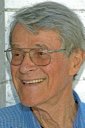 James Moore合作论文数United States Geological Survey3john p galloway合作论文数2scott w starratt合作论文数2MS MARLOW合作论文数2Buffingt.Ec合作论文数2Michael S. Marlow合作论文数2Robert a Page合作论文数2Tracy L. Vallier合作论文数2David G. Howell合作论文数2Christine Mclelland合作论文数2Edwin C. Buffington合作论文数2John C. Lahr合作论文数2Erk Reimnitz合作论文数2s l eittreim合作论文数1f f h wang合作论文数1Roy A. Bailey合作论文数1William R. Normark合作论文数1j c lahr合作论文数1james w hendley合作论文数1Christina E. Gutmacher合作论文数1J.V. Byrne合作论文数1Gordon R. Hess合作论文数1R.E. Boyce合作论文数1Paul R. Carlson合作论文数1
 Bruce Richmond合作论文数U.S. Geological Survey1David M Hopkins合作论文数1C. E. Gutmacher合作论文数1Curt D. Peterson合作论文数1P. W. Barnes合作论文数1C.J. Shipek合作论文数1V.E. McKelvey合作论文数1Alan K. Cooper合作论文数1
 C. Hans Nelson合作论文数1Ralph E. Hunter合作论文数1John R. Dingler合作论文数1Robert E. Winter合作论文数1




