Forty families were selected to represent the range of typical American families in size, race, and socioeconomic status. In data from 2 1/2 years of once-monthly, hour-long observations of unstructured parent-child interactions in the home, parenting was examined over 27 months, including the time before, during, and after all the children learned to talk
Although public health care systems often depend on revenue generated from client payment for services, inadequate agency fee payment systems continue to create substantial administrative problems. The first study examined the effects of implementing a system for producing and maintaining routine client fee payment. The second study was a replication of the first study. The Credit Criterion System was designed to: (a) allow clients to establish intra-agency credit by paying cash for each of the first three visits; and (b) pay for services monthly after credit was established. The system resulted in a baseline collection rate of 20%, compared with the Credit Criterion rate of 96.6%. The Credit Criterion System did not create additional administrative costs and it had no effect on attendance. Thus, the Credit Criterion System appears to be a reasonable set of procedures for allowing clients to meet their financial obligations to an agency.
Tachograph recorders were installed in 224 vehicles of a metropolitan police department to monitor vehicle operation in an attempt to reduce the rate of accidents. Police sergeants reviewed each tachograph chart and provided feedback to officers regarding their driving performance. Reliability checks and additional feedback procedures were implemented so that upper level supervisors monitored and controlled the performance of field sergeants. The tachograph intervention and components of the feedback system nearly eliminated personal injury accidents and sharply reduced accidents caused by officer negligence. A cost-benefit analysis revealed that the savings in vehicle repair and injury claims outweighed the equipment and operating costs.
After observing the lack of generalization of language trained in highly structured training sessions using established behavior modification techniques, "incidental teaching" procedures were developed to change the use of specified language behaviors in the natural environment. This paper reports an analysis of the general changes in the language, other than that specifically targeted by the incidental teaching procedures, used by disadvantaged preschool children. The daily language samples of disadvantaged children involved in a previously reported experiment to increase compound sentence usage were reexamined and compared to comparable records of other disadvantaged children and of middle-class children of college parents in order to assess possible general effects of the intervention program. Whereas the language that both groups of comparison children used changed little across the preschool year, the amount of talking by the children in the experimental program increased markedly. Their use of more elaborate vocabulary and more elaborate sentences also increased in direct proportion to the increases in overall language use, such that both language use and language elaboration in the experimental group of children changed from a pattern simlar to the comparison group of disadvantaged children to a pattern similar to the comparison group of middleclass children. It is argued that some general features of the incidental teaching procedure--differentially attending to child overtures and responding relative to the child's selected topic (reinforcer)--contributed to the increase in overall language use beyond the specific language behavior targeted, and that this increase in the probability of children's talking itself resulted in the substantial increases in elaboration seen in the children's spontaneous language. Because, at least in children with fairly well-developed language repertoires, language use is contextually controlled, talking more involves talking in more varied and complex contexts, which inevitably produces the use of more elaborate language.
Program evaluation can provide objective information relevant to decisions on program maintenance. A program to address problems in the preparation of criminal investigation reports in a metropolitan police department was evaluated. The program permanently altered environmental conditions under which reports were prepared to facilitate performance. Police officers, who had previously prepared reports without assistance, visited the Case Preparation Room to prepare reports with assistance from office personnel. Compared to reports prepared without assistance, reports prepared in the Case Preparation Room documented more case elements required by the state legal code for criminal prosecution, were completed in fewer days following arrests, and received higher ratings from Assistant District Attorneys. Operation of a permanent program available to approximately 945 officers proved a practical solution to improving the preparation of criminal investigation reports.
To determine whether tutoring might be academically beneficial to the tutor, this study investigated the acquisition of spelling words by three elementary students in a peer tutoring program. The experimental design allowed a simultaneous comparison of each child's gain in performance on comparable word lists on which the child tutored another child, was tutored by another child, or neither gave nor received tutoring. The children's spelling improved nearly an equivalent amount on those words on which they tutored another child as on the words on which they were tutored; no such change was noted on the words on which they neither gave nor received tutoring. These findings, that peer tutoring is profitable for the tutor as well as the tutee, provide a basis for recommending peer tutoring as one method of individualizing education.
THIS ARTICLE REPORTS ON THE PRIMARY STEPS IN THE DEVELOPMENT OF PARENT ADVICE FOR POPULAR DISSEMINATION: (a) developing advice for one specific problem situation, family shopping trips; (b) testing the advice program for benefit to children and convenience to adults; and (c) packaging the advice so it can be used successfully by interested parents. Systematic observation of 12 families using the written advice package on shopping trips revealed its effectiveness in reducing child disruptions and increasing positive interactions between parents and children. These findings, along with interview information from families, showed that the package is usable, effective, and popular with both parents and children, and thus is ready for dissemination to a wide audience of parents-a step that in itself should involve research and evaluation.
Behavioral measures of food consumption and tasting were combined with nutrient analysis of foods served at a toddler day-care center to determine whether children at the stage of initial exposure to adult diets would accept textured vegetable protein (TVP) and nonfat dry milk as well as they ate other sources of protein and calcium. Main dishes were prepared alternately with TVP, meat, or neither; others were prepared with or without nonfat dry milk. The variation in ingredients appeared not to affect the amount children ate, the percentage sampling the foods, or the percentage eating half a portion or more. Dishes made with TVP increased protein intake comparable to the amount obtained with meat supplements, and calcium intake increased with nonfat dry-milk supplements. In light of these findings, it appears that TVP and nonfat dry-milk are practical alternative sources of protein and calcium in menus for young children.
This study focused on whether toddlers' and preschoolers' consumption of milk is affected by its butterfat content, the temperature at which it is served or the children's familiarity with the type of milk served. A group of 36 toddlers attending a day care center and a group of 16 preschoolers at another center were served whole, low fat, liquid nonfat and reconstituted nonfat dry milk, the last at room temperature and chilled; and the amounts consumed were recorded. In neither group was there a significant difference in the amounts consumed across all types and temperatures, and none of the children showed a systematic preference for the milk type commonly served at home. On the basis of these results it appears that the serving of lowfat milk to young children can be considered without fear of decreasing milk consumption.
Shoplifting is one of the most frequent crimes in the United States, yet there is no agreement about effective prevention procedures. Since most prevention strategies are aimed at either increasing public awareness of the severity of the consequences or increasing the threat of detection, procedures that contain these elements were evaluated. Posting signs around a department of a department store pointing out that shoplifting is a crime, etc., partially reduced shoplifting rates. When merchandise that was frequently taken was identified by signs and stars, shoplifting decreased to near zero. Publicity campaigns to inform the public of consequences for shoplifting may produce desirable results, but identifying likely shoplifting targets, which may increase the likelihood of detection, effectively reduces shoplifting rates.
Since a major task of childhood is learning to get along in a group without disrupting other children's activities, caregivers need explicit guidelines for gentle but effective procedures for dealing with disruptive behaviors in child-care settings. In a day-care center for normal 1- and 2-yr.-old children, an effort was made to develop a procedure that appeared sufficiently humane and educational to be acceptable to parents and day-care workers, and yet effective in reducing disruptive play behaviors. Caregivers used the occasion of disruptive behavior to instruct the child in appropriate alternatives, then had the child sit on the periphery and observe the appropriate social behavior of the other children "sit and watch", for a brief period before inviting him or her to rejoin the play activities. The effectiveness of this procedure was compared with a method commonly recommended for the use with young children: instructing the child, then distracting or redirecting the child to an alternative toy or activity. Contingent observation, combining instruction with a brief timeout (from being a participant in an activity to becoming an observer of the activity), proved considerably more effective in maintaining low levels of disruptions and was considered by caregivers and parents to be an appropriate and socially acceptable method of dealing with young children's disruptive behaviors. Therefore, contingent observation can be recommended for general use in day-care programs for young children.
Journal of Applied Behavior AnalysisVolume 8, Issue 2 p. 230-230 MEASURING URBAN PROBLEMS: A BRIEF REPORT ON RATING GRASS COVERAGE1 Edward R. Christophersen, Edward R. Christophersen LIVING ENVIRONMENTS GROUP DEPARTMENT OF HUMAN DEVELOPMENT THE UNIVERSITY OF KANSAS LAWRENCE, KANSAS 66045Search for more papers by this authorLarry A. Doke, Larry A. Doke NOW CLINICAL DIRECTOR, CHILDREN AND YOUTH SERVICES, MOCCASIN BEND PSYCHIATRIC HOSPITAL, CHATTANOOGA, TENNESSEE 37405. LIVING ENVIRONMENTS GROUP DEPARTMENT OF HUMAN DEVELOPMENT THE UNIVERSITY OF KANSAS LAWRENCE, KANSAS 66045Search for more papers by this authorDonald O. Messmer, Donald O. Messmer LIVING ENVIRONMENTS GROUP DEPARTMENT OF HUMAN DEVELOPMENT THE UNIVERSITY OF KANSAS LAWRENCE, KANSAS 66045Search for more papers by this authorTodd R. Risley, Todd R. Risley LIVING ENVIRONMENTS GROUP DEPARTMENT OF HUMAN DEVELOPMENT THE UNIVERSITY OF KANSAS LAWRENCE, KANSAS 66045Search for more papers by this author Edward R. Christophersen, Edward R. Christophersen LIVING ENVIRONMENTS GROUP DEPARTMENT OF HUMAN DEVELOPMENT THE UNIVERSITY OF KANSAS LAWRENCE, KANSAS 66045Search for more papers by this authorLarry A. Doke, Larry A. Doke NOW CLINICAL DIRECTOR, CHILDREN AND YOUTH SERVICES, MOCCASIN BEND PSYCHIATRIC HOSPITAL, CHATTANOOGA, TENNESSEE 37405. LIVING ENVIRONMENTS GROUP DEPARTMENT OF HUMAN DEVELOPMENT THE UNIVERSITY OF KANSAS LAWRENCE, KANSAS 66045Search for more papers by this authorDonald O. Messmer, Donald O. Messmer LIVING ENVIRONMENTS GROUP DEPARTMENT OF HUMAN DEVELOPMENT THE UNIVERSITY OF KANSAS LAWRENCE, KANSAS 66045Search for more papers by this authorTodd R. Risley, Todd R. Risley LIVING ENVIRONMENTS GROUP DEPARTMENT OF HUMAN DEVELOPMENT THE UNIVERSITY OF KANSAS LAWRENCE, KANSAS 66045Search for more papers by this author First published: Summer 1975 https://doi.org/10.1901/jaba.1975.8-230 † The full text of this manuscript is deposited with the National Auxiliary Publications Service (NAPS). For copies, order NAPS Document #02524. Order from ASIS/NAPS Co., c/o Microfiche Publications, 440 Park Avenue South, New York, New York 10016. Remit with order for each copy $1.50 for microfiche or $5.00 for photocopies. Make checks payable to Microfiche Publications. Preparation of this paper was partially supported by the Department of Health, Education and Welfare grant MH-18542-03 to the Bureau of Child Research and the Department of Human Development at the University of Kansas. The package of instructions for observers is available from The Living Environments Group, c/o Todd R. Risley, Department of Human Development, The University of Kansas, Lawrence, Kansas 66045. AboutPDF ToolsRequest permissionExport citationAdd to favoritesTrack citation ShareShare Give accessShare full text accessShare full-text accessPlease review our Terms and Conditions of Use and check box below to share full-text version of article.I have read and accept the Wiley Online Library Terms and Conditions of UseShareable LinkUse the link below to share a full-text version of this article with your friends and colleagues. Learn more.Copy URL Share a linkShare onFacebookTwitterLinkedInRedditWechat No abstract is available for this article. Volume8, Issue2Summer 1975Pages 230-230 RelatedInformation
"Incidental teaching" denotes a process whereby language skills of labelling and describing are learned in naturally occurring adult-child interactions. In the present study, 15-min daily samples of the spontaneous speech of 11 children were recorded during free play over eight months of preschool. After incidental teaching of compound sentences, increases in unprompted use of compound sentences were seen for all the children, first directed to teachers, and then to children, in accordance with who attended to the children's requests for play materials. The incidental teaching procedure also stimulated spontaneous variety in speech, and appears to have general applicability to child learning settings.
Group care settings for dependent people must be organized to facilitate delivery of responsive care and to prevent inadvertant neglect or deliberate abuse. Accordingly, in an infant and a toddler day-care center, an open environment was examined as a means to increase the visibility of children to staff and of staff-child interactions to the supervisor, and to investigate potential adverse effects of the open environment on infants' and toddlers' activities. These studies demonstrated that: (1) an open environment markedly decreased the amount of time a child could not be seen by any adult and the amount of time staff members' activities were not visible to the supervisor, and markedly reduced the effort required to supervise those who were not immediately visible; (2) an open environment did not adversely affect the sleep of either infants or toddlers; and (3) an open environment is as conducive to small group pre-academic activities with toddlers as is a separate room. These studies convinced us that infant and toddler day care can and should be accomplished in an open environment.
In most federal job training and employment programs, trainees' pay is not contingent on job performance, but upon physical presence. This study sought to increase the job performance of seven Neighborhood Youth Corps workers being paid an hourly wage for serving as aides in an urban recreation program. When thorough job descriptions and threatened termination of employment were insufficient to maintain adequate job performance, an attempt was made to make the hourly wage (required by the Neighborhood Youth Corps program) more contingent on job performance. When the number of hours credited the workers on their payroll sheets was proportional to their rating on a simple checklist of job performance, rather than to the number of hours they were present, their job performance was maintained at near-perfect levels. Although this simple semantic shift in emphasis-from "hours worked" to "hours worked"-was still interpreted as meeting the Neighborhood Youth Corps requirements for hourly pay, its behavioral effects were substantial. This simple procedure might be used in other training programs handicapped by hourly wage requirements.
In urban high-density areas, litter has become an increasingly obvious and pervasive problem. In the present study, repeated measures of the amount of litter on randomly selected yards in an urban low-income housing project were used to evaluate the effectiveness of a series of anti-litter procedures directed at the children residing in the project. Paying children for volume of trash collected resulted in only a small decrease in the number of litter pieces present. Paying them for cleaning assigned yards markedly decreased the level of litter in all sampled yards. Thus, children can be employed to maintain a clean neighborhood in spite of the rapid accumulation of new litter in urban yards.
 B Hart合作论文数6AF CARR合作论文数3John F. Schnelle合作论文数3L. D. Larson合作论文数3Emily Herbert-Jackson合作论文数3RE KIRCHNER合作论文数2Hb Clark合作论文数2
 John F. Schnelle合作论文数Vanderbilt University School of Medicine;Center for Quality Aging, Vanderbilt University Medical Center2Sandra Twardosz合作论文数University of Kansas2
 Patrick Mcnees合作论文数School of Nursing, University of Alabama at Birmingham2
 Charles H. Pierce合作论文数Royal Victoria Hospital, McGill University2
 Michael F. Cataldo合作论文数Department of Behavioral Psychology, Kennedy Krieger Institute;Department of Psychiatry and Behavioral Sciences, Johns Hopkins University School of Medicine;Kennedy Krieger Institute, Johns Hopkins University School of Medicine2B Traughber合作论文数1MZ CROSS合作论文数1
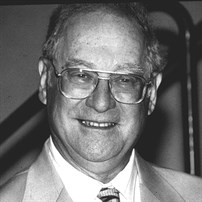 Donald M. Baer合作论文数Department of Applied Behavioral Sciences, University of Kansas1Brandon F Greene合作论文数1Michele Domash合作论文数1M. A. Domash合作论文数1Edward R. Christophersen合作论文数Southern Illinois U.1




