We take a fresh look at about 60 years of recommendations for US federal funding for astronomical and astrophysical facilities provided by seven survey committees at roughly 10-year intervals. It remains true that very roughly one third of the highest priority items were done with (mostly) federal funding within about 15 years of the reports; another third happened with (mostly) state, private, or international funding; and about a third never happened (and we might well not want them now). Some other very productive facilities were never quite recommended but entered the queue in other ways. We also take brief looks at the long-term achievements of the highest-priority facilities that were actually funded and built more or less as described in the decadal reports. We end with a very brief look at the gender balance of the various panels and committees and mention some broader issues that came to look important while we were collecting the primary data. A second paper will look at what sorts of institutions the panel and committee members have come from over the years.
John Bolton and Joseph Weber both attended residential colleges at very little cost to their families. Each honed his skills at electrical, electronic, and radio engineering in his nation’s Navy, served on an aircraft carrier during World War II, and went on to make major contributions to the development of a new way of looking at the Cosmos. In the late 1940s Bolton discovered the first discrete radio sources and showed that many are galaxies emitting prodigious amounts of energy at radio wavelengths. It marked the birth of extragalactic radio astronomy. In the late 1960s Weber built the first detector in an attempt to confirm the existence of gravitational waves, first predicted by General Relativity. Although the attempt failed, it led eventually to the successful detection of gravitational waves in 2015. This paper describes and compares the careers of Bolton and Weber.
Astrophysics is the branch of astronomy that employs the principles of physics and chemistry to ascertain the nature of the heavenly bodies, rather than their positions or motions in space. Among the objects studied are the Sun, other stars, galaxies, extrasolar planets, the interstellar medium and the cosmic microwave background. Astrophysics is a very broad subject; astrophysicists typically apply many disciplines of physics, including mechanics, electromagnetism, statistical mechanics, thermodynamics, quantum mechanics, relativity, nuclear and particle physics, and atomic and molecular physics. In the present book, fifteen typical literatures about Astrophysics published on international authoritative journals were selected to introduce the worldwide newest progress, which contains reviews or original researches on electrodynamics, astronomy, cosmology, ect. We hope this book can demonstrate advances in Astrophysics as well as give references to the researchers, students and other related people.
AbstractI have written elsewhere from a (mostly) celebratory point of view about early international astronomical projects. This version looks at some of the same projects, but from a less cheerful point of view.
Compact Stars and the Evolution of Binary Systems Stability of Relativistic Stars Black Hole Physics Stellar Dynamics Radiative Transfer Astrophysical Magnetohydrodynamics Black Holes in the Early Universe Cosmic Microwave Background Polarization Gravitational Waves Chandra X-ray Observatory A Historical Perspective Personal Reminiscences.
P UBLICATIONS OF THE A STRONOMICAL S OCIETY OF THE P ACIFIC , 121:433–435, 2009 April © 2009. The Astronomical Society of the Pacific. All rights reserved. Printed in U.S.A. Conference Highlights Star Formation from Spitzer (Lyman) to Spitzer (Space Telescope) and Beyond 1 NGC 6334 IV (MM3); and Nakajima, also on the Lupus 3 region). 2. Star Formation is Inefficient. Meaning that, if you look at a particular mass of cool, dense molecular gas, the fraction of it turned into stars in a dynamical time is typically a few percent (J. Silk), though larger values are possible in bound clouds (I. Bonnell), and very different numbers probably describe star formation in galaxies very unlike the Milky Way and at large z (E. Grebel). 3. Most Stars Form in Groups of 10–10 6 . Cluster envi- ronments can enhance disk accretion onto planetary cores (S. Pfalzner). Brown dwarfs are more spread out than stars (S. Schmeja), though, like the evidence for mass segregation as clusters age, this surely has some contribution from source confusion in dense centers. 4. There Is a Characteristic Product, a Log-Normal IMF, Peaking at 0:2–0:3 M ⊙ . Though this, too, could have been very different long ago and far away (Grebel). Also, low-mass stars are single (R. Jayawardhana on Cha I and Upper Sco, also pro- viding a candidate for the first directly-imaged exoplanet); in contrast to Herbig AeBe stars, most of which are binaries, their disks aligned with their orbit planes (R. Ooudmaijer). 5. Feedback Processes are Ubiquitous and Important. There are jets at all wavelengths (K. Stapelfeldt, on numerous new Herbig-Haro objects detected by Spitzer), the need for ongoing supernovae to keep star formation down to the observed 2% (J. Silk), and perhaps even massive star feedback to form clus- ters (J. Alves). 6. Stars Form with and from Accretion Disks Across the Full Mass Range from BDs to OBs. And there is a definite time sequence over which the disks disappear (I. Tsukugoshi, on T Tauri stars). There are also evolutionary sequences in maser type, radio emission, and SED shapes (R. Oudmaijer). Whole clusters also evolve (S. Schmeja) from hierarchical to centrally- condensed structures. 7. Nature Does Some “Prepackaging.” So that the distribu- tion of core masses, the CMF, has the same shape as the IMF (though shifted to larger masses), and must somehow give rise directly to the IMF (J. Alves). This was perhaps the topic of greatest dispute among the “certainties.” Several speakers asked whether the CMF predicts the IMF (R. Kawabe, reporting several AzTEC/ASTE surveys; R. Smith, noting that different methods yield different observed CMFs; P. Hennebelle, remark- ing on the range of relevant processes, with outflows, accretion, and turbulence of comparable importance; and S. Dib, suggest- ing that the transformation from CMF to IMF is a function of environment). I. Bonnell firmly denied a direct link between The confluence of the 400th anniversary of astronomical telescopes, the completion of the basic, cold, five-year mission of the Spitzer Space Telescope, and the near-certain advent of JWST, ALMA, and extremely large, ground-based telescopes seemed to invite a symposium to investigate the past, present, and future of star formation studies. While this summary attempts to mention everybody, with at least one significant idea from each speaker, including the one-minute poster presenta- tions, it will surely fail. The sessions were expertly chaired by L. Woltjer, C. Cesarsky (also involved in the ESO event), J. Andersen, and H.-M. Maitzen. The Symposium started with two historical introductions (V. Trimble & B. G. Elmegreen), addressing, first, the very long time required for astronomers all to agree, only after 1950, that star formation is an ongoing process, not something that happened long ago (whether 10 7 , 10 10 , or 10 12 years ago) when the universe was very different; and second, the vital roles of Lyman Spitzer and his immediate predecessors, colleagues, and students in establishing the exis- tence and properties of interstellar matter from which stars could form, and the processes that would allow them to do so. Remarkably, Spitzer was never interested in the idea of cold molecular hydrogen as the raw material of star formation, and came rather late to the idea of turbulence as an important process. We follow the “seven simplest lessons from 60 years of star formation,” as outlined by J. Alves, as a logical order to this summary, and invite you to keep an eye out for some of the topics of ongoing dispute, including: (a) whether the initial mass function (IMF) is universal, what determines it, and whether it is closely related to the mass distribution of dense cores in prestellar clouds (Core Mass Function, or CMF); (b) whether triggering is important; (c) whether massive stars form in the same way as ones that can remain below Eddington luminosity throughout the process; (d) environmental effects and the role of binaries; (e) how brown dwarfs form; and (f) how (in)efficient is star formation, and why. And so, on to the seven “certainties,” keeping in mind that Z is metallicity and z is redshift. 1. Stars Form Continually in the Cold Interiors of Dark Molecular Clouds (If You Doubt This, Please Leave the Room). Multiwavelength studies of specific regions persuaded us all to remain (I. Zinchenko, on S76E, with triggering by H II expan- sion; M. Rengel, on the second class 0 source in Lupus 3, indi- cating that these live for only 10 4 yr; P. Persi, on a new SF site, Conference was held in Vienna on 2008 September 10–12, and was part of the European Astronomical Society’s JENAM 2008.
I56 Correspondence Vol. I29 CORRESPONDENCE To the Editors of ‘The Observatory’ Astronomers Against the Tide I received a review copy, from another journal, of Against the Tide, edited by M. Lopez Corredoira and C. Castro Perelman, and would like to add some thoughts to those provided in Elizabeth Grifl-1n’s firm but balanced review which appeared in the February issue (129, 32), particularly concerning the astronomers represented. These are (in order through the volume) Wolfgang Kundt, H. C. (Chip) Arp, Tom van Flandernl, and editor Lopez Corredoira himself. All are at least acquaintances, of 5 to 45 years’ standing.What has each worked on that has resulted in near—exclu- sion from the main-stream astronomical community? Arp. More than 40 years of imaging of peculiar galaxies (many from his ownAtlas) showing QSOS, etc., nearby in the sky, often on opposite sides, which he has inter- preted as indicating that the QSOS were ejected from the galaxies and so are not at the distances indicated by their redshifts.Yes, I tried to talk him out of focussing on this in 196 5, when we shared time at Palomar in bad weather. I failed. I/an Flandern. For many years a staff member at the US Naval Observatory, where he concluded that his observations of Solar System kinematics implied a significant change in the value of G, which was not accepted or confirmed by others. More recently, he has put forward an ‘exploding planet’ hypothesis to interpret the dynam- ical evolution of the Solar System, which has fed into a charming Isaac Asimov story concerning Prof. Moriarty’s treatise On the Dynamics of an Asteroid. But this is not van Flandern’s fault! Lopez Corredoira. First, he was in a priority dispute on reasonably conventional observations and interpretations of the central-bar structure in the Milky Way, but also he was involved in quasar/QSO-like objects that he has imaged in the vicinity of nearby galaxies. Kundt. Unlike the others, primarily a theorist with a background in high-energy physics, but if there is a non—standard way of looking at anything — neutron stars, X-ray binaries, GRBS, AGNS, cosmic-ray acceleration, plate tectonics, Tunguska, evolution of the Earth’s atmosphere —Wolfgang has probably thought and written about it. What are they complaining about? Lack of access to astro-ph, not being allowed to make conference presentations, rude rejection letters from editors, insufficient or no observing time to make progress on their interpretations of various phenomena. What are my credentials for thinking about these issues? I am not an ‘authorized author’ allowed to post things on astro-ph. (Admittedly I have never asked.) Perhaps more important, I was married for more than 28 years to Joe Weber, the pioneer of gravitational—radiation—detection technology, who was ‘voted off the island’ of gener- ally accepted physics somewhere around our 5th anniversary. In truth, I disagree about the scientific issues (which Arp of the four explains most completely) on most or all of the topics addressed by the four astronomer—authors, but (as Voltaire did not say), I will defend their right to present their ideas, in posters if not in contributed talks, if not to the death, at least to the level of resigning from © The Observatory - Provided by the NASA Astrophysics Data System
Author(s): Trimble, V | Abstract: During the past 30 years, the astronomical literature has included orbits by Roger Griffin and colleagues for at least 297 single-lined and 97 double-lined spectroscopic binaries derived from data gathered wholly or partially with the Cambridge Radial Velocity Spectrometer and its close relatives. These systems have, on average, considerably longer periods than SB systems in other compilations and considerably smaller velocity amplitudes (except in comparison to samples of stars with planets), with medians near 700 days and 9.5 km s_1 for the SB1s and the extremes rising to several decades and falling to less than 2 km s-1. From these orbits, I here extract a distribution of mass ratios, using long-established but imperfect methods. A number of correction factors might be adopted: for over-representation of SB2s, observational selection against long periods, small amplitudes (especially when combined with large rotation speeds and/or near-equal brightness of the stars), large eccentricities, and very possibly other facts of life. Some combination of such corrections can undoubtedly produce whatever distribution your favourite models for binary-star formation predict; but the unvarnished graph does not look much like any such model.
The history of science can be recounted in many ways: by addressing the work of one person or school; by starting with the ancients and working chronologically up to the present; by focusing on a particular century; or by tracing a particular important idea as far back and forward as it can be found. The present discussion does none of these. Rather, it adopts the ordering of a standard introductory astronomy textbook, from the solar system via stars and galaxies, to the universe as a whole, and in each regime picks out a few issues that were controversial or wrongly decided for a long time. For each, I attempt to identify a duration of the period of uncertainty or error and some of the causes of the confusion. This is surely not an original idea, though I am not aware of having encountered it elsewhere, and it is not one that is likely to appeal to most 21st century historians of science, for whom the question "Who first got it right?" is not necessarily an important, or even appropriate, one. Some of the stories have been told as historical introductions to conferences and are here summarized and brought up to date. Others I had not previously addressed.
Here are two textbooks, both published by Springer and each roughly half devoted to cosmology?the large scale structure and evolution of the Universe. I can imagine a context (not the same context) in which each would be useful. And there the similarities largely end. Bergstrom and Goobar's (hereafter B&G) other topic is particle astrophysics, and they are addressing students who already have some knowledge of advanced quantum mechanics and classical field theory (or who can master some relativistic dynamics and the Dirac equation on the basis of a couple of very information-dense appendices). The book is meant for use at the graduate level, probably the second year by US standards (the authors are from Stockholm). Schneider (hereafter PS), on the other hand, begins with galaxies, and then alternates between cosmological topics of gradually increasing sophistication (expanding universe to CMB fluctuations) and additional galactic topics?clusters, quasars and all. The book is meant as the second half of an introductory astronomy/astrophysics course for physics majors, and in the US would fit into an upper division `capstone' course. Each is meant for a single semester class at the target level, and might be squeezed into a 10-week term with elimination of some topics. B&G is a paperback of a second edition, with colour confined to a central block of plates, relatively few graphs and drawings, but lots of complex equations. PS is a hard cover translation from a German original, with colour used freely in astronomical images and graphs throughout, with fewer and less complex equations. Though the nominal difference in copyright date is only two years (2006 for PS, 2004 for B&G), the former is considerably more up to date, mentioning, for instance, that the third year WMAP results are not different enough from the first year to justify redoing drawings and such (I agree). What can you expect to get if you buy one or both of these? B&G have a homepage of error corrections. There are worked problems in the text and 2?15 problems at the ends of each of the 15 chapters (5 on average). I can do at least some of them. The list of references or suggestions for further reading is partly out of date and gives no indication of the levels of the books mentioned. The preface promises a list of outstanding texts in particle physics and cosmology to appear at the end of the first chapter. Either this is the (rather unsatisfactory) list at the end of the book, or it has disappeared completely. The reader is also referred to the arXiv astro-ph and hep-ph sections and to proceedings of the Texas and TAUP conference series for current information. Some, but not all, of the equations and problems choose c = G = 1 or c = = 1 units. The discussion of inflation includes flatness, horizon and monopole problems, but not the production and amplitude of primordial fluctuations. The PS appendices are very basic astronomy, and the units are generally cgs and astronomical (but with a sudden outbreak of light years in one place). The text and author do not have their own website, but readers are referred to both arXiv and ADS. The description of histories of current issues is sometimes superficial (but so is that of B&G). The basic equations relating H, ?, ? and others are in the optimal form for actually estimating numerical values (which is less true of B&G). There are particularly good quantitative treatments of gravitational lensing (the author's speciality) and basic cosmological models. Other topics, like active galaxies, are presented attractively but qualitatively, and one might be hard pressed to come up with suitable homework and exam problems covering them. There are some classic `back of the envelope' calculations embedded in the text, but no problems at the ends of the chapters. The treatment of inflation mentions only the flatness and horizon problems, and it may take you a while to find the bits you want. The index lists neither lambda nor the cosmological constant, and inflation is said to appear on pp 307?412. The chapters are of equal length, in traditional textbook fashion. Neither volume has much to say about issues that are currently `hot'?the importance of extra dimensions, fine tuning of cosmological parameters, possible evidence for cosmic geometry different from the simplest. Discussions of such things will, of course, date a textbook quickly. On the other hand, they are often the items that physics (etc) students will have heard about in colloquia and would like to have clarified. Names appear only as eponyms, from Altarelli Parisi evolution (which is not on the page to which B&G's index refers you) to the Zeeman effect, which is where PS's index says it is. Can I imagine using either of these as texts? Definitely yes for PS, since it is a possible fit to an astrophysics course that UCI offers as a `vocabulary builder' for students coming out of mainstream physics (and for which we have yet to find an entirely suitable text). We are contemplating a faculty hire or two in astro-particle physics, in which case B&G might well be a good fit to a seminar for students beginning work in that area. If I were asked to teach the course, however, I would probably want an instructor's solution manual for the text problems. One may well exist, though the book does not mention it. Using PS, you will have to make up your own problems (which you can then reasonably be expected to be able to work without help).
 A. Zasov合作论文数3
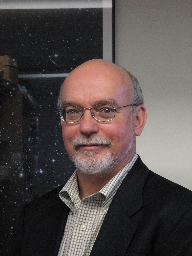 John Huchra合作论文数Harvard University;Harvard-Smithsonian Center for Astrophysics3
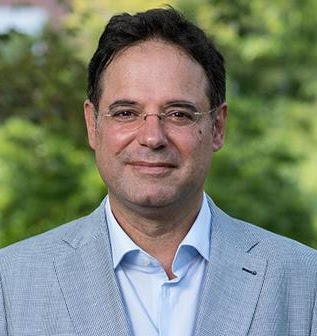 João Alves合作论文数University of Vienna2Michael W. Feast合作论文数Astronomy Department;University of Cape2
 Gustavo Bruzual A.合作论文数Instituto de Radioastronomia y Astrofisica, Universidad Nacional Autonoma de Mexico2
 Francesco Bertola合作论文数Dipartimento di Astronomia, Universita di Padova2Peter Robertson合作论文数1w k h panofsky合作论文数1abraham pais合作论文数1E. Ye. Khachikian合作论文数1S. Okamura合作论文数1D. Burstein合作论文数1
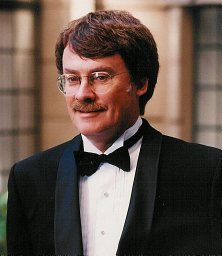 Michael Riordan合作论文数Univ Calif Santa Cruz1Neal Jackson合作论文数Department of Physics and Astronomy, School of Natural Sciences, Faculty of Science and Engineering, The University of Manchester1
 Sadanori Okamura合作论文数University of Tokyo1
 Chris Quigg合作论文数Fermi National Accelerator Laboratory1
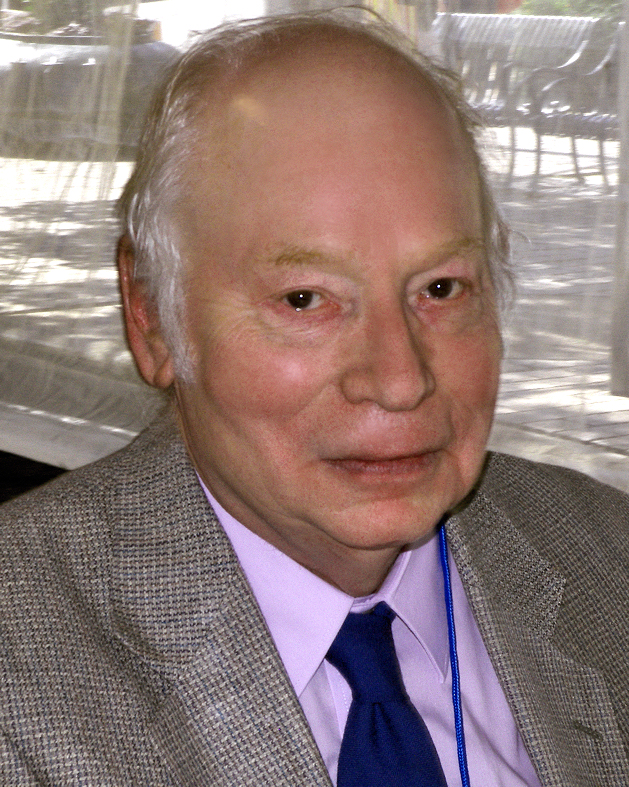 Steven Weinberg合作论文数College of Liberal Arts, University of Texas at Austin1
 Bruce Elmegreen合作论文数IBM1
 Josep Miquel Girart合作论文数Institut de Ciències de l'Espai, CSIC1
 Tim de Zeeuw合作论文数Sterrewacht Leiden1




