The adaptation to climate change and the adoption of circular strategies are macrotrends that require business transformations. In response, profound changes are required to skill formation systems across the world. The present empirical research study is built on the discourse on education for sustainable development as well as institutionalist and constructivist lenses to investigate the role of Technical and Vocational Education and Training (TVET) in meeting skill requirements for global sustainability agendas. The objectives of the study are to investigate a) modalities in use to mainstream sustainability into course offerings, i.e., training, upskilling, and reskilling with micro-credentials and credit transfers in learning pathways, b) the implementation of six Sustainable Development Goals (SDGs) into curricula, namely ‘Quality Education’, ‘Decent Work and Economic Growth’, ‘Industry, Innovation, and Infrastructure’, ‘Clean Water and Sanitation’, ‘Affordable and Clean Energy’, and ‘Climate Action’, and c) the existence of partnerships for curricula development with reference to SDG17. By adopting the positivist research paradigm and an explanatory research design, a survey was conducted in 11 countries in South and Southeast Asia to which 761 TVET teachers responded. The findings show that SDGs were incorporated into new courses supporting vertical integration as well as SDGs were embedded into existing curricula supporting horizontal integration. The findings also offer a nuanced understanding of various modalities in use to mainstream sustainability into course offerings. The findings imply intricate challenges institutes face when implementing sustainability into curricula and emphasise the value of multi-stakeholder partnerships for curricula development. Partial η2 values, reflecting variances as much as 6
The paper presents a case study where value stream mapping (VSM) is applied to improve factory-floor employees' performance management process (PMP) in the manufacturing context. The objectives were to 1) understand the PMP of the factory-floor employees, and 2) apply the VSM to improve their PMP. The present study a) identifies value from customers' perspective, b) maps PMP along with its subprocesses, c) analyses waste with the intention of minimization, d) adopts a pull approach to fulfil customers' demands, and e) proposes avenues for perfection. The study showed that notable efficiency improvements can be achieved even by SMEs from the application of VSM and DMAIC (define-measure-analyze-improve-control).
The modernization of TVET has not occurred with a system-wide approach covering the entire spectrum of TVET institutes worldwide. The literature that incorporates the Sustainable Development Goal for Education (SDG4) and the fourth industrial revolution in TVET is very rare to be found from international and comparative standpoints since these areas are still emerging. Further, case-based or single country-based experiences do not provide sufficient information to make informed decisions. Therefore, more empirical studies are needed on the adoption of SDG4 in TVET institutes to gain a broad-based understanding of the prevailing context. Given these gaps in the scholarship, the present study investigated the status of the adoption of SDG4 in TVET institutes. Accordingly, the study collected data covering the areas of 1) the teaching and learning context, 2) steps taken to impart skills for employment, and 3) steps taken to enhance the capacities of staff in response to the changing world of work from fifteen Asian and Pacific countries. Four hundred and twenty-eight TVET staff responded to the survey. The findings showed significant differences by the regional classification of the country and by the type of TVET institute. The findings of the study are novel and provide ample evidence for the status of TVET in incorporating SDG4 in the fourth industrial revolution era. The findings also showed that the policymaking bodies must take active measures to increase responsiveness in fulfilling SDG4 and addressing challenges brought about by the fourth industrial revolution technologies.
Business Process Management (BPM) plays a critical role by driving digital innovation and enhancing organizational agility. Due to its importance in information systems (IS), educational institutions worldwide offer diverse BPM courses. However, a notable gap remains in teaching resources that offer real-world cases with a strong focus on diverse organizational contexts. This teaching case fills this gap by presenting the employees' performance management process of a small-to-medium enterprise (SME) in a developing nation. The case offers a unique perspective in BPM by illuminating its interplay with contextual complexities in the SME environment. The case highlights an underexplored area on BPM-the critical role of effectively integrating and managing employees' performance within operational workflows-by bridging theory with practice and fostering digital-oriented problem-solving skills. The case is designed with student tasks centered around a structured process lifecycle approach, utilizing real-life process data and supported by comprehensive teaching materials. It is practical, engaging, userfriendly, and adaptable across diverse learning environments, making it a valuable resource in BPM education. This case enables educators to effectively teach complex BPM topics while fostering practical skills in students.
Education in Business Process Management is essential for a country's economic growth and provides individuals with valuable knowledge and skills for a competitive career. BPM educators must ensure students learn the discipline with course materials that are engaging, relevant, and applicable to their futures. The outcome of any BPM curriculum is to produce a graduate who is equipped with the knowledge and skills required by the industry. However, developing a BPM curriculum that matches industry requirements is a challenge due to a lack of awareness about the industry requirements and the potential of BPM graduates in uplifting the organisations to excellence. We overcame this challenge with multiple university-industry collaborations to design and deliver this BPM education programme. Therefore, this paper details experiences spanning 10 years, starting from the initial design of the programme in 2016 and delivery in 2017, the first revision to the programme in 2021, and the second revision in 2025, highlighting the specifics of different university-industry collaborations. Further, the paper discusses the Department’s experiences with the World Bank funded Accelerating Higher Education Expansion and Development project for the first curriculum revision, and the University of Moratuwa funded initiative for the second curriculum revision. To date, the programme has produced 150+ BPM graduates with a 100
This study examines whether organizational culture influences employees to seek alternative job opportunities and explores the moderating effect of firm size on the relationship between organizational culture and job search effort. Conducted in Sri Lanka, the research focuses on employees from small, medium, and large private firms, categorized by the number of persons employed. A total of 252 valid responses were analyzed. The findings reveal that organizational culture significantly impacts employees’ job search effort and that firm size plays a moderating role in this relationship.
The paper provides results of a study that investigated the response of technical and vocational education and training (TVET) institutions for the implementation of 4 th industrial revolution (4IR) competencies into programme offerings. The investigation was confined to TVET in science, technology, engineering, and mathematics (STEM) fields at the tertiary level. 470 TVET staff responded to the survey from 15 countries, all of which belonging to the middle-income category in Indo-Pacific. The study examined institutional response covering eight areas, i.e., financial support for digital transformations, support for partnerships, job market sensitivity, support for changes to programme offerings, popularization of programme offerings, support for teacher development, support for adherence to quality, and the overall assessment of institution management in response to implementing 4IR competencies into programme offerings. The results showed significant differences in the institutional response for the eight areas by the institution type- TVET regulatory bodies, TVET teacher training and research institutes, TVET universities, polytechnics, and TVET colleges.
The very nature of work, labor market composition, and skill requirements are severely affected by technology-driven transformations currently underway with the 4th industrial revolution (4IR). The effect of 4IR technologies on technical and vocational education and training (TVET) and the contribution of TVET to the labor market is explicit. The paper presents the findings of a study that investigated whether TVET institutions are prepared to face the challenges of 4IR. The data for the study were collected by surveying 428 teachers from 15 countries in Asia and the Pacific engaged in science, technology, engineering, and mathematics (STEM) fields at the tertiary level. The findings of our study undoubtedly bring greater attention to the initiatives of TVET in these countries in preparing the workforce for job roles necessitated in the 4IR. The findings can also be used to frame policy recommendations for the growth of economies.
Purpose The study aims to investigate organization interventions experienced by employees during the lockdown for Coronavirus disease-2019 (COVID-19), and the effect of these organization interventions on hope. Design/methodology/approach The respondents for the study were employees in full-time white-collar or professional job positions; they performed their job roles by way of work from home (WFH) in Sri Lanka during the COVID-19 lockdown. Structural equation modelling was used to analyse the data. Findings Results showed that employees maintained high levels of hope while working from home. The study identified four organization interventions that (a) promote collaborative and coordinated work, (b) promote meaningful goals and a sense of social support, (c) alleviate psychological strain and (d) assist in maintaining physical health. These four organization interventions increased hope during the COVID-19 lockdown while working from home. Originality/value The literature calls for research on intervention studies explaining the promotion of hope. The present study was built on the theories of positive organizational behaviour, conservation of resources theory and hope theory. The findings support that these three traditional theories have lasting theoretical resonance in explaining present-day phenomena with unique applications.
Purpose The purpose of this paper is to investigate the determinants of pay satisfaction of executive-level employees in public sector of Sri Lanka, which follows an open pay system. Design/methodology/approach The perceptions of equity, love of money, justice and seven individual and socio-demographic characteristics were investigated as the determinants of pay satisfaction. The survey methodology is used for data collection. Findings The findings showed equity, love of money, justice, the years of work experience in public sector, the number of income earners in the family and the number of dependents in the family as the significant predictors of pay satisfaction. Gender is identified as a significant predictor of love of money. Originality/value This study investigated the dynamics of pay satisfaction in a novel research context – i.e. public sector, an open pay system, gender equality in the pay system and an Asian developing country.
Organizations are increasingly concerned about their social and environmental responsibilities and are interested in developing strategies to improve their performance and accountability in these areas. One such strategy focuses on leadership styles, by which leaders are selected or trained to address the needs of people and entities outside themselves (i.e., stakeholders), and subsequently inspire their followers to do the same. Implicit in this strategy is an assumption that a new type of leadership is required to achieve social and environmental responsibility goals. In this study, we offer a different perspective by proposing that leaders may only need to be encouraged or trained to emphasize some aspects of their existing leadership styles, while minimizing the use of others. We focus our study in Asia, where a paternal leadership style is prevalent, and often expected by followers. This leadership style consists of behaviors that may be organized into three dimensions: authoritarian, benevolent, and moral. We propose that the benevolent and moral dimensions reflect leadership styles that promote followers’ social motivation and examine their interaction with the self-transcendent values of their followers in predicting followers’ prosocial motivation to help others through their work. We found that only the benevolent dimension was significant and appeared to compensate for low self-transcendent values in followers. Implications for using leadership to promote social responsibility are discussed.
Purpose The purpose of this study is to investigate the influence of emotional intelligence (EI) on the relationship between strategic management of technology (SMT) and organizational performance (OP).
The capacity of organizations of all types and sizes to face unexpected and unpredictable events is vital for survival and growth. Resilience is a desirable human characteristic. Individuals who can bounce back in stressful situations, setbacks, and failures in their lives are the ones with the characteristic of resilient. Resilient employees have a greater capacity to perform their job tasks and are better suited to adapt to adverse conditions. Knowing the effectiveness of organization-initiated support interventions in building resilience create opportunities to respond much better and emerge stronger in the world, which is volatile, uncertain, complex, and ambiguous. The COVID-19 pandemic was such an unexpected and unpredictable event, which tested the capacity of organizations and their employees. During the lockdown periods for the pandemic, organizations had to introduce several support interventions that supposed to help in getting the work done from employees, who were working from home. Although not necessarily targeted to enhance employee resilience, the present study argues that organization-initiated support interventions introduced to mitigate hindrances of the lockdown could have increased employee resilience. Accordingly, the present study investigated organization-initiated support interventions introduced during the state-regulated lockdown that could have increased employee resilience. The findings provide an assessment of organization-initiated support interventions and their effects in building employee resilience.
Anxiety due to organisational change is an important issue in occupational health. The paper presents the findings of a study that investigated the level of anxiety experienced by employees due to an acquisition and the effect of human resource management practices in easing anxiety. The sample consisted of employees from both acquiring and target entities, who had experience spanning three phases of merger and acquisition, i.e., pre-, during, and post. The findings showed significant differences in the level of anxiety between the two entities as well as across the three phases. The results showed that human resource management practices play an important role in easing anxiety, which is a widely identified occupational health issue in mergers and acquisitions.
The objectives of this study was to investigate whether individuals suffer from fear of financial situation and uncertainty, to investigate the level of adjustment of spouses, to investigate support extended by the other family members and, to analyse whether the support extended by the other family members moderates the relationship between individuals’ fears on financial situation/uncertainty and, the respective level of adjustment of spouses. The data collected from an online survey, through a random sample of 300 adults aged 25 years and older residing in the Western Province, Sri Lanka were analysed. A conceptual model was developed and variables such as fear of financial situation, uncertainty and extended family support available for spouses was reviewed in relation to the adjustment of spouses. Four hypotheses were established. Statistical analysis wer performed to identify moderator effect of resources available for spouses. It were identified that COVID-19 created fear of financial situation and uncertainty among married couples and, it was concluded that support provided from their respective families contributed to adjustment of Sri Lankan spouses. A key limitation was that there was no equal participation from both genders. Future research may include replicating the same study with a more diverse sample. Future researchers can conduct a follow-up study to identify long-term effects of COVID-19 on Sri Lankan married couples.
The objectives of this study were to investigate organization support received by employees during the COVID-19 lockdown and its effect on self-efficacy. The study was conducted in Sri Lanka during the COVID-19 lockdown; a sample of employees who performed work in the form of work-from-home responded to the survey questionnaire. The data were analysed using structural equation modelling techniques. The findings led to identify four organization support practices implemented during the COVID-19 lockdown. These were named as work collaboration and coordination, work direction, psychological wellness, and physical wellness. These four practices significantly enhanced the self-efficacy of employees. The findings of the study imply that the traditional theories of social cognitive theory and positive psychology have enduring theoretical resonance to better understand contemporary phenomena with novel applications.
This paper presents findings of a study that investigated causes for migration, the expectations of migration and post-migration experience of IT professionals from Sri Lanka. The paper also discusses effects of education qualification from abroad, past work experience from abroad, and homeownership before migration on skilled migration. For the study, survey methodology was used, and two different sample groups were selected – migrants and prospective migrants from the IT sector. The results indicated two domains of causes and four domains of expectations. There were significant differences between expectations and post-migration experience of migrants; there were significant differences in some causes for migration and expectations and postmigration experience by homeownership before migration. The paper concludes with a discussion on implications of the findings for theory and practice.
Effective improvement and execution of technologies require incredibly careful consideration not only to technological and engineering advancements and resulting capabilities, but also to human, raw materials, financial feasibility, and the reasonably competitive environment. The strategic management of technology (SMT) brings together engineering, scientific, and management disciplines to tackle the preparation, growth, and implementation of technical skills to form and serve a strategic and a functional purpose of a business.
The COVID-19 pandemic forced millions of employees worldwide to perform their full--timejob tasks remotely from home. As creative performance is considered a desirable work outcome expected by organizations, the present study investigated whether the work-family and family-work conflicts mediate the relationship between job conditions experienced by employees while working from home and their creative performance. The study, carried out in Sri Lanka, featured a sample of employees in white-collar or professional positions who carried on with their full-time jobs during the COVID-19 pandemic working from home. It was found that job conditions (work characteristics, work environment and technical support) significantly negatively related to both work--familyconflict and family-work conflict. In addition, the results supported the media-tion hypothesis.
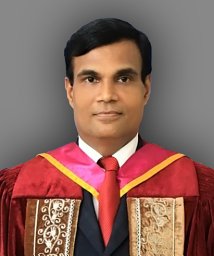 g l d wickramasinghe合作论文数Dept Text & Clothing Technol, Univ Moratuwa13
 Khaleel Malik合作论文数Division of Innovation Management and Policy, School of Alliance Manchester Business, Faculty of Humanities, The University of Manchester;Manchester Institute of Innovation Research, School of Alliance Manchester Business, Faculty of Humanities, The University of Manchester4
 Nimali De Zoyza合作论文数4Chandana De Silva合作论文数3Samangi Manuja Nanayakkara合作论文数Department of Management of Technology, University of Moratuwa3
 Upamali Amarakoon合作论文数Central Queensland University3
 G. D. Samarasinghe合作论文数Faculty of Business, University of Moratuwa3anuradha gamage合作论文数2Suranga Jayabandu合作论文数2Manoja Karunasekara合作论文数2Anurudh Gurugamage合作论文数2mayura jayaweera合作论文数2T. M. J. A. Cooray合作论文数Department of Mathematics;University of Moratuwa;Department of Mathematics, University of Moratuwa2Nuwan Wickramanayake合作论文数2Saman Kumara合作论文数2Vathsala Gunawardena合作论文数2
 Donald G. Gardner合作论文数Department of Chemistry, Illinois Institute of Technology2Kenneth Mathusinghe合作论文数1Saumya Dolamulla合作论文数1suyama liyanage合作论文数1Tiloka de Silva合作论文数Dept Decis Sci, Univ Moratuwa1Duminda Kuruppuarachchi合作论文数1
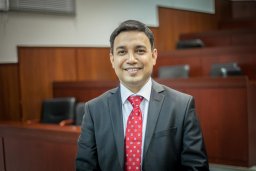 Monowar Mahmood合作论文数Kimep University1Christopher Rees合作论文数Global Development Institute, School of Environment, Education and Development, Faculty of Humanities, The University of Manchester1Aminu Mamman合作论文数Global Development Institute, School of Environment, Education and Development, Faculty of Humanities, The University of Manchester1
 Wasana Bandara合作论文数Information Systems Discipline, Queensland University of Technology1
 Hemamali Perera合作论文数Faculty of Medicine, University of Colombo1
 Jon L. Pierce合作论文数University of Minnesota1Saman Garusinghe合作论文数1K Wanigasinghe合作论文数1Chandana Karunaratne合作论文数1Lasantha Perera合作论文数1
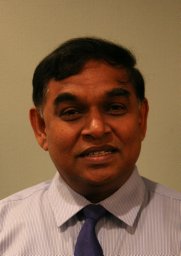 Ranjit Perera合作论文数Presently at Comnets;University of Bremen;Dept . of Electrical Engineering;University of Moratuwa;University of Bremen, University of Moratuwa1




