In this paper we present FiPPiE, a Filter-Inferred Pitch Poste-riorgram Estimator – a method of estimating fundamental frequency from spectrograms, either linear or mel, by applying a special kind of filter in the spectral domain. Unlike other works in this field, we developed a procedure for training an optimized filter (or kernel) for this type of estimation. FiPPiE, based on this optimized filter, demonstrated itself as a reliable fundamental frequency estimator that is computationally efficient, differentiable, and easily implementable. We demonstrate the performance of the method both by the analysis of its behavior on human recordings, and by the stability analysis with help of an automated system.
Transfer tasks in text-to-speech (TTS) synthesis - where one or more aspects of the speech of one set of speakers is transferred to another set of speakers that do not feature these aspects originally - remains a challenging task. One of the challenges is that models that have high-quality transfer capabilities can have issues in stability, making them impractical for user-facing critical tasks. This paper demonstrates that transfer can be obtained by training a robust TTS system on data generated by a less robust TTS system designed for a high-quality transfer task; in particular, a CHiVE-BERT monolingual TTS system is trained on the output of a Tacotron model designed for accent transfer. While some quality loss is inevitable with this approach, experimental results show that the models trained on synthetic data this way can produce high quality audio displaying accent transfer, while preserving speaker characteristics such as speaking style.
Intonation is characterized by rises and falls in pitch and energy. In previous work, we explicitly modelled these prosodic features using Clockwork Hierarchical Variational Autoencoders (CHiVE) to show we can generate multiple intonation contours for any text. However, recent advances in text-to-speech synthesis produce spectrograms which are inverted by neural vocoders to produce waveforms. Spectrograms encode intonation in a complex way; there is no simple, explicit representation analogous to pitch (fundamental frequency) and energy. In this paper, we extend CHiVE to model intonation within a spectro-gram. Compared to the original model, the spectrogram extension gives better mean opinion scores in subjective listening tests. We show that the intonation in the generated spectrograms match the intonation represented by the generated pitch curves.
The prosodic aspects of speech signals produced by current text-to-speech systems are typically averaged over training material, and as such lack the variety and liveliness found in natural speech. To avoid monotony and averaged prosody contours, it is desirable to have a way of modeling the variation in the prosodic aspects of speech, so audio signals can be synthesized in multiple ways for a given text. We present a new, hierarchically structured conditional variational autoencoder to generate prosodic features (fundamental frequency, energy and duration) suitable for use with a vocoder or a generative model like WaveNet. At inference time, an embedding representing the prosody of a sentence may be sampled from the variational layer to allow for prosodic variation. To efficiently capture the hierarchical nature of the linguistic input (words, syllables and phones), both the encoder and decoder parts of the auto-encoder are hierarchical, in line with the linguistic structure, with layers being clocked dynamically at the respective rates. We show in our experiments that our dynamic hierarchical network outperforms a non-hierarchical state-of-the-art baseline, and, additionally, that prosody transfer across sentences is possible by employing the prosody embedding of one sentence to generate the speech signal of another.
A neural network model that significant improves unit selection -based Text-To-Speech synthesis is presented. The model employs a sequence-to-sequence LSTM-based autoencoder that compresses the acoustic and linguistic features of each unit to a fixed-size vector referred to as an embedding. Unit-selection is facilitated by formulating the target cost as an L2 distance in the embedding space. In open-domain speech synthesis the method achieves a 0.2 improvement in the MOS, while for limited-domain it reaches the cap of 4.5 MOS. Furthermore. the new TTS system halves the gap between the previous unit-selection system and WaveNet in terms of quality while retaining low computational cost and latency.
Adults with Autism Spectrum Conditions (ASC) experience marked difficulties in recognising the emotions of others and responding appropriately. The clinical characteristics of ASC mean that face to face or group interventions may not be appropriate for this clinical group. This article explores the potential of a new interactive technology, converting text to emotionally expressive speech, to improve emotion processing ability and attention to faces in adults with ASC. We demonstrate a method for generating a near-videorealistic avatar (XpressiveTalk), which can produce a video of a face uttering inputted text, in a large variety of emotional tones. We then demonstrate that general population adults can correctly recognize the emotions portrayed by XpressiveTalk. Adults with ASC are significantly less accurate than controls, but still above chance levels for inferring emotions from XpressiveTalk. Both groups are significantly more accurate when inferring sad emotions from XpressiveTalk compared to the original actress, and rate these expressions as significantly more preferred and realistic. The potential applications for XpressiveTalk as an assistive technology for adults with ASC is discussed.
The statistical models of hidden Markov model based text-to-speech (HMM-TTS) systems are typically built using homogeneous data. It is possible to acquire data from many different sources but combining them leads to a non-homogeneous or diverse dataset. This paper describes the application of average voice models (AVMs) and a novel application of cluster adaptive training (CAT) with multiple context dependent decision trees to create HMM-TTS voices using diverse data: speech data recorded in studios mixed with speech data obtained from the internet. Training AVM and CAT models on diverse data yields better quality speech than training on high quality studio data alone. Tests show that CAT is able to create a voice for a target speaker with as little as 7 seconds; an AVM would need more data to reach the same level of similarity to target speaker. Tests also show that CAT produces higher quality voices than AVMs irrespective of the amount of adaptation data. Lastly, it is shown that it is beneficial to model the data using multiple context clustering decision trees.
Xie Chen would like to thank Toshiba Research Europe Ltd, Cambridge Research Lab, for funding his work. The authors would like to thank the Toshiba Cambridge Speech Group for allowing the data to be collected, also would like to thank Chao Zhang and Eric Wang for providing DNN and CMLLR transform tools.
Standard grapheme-to-phoneme (G2P) systems are trained using a homogeneous lexicon, for example one associated with a particular accent. In practice, a synthesis system may be required to handle multiple accents. Furthermore, a speaker rarely has a pure accent; accents vary continuously within and between regions of a country. Generating phonetic sequences for each accent is possible, but combining them to yield a single synthesis pronunciation is highly challenging. To address this problem, this paper considers a space of accents. The bases for these spaces are defined by statistical G2P models in the form of graphone models. A linear combination of these models define the accent space. By selecting a point in this continuous space, it is possible to specify the accent for an individual speaker. The performance of this approach is evaluated using an accent space defined by American, Scottish and British English. By moving around the accent space, it is shown that it is possible to synthesize speech from all these accents as well as a range of intermediate points. Index Terms: phonetic sequence generation, accent space, interpolation
This paper proposes a method to modify the expression or emotion in a sample of speech without altering the speaker’s identity. The method exploits a statistical speech model that factorises the speaker identity from expressions using linear transforms. For this approach, the set of transforms that best fit the speaker and expression of the input speech sample are learned. They are then combined with the expression transforms of the desired expression taken from another speaker. Since the combined expression transform is factorised and contains information about expression only, it may be applied to the original speech sample to modify its expression to the desired one without altering the identity of the speaker. Notably, this method may be applied universally to any voice without the need for a parallel training corpus.
Copyright © 2014 ISCA. The standard evaluation of intonation models is by means of non-referenced subjective tests (pair or MOS) in which subjects rate the quality or compare different samples without any explicit reference. These tests are usually conducted on an isolated sentence basis. However, for a single sentence, with no contextual information, there are multiple valid intonations. A subject's preference over this range of intonation patterns may be highly personal. This paper investigates the degree to which this ambiguity in the appropriate intonation pattern impacts the assessments of prosody for speech synthesis systems. To examine this problem, the variance of the F0 pattern of several vocoded sentences was modified and subjects asked to compare multiple versions with different levels of modification in terms of preference/quality. Then, they were presented with the reference which defines the original intonation and asked about the similarity to that reference. The results show that subjects can identify the samples with no F0 variance modification when given a reference but they don't always prefer them. Thus, non-referenced tests with no context, though may help to analyse user acceptability, may not be appropriate to measure the performance of intonation models.
Hidden Markov model based text-to-speech systems may be adapted so that the synthesised speech sounds like a particular person. The average voice model (AVM) approach uses linear transforms to achieve this while multiple decision tree cluster adaptive training (CAT) represents different speakers as points in a low dimensional space. This paper describes a novel combination of CAT and AVM for modelling speakers. CAT yields higher quality synthetic speech than AVMs but AVMs model the target speaker better. The resulting combination may be interpreted as a more powerful version of the AVM. Results show that the combination achieves better target speaker similarity when compared with both AVM and CAT while the speech quality is in-between AVM and CAT.
PROBLEM TO BE SOLVED: To provide a text reading method configured to output sound that has a voice of a selected speaker and a selected speaker attribute.SOLUTION: A method includes steps of: selecting a speaker of an input text; selecting a speaker attribute for the input text; using an acoustic model to convert a sequence of acoustic units into a sequence of sound vectors; and outputting the sequence of voice vectors as audio associated with a voice of the selected speaker and the selected speaker attribute. The acoustic model includes a first parameter set relating to the voice of the speaker and a second parameter set relating to the speaker attribute, and the first and second parameter sets do not overlap. The step of selecting the voice of the speaker includes a step of selecting a parameter for providing the voice of the speaker from the first parameter set, and the step of selecting the speaker attribute includes a step of selecting a parameter providing the selected speaker attribute from the second set.
A method of animating a computer generation of a head, the head having a mouth which moves in accordance with inputted speech or text to be output by the head, said method comprising: providing an input related to the speech which is to be output by the movement of the mouth, dividing said input into a sequence of acoustic units, selecting an expression to be output by said head and converting said sequence, of acoustic units to a sequence of image vectors using a statistical model. The model has a plurality of parameters describing probability distributions which relate an acoustic unit to an image vector for a selected expression and the sequence of image vectors is then output as video such that the mouth of said head moves to mime the speech associated with the input text with the selected expression. A parameter of a predetermined type of each probability distribution in said selected expression is expressed as a weighted sum of parameters of the same type, and the weighting used is expression dependent and means that converting a sequence of acoustic units to a sequence of image vectors comprises retrieving the expression dependent weights for the selected expression. The parameters involved are provided in clusters, each comprising at least one sub-cluster with the expression dependent weights being retrieved for each cluster such that there is one weight per sub-cluster.
This paper presents a complete system for expressive visual text-to-speech (VTTS), which is capable of producing expressive output, in the form of a 'talking head', given an input text and a set of continuous expression weights. The face is modeled using an active appearance model (AAM), and several extensions are proposed which make it more applicable to the task of VTTS. The model allows for normalization with respect to both pose and blink state which significantly reduces artifacts in the resulting synthesized sequences. We demonstrate quantitative improvements in terms of reconstruction error over a million frames, as well as in large-scale user studies, comparing the output of different systems.
 Javier Latorre合作论文数Apple18
 Thomas Hain合作论文数School of Computer Science, The University of Sheffield16
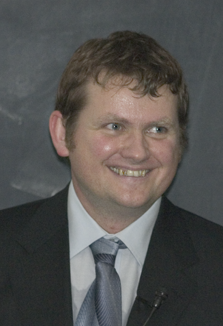 Steve Renals合作论文数The Center for Speech Technology Research, The University of Edinburgh15
 John Dines合作论文数Expedia14
 Mark Gales合作论文数Information Engineering Division, Department of Engineering, University of Cambridge14
 Martin Karafiat合作论文数DCGM13
 Kayoko Yanagisawa合作论文数11
 Mike Lincoln合作论文数School University of Tennessee10
 Roberto Cipolla合作论文数Department of Engineering, University of Cambridge;Cambridge Research Laboratory, Toshiba Europe Ltd9
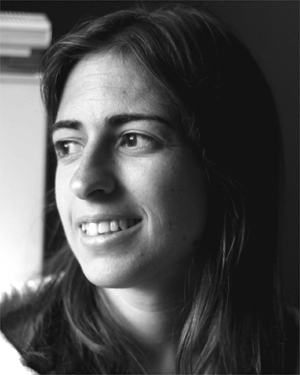 Giulia Garau合作论文数9
 Björn Stenger合作论文数Rakuten Institute of Technology;Rakuten Group, Inc.9
 Masami Akamine (赤嶺政巳)合作论文数Graduate School of Engineering, Tohoku University;Al Electronics Education and Research Center, Tohoku University8
 Odette Scharenborg合作论文数Intelligent Systems, Faculty of Electrical Engineering, Mathematics and Computer Science, Delft University of Technology7
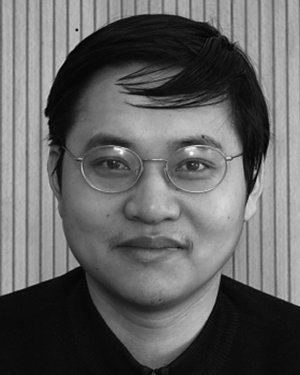 Langzhou Chen合作论文数7
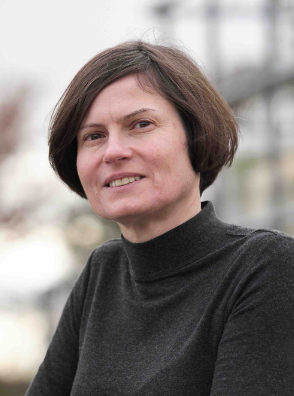 Kate Knill合作论文数Speech Research Group, Machine Intelligence Laboratory, Department of Engineering, University of Cambridge7
 Darren Moore合作论文数Dubber7
 Kean K. Chin合作论文数6
 Lukáš Burget合作论文数Department of Computer Graphics and Multimedia, Faculty of Information Technology, Brno University of Technology6
 Norbert Braunschweiler合作论文数Institute of Natural Language Processing;University of Stuttgart;Institute of Natural Language Processing, University of Stuttgart5
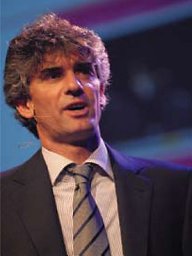 Roeland Ordelman合作论文数University of Twente5
 Asmaa El Hannani合作论文数Université Chouaib Doukkali;Ecole Nationale des Sciences Appliquées d'El Jadida5Balakrishna Kolluru合作论文数Department of Computer Science;University of Shefeld;Department of Computer Science, University of Shefeld5
 Stuart Wrigley合作论文数Department of Computer Science;University of Sheffield;Department of Computer Science, University of Sheffield5Rob Clark合作论文数4Robert Anderson合作论文数3
 Phil Garner合作论文数Audio Inference Group, Idiap Research Institute3
 James Nathaniel Carmichael合作论文数3
 Heiga Zen (全炳河)合作论文数Google DeepMind3
 Iain Mccowan合作论文数Institute for Perceptual Artificial3
 Ranniery Maia合作论文数Cambridge Res Lab, Toshiba Res Europe Ltd3
 Guy Brown合作论文数Department of Computer Science, Faculty of Engineering, The University of Sheffield3IOANNIS STYLIANOU合作论文数2L. van Dongen合作论文数2
 Sarah Cassidy合作论文数School of Psychology, Faculty of Science, The University of Nottingham2r o anderson合作论文数2
 Jonathan Shen合作论文数Upwork2
 Roger K. Moore合作论文数Department of Computer Science, Faculty of Engineering, The University of Sheffield2
 Robert H Anderson合作论文数Institute of Genetic Medicine, Newcastle University2
 David A. Van Leeuwen合作论文数TNO Human Factors2
 Yannis Stylianou合作论文数Computer Science Department, University of Crete;Apple2
 Simon Baron-Cohen合作论文数Department of Psychology, University of Cambridge;Autism Research Centre, Department of Psychiatry, University of Cambridge2
 Mirjam Ernestus合作论文数Centre for Language Studies, Department of Language and Communication, Faculty of Arts, Radboud University Nijmegen2
 Jithendra Vepa合作论文数IDIAP Research Institute;Swiss Federal Institute of Technology;IDIAP Research Institute, Swiss Federal Institute of Technology2
 Marijn Huijbregts合作论文数Department of Electrical Engineering;Mathematics and Computer Science;University of Twente;Department of Electrical Engineering, University of Twente2
 Lev Finkelstein合作论文数Google2Y. Pereiro合作论文数University of Cantabria;University of Florida2
 Philip Green合作论文数Department of Computer Science, Faculty of Engineering, The University of Sheffield2
 Hanna Silén合作论文数2
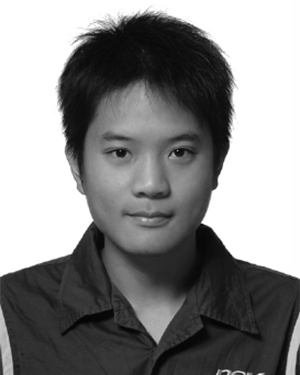 Chun-An Chan合作论文数2




