If structural injustice is the problem, is liberalism the solution? This chapter argues that over the last few centuries liberalism tackled three manifestations of historical injustice (slavery; natural hierarchies; colonialism) by promoting the mantra of individual rights, but the unintended consequence of this philosophy has been to engender and legitimize even more enduring forms of structural injustice (exploitation; inequality; domination). Historical injustice has not gone away, it has simply learned to accommodate liberal orthodoxy. To tackle structural injustice, it may be necessary to look beyond liberalism.
War crimes are being committed in Ukraine today, but who should be held responsible? By looking at the literature on responsibility and violence by Philippa Foot and John Harris, this article argues that there are grounds for holding Vladimir Putin responsible for war crimes in Ukraine, even if he did not give the command for these crimes and other atrocities to be carried out.
This article explores three philosophical issues regarding the concept of violence. First, violence is not just an act, it is also an experience. The study of violence should not focus exclusively on understanding actions that cause harm. Instead, a more phenomenological approach is required, one that prioritizes the experience of violence, especially those of victims and survivors of violence. Second, it is necessary to distinguish between “unwanted” and “unconsented” violence. Third, the definition of violence as violation of integrity or wholeness will come into scrutiny. In particular, to what extent does integrity as intactness apply to human beings, and if violence is defined in terms of breaking something intact, can violence be done to something that is already broken?
There are two ways to make sense of a human tragedy: as an injustice, or as a misfortune. A misfortune is usually associated with inescapable external forces of nature, and as such the desolation it leaves in its wake is blameless. An injustice, on the other hand, is caused by fellow humans, it is intentional, controllable, and therefore not blameless. Being hit by lightning is a misfortune, living in poverty is an injustice. Contrary to what may seem, and what some politicians are telling us, Covid-19 has a lot more in common with poverty than with lightning strike. That is because Covid-19 is a case-study in injustice, not misfortune. No one is responsible for the existence of Covid-19, but collectively we are responsible for the fact that pandemic preparedness plans were grossly insufficient, and the response to the crisis inadequate. All the inequalities, biases, prejudices, and wrongs of modern society have been irrevocably exposed by Covid-19. This chapter will offer recommendations to what social, political and economic changes need to be made, domestically and globally, after this pandemic crisis is over. If everything post Covid-19 goes back to being essentially similar to what it was pre Covid-19, we will have wasted a unique opportunity to eradicate some of the worst underlying conditions of social injustice which inflict misery to billions of people across the globe.
Covid-19 has exposed the structural injustice in global society. This is reflected in the maldistribution of vaccines between rich and poor countries. The hoarding of vaccines by the richest nations is one of the most disturbing realities of this global pandemic. We argue that vaccine inequality ought to be examined through the lenses of postcolonial theory.
This collective paper on radicalization and violent extremism part of the 'Philosophy of education in a new key' initiative by Educational Philosophy and Theory brings together some of the leading contemporary scholars writing on the most pressing epistemological, ethical, political and educational issues facing post-9/11 scholarship on radicalization and violent extremism. Its overall aim is to move beyond the 'conventional wisdom' associated with this area of scholarly research best represented by its many slogans, metaphors and other thought-terminating cliches. By providing conceptual lenses on issues previously compartmentalized primarily [or even exclusively] in security and intelligence studies or at the fringes of scholarly interest, radicalization and violent extremism turn out to be much more complex than 'radicalization studies' has been eager to acknowledge.
This chapter gives some consideration to what social, political, and economic changes need to be made, domestically and globally, after this pandemic crisis is over. If everything post COVID-19 goes back to being essentially similar to life pre COVID-19, we will have wasted a unique opportunity to eradicate some of the worst underlying conditions of social injustice which inflict misery on billions of people across the globe. There are at least four main lessons we must learn from the COVID-19 crisis. First, the importance of politics. Second, the necessity of a well-funded state. Third, the imperative to raise taxes to give the state adequate resources. Fourth, the requirement to introduce new radical social and economic reforms.
In crises, we rely desperately on the truth, and there is no room for fake news or post-truth. Or at least, there shouldn't be. But that has not been the case during the COVID-19 pandemic. This chapter will start by distinguishing between lies and post-truth, before highlighting the subversive nature of post-truth, which aims to delegitimize truth. Not even COVID-19 is immune from the toxic rhetoric of post-truth.
Incidents of domestic violence skyrocketed during the weeks of lockdown. This phenomenon was universal. In Ireland reports of domestic violence increased by almost 25 per cent after the coronavirus lockdown period began. This chapter focuss on one cultural event that captured the imagination of millions of people during the lockdown, especially in the UK and Ireland: the televised adaptation of Sally Rooney's Normal People. The impact of domestic violence on young lives is one of the main themes in Rooney's book.
We live in an ageing society. The average age of death from COVID-19 is over 80. Care homes have taken the full force of this epidemiological tsunami. In Ireland 63 per cent of fatalities from COVID-19 related illnesses have occurred in nursing and care homes, not hospitals. It is now beyond doubt that in the way most countries prepared for the pandemic, nursing and care homes were not a priority, as reflected by the present mortality rates. Society's relationship to people living in old age has never been under closer scrutiny; thus there has never been a better time to go back 2,000 years to the philosophical work of Marcus Tullius Cicero, On Old Age (44 BCE). This pandemic has fully exposed the lack of respect our efficiency-obsessed modern society has for people in old age.
This article rejects the received view that Post-Truth is a new, unprecedented political phenomenon. By showing that Truth and Post-Truth share the same genesis, this article will submit the idea of a Consensus Theory of Post-Truth. Part 1 looks at the difference between Post-Truth, lies and bullshit. Part 2 suggests reasons behind the current preoccupation with Post-Truth. Part 3 focuses on Habermas's influential consensus theory of truth to suggest that truth and Post-Truth have more in common than is generally assumed. Part 4 puts forward the Consensus Theory of Post-Truth. Part 5 suggests three ways to emasculate the potentially destructive effect of Post-Truth on democratic society.
Every generation has its stand-out political scientist. In the U.S. after the war Robert Dahl defined the discipline for many decades, and in more recent years the torch has been passed on to influ...
The Roman philosopher Marcus Tullius Cicero famously said that ‘to study philosophy is nothing but to prepare one’s self to die’. He influenced the sixteenth-century French philosopher Michel de Montaigne, who wrote an essay entitled ‘That to Study Philosophy is to Learn to Die’. This chapter explores our relationship with death through the philosophical lenses of these two thinkers, before giving the reader a short summary of all the chapters in the book.
There are two ways to think of a human tragedy: as an injustice, or as a misfortune. A misfortune is usually associated with inescapable external forces of nature, and as such the desolation it leaves in its wake is blameless. An injustice, on the other hand, is caused by fellow humans; it is intentional, controllable, and therefore not blameless. Poverty is an injustice not a misfortune. COVID-19 has exposed the true character of our society: its remorseless injustice. No one is responsible for the existence of COVID-19, but collectively we are responsible for the fact that pandemic preparedness plans were grossly insufficient, and the response to the crisis inadequate. All the inequalities, biases, prejudices, and wrongs of modern society have been irrevocably exposed by COVID-19.
 Boris Vezjak合作论文数2
 Derek Silva合作论文数Kings Univ Coll2
 Mitja Sardoč合作论文数2Gorazd Andrejč合作论文数2campbell brown合作论文数2
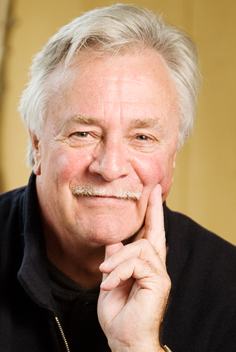 Michael A. Peters合作论文数Beijing Normal University;Faculty of Education, University of Illinois, Urbana-Champaign;University of Auckland2David Archard合作论文数2
 Marek Tesar合作论文数School of Learning, Development and Professional Practice, Faculty of Education and Social Work, The University of Auckland2Zdenko Kodelja合作论文数The Educational Research Institute2
 Lucy Allais合作论文数William H. Miller III Department of Philosophy, Krieger School of Arts and Sciences, Johns Hopkins University;University of the Witwatersrand2
 Quassim Cassam合作论文数Department of Philosophy, Faculty of Social Sciences, The University of Warwick2Dennis Kavanagh合作论文数1
 Shane O'Neill合作论文数1JOHN SCOTT合作论文数1Nenad Miščević合作论文数1Jools Gilson合作论文数1
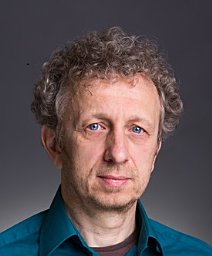 Csaba Csaki合作论文数Institute of Informatics, Corvinus University of Budapest1
 Fathali M. Moghaddam合作论文数Department of Psychology, Georgetown University1
 Bob Jessop合作论文数Department of Sociology, Faculty of Humanities, Arts and Social Sciences, Lancaster University1Shari Garmise合作论文数1
 C.A.J. Coady合作论文数University of Melbourne1Dario Castiglione合作论文数1
 Richard Bellamy合作论文数Department of Political Science, Faculty of Social & Historical Sciences, University College London;Hertie School of Governance1Eric Prier合作论文数1
 Frederic Adam合作论文数University College Cork, Ireland
Colin McCormack University College Cork, Ireland
Publisher Idea Group Publishing Hershey, PA, USA1Christopher Clapham合作论文数1
Frederic Adam合作论文数University College Cork, Ireland
Colin McCormack University College Cork, Ireland
Publisher Idea Group Publishing Hershey, PA, USA1Christopher Clapham合作论文数1




