Public and private actors who realize mobility innovations in practice often aim to reduce uncertainty through traditional project management strategies. These approaches define an end goal and use predictive tools to explore scenarios and risks. It is thereby assumed that more research is necessary and agreement can be found among decision-makers. In practice, however, these conditions are rarely met in innovation processes. Alternative strategies to deal with uncertainty have been proposed in literature that are more focused on relations between decision-makers and exploring possibilities in an iterative way, such as shared visioning and other collaborative approaches. The question is how to stimulate actors to use these approaches in practice. This study tested how altering actor perspectives and views about uncertainty led to more collaborative responses to uncertainty. A comparison has been made in a serious game setting between a baseline control session, where uncertainty was negatively framed and rewarded, and an intervention session, where uncertainty was positively framed and rewarded. The game simulated a multi-actor decision-making process of negotiating about mobility innovations for a sustainable mobility plan. We found that in both sessions, actors used collaborative strategies to deal with uncertainty, but in the control session, participants were also applying control strategies for their own organization to reduce uncertainty because of the inhibiting conditions on mindset and synergy. The results of this study indicate that bringing decision-makers in a more positive arrangement toward uncertainty leads to better multi-actor collaboration, driving sustainable mobility innovations forward.
The development of infrastructure can create synergies across multiple sectors, yet the governance and decision-making processes that drive such transformations often receive insufficient attention. This study aims to highlight key challenges in decision-making associated with the ‘infrastructural turn’ at the intersection of energy and mobility. The case focuses on a public transport provider’s initiative to leverage its metro power grid for the development of public charging infrastructure for electric vehicles. We trace how the collaborative decision-making process navigated through various configurations. The initiative challenged established organizational roles and pervasive silo mentalities and ultimately reached two significant milestones after nearly a decade. The findings suggest that harnessing potential synergies requires developing more integrative thinking and allowing sufficient space for joint goal-setting across sectors. We advocate for more research on informal organization and unintended consequences to better understand governance challenges of sustainable infrastructure development.
Actors experience considerable uncertainty when developing and realizing mobility innovations that can contribute in the transition to a sustainable transport system. Although the role of uncertainty and its handling is mentioned as important in the literature on transitions and innovations, there is a lack of understanding how uncertainty affects decision-making processes and actors themselves. This paper investigates the interplay of uncertainty competencies and governance settings in four innovation cases of Mobility as a Service (MaaS). Our findings demonstrate it is difficult to sustain MaaS beyond a research trial, because actors experience too much uncertainty about governance questions of long-term responsibilities and role distribution. Although individual actors possess effective project management skills and willingness to innovate in a trial context, they are unable to bring MaaS to a next level because MaaS is not seen as a part of a larger design quest in which stakeholders experiment and play with uncertainty through different institutional configurations.
The proposed solutions for sustainable development generally require new links and the involvement of multiple sectors. As a consequence, organizations can rely less on closed and rational analysis-based forms of strategizing; they increasingly see the need for joint strategy processes. However, a joint strategy process challenges the boundaries of the organizations involved, which creates tensions. This paper takes stock of conflicts and uncertainties that organizations which become involved in joint strategizing encounter. Our focal point is the sustainable development of infrastructure. We focus on an explorative single case study on the coordination of heat infrastructure development in the Regional Energy Strategy Rotterdam-The Hague (RES R-TH). The primary data were collected via three sources of information: observations from roundtable meetings, interviews with representatives of the organizations involved in the RES-TH and reflections from participants of these actors in research-led ateliers. We illuminate a wide range of tensions between organizations and identify three categories of dilemmas: input, throughput and outcome. By explicating dilemmas and identifying categories, we discard the idea that a universal solution exists for organizations engaging in joint strategizing. Instead, we provide evidence of different types of decision-making challenges, which emerges from a more granular analysis of the open strategizing process.
This chapter introduces governance as the ruleset that stakeholders work with when making decisions, in this on how to deal with COVID crisis in public transport. This chapter looks at several countries and the way in which their decisions, shared between authorities (health and transport) and operators, have shaped the effects on ridership. In a brief case study on Amsterdam, the interplay between various governmental layers and the operator is explained and is shown how existing governance shaped the decisions on the COVID response. This chapter ends with the observation on how COVID responses were shaped by the existing governance and that COVID in turn possibly is having the effect of a rethink on the existing governance.
Governance of infrastructures: Building bridges with technology and governance Governance research in infrastructure sectors has gained traction in the Netherlands in recent decades. The classic leading disciplines in infrastructure research were economics, which linked capacity, costs and engineering, optimising the design for each specific technological infrastructural context, such as rail, electricity and data. This article follows the path from Delft to a broad linking of governance in the Netherlands to the research classics.In a transitory world, infrastructure literately connects all the moving parts of energy, transport, water and data systems. Supporting change can only work if decision-making does justice to economic and technical realities, which poses a major challenge in the current dynamic climate. Innovating governance of and in infrastructure sectors in a way that ties these realities together is the next challenge.
To make the supply of transport services more attractive and sustainable, mobility suppliers and governmental actors expect much from mobility innovations. When developing and realizing these innovations, they experience considerable uncertainty about the future outcomes of implementing these innovations (1), and about other actors' intentions and actions in realizing these innovations (2). Literature on governance under uncertainty often overlooks the experienced uncertainty during interactions among multiple actors. To address this gap, this paper applies a new conceptual model for understanding interacting actor behaviour under uncertainty in the context of two innovative mobility cases in the Netherlands: Mobility as a Service (a digital channel for users to plan, book, and pay for multiple mobility services) and ERTMS (a new European rail traffic control system). Our analysis reveals that actors tend to rely on traditional project management approaches for dealing with uncertainty, even when there is no shared understanding of innovation requirements and scope. However, uncertainty manifests itself most regarding actors' intentions and actions in the development phase of innovations. This gap underscores the limitations of managing innovations using project management and highlights the need for additional governance approaches to address the major uncertainties that actors face about their mutual relations.
Dealing with uncertainty in cross-sectoral infrastructure projects Infrastructure managers increasingly face scarcity in terms of the capacity to develop their infrastructure networks. New projects face significant limitations, in terms of maintenance and renewal as well as the development of new infrastructures. A logical next step from a project perspective is so-called cross-sectoral infrastructure projects. In this article, we assess the consequences of working in cross-sectoral infrastructure projects. Recent findings from an in-depth case study of a cross-sectoral infrastructure project suggests that working in these projects is not simply ‘more of the same’ in terms of task execution and project management. Instead, practitioners need to adjust their forms of collaboration and communication with practitioners from other infrastructure operators. The focus of attention shifts from the management of risks and the environment to the joint exploration of uncertainties in the environment in the early phase of infrastructure development projects.
To gain ridership, bus services need to offer more than just high frequencies. An attractive system design for Bus Rapid Transit (BRT) is a result of various configurational choices concerning infrastructure, rolling stock and operations. To find out which configurations are preferred by potential and current passengers, a Discrete Choice Experiment was carried out in The Netherlands. For this study, eight BRT characteristics were included. Results (n = 1019) show that four characteristics are valued the most: frequency, service hours, reliability and stop spacing. The attractiveness of three different service formulas or configurations is evaluated. The more conventional bus configuration is preferred by the majority of the respondents. However, a considerable amount (25%) of respondents that prefer this configuration does not consider using this service formula. Configurations that either address offering more passenger comfort or higher capacity, do seem to be attractive to distinct passenger segments who are more likely to actually use the service. These appealing BRT configurations address different types of passenger segments and therefore could coexist on certain routes.
The UN sustainable development goals (SDGs) were adopted by the United Nations as a "universal call to action to end poverty, protect the planet, and ensure that by 2030 all people enjoy peace and prosperity." These goals prove to have a strong appeal to managers in both public and private sectors. Despite the popularity of the goals, little is known about the consequences (intended and unintended, desired and undesired) of organisations adopting SDGs in their management practices. Therefore, our research question is: "What is the potential role of SDGs as an accountability mechanism?" The following article will study how organisations responsible for technological infrastructures in the Netherlands use the SDGs as an accountability mechanism. To do this, the authors will first provide an overview of the SDGs and how we conceptualize accountability. We will then present our case study methodology before looking at a single case study based on interviews with employees from three organizations running infrastructure in the Netherlands. Based on this case study, we will provide a broader analysis of the key tensions that are becoming apparent when using the SDGs as an accountability mechanism. In conclusion, we will argue that the SDGs may provide a valuable tool to make organizations more accountable to societal needs, however further shifts are needed in the way the accountability mechanisms are designed in order to ensure meaningful accountability.
The interdependencies between infrastructures are growing. Engineering decision making that earlier was largely confined to a specific sector now requires more and more understanding of how systems interact: a system-of-systems perspective. The article analyzes the effect of that added complexity in a single case study in de Zuid-As, Amsterdam, in the Netherlands, and relates the findings to the literature on engineering decision making and project management in complex projects. The article concludes that cross-sectoral engineering decision making has an additional level of complexity that requires governance of uncertainty. Despite this challenge being a well-known challenge among infrastructure operators, it is still not recognized for its importance, and it seems to be a neglected element in collaboration. Key is an open approach in the early stages that goes beyond classic cooperative decision making in engineering and project management environments.
This paper uses stated preference data collected in the city of Rotterdam and discrete choice modelling techniques to study the relationship between public transport and shared micromobility. It assumes a hypothetical condition of integrated systems and studies the relationships of complement and competition between these modes. The findings suggest that shared micromobility modes are viable alternatives as egress modes for metro trips. Shared micromobility can be seen as a complement to metro, yet shared e-mopeds proved to also be a viable option as individual modes for long-distance trips. Different characteristics proved to be important in choices in this context: frequency of public transport use, previous use of shared micromobility, and age. Considering the results obtained, collaboration between shared micromobility and transit operators might benefit them as well as travellers. Collaborations should be designed so that they help travellers to decrease total travel time, even if it implies longer egress legs. However, the costs of these shared modes should not be as high as to prevent travellers to use them as egress alternatives. Finally, young travellers and frequent transit users could be specifically targeted, as they showed to have a better perception of shared micromobility.
For Europe's urban agglomerations to be economically competitive, it is vital that international destinations be easily accessible. Although much has been invested in the construction of European rail infrastructure over the past century, passenger transport by rail has not grown as fast as transport by road and air. So why do people not use international trains more, even though they have an extensive international rail network at their disposal? Based on a series of in-depth interviews with relevant public and private stakeholders and two expert meetings, we identify the main bottlenecks and constraints. In order to understand the complexity of international rail transport, we have divided the existing bottlenecks into four groups corresponding to four layers of the rail transport system: mobility services, transport services, traffic services, and the physical and digital infrastructure. We formulate concrete policy recommendations for improvements to be made in the various components of the rail transport system.
Citation (APA) Hirschhorn, F., & Veeneman, W. (2021). Public Transport Governance. In C. Mulley, J. Nelson, & S. Ison (Eds.), The Routledge Handbook for Public Transport (pp. 21-32). Routledge Taylor & Francis Group. https://www.taylorfrancis.com/chapters/edit/10.4324/9780367816698-3/public-transport-governance-fabiohirschhorn-wijnand-veeneman?context=ubx&refId=a96d8a2e-98a1-4044-b12b-6ad524111f7b
Governance consists of those rule sets that let stakeholders decide together on the solutions to implement. It regulates who has what seat at the table where decisions are made. For mobility and the urban form, those rule sets condition the development of the city of tomorrow. This chapter argues that this conditioning is stronger than many policy makers and researchers in the fields of urban planning and mobility consider. They focus on the policies themselves and accept the conditioning through those rule sets as a given. However, the time scales of urban and infrastructure development are long, with the policies often brief interventions and the more established governance being long-term influencers of the development of the city. To support developing the understanding further, this chapter introduces a number of elements of the rule sets, like the distribution of agency, the role of market and governmental players, central and more decentral stakeholders, and the role of governance in coordinating a diverse set of needs of many different stakeholders. It concludes that a number of the current problems and future solutions of the modern city can be addressed by fine-tuning the governance toward a more inclusive rule set.
The boundaries between collective and individual transport are fading. Current solutions for payment and planning of trips are suboptimal for journeys that span across individual, collective and shared transport modalities. The discussion around these innovations often tends towards public authorities needing to strengthen their integrating role, or towards the private companies developing key innovations. We argue that focusing on only one of these perspectives, either integration or innovation, is likely to lead to what we call 'subtopias'. Furthermore, we discuss and resolve the conflict between the two roles based on four different scenarios, ranging from nightmare to utopian dream. Our claim is that a balance is needed between, rather than a prevalence for private and public, for integrated and innovative mobility services to manifest themselves. As we see it, authorities will need to direct, harmonize and coordinate specific elements of personal mobility systems in order to be able to facilitate a seamless multi-modal mobility experience for travelers.
Sustainable transport typically requires a broad spectrum of policy measures, with responsibilities shared by different authorities and with various public values competed with each other, such as commuting, health, spatial quality, and economic development. Designing and implementing integrated policy packages, with consideration for the interdependencies between measures and actors is a promising approach and thus an interesting research topic. A large part of the literature on transport policy looks at separate measures and their effects. These measures in reality always work in constellation with other measures and understanding their dependencies in a way to create synergies through packaging has been the topic of theoretical discussions. However, empirical research on policy packaging is sorely lacking. In this paper, we examine the implementation process of packaging of TM measures from the perspective of actors and their distinct roles and interactions. The data is collected by document analysis and interviews with officers in a Chinese city. Several major problems threatening the implementation of policy packaging are detected, including overlooking implementation at district-level, resource competition between measures, and the absence of integrative supervision. It provides a first answer to the discrepancy occurring in the promise of real-world crafting of well-integrated policies for sustainable mobility.
Public authorities are under mounting pressure to promote more sustainable urban mobility, including a modal shift from cars. With an empirical focus on Oslo and Amsterdam metropolitan areas, this paper analyses how the interplay between formal frameworks, informal institutions, and individuals’ agency can contribute to making public transport more attractive in relation to other modes. Findings indicate that formal frameworks, informal institutions, and key actors co-exist and interact in complementary, substitutive, and accommodating manner; they work alongside each other to facilitate collective decision-making on issues ranging from integrating land use and transport to dealing with budget constraints. By identifying these types of interaction, this study shows that, to advance transport sustainability, authorities not only need insight on what policies to design, but can also benefit from understanding how policy-making and implementation unfold. A broader insight offered by the paper is that financial performance goals appear as a main policy driver in public transport, eclipsing sustainability concerns.
 D.M. (Didier) Van De Velde合作论文数Inno-V;Ecole Nationale des Travaux Publics de L'etat;Delft University of Technology18
 H.G. (Haiko) Van Der Voort合作论文数Technische Universiteit Delft11
 Fabio Hirschhorn合作论文数Fac Technol Policy & Management, Delft Univ Technol9
 Ernst Ten Heuvelhof合作论文数Faculty of Technology, Policy and Management, Delft University of Technology7Willemijn Dicke合作论文数Technology Policy and Management;Delft University of Technology;Delft University of Technology7
 Joop Koppenjan合作论文数Delft University of Technology7
 M.L.C. (Mark) de Bruijne合作论文数Organisation and Governance Section, Department of Multi-Actor Systems, Faculty of Technology, Policy and Management, Delft University of Technology7Lars Lutje Schipholt合作论文数5
 Igor Mayer合作论文数Dalian University of Technology;Department of Organization Studies, Faculty of Social and Behavioral Sciences, Tilburg University;Tilburg School of Social and Behavioral Sciences;Breda University of Applied Sciences;Signature games5
 M. (Martijn) Leijten合作论文数Department of Multi-Actor Systems, Faculty of Technology, Policy and Management, Delft University of Technology5
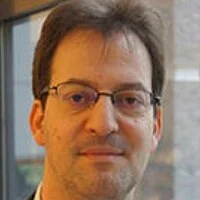 W.M. (Martin) de Jong合作论文数Department of Business-Society Management, Rotterdam School of Management, Erasmus University Rotterdam;Erasmus School of Law, Erasmus University Rotterdam;Institute for Gloabl Public Policy, Fudan University4
 J.L.T. (Jos) Blank合作论文数Department of Values, Technology and Innovation, Faculty of Technology, Policy and Management, Delft University of Technology3
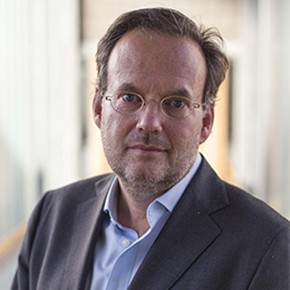 Hans de Bruijn合作论文数Faculty of Technology, Policy and Management, Delft University of Technology3
 Bram Klievink合作论文数Delft University of Technology3
 V.A.W.J. Marchau (Vincent)合作论文数Institute for Management Research, Radboud University3B Steenhuisen合作论文数2l van doorn合作论文数2Ruben Akse合作论文数2t k niaounakis合作论文数Fac Technol Policy & Management, Delft Univ Technol2
 Wei Yang合作论文数Corresponding author.2
 Vincent de Gooyert合作论文数Dept Business Adm, Radboud Univ Nijmegen2
 S.M. Ritter合作论文数Nijmegen School of Management, Radboud University2
 Ben Wagner合作论文数Faculty of Technology, Policy and Management, Delft University of Technology;AI Futures Lab, Delft University of Technology;Inholland University of Applied Sciences2
 J. W. G. M. van der Pas合作论文数2
 Suzanne Hiemstra-van Mastrigt合作论文数2
 Bauke.M. Steenhuisen合作论文数Department of Multi-Actor Systems, Faculty of Technology, Policy and Management, Delft University of Technology2
 Andrew Smith合作论文数Institute for Transport Studies, University of Leeds;Business School, University of Leeds;Department of Economics, Masaryk University2
 Niels van Oort合作论文数Department of Transport and Planning, Faculty of Civil Engineering and Geosciences, Delft University of Technology2JA de Bruijn合作论文数1
 Lars Lutje Lutje Schipholt合作论文数1
 Bertien Broekhans合作论文数1katrin augustin合作论文数1Barth Donners合作论文数1René Borsje合作论文数1Maria Hoop合作论文数1Gerald Hoekstra合作论文数1Ritsche A. Kloosterman合作论文数1
 Nejc Gerzinic合作论文数Dept Transport & Planning, Delft Univ Technol1
 Yun Song合作论文数Fac Technol Policy & Management, Delft Univ Technol1Alexander Paulsson合作论文数1Silvia Malpezzi合作论文数1
 Frank Witlox合作论文数Doctoral School of Natural Sciences, Ghent University;Department of Geograph, Ghent University;College of Civil Aviation, Nanjing University of Aeronautics and Astronautics1
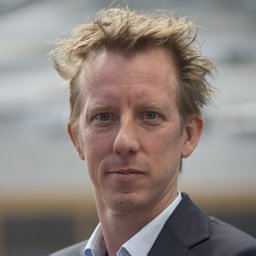 Jasper Van Kuijk合作论文数Faculty of Industrial Design Engineering, Delft University of Technology1
 Jan Peter van der Hoek合作论文数Department of Water Management, Faculty of Civil Engineering and Geosciences, Delft University of Technology1
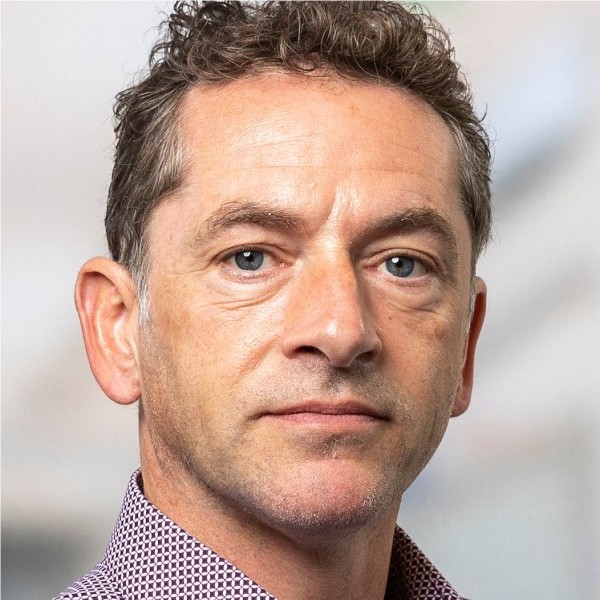 U. (Udo) Pesch合作论文数Department of Values, Technology & Innovation, Faculty of Technology, Policy and Management, Delft University of Technology1
 Corinne Mulley合作论文数Institute of Transport and Logistics Studies, The University of Sydney Business School1
 S. P. Hoogendoorn合作论文数Delft University of Technology;School of Transportation, South East University1
 Bruno Faivre D'Arcier合作论文数1
 Thijs Urlings合作论文数1




