This chapter provides an introductory guide to poststructuralist theory for researchers interested in conducting sport coaching research to develop pragmatic interventions perspective. Poststructuralism marked a strong paradigmatic shift away from the main tenets, and epistemological and ontological assumptions of positivism, but also of humanism/interpretivism and critical theory and their respective articulations of power, knowledge, truth, and reality. While a power relation might be fluid and mobile, it is not free in the sense that it is both regulated and produced through discourses or ways of knowing, which are perpetuated through our everyday practices. These everyday practices thus provide the limits and possibilities for understanding and practicing sport coaching. These coaching and sporting discourses can be subjected or marginalized or they can become dominant and problematically reified as universal coaching truths. To map discourses within a discursive field does not imply dividing dominant discourses from subjected ones as if discourses were fixed, permanent, and monolithic entities.
The purpose of this commentary is to provide a broad overview of the empirical research-based articles published in the International Sport Coaching Journal from its inception in 2014 through 2020. Data from 101 publications were collected and analyzed using Arksey and O’Malley’s six-stage framework for conducting scoping reviews. Data were extracted on the size and scope of research, populations and perspectives studied, and methodologies and data collection methods used. The results show that empirical research publications grew more prominent over time (i.e., 24.0% of 2014 publications vs. 58.1% of 2020 publications) compared with other publication types. The most commonly researched topics included coach development and coach behaviors. The participants most studied were male coaches, performance sport coaches, and adult sport coaches, featuring primarily European and North American coaches. The majority of studies used a qualitative methodology with the most common research designs being phenomenological and case studies. A variety of data collection methods were used that involved one-on-one interviews and questionnaires. Several recommendations are advanced to stakeholders, including strategies to promote racial and gender diversity and to collect and report demographic data on race and coaching experience.
This study investigated whether gratitude predicted burnout directly and indirectly through coach–athlete relationships. National Collegiate Athletic Association (NCAA) Divisions I ( n = 305), II ( n = 202), and III ( n = 89) student-athletes ( N = 596, 76.5% women) completed a survey regarding athlete burnout, coach–athlete relationships, trait gratitude, and state gratitude (sport and general). Structural equation modeling revealed that gratitude predicted athletes’ burnout. Sport state gratitude was the most accurate negative predictor of burnout. In addition, indirect associations between sport state gratitude and burnout emerged through coach–athlete relationships, suggesting that sport state gratitude was positively associated with coach–athlete relationships, which in turn, negatively predicted burnout. Coach–athlete relationships were positively predicted by sport state gratitude. These findings suggest that grateful student-athletes may experience less burnout, and athletes who have strong coach–athlete relationships may experience more gratitude.
Mindfulness-based interventions (MBIs) have shown efficacy with diverse populations. The training periods for sport MBIs range 4-10 weeks, but positive outcomes have been found during the first 2-4 weeks This is promising as athletes have busy schedules. Additionally, smartphone MBIs are gaining in popularity, but research with them is just beginning. Therefore, the purpose of this pilot study was to investigate a brief MBI with competitive high school baseball players. Participants included four athletes (mean 15.6 years) from one club team and their head coach. The athletes completed mindfulness training via Headspace (headspace.com). Each athlete was interviewed post-intervention. The head coach was also interviewed to gain insight into any observed changes in his athletes. Consensual Qualitative Research analysis resulted in four categories: Mindfulness, Readiness for Competition, Self-confidence, and Perceptions of the Intervention. All athletes discussed the MBI as facilitative for mental preparation for competition. Further, one athlete initially reporting low self-confidence, felt that his confidence improved after participation in the pilot study. Finally, all participants identified the app as a convenient way to practice mindfulness given their busy schedules. Positive outcomes in the current study are supported in the literature and provide insight into the efficacy and acceptability of a smartphone MBI. Future directions for research and implications for applied settings are discussed.
There is a growing body of research on positive tactile communication and its impact on athlete performance and team dynamics. The purpose of the present study was to examine the profile and perceived impact of positive tactile communication as a coaching strategy in a high-performance team sport setting. Participants were members of a successful American collegiate women's basketball team comprising the head coach, associate head coach, and 16 student-athletes. Methods of data collection included systematic observation and focus groups. Positive tactile communication was perceived to be an effective coaching strategy for enhancing relationships and athlete performance. To our knowledge, this is the first study to include both quantitative and qualitative data from multiple coaches on the same team, as well as athlete perceptions of coaches' strategic use of positive tactile communication.
The purpose of this study was to develop and validate the Coaching Athlete Purpose Scale (CAPS), designed to measure alignment between coaching purpose and the athlete-centered outcomes of competence, confidence, connection, and character (the 4Cs). Following literature review, a pool of items was developed and submitted for content validation to a panel of experts. These items were tested in four independent studies with intercollegiate coaches in the United States (N = 1347). In Study 1, initial factor structure was examined through exploratory factor analysis. In Study 2, the factorial structure was confirmed and the scale was further optimized for length. Confirmatory factor analyses were used in Studies 2, 3, and 4 to further assess psychometric properties and to test measurement invariance across sex, NCAA Division, employment status, and position. The final items of the scale were tested using a correlated-factor model, a bifactor model, and a second-order model within both the confirmatory factor analysis and exploratory structural equation modeling (i.e., Full-ESEM and Set-ESEM) frameworks. Overall, results provided strong evidence of construct validity and reliability, suggesting the 15item CAPS as a practical research and formative assessment tool for checking alignment between coaching purpose and athlete-centered outcomes.
Competitions in many team sports include short breaks (e.g., intermissions, halftime) where coaches have a unique opportunity to make tactical adjustments and communicate with athletes as a group. Although these breaks are significant coaching moments, very little is known about what successful coaches do during this time. The purpose of this study was to examine intermission routines and knowledge of highly experienced and successful National Collegiate Athletic Association (NCAA) ice hockey coaches. A thematic analysis was used to analyze semistructured and stimulated-recall interview data. Results revealed that coaching during intermissions was a continuous process influenced by the coaches' history and personal characteristics. Drawing on these factors, the coaches created an intermission routine that guided them as they analyzed unpredictable situational factors such as their team's performance and the athletes' emotional state. Overall, the results offer a rare glimpse into the intermission strategies of successful coaches in a high-performance setting.
The purpose of the present article is to share the design and impact of a coach-athlete relationship coach education seminar. The seminar is part of the United States Olympic Committee’s (USOC) National Team Coach Leadership Education Program (NTCLEP). Development and delivery of the seminar is facilitated by The People Academy (www.people.academy). Impact results from participation in this seminar are drawn from coaches and athletes from USA Archery and USA Cycling. The article is organized into three sections. In the first section an overview of the coach-athlete relationship building component of the USOC’s high performance coach education program is provided. Two case summaries are then presented on the impact of the program on coach-athlete relationships and athlete performance. The third and final section is used to offer suggestions for future coach education initiatives and coaching strategies aimed at enhancing coach-athlete relationships.
Coaches often identify social learning situations as the most valuable and influential to their learning. Thus, researchers have proposed implementing social learning initiatives, in particular, the community of practice approach. The purpose of the present study was to explore how an existing coach community of practice was created and sustained in a university setting, and to assess what value was created by participating in the community of practice. Participants included four National Collegiate Athletic Association Division 1 coaches from a university in the Southwestern United States. Data collection included an individual interview with each coach. Interviews were analysed using a value creation framework. The findings revealed that the coaches created value within all five cycles of Wenger et al.’s framework. In particular, the coaches learned a number of coaching strategies, some of which they were able to implement, and as a result, observe benefits in their coaching and athletes’ performance.
There is a growing worldwide interest in understanding optimal and healthy pathways for talent development in sport. The purpose of the study was to explore how familial, environmental and social factors facilitated the athletic development of elite Touch representatives who grew up in the small town of Petersville (pseudonym), New Zealand. An interest in understanding these factors influenced the decision to use an ecological model of development as an analytical lens and to apply (auto) ethnographic methodologies. The participants, which included the first author, grew up in Petersville and had represented New Zealand in the sport of Touch, in various capacities, i.e. of player, referee and manager. While the primary focus is on athletic development of the players who grew up in Petersville, they grew up in a community in which other members were active in the elite NZ Touch community. Consistent with an ecological view of development, the discussion illustrates how influential the referee (who was also the coach of the school Touch team) and the manager were to player development. The findings contribute to the literature by demonstrating a nuanced interpretation of the 'birthplace effect', particularly in countries with small populations and limited geographical areas.
The purpose of this study was to examine the experiences of competitive masters swimmers by asking them to describe desired coaching characteristics and perceived benefits associated with masters swimming. The research questions guiding this study were: What are masters swimmers’ desired coaching characteristics? What are masters swimmers’ perceptions regarding the benefits of participating in masters athletics? Semi-structured interviews were conducted with six competitive male masters swimmers aged 49–64 and the qualitative data were analysed using a thematic analysis. According to the athletes, their coaches used effective communication skills to establish positive environments that led to social, health, and performance improvements. In addition, the athletes reported how their coach's kept them focused and motivated prior to competitions when their training became more challenging. Results from this study are of interest to masters swimming athletes and coaches, and could be used to inform the development and design of programs that could optimise the performance and enjoyment of competitive masters swimmers.
Coach education researchers have suggested that coaches require ongoing support for their continued learning and development after initial certification. Communities of practice have been used in a variety of settings, and have been identified as an effective means for supporting coach learning and development. However, researchers have yet to fully explore the value that can be created through participating in them within sport settings. The purpose of this study was to collaboratively design, implement, and assess the value created within a coach community of practice, using Wenger, Trayner, and De Laat's (2011) Value Creation Framework. Participants included five youth sport coaches from a soccer organization. Data collection included observations and reflections from the first author throughout the study, two individual interviews with each coach, and interactions via an online discussion platform. The findings revealed that the coaches created value within each of the five cycles of value creation in Wenger and colleagues' framework, and that they created value that was personally relevant to their immediate coaching needs. The coaches' learning led to an increase in perceived coaching abilities.
The purpose of this paper is to summarize a decade-long effort to create a replicable methodology for the design and sustainable development of educationally effective sport programs. Working at a macro level in parallel to the single-sport efforts of groups such as USA Hockey at the micro level, our goal has been to integrate existing and proven approaches from sport and other fields into an interdisciplinary framework that sport leaders and policymakers could use to address challenges such as declining youth enrollment, athlete retention, inadequate coach training, and fan avidity. The name we have chosen for the proposed framework is Long Term Program Development (LTPD). In the first section of the paper, we share the interdisciplinary foundation of LTPD. The second section provides an overview of the LTPD framework. Examples of the LTPD framework in action are presented in the third section. The fourth and final section sets forth our ideas about the future of LTPD and the anticipated roles of all levels of sport to further develop and disseminate LTPD. Finally, throughout the paper we highlight the need for sport leaders, including coaches, to approach their work as a teacher and servant leader, a core tenet of the LTPD framework.
 Pierre Trudel合作论文数School of Human Kinetics, University of Ottawa24
 Jenelle Gilbert合作论文数13
 Gordon Bloom合作论文数Department of Kinesiology and Physical Education, Faculty of Education, McGill University8
 Jean Côté合作论文数School of Kinesiology and Health Studies, Faculty of Arts and Science, Queen's University8
 Diane Culver合作论文数School of Human Movement and Nutrition Sciences, Faculty of Health and Behavioural Sciences, The University of Queensland6
 Rachael Bertram合作论文数5Michael J. Sheridan合作论文数4sandrine rangeon合作论文数3Wenhua Zou (邹文华)合作论文数3
 Ronald G. Gallimore合作论文数Psychiatry, University of California, Los Angeles Los Angeles3Michael G. Coles合作论文数3swen nater合作论文数2Julia Allain合作论文数2derek schwandt合作论文数2leon haughian合作论文数2mark siwik合作论文数2Josh Motenko合作论文数2
 Mariya Yukhymenko合作论文数Department of Curriculum and Instruction, California State University2
 William Falcao合作论文数2Cynthia Morawski合作论文数2
 Mark William Bruner合作论文数Nipissing Univ2Dawn K. Lewis合作论文数1Guy Krueger合作论文数1
 Blake Costalupes合作论文数1Brittany Loney合作论文数1nadine dubina合作论文数1
 Jeffrey B. Ruser合作论文数1
 Scott R Sailor合作论文数Dept Kinesiol, Calif State Univ Fresno1
 Katherine E. Hirsch合作论文数Department of Kinesiology, University of Windsor1
 François Rodrigue合作论文数Coaching & Leadership, Univ Ottawa1
 Danielle Alexander合作论文数Dept Kinesiol & Phys Educ, McGill Univ1
 Matthew Vierimaa合作论文数School of Kinesiology, Acadia University1
 Terry Orlick合作论文数1
 Tania Cassidy合作论文数School of Human Movement and Nutrition Sciences, Faculty of Health and Behavioural Sciences, The University of Queensland1
 Jeff Caron合作论文数Department of Kinesiology and Physical Education, McGill University1
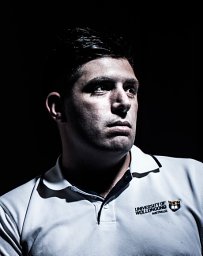 Stewart Vella合作论文数Univ Wollongong1
 Paul J. McCarthy合作论文数1
 Sophia Jowett合作论文数1Felicia Greer合作论文数1Lynnette C. Zelezny合作论文数1
 Cliff Mallett合作论文数School of Human Movement and Nutrition Sciences, The University of Queensland;Faculty of Health, Medicine and Behavioural Sciences, The University of Queensland;Parenting and Family Support Centre, The University of Queensland1Andrew C. Sparkes合作论文数1
 Todd Loughead合作论文数School of Kinesiology, University of Western Ontario1Valerie N. Jones-Harvey合作论文数1Jim Denison合作论文数1
 Francois Victor Tochon合作论文数1Luke Lichtenwaldt合作论文数1
 Karl Erickson合作论文数School of Kinesiology and Health Studies, Queen's University1
 Paul Potrac合作论文数Dept Sport Hlth & Exercise Sci, Univ Hull1




