Walter Müller: Entwicklung und Spätformen der Leibeigenschaft am Beispiel der Heiratsbeschränkungen. Die Ehegenoßsame im alemannisch-schweizerischen Raum. (Vorträge und Forschungen Sonderbd. 14, hrsg. v. Konstanzer Arbeitskreis für mittelalterliche Geschichte). Sigmaringen: Thorbecke 1974.174 S. DM 36,-.
This volume examines the role of education in shaping rates and patterns of intergenerational social mobility among men and women during the twentieth century. Focusing on the relationship between a person's social class and the social class of his or her parents, each chapter looks at a different country—the United States, Sweden, Germany, France, the Netherlands, Italy, Spain, and Switzerland. Contributors examine change in absolute and relative mobility and in education across birth cohorts born between the first decade of the twentieth century and the early 1970s. They find a striking similarity in trends across all countries, and in particular a contrast between the fortunes of people born before the 1950s, those who enjoyed increasing rates of upward mobility and a decline in the strength of the link between class origins and destinations, and later generations who experienced more downward mobility and little change in how origins and destinations are linked. This volume uncovers the factors that drove these shifts, revealing education as significant in promoting social openness. It will be an invaluable source for anyone who wants to understand the evolution of mobility and inequality in the contemporary world.
The chapter examines the role of education in social mobility among men and women in Germany during the twentieth century. It analyses two pathways of how a person’s social class origin affects her or his own class position: First, an education-mediated path, where a person’s social origin influences her or his educational attainment, which in turn influences the social class position she or he attains in adult life. Second, a path that comprises all the mechanisms not related to formal education by which social origins influence an adult’s social class position. Using data from various large-scale survey programs (ALLBUS, SOEP, NEPS), and based on log-linear modelling and decomposition methods, the chapter shows that in the long run social fluidity increased and that this is mainly associated with a decline in educational inequality and with an strong educational expansion for both men and women over the twentieth century.
Lieferung 4 Grab-, Sarg-, Votiv- und Bauinschriften by Christel Butterweck, Diethelm Conrad, Wilhelmus C. Delsman, Manfried Dietrich, Karl Hecker, Heike Sternberg-el Hotabi, Frank Kammerzell, Oswald Loretz, Hans-Peter Müller, Walter W. Müller, Boyo Ockinga, Willem H. Ph. Römer, Hans P. Roschinski was published on January 1, 1988 by Gütersloher Verlagshaus.
Dokumente zum Rechts- und Wirtschaftsleben by Diethelm Conrad, Wilhelmus C. Delsman, Manfried Dietrich, Otto Kaiser, Ursula Kaplony-Heckel, Oswald Loretz, Heiner Lutzmann, Walter W. Müller, Willem H. Ph. Römer, Einar von Schuler was published on January 1, 1983 by Gütersloher Verlagshaus.
Hochschulen vermitteln wie andere Bildungseinrichtungen auch explizit und in systemati-scher Weise Kompetenzen und Qualifikationen und tragen durch die Weitergabe von Orien-tierungen, Werten und sozialen Verhaltensweisen teils offen, teils implizit („hidden curricu-lum“) zur Sozialisation der Bevölkerung bei. Damit verbunden ist, was oft als Selektion, Statuszuweisung oder Statusdistribution bezeichnet wird: Die Chancen von Individuen auf unterschiedlich vorteilhafte Positionen im Erwerbssystem oder auf Positionen von Macht und Einfluss in anderen Bereichen sind in hohem Grad durch das Abschneiden im Bildungs-system geprägt. Die Erträge von Bildung sind aber nicht nur durch die gewonnenen Kompe-tenzen und Fähigkeiten oder das erworbene Wissen bestimmt. Zertifizierte Qualifikationen können auch Konsequenzen unabhängig vom Gelernten haben, und was letztlich als Berufs-oder Machtposition herauskommt, hängt auch von vielfältigen Bedingungen in den ver-schiedenen Ertragsfeldern ab. Was jemand im Bildungssystem erreicht, ist stark von unglei-chen Ausgangsbedingungen der familiären Herkunft beeinflusst. Deshalb werden über Bil-dung auch soziale Ungleichheiten von einer Generation auf die nachfolgende „vererbt“. Der Bildungserwerb ist aber nicht ausschließlich durch Bedingungen der Herkunft bestimmt. Bildung fördert deshalb nicht nur die Reproduktion sozialer Ungleichheit, sondern sie ist zugleich ein wichtiger Kanal sozialer Mobilität zwischen den Generationen.
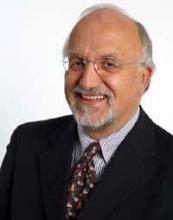
 Reinhard Pollak合作论文数Social Science Research Center Berlin19
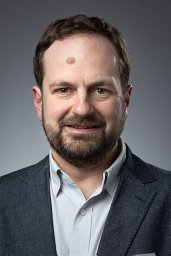
 Karl Mayer合作论文数Institution for Social and Policy Studies, Yale University;Center for Research on Social Inequalities and the Life Course, Yale University;Department of Sociology, Yale University19
 Heike Wirth合作论文数10
 Felix Weiss合作论文数Institut für Informatik, Universität Jena8Markus Gangl合作论文数6
 Franz Urban Pappi合作论文数Mannheimer Zentrum für Europäische Sozialforschung, Universität Mannheim6
 Yossi Shavit合作论文数University of Haifa6Wilhelmus C. Delsman合作论文数5
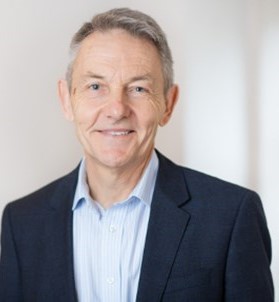 Richard Breen合作论文数Nuffield College, Oxford University/Department of Sociology, Oxford University5Oswald Loretz合作论文数5
 Gerrit Bauer合作论文数Universität Mannheim5Manfried Dietrich合作论文数5Johann Handl合作论文数4
 Karl-Dieter Opp合作论文数Department of Sociology, University of Washington;Institut fur Soziologie, Fakultät für Sozialwissenschaften und Philosophie, Universitat Leipzig4
 Klaus R. Allerbeck合作论文数4Willem H. Ph. Römer合作论文数4diethelm conrad合作论文数3Markus Klein合作论文数3Steinmann Susanne合作论文数3Henning Lohmann合作论文数3
 Ruud Luijkx合作论文数Department of Sociology, Tilburg University3Ursula Kaplony-Heckel合作论文数3Silvia Luber合作论文数3
 Stefani Scherer合作论文数Department of Sociology and Social Research, Trento University3
 Richard Arum合作论文数Department of Sociology, New York University3Heike Sternberg-el Hotabi合作论文数2Ernst Kausen合作论文数2Frank Kammerzell合作论文数2Karl Hecker合作论文数2christel butterweck合作论文数2E. von Schuler合作论文数2
 Cornelia Gresch合作论文数2Steffen Schindler合作论文数2Hildegard Brauns合作论文数2
 Jutta Allmendinger合作论文数WZB Berlin Social Science Center;Lehrbereich Bildungssoziologie und Arbeitsmarktforschung, Institut fur Sozialwissenschaften, Kultur-, Sozial- und Bildungswissenschaftlichen Fakultat, Humboldt University2
 George Bohrnstedt合作论文数American Institutes for Research2
 Karin Kurz合作论文数Institut für Soziologie, Universität Leipzig2
 Richard Alba合作论文数Graduate Center, The City University of New York2Heiner Lutzmann合作论文数2Norbert Nebes合作论文数1wilhelm burklin合作论文数1hubert feger合作论文数1John Ridge合作论文数1Steffen Kühnel合作论文数1Reinhart Schneider合作论文数1christel hopf合作论文数1
 Georg Pinter合作论文数1
 Katharina Pils合作论文数1Mitteilungen der ÖGGG合作论文数1




