Frequent Itemset Mining (FIM) is an important task in data analytics, where classical algorithms face scalability bottlenecks from the combinatorial growth of candidates and the memory overhead of their data structures. Inspired by recent developments in quantum computing, in this paper, we propose the Quantum Frequent-itemset Mining (QFM) data-processing framework for FIM. Following the level-wise structure of the itemset lattice, QFM introduces three mechanisms: (1) Bit-Vector Qubit Encoding for quantum data representation, which organizes transaction data into branchless bit-vectors to facilitate systematic uncomputation; (2) Mining-Aware Candidate Superposition, which prepares a quantum superposition over valid candidates at each lattice level rather than the full itemset lattice; and (3) Bit-Parallel Threshold Marking, which constructs a logarithmic-depth threshold-marking oracle for reliable repeated support verification within hardware coherence limits. We provide theoretical time complexity analysis, implement QFM on IBM Qiskit and Amazon Braket, and evaluate it on real-world datasets against representative classical baselines, where QFM achieves 96
The next Point-of-Interest (POI) recommendation task aims to predict users' next destinations based on their historical movement data and plays a key role in location-based services and personalized applications. Accurate next POI recommendation depends on effectively modeling geographic information and POI transition relations, which are crucial for capturing spatial dependencies and user movement patterns. While Large Language Models (LLMs) exhibit strong capabilities in semantic understanding and contextual reasoning, applying them to spatial tasks like next POI recommendation remains challenging. First, the infrequent nature of specific GPS coordinates makes it difficult for LLMs to model precise spatial contexts. Second, the lack of knowledge about POI transitions limits their ability to capture potential POI-POI relationships. To address these issues, we propose GA-LLM (Geography-Aware Large Language Model), a novel framework that enhances LLMs with two specialized components. The Geographic Coordinate Injection Module (GCIM) transforms GPS coordinates into spatial representations using hierarchical and Fourier-based positional encoding, enabling the model to understand geographic features from multiple perspectives. The POI Alignment Module (PAM) incorporates POI transition relations into the LLM's semantic space, allowing it to infer global POI relationships and generalize to unseen POIs. Experiments on three real-world datasets demonstrate the state-of-the-art performance of GA-LLM.
Traffic crash prediction (TCP) is a fundamental problem for intelligent transportation systems in smart cities. Improving the accuracy of traffic crash prediction is important for road safety and effective traffic management. Owing to recent advances in artificial neural networks, several new deep-learning models have been proposed for TCP. However, these works mainly focus on accidents in regions, which are typically pre-determined using a grid map. We argue that TCP for roads, especially for crashes at or near road intersections which account for more than 50% of the fatal or injury crashes based on the Federal Highway Administration, has a significant practical and research value and thus deserves more research. In this paper, we formulate TCP at Road Intersections as a classification problem and propose a three-phase data-driven deep learning model, called Road Intersection Traffic Crash Prediction (RoadInTCP), to predict traffic crashes at intersections by exploiting publicly available heterogeneous big data. In Phase I we extract discriminative latent features called topological-relational features (tr-features), of intersections using a neural network model by exploiting topological information of the road network and various relationships amongst nearby intersections. In Phase II, in addition to tr-features which capture some inherent properties of the road network, we also explore additional thematic information in terms of environmental, traffic, weather, risk, and calendar features associated with intersections. In order to incorporate the potential correlation in nearby intersections, we utilize a Graph Convolution Network (GCN) to aggregate features from neighboring intersections based on a message-passing paradigm for TCP. While Phase II serves well as a TCP model, we further explore the signals embedded in the sequential feature changes over time for TCP in Phase III, by exploring RNN or 1DCNN which have known success on sequential data. Additionally, to address the serious issues of imbalanced classes in TCP and large-scale heterogeneous big data, we propose an effective data sampling approach in data preparation to facilitate model training. We evaluate the proposed RoadInTCP model via extensive experiments on a real-world New York City traffic dataset. The experimental results show that the proposed RoadInTCP robustly outperforms existing methods.
Recently, Non-Fungible Tokens (NFTs) have attracted attention as valuable digital assets. However, NFT marketplaces face complex challenges in simultaneously recommending optimal pricing to sellers and desirable NFTs to buyers. Unlike conventional marketplaces that focus only on balancing demand and supply between sellers and buyers, these tasks are complicated by intricate value interdependencies arising from diverse buyer preferences, budgets, trait rarities, and the unprecedented breeding mechanisms. This paper formulates the NFT Project Pricing/Purchasing Recommendation ((NPR)-R-3) problem, aiming to achieve a competitive equilibrium that concurrently optimizes seller revenue and buyer utility. We introduce BANTER, an iterative algorithm that jointly determines (1) optimal NFT purchases for buyers (via NFT-REC), considering breeding utility and current prices; and (2) optimal pricing for sellers (via PRICE-REC), based on aggregated demand from NFT-REC. To efficiently manage the combinatorial complexity of breeding, we devise Optimal Parent Pair Selection (OPPS) and Heterogeneous Parent Set Selection (HPSS) schemes. Theoretical analysis guarantees BANTER to converge to a competitive equilibrium. Experiments on five real-world NFT datasets demonstrate its effectiveness in enhancing both seller revenue and average buyer utility. Source code: https://github.com/jimmy-academia/BANTER
Non-fungible tokens (NFTs) have emerged as a transformative innovation in art and technology, relying heavily on social networks for promotion and revenue generation. The value of NFTs is profoundly influenced by their scarcity, rarity, and unique breeding mechanisms, which present novel challenges for viral marketing strategies. In this paper, we introduce a new research problem of NFT Revenue Maximization (NRM), which focuses on maximizing revenue from the perspective of NFT marketplaces by optimally selecting users for viral marketing campaigns (NFT airdrops) and determining the ideal quantities of NFTs to release. We prove the hardness of NRM and propose an approximation algorithm named Quantity and Offspring-Oriented Airdrops (QOOA). Our algorithm leverages the concepts of Scarcity-Conscious Revenue and Valuation-based Quantity Inequality to prune suboptimal airdrops and quantities at an early stage. To further enhance revenue through NFT breeding, QOOA identifies and incentivizes Rare Trait Collectors to acquire multiple NFTs with rare traits, facilitating the breeding of high-value offspring. Experimental results demonstrate that QOOA significantly outperforms baselines, achieving up to 3.8 times higher revenue in large-scale social networks.
In this “Info-plosion” era, recommendation systems (or recommenders) play a significant role in finding interesting items in a surge of the on-line digital activity and e-commerce. Because of its practicability, the matrix factorization (MF) technique has been widely applied for recommendation systems. Prior MF-based studies on recommendations generally extract latent factors from users and items to make recommendations. However, user's preferences may change over time in real-world applications. In this paper, by integrating the transformer and matrix factorization techniques, a novel recommendation system, namely Evolution-Based Transformer Recommendation (Evo-TransRec), is developed to effectively describe the evolution of user preferences over time. Several optimization techniques are equipped to Evo-TransRec to capture the evolution relations and predict the user preference. The experimental results show that Evo-TransRec outperforms all the state-of-the-art baselines on real datasets to demonstrate the practicability.
In this "info-plosion" era, recommendation systems (or recommenders) play a significant role in finding interesting items in the surge of online digital activities and e-commerce. Several techniques have been widely applied for recommendation systems, but the cold-start and sparsity problems remain a major challenge. The cold-start problem occurs when generating recommendations for new users and items without sufficient information. Sparsity refers to the problem of having a large amount of users and items but with few transactions or interactions. In this article, a novel cross-domain recommendation model, Cross-Domain Evolution Learning Recommendation (abbreviated as CD-ELR), is developed to communicate the information from different domains in order to tackle the cold-start and sparsity issues by integrating matrix factorization and recurrent neural network. We introduce an evolutionary concept to describe the preference variation of users over time. Furthermore, several optimization methods are developed for combining the domain features for precision recommendation. Experimental results show that CD-ELR outperforms existing state-of-the-art recommendation baselines. Finally, we conduct experiments on several real-world datasets to demonstrate the practicability of the proposed CD-ELR.
Virtual Reality (VR) has emerged due to advancements in hardware and computer graphics. During the pandemic, conferences and exhibitions leveraging VR have gained attention. However, large-scale VR conferences, face a significant problem not yet studied in the literature -- displaying too many irrelevant users on the screen which may negatively impact the user experience. To address this issue, we formulate a new research problem, Social-Aware VR Conference Group Display Configuration (SVGD). Accordingly, we design the Social Utility-Aware VR Conference Group Formation (SVC) algorithm, which is a 2-approximation algorithm to SVGD. SVC iteratively selects either the P-Configuration or S-Configuration based on their effective ratios. This ensures that in each iteration, SVC identifies and chooses the solution with the highest current effectiveness. Experiments on real metaverse datasets show that the proposed SVC outperforms 11 baselines by 75% in terms of solution quality.
Solving a combinatorial optimization problem is a challenging algorithm design task that demands a comprehensive understanding of the tackled problem and the design of a novel strategy to find the optimal solution efficiently. Owing to the advances in machine learning and research interests in exploring, machine learning techniques to tackle combinatorial optimization problems on graphs have grown recently. One of the key challenges in this research effort is to accurately capture the important information in the graph structure and partial solutions appearing in the intermediate steps toward finding the solution. To overcome this issue, we propose a new model, namely, State-Aware Multi-relation Aggregation (SAMA). Experiments conducted on graphs that are artificially generated and appearing in real applications demonstrate the superiority of SAMA over alternative algorithmic and learning-based models.
Reinforcement learning to solve graph optimization problems has attracted increasing attention recently. Typically, these models require extensive training over numerous graph instances to develop generalizable strategies across diverse graph types, demanding significant computational resources and time. Instead of tackling these problems one by one, we propose to employ transfer learning to utilize knowledge gained from solving one graph optimization problem to aid in solving another. Our proposed framework, dubbed the State Extraction with Transfer-learning (SET), focuses on quickly adapting a model trained for a specific graph optimization task to a new but related problem by considering the distributional differences among the objective values between the graph optimization problems. We conduct a series of experimental evaluations on graphs that are both synthetically generated and sourced from real-world data. The results demonstrate that SET outperforms other algorithmic and learning-based baselines. Additionally, our analysis of knowledge transferability provides insights into the effectiveness of applying models trained on one graph optimization task to another. Our study is one of the first studies exploring transfer learning in the context of graph optimization problems.
Recently, the expressive power of GNNs has been analyzed based on their ability to determine if two given graphs are isomorphic using the WL-test. However, previous analyses only establish the expressiveness of GNNs for graph-level tasks from a global perspective. In this paper, we analyze the expressive power of GNNs in terms of Graph Reconstructability, which aims to examine whether the topological information of graphs can be recovered from a local (node-level) perspective. We answer this question by analyzing how the output node embeddings extracted from GNNs may maintain important information for reconstructing the input graph structure. Moreover, we generalize GNNs in the form of Graph Reconstructable Neural Network (GRNN) and explore Nearly Orthogonal Random Features (NORF) to retain graph reconstructability. Experimental results demonstrate that GRNN outperforms representative baselines in reconstructability and efficiency.
Real-time social interactions and multi-streaming are two critical features of live streaming services. In this paper, we formulate a new fundamental service query, Social-aware Diverse and Preferred Organization Query (SDSQ), that jointly selects a set of diverse and preferred live streaming channels and a group of socially tight viewers for organization of a live multi-streaming soiree. We prove that SDSQ is NP-hard and inapproximable within any factor, and design SDSSel, a 2-approximation algorithm with a guaranteed error bound. Moreover, we study SDSQ-T, a special case of SDSQ, where the social graph is a threshold graph, and propose TDSSel, a 2-approximation algorithm without any error to SDSQ-T. We propose two pruning strategies, PCP and CDP to boost SDSSel and TDSSel. We further propose a more challenging but practical service query, Generalized Social-aware Maximum Preferred and Diverse Query (GSPQ), a generalization of SDSQ. We design GPDSel, a 4-approximation algorithm for GSPQ with a guaranteed error bound. We propose a strategy to improve the approximation ratios of the proposed algorithms. A user study on Twitch validates SDSQ, and the large-scale experiments on real datasets demonstrate the superiority of the proposed algorithms over several baselines for live-streaming services.
Time series classification has ubiquitous applications in the real world. Owing to its importance, many time series classification techniques have been proposed over years. Among them, neural network based methods have attracted significant research attention due to their ability to automatically extract latent and discriminative features from data. In this paper, we explore relationship features , which provide valuable global information for time series analytics, and propose a general neural network architecture, namely Rel-CNN , to learn both global and local subsequence features for time series classification. Moreover, we provide two detailed model designs, Relationship Feature based Convolution Filtering and Latent Relationship Feature based Convolution Filtering , and address technical issues due to excessive parameters to learn in these models. We evaluate our models and baselines on time series classification, with extensive experiments on the widely-used 85 uni-variate “bake-off” datasets and 8 multi-variate UEA datasets. Experimental results show that our Rel-CNN models are superior to the representative time series classifiers, in terms of average accuracy, average Macro-f1 and ranking metrics. In addition, an ensemble version of Rel-CNN also outperforms the state-of-the-art ensemble classifiers in terms of average rank, average accuracy and average Macro-f1 on the bake-off datasets.
Data poisoning attacks against recommender systems (RecSys) often assume a single seller as the adversary. However, in reality, there are usually multiple sellers attempting to promote their items through RecSys manipulation. To obtain the best data poisoning plan, it is important for an attacker to anticipate and withstand the actions of his opponents. This work studies the problem of Multiplayer Comprehensive Attack (MCA) from the perspective of the attacker, considering the subsequent attacks by his opponents. In MCA, we target the Heterogeneous RecSys, where user-item interaction records, user social network, and item correlation graph are used for recommendations. To tackle MCA, we present the Multilevel Stackelberg Optimization over Progressive Differentiable Surrogate (MSOPDS). The Multilevel Stackelberg Optimization (MSO) method is used to form the optimum strategies by solving the Stackelberg game equilibrium between the attacker and his opponents, while the Progressive Differentiable Surrogate (PDS) addresses technical challenges in deriving gradients for candidate poisoning actions. Experiments on Heterogeneous RecSys trained with public datasets show that MSOPDS outperforms all examined prior works by up to 10.6% in average predicted ratings and up to 11.4% in HitRate@3 for an item targeted by an attacker facing one opponent. Source code provided in https://github.com/jimmy-academia/MSOPDS.
Socially tenuous groups (or simply tenuous groups) in a social network/graph refer to subgraphs with few social interactions and weak relationships among members. However, existing studies on tenuous group queries do not consider the user profiles (keywords) of the members whereas in many social network applications, e.g., finding reviewers for paper selection and recommending seed users in social advertising, keywords also need to be considered. Thus, in this paper, we investigate the problem of keywords-based socially tenous group (KTG) queries. A KTG query is to find top N tenuous groups in which the members of each group jointly cover the most number of query keywords. To address the KTG problem, we first propose two exact algorithms, namely KTG-VKC and KTG-VKC-DEG, which give priority to the valid keyword coverage and the combination of valid keyword coverage and degree, respectively, to select members to form a feasible group by adopting a branch and bound (BB) strategy. Moreover, we propose keyword pruning and k-line filtering to accelerate the algorithms. To yield diversified KTG results, we also study the problem of diversified keywords-based socially tenous group (DKTG) queries. To deal with the DKTG problem, we propose a DKTG-Greedy algorithm by exploiting a greedy heuristic in combination with KTG-VKC-DEG. Furthermore, we design two alternative indexes, namely NL and NLRNL, to efficiently check whether the social distance of any two members is greater than the social constraint k in the above algorithms. We conduct extensive experiments using real datasets to validate our ideas and evaluate the proposed algorithms. Experimental results show that the NLRNL index achieves a better performance than the NL index.
In this article, we study a novel variant of geo-social group queries, namely, keyword-based geo-social group (KGSG) queries. Motivated by group-based activity planning, KGSG ensures that the attendees have a good social relationship, are close enough to the activity location, and are interested in the activity. Efficient processing of the KGSG query is very challenging as the problem is NP-hard. To address the challenge, we first propose two R-tree based algorithms, namely Distance Ordering based (Baseline) and Breadth Distance Ordering with Neighbor Expanding (BDONE). To further improve these two R-tree based algorithms, we propose a new keyword-aware social spatial index, called SIR-tree, which incorporates spatial, social, and keyword information into an R-tree. The novelty of SIR-tree lies in the idea of projecting the social relationships of an LBSN on the spatial layer which also maintains the users’ keyword information, to facilitate efficient KGSG query processing. Accordingly, we develop an efficient algorithm, called KGSG by SIR-tree Acceleration (KGSG-SIR), which exploits SIR-tree to accelerate query processing of KGSG. We conduct an extensive performance evaluation using four real datasets to validate our ideas and the proposed algorithms. The experimental result shows that the KGSG-SIR algorithm outperforms the two algorithms significantly.
The phenomena of influence diffusion on social networks have received tremendous research interests in the past decade. While most prior works mainly focus on predicting the total influence spread on a single network, a marketing campaign that exploits influence diffusion often involves multiple channels with various information disseminated on different media. In this paper, we introduce a new influence estimation problem, namely Content-aware Multi-channel Influence Diffusion (CMID), and accordingly propose CMINet to predict newly influenced users, given a set of seed users with different multimedia contents. In CMINet, we first introduce DiffGNN to encode the influencing power of users (nodes) and Influence-aware Optimal Transport (IOT) to align the embeddings to address the distribution shift across different diffusion channels. Then, we transform CMID into a node classification problem and propose Social-based Multimedia Feature Extractor (SMFE) and Content-aware Multi-channel Influence Propagation (CMIP) to jointly learn the user preferences on multimedia contents and predict the susceptibility of users. Furthermore, we prove that CMINet preserves monotonicity and submodularity, thus enabling (1 − 1/e)-approximate solutions for influence maximization. Experimental results manifest that CMINet outperforms eleven baselines on three public datasets.
Geo-social group queries, which return a social cohesive user group with a spatial constraint, have receive significant research interests due to their promising applications for group-based activity planning and scheduling in location-based social networks (LBSNs). However, existing studies on geo-social group queries mostly assume the users are stationary whereas in realistic LBSN application scenarios all users may continuously move over time. Thus, in this paper, we investigate the problem of continuous geo-social groups monitoring (CGSGM) over moving users. A challenge in answering CGSGM queries over moving users is how to efficiently update geo-social groups when users are continuously moving. To address the CGSGM problem, we first propose a baseline algorithm, namely Baseline-BB, which recomputes the new geo-social groups from scratch at each time instance by utilizing a branch and bound (BB) strategy. To improve the inefficiency of BB, we explore a new strategy, called common neighbor or neighbor expanding (CNNE), which expands the common neighbors of edges or the neighbors of users in intermediate groups to quickly produce the valid group combinations. Accordingly, another baseline algorithm, namely Baseline-CNNE, is proposed. As these baseline algorithms do not maintain intermediate results to facilitate further query processing, we develop an incremental algorithm, called incremental monitoring algorithm (IMA), which maintains the support, common neighbors and the neighbors of current users when exploring possible user groups for further updates and query processing. Since IMA requires many times of truss decomposition when processing mutiple-users updates, we propose an improved incremental algorithm, called improved incremental monitoring algorithm (IIMA), which performs truss decompostion only once. Moreover, we design algorithms for handling the social changes that result in insertion/deletion of some edges in the social network. Owing to the challenge in setting, an appropriate monitoring distance, we further study the top $N$N CGSGM problem, which finds top $N$N result groups at each time instance. Finally, we conduct extensive experiments using four real datasets to validate our ideas and evaluate the proposed algorithms.
 Dik Lun Lee (李廸麟)合作论文数Department of Computer Science and Engineering, School of Engineering, The Hong Kong University of Science and Technology52
 Jianliang Xu (徐建良)合作论文数Blockchain and FinTech Lab, Department of Computer Science, Hong Kong Baptist University45
 Baihua Zheng (郑白桦)合作论文数School of Computing and Information Systems, Singapore Management University44
 De-Nian Yang (楊得年)合作论文数Institute of Information Science, Academia Sinica42
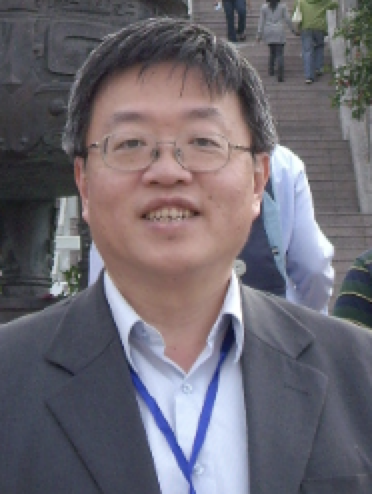 Ming-Syan Chen (陳銘憲)合作论文数Department of Electrical Engineering, National Taiwan University;Nanyang Technological University23
 Mao Ye合作论文数Coupang20
 Chih-Ya Shen (沈之涯)合作论文数Department of Computer Science, National Tsing Hua University20
 Yingqi Xu合作论文数18
 Wen-Chih Peng (彭文志)合作论文数Department of Computer Science, National Yang Ming Chiao Tung University;Advanced Database System Laboratory, National Yang Ming Chiao Tung University18
 Tao-Yang Fu合作论文数Pinterest16
 Ken C. K. Lee合作论文数Amazon Web Services16
 Huajing Li合作论文数16
 Anand Sivasubramaniam合作论文数Department of Computer Science and Engineering, School of Electrical Engineering and Computer Science, College of Engineering, The Pennsylvania State University;Institute of Energy and the Environment, The Pennsylvania State University15
 Philip S. Yu (俞士綸)合作论文数Department of Computer Science, College of Engineering, University of Illinois Chicago;Big Data and Social Computing Lab, University of Illinois Chicago15
 Hong-Han Shuai (帥宏翰)合作论文数Department of Electronics and Electrical Engineering, National Chiao Tung University;Institute of Electrical and Computer Engineering, National Chiao Tung University13
 Peifeng Yin合作论文数Pinterest13
 Zhen Lei合作论文数John and Willie Leone Family Department of Energy and Mineral Engineering, College of Earth and Mineral Sciences, The Pennsylvania State University12
 Peng Liu合作论文数College of Information Sciences and Technology, Pennsylvania State University12
 Xueyan Tang合作论文数School of Computer Engineering, College of Computing and Data Science, Nanyang Technological University;School of Computer Science and Engineering, Nanyang Technological University12Qinglong Hu合作论文数Creighton University Medical Center;Pathology12
 C. Lee Giles合作论文数College of Information Sciences and Technology, The Pennsylvania State University11
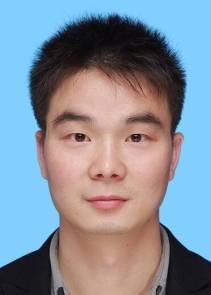 Huaijie Zhu (朱怀杰)合作论文数School of Artificial Intelligence, Sun Yat-sen University11Xingjie Liu合作论文数10Mei Li合作论文数10Julian Winter合作论文数9
 Meng-Fen Chiang合作论文数Singapore Management University8
 Paul Bonoli合作论文数Plasma Science and Fusion Center, Massachusetts Institute of Technology8
 Jian Yin (印鉴)合作论文数School of Artificial Intelligence, Sun Yat-Sen University8
 Ge Yu (于戈)合作论文数College of Computer Science and Engineering, Northeastern University8
 Dongwon Lee合作论文数College of Information Sciences and Technology, The Pennsylvania State University8
 Vincent S. Tseng (Vincent Shin-Mu Tseng) (曾新穆)合作论文数Department of Computer Science, National Yang Ming Chiao Tung University;Institute of Data Science and Engineering, College of Computer Science, National Yang Ming Chiao Tung University8
 Gail J Mitchell合作论文数School of Nursing, Faculty of Health, York University8
 Stephen J. Wukitch合作论文数Plasma Science and Fusion Center, Massachusetts Institute of Technology8
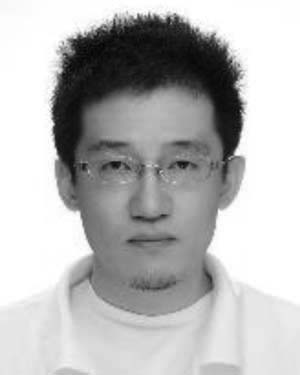 Yi-Cheng Chen合作论文数Dept Comp Sci & Informat Engn, Tamkang Univ7G. Schilling合作论文数7
 Wei Liu (刘威)合作论文数School of Artificial Intelligence, Sun Yat-sen University7
 LIM Ee Peng合作论文数School of Computing and Information Systems, Singapore Management University7
 Miklos Porkolab合作论文数Department of Physics, Massachusetts Institute of Technology;Plasma Science and Fusion Center, Massachusetts Institute of Technology7Hui-Ju Hung合作论文数6Cl Fiore合作论文数6Es Marmar合作论文数6Hsi-Wen Chen合作论文数Department of Electrical Engineering, National Taiwan University6
 Isaac Councill合作论文数6
 Bo Luo合作论文数Department of Electrical Engineering and Computer Science, School of Engineering, The University of Kansas;High Assurance and Secure Systems Research Center, Institute for Information Sciences, The University of Kansas6Alan E Hubbard合作论文数6Rejean Boivin合作论文数6E. Nelson-Melby合作论文数6
 Qi He合作论文数Nextdoor;ACM CIKM6