In a triumph of science, the first two large-scale trials to report the effectiveness of vaccines against SARS-CoV-2—the deadly, highly contagious virus that causes COVID-19—were both great successes right out of the gate. In November, the pharmaceutical giant Pfizer and the much younger biotech company Moderna both reported that their vaccines were about 95 percent effective in preventing cases of COVID-19. The news came just 10 months after the virus was first isolated and sequenced in a lab in China.
A dozen interstellar objects may be passing near the Sun.
Reflective, conductive, and magnetic, U-carbon could have many practical uses—if it's real.
Michael E. Brown is often called "the guy who killed Pluto." But he takes the moniker in stride. Sitting in his sunny Pasadena office at the California Institute of Technology, Brown jokes that Pluto, which was reclassified as a dwarf planet in 2006, had it coming. The year before, Brown had discovered Eris, a frosty dwarf in the outer solar system more massive than Pluto and named, fittingly, for the Greek goddess of strife.
a young man, I yearned for a machine like the ship's computer on Star Trek: a gadget that can listen and obey a human voice, and answer in kind. Fifteen years ago, after reading about university researchers who had gotten voice-controlled artificial intelligence systems working, I taught myself Linux and set up a server in my attic in the hope that the technology had arrived to let me build such a thing myself. It had not.
The Bioconductor project gathers genomics tools and data into a handy package that can run in the cloud. The Bioconductor project gathers genomics tools and data into a handy package that can run in the cloud.
Radioactive tritium promises a bigger bang for Sandia's Z machine but poses safety issues.
The last straw was a midday break-in right next door. For months, my wife and I had worried that our neighborhood in the Seattle suburbs was suffering from a nasty rash of home burglaries. We had toyed with getting a security system for our house but balked at the monthly fees and installation hassle of conventional systems. Then our neighbors alerted us that intruders had just busted into their home—only a few meters from ours—in broad dayligh
Some 20 years ago, Bill Gates was the king of computing, and not above boasting about his new high-tech house. In his book The Road Ahead he described how large monitors in the house would display great works of art, changing every day. These digital art frames could even react as you walked past, no button pushing required. Now that, I remember thinking, is something I would like. . Gates predict...
The Ototo board is an invention for musical innovators; it is to would-be creators of playable instruments what a prototyping board is to circuit builders. The board makes it easy to connect both everyday objects and a wide range of analog sensors to a music synthesizer. Any vaguely conductive surface (metallic duct tape, the skin of a fruit, and so forth) becomes a touch sensor once wired to one of 12 large pads on the board, which correspond to one octave of notes. Additional sensors can be plugged into any one of the four headers, which provide 5 volts, a ground, and a voltage-sensing input. The inputs from these can alter the pitch, amplitude, and timbre of sounds. There's a built-in speaker, and a stereo headphone jack can send sounds to an amplifier. · But the most powerful feature of the Ototo–what really elevates it from toy to tool–is that when you connect it to a computer via the board's Micro–USB port, it functions as a musical instrument digital interface (MIDI) controller. This means it translates both key touches and analog sensor values into a stream of commands for software instruments. MIDI is the universal language of digital musical instruments, and it was this feature I was most eager to explore. In particular, I was wondering whether it could help me play a beautiful violin romance by Antonin Dvorak, even though I've never had a lesson. · Yuri Suzuki and Mark McKeague, the creators of the Ototo (which was developed along with Naomi Elliott and Joseph Pleass), are cofounders of the London design firm Dentaku, and the board reflects their artistic interest in encouraging people to interact with sound and music in new ways. The video that they and their friends made to demonstrate the first prototypes of the Ototo early last year showed instruments made from cardboard, vegetables, and bowls of water. It's cool stuff, if not practical for serious music making.
As an old-school writer, I prefer my reading matter printed and bound. But as an avid piano player, I am sick to death of music books. The music stand on our Baldwin grand piano holds a few pages laid side by side just fine. But most piano music is sold in songbooks: double-sided pages bound to inflexible spines. These books close up on you midsong when they are new; they fall to pieces when they ...
Most of us bake, roast, and broil our food using a technology that was invented 5,000 years ago for drying mud bricks: the oven. The original oven was clay, heated by a wood fire. Today, the typical oven is a box covered in shiny steel or sparkling enamel, powered by gas or electricity. But inside the oven, little has changed.
In 1979, when I was 11 and enthralled by Star Wars, magnetism held a special appeal. It was the closest thing in the real world to "the Force." So for our fifth-grade science project, a friend and I wrapped my dad‚s iron chisel with wire to make an electromagnet. When connected to a lantern battery, it grabbed, repulsed, and spun bar magnets like magic. But when we got curious and plugged it into ...
Long-term study will monitor healthy people in detail — and encourage them to respond to the results.
 Nathan Myhrvold合作论文数11
 christine soares c合作论文数4G Stix合作论文数4M Alpert合作论文数3Graham P. Collins合作论文数3M May合作论文数2M Fischetti合作论文数2C Ezzell合作论文数2PE Ross合作论文数2S Ashley合作论文数2Douglas Fox合作论文数2
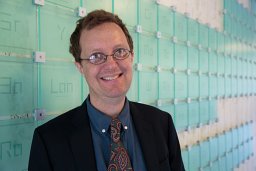 George S. Musser合作论文数2Corey S. Powell合作论文数2c q choi合作论文数1Steven Ashley合作论文数1wen he wu tian (文和 武田)合作论文数1GP Collins合作论文数1
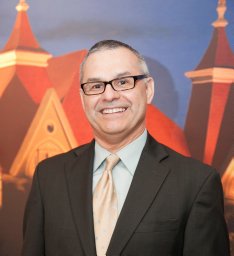 Ruben Garza合作论文数Curriculum & Instruction and Office of Educator Preparation, College of Education1Bonner, J.T.合作论文数1
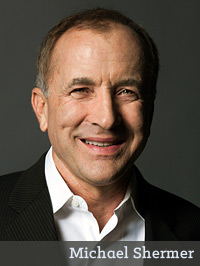 Michael Shermer合作论文数Skeptics Society1




