In this paper, we propose and analyze multiscale hybridizable discontinuous Galerkin (HDG) methods for solving a class of second-order equations with oscillatory solutions in one dimension. The high-order multiscale finite element spaces Ep and T2p +1 contain non-polynomial basis functions that incorporate fine-scale features, as developed in our previous work (Dong and Wang, 2020). We prove that the resulting multiscale HDG method with the Ep space achieves optimal convergence in both the primary variable and its derivative with respect to the mesh size h, provided h is sufficiently small. Numerical experiments demonstrate that for both Ep and T2p +1 spaces, the multiscale HDG methods exhibit second-order convergence without any resonance errors even when h is comparable to or larger than the wavelength scale, whereas the traditional HDG method with polynomial basis functions fails to converge in this regime. When h is smaller than the scale of the wavelength, numerical results confirm the optimal high-order convergence predicted by the error analysis. Our numerical results also demonstrate that the proposed methods are capable of capturing highly oscillating solutions of the Schr & ouml;dinger equation in the application of the resonant tunneling diode (RTD) model.
In this work, we develop a novel sparsity reconstruction algorithm for Electrical Impedance Tomography (EIT), focusing on problems where the region of interest contains relatively simple, localized inhomogeneities. The optimization framework employs l^1 -norm regularization to promote sparsity, combined with the soft shrinkage algorithm. Our key ingredient is incorporating the Adam (Adaptive Moment Estimation) algorithm for adaptive step sizes and directions, enhancing both convergence speed and accuracy. The optimization problem is solved numerically using a high-order Discontinuous Galerkin (DG) method with quadratic polynomials. Numerical results demonstrate the efficiency and accuracy of the proposed sparsity reconstruction method with Adam, with comparisons to the smoothness regularization also presented.
In this work, we extend our previous work (Li and Wang, 2023) of the discontinuous Galerkin (DG) method for Electrical Impedance Tomography (EIT) with full data to partial data where the current and voltage measurements are taken only on part of the boundary. Additionally, we provide the convergence analysis of the DG approximation for EIT for partial data based on an iterative method with Tikhonov regularization. We prove that the minimizers of the discrete optimization problems converge to a minimizer of the continuous optimization problem as the mesh sizes of the discretization approach zero. Numerical results for the recovery of conductivities are tested with different types of partial data. The partial data results are demonstrated to be comparable to the full data results.
In this work, we develop an efficient high order discontinuous Galerkin (DG) method for solving the Electrical Impedance Tomography (EIT). EIT is a highly nonlinear ill-posed inverse problem where the interior conductivity of an object is recovered from the surface measurements of voltage and current flux. We first propose a new optimization problem based on the recovery of the conductivity from the Dirichlet-to-Neumann map to minimize the mismatch between the predicted current and the measured current on the boundary. And we further prove the existence of the minimizer. Numerically the optimization problem is solved by a third order DG method with quadratic polynomials. Numerical results for several two-dimensional problems with both single and multiple inclusions are demonstrated to show the high accuracy and efficiency of the proposed high order DG method. Analysis and computation for discontinuous conductivities are also studied in this work.
We develop and analyze a high-order multiscale discontinuous Galerkin (DG) method for two-dimensional stationary Schrödinger equations in quantum transport. The solution of the problem under consideration has oscillations mainly in one direction, so we include oscillatory non-polynomial basis functions in that direction and use polynomial basis in the other direction to approximate the solution. We prove that the resulting method converges with an optimal order when the mesh size is sufficiently small. Numerically we observe that the method converges on coarse meshes and achieves optimal higher-order convergence when the mesh size is refined to the scale of the wave length. Numerical results show that the method can capture highly oscillating solutions of Schrödinger equations more effectively than standard DG methods with polynomial basis.
In this paper, numerical experiments are carried out to investigate the impact of penalty parameters in the numerical traces on the resonance errors of high-order multiscale discontinuous Galerkin (DG) methods (Dong et al. in J Sci Comput 66: 321–345, 2016; Dong and Wang in J Comput Appl Math 380: 1–11, 2020) for a one-dimensional stationary Schrödinger equation. Previous work showed that penalty parameters were required to be positive in error analysis, but the methods with zero penalty parameters worked fine in numerical simulations on coarse meshes. In this work, by performing extensive numerical experiments, we discover that zero penalty parameters lead to resonance errors in the multiscale DG methods, and taking positive penalty parameters can effectively reduce resonance errors and make the matrix in the global linear system have better condition numbers.
We develop a new high-order multiscale discontinuous Galerkin (DG) method for a class of second-order equations with oscillatory solutions in two-dimensional space. The solutions of these equations mainly oscillate in one direction, so we use non-polynomial basis functions in that direction and polynomial basis in the other direction. Numerically we observe that the method converges on coarse meshes where traditional DG methods fail. On fine meshes, our method achieves optimal higher-order convergence and the errors are several magnitudes smaller than those of traditional DG methods.
SummaryA hybrid Eulerian‐Lagrangian particle‐in‐cell–type numerical method is developed for the solution of advection‐dominated flow problems. Particular attention is given over to the high‐order transfer of flow properties from the particles to the grid. For smooth flows, the method presented is of formal high‐order accuracy in space. The method is applied to solve the nonlinear shallow water equations resulting in a new, and novel, shock capturing shallow water solver. The approach is able to simulate complex shallow water flows, which can contain an arbitrary number of discontinuities. Both trivial and nontrivial bottom topography is considered, and it is shown that the new scheme is inherently well balanced, exactly satisfying the ‐property. The scheme is verified against several one‐dimensional benchmark shallow water problems. These include cases that involve transcritical flow regimes, shock waves, and nontrivial bathymetry. In all the test cases presented, very good results are obtained.
In this paper, we extend the high order finite-difference method with subcell resolution (SR) in [34] for two-species stiff one-reaction models to multispecies and multireaction inviscid chemical reactive flows, which are significantly more difficult because of the multiple scales generated by different reactions. For reaction problems, when the reaction time scale is very small, the reaction zone scale is also small and the governing equations become very stiff. Wrong propagation speed of discontinuity may occur due to the underresolved numerical solution in both space and time. The present SR method for reactive Euler system is a fractional step method. In the convection step, any high order shock-capturing method can be used. In the reaction step, an ODE solver is applied but with certain computed flow variables in the shock region modified by the Harten subcell resolution idea. Several numerical examples of multispecies and multireaction reactive flows are performed in both one and two dimensions. Studies demonstrate that the SR method can capture the correct propagation speed of discontinuities in very coarse meshes.
In this paper, we propose a multi-scale discontinuous Galerkin (DG) method for second-order elliptic problems with curvilinear unidirectional rough coefficients by choosing a special non-polynomial approximation space. The key ingredient of the method lies in the incorporation of the local oscillatory features of the differential operators into the approximation space so as to capture the multi-scale solutions without having to resolve the finest scales. The unidirectional feature of the rough coefficients allows us to construct the basis functions of the DG non-polynomial approximation space explicitly, thereby greatly increasing the algorithm efficiency. Detailed error estimates for two-dimensional second-order DG methods are derived, and a general guidance on how to construct such non-polynomial basis is discussed. Numerical examples are also presented to validate and demonstrate the effectiveness of the algorithm.
The goal of this paper is to relate numerical dissipations that are inherited in high order shock-capturing schemes with the onset of wrong propagation speed of discontinuities. For pointwise evaluation of the source term, previous studies indicated that the phenomenon of wrong propagation speed of discontinuities is connected with the smearing of the discontinuity caused by the discretization of the advection term. The present study focuses only on solving the reactive system by the fractional step method using the Strang splitting. Studies shows that the degree of wrong propagation speed of discontinuities is highly dependent on the accuracy of the numerical method. The manner in which the smearing of discontinuities is contained by the numerical method and the overall amount of numerical dissipation being employed play major roles. Depending on the numerical method, time step and grid spacing, the numerical simulation may lead to (a) the correct solution (within the truncation error of the scheme), (b) a divergent solution, (c) a wrong propagation speed of discontinuities solution or (d) other spurious solutions that are solutions of the discretized counterparts but are not solutions of the governing equations. The findings might shed some light on the reported difficulties in numerical combustion and problems with stiff nonlinear (homogeneous) source terms and discontinuities in general.
The objective of this study is to gain a deeper understanding of the behavior of high order shock-capturing schemes for problems with stiff source terms and discontinuities and on corresponding numerical prediction strategies. The studies by Yee et al. (2012) and Wang et al. (2012) focus only on solving the reactive system by the fractional step method using the Strang splitting (Strang 1968). It is a common practice by developers in computational physics and engineering simulations to include a cut off safeguard if densities are outside the permissible range. Here we compare the spurious behavior of the same schemes by solving the fully coupled reactive system without the Strang splitting vs. using the Strang splitting. Comparison between the two procedures and the effects of a cut off safeguard is the focus the present study. The comparison of the performance of these schemes is largely based on the degree to which each method captures the correct location of the reaction front for coarse grids. Here "coarse grids" means standard mesh density requirement for accurate simulation of typical non-reacting flows of similar problem setup. It is remarked that, in order to resolve the sharp reaction front, local refinement beyond standard mesh density is still needed.
A new high order finite-difference method utilizing the idea of Harten ENO subcell resolution method is proposed for chemical reactive flows and combustion. In reaction problems, when the reaction time scale is very small, e.g., orders of magnitude smaller than the fluid dynamics time scales, the governing equations will become very stiff. Wrong propagation speed of discontinuity may occur due to the underresolved numerical solution in both space and time. The present proposed method is a modified fractional step method which solves the convection step and reaction step separately. In the convection step, any high order shock-capturing method can be used. In the reaction step, an ODE solver is applied but with the computed flow variables in the shock region modified by the Harten subcell resolution idea. For numerical experiments, a fifth-order finite-difference WENO scheme and its anti-diffusion WENO variant are considered. A wide range of 1D and 2D scalar and Euler system test cases are investigated. Studies indicate that for the considered test cases, the new method maintains high order accuracy in space for smooth flows, and for stiff source terms with discontinuities, it can capture the correct propagation speed of discontinuities in very coarse meshes with reasonable CFL numbers.
In simulating hyperbolic conservation laws in conjunction with an inhomogeneous stiff source term, if the solution is discontinuous, spurious numerical results may be produced due to different time scales of the transport part and the source term. This numerical issue often arises in combustion and high speed chemical reacting flows.
The goal of this paper is to generalize the well-balanced approach for non-equilibrium flow studied by Wang et al. (2009) [29] to a class of low dissipative high-order shock-capturing filter schemes and to explore more advantages of well-balanced schemes in reacting flows. More general 1D and 2D reacting flow models and new examples of shock turbulence interactions are provided to demonstrate the advantage of well-balanced schemes. The class of filter schemes developed by Yee et al. (1999) [33], Sjögreen and Yee (2004) [27] and Yee and Sjögreen (2007) [38] consist of two steps, a full time step of spatially high-order non-dissipative base scheme and an adaptive non-linear filter containing shock-capturing dissipation. A good property of the filter scheme is that the base scheme and the filter are stand-alone modules in designing. Therefore, the idea of designing a well-balanced filter scheme is straightforward, i.e. choosing a well-balanced base scheme with a well-balanced filter (both with high-order accuracy). A typical class of these schemes shown in this paper is the high-order central difference schemes/predictor–corrector (PC) schemes with a high-order well-balanced WENO filter. The new filter scheme with the well-balanced property will gather the features of both filter methods and well-balanced properties: it can preserve certain steady-state solutions exactly; it is able to capture small perturbations, e.g. turbulence fluctuations; and it adaptively controls numerical dissipation. Thus it shows high accuracy, efficiency and stability in shock/turbulence interactions. Numerical examples containing 1D and 2D smooth problems, 1D stationary contact discontinuity problem and 1D turbulence/shock interactions are included to verify the improved accuracy, in addition to the well-balanced behavior.
We develop a multiscale discontinuous Galerkin (DG) method for solving a class of second order elliptic problems with rough coefficients. The main ingredient of this method is to use a non-polynomial multiscale approximation space in the DG method to capture the multiscale solutions using coarse meshes without resolving the fine scale structure of the solution. Theoretical proofs and numerical examples are presented in both one and two dimensions. For one-dimensional problems, optimal error estimates and numerical examples are shown for arbitrary order approximations. For two-dimensional problems, numerical results are presented by the high order multiscale DG method, but the error estimate is proven only for the second order method.
 Chi-Wang Shu (舒其望)合作论文数Division of Applied Mathematics, Brown University14
 Helen C Yee合作论文数NASA Ames Research Center8
 D. V. Kotov合作论文数Institute of Problems in Mechanics, Russian Academy of Sciences5bjoern sjoegreen合作论文数4Bo Dong合作论文数4
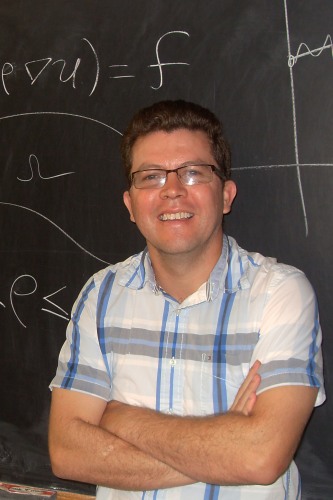 Johnny Guzmán合作论文数Division of Applied Mathematics, Brown University2Guiru Zhang合作论文数1
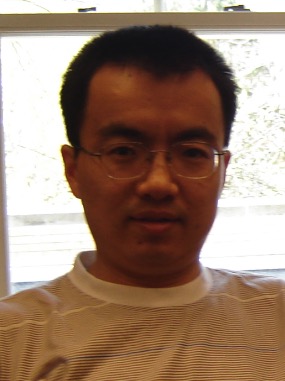 Xiantao Li合作论文数Department of Mathematics, Penn State University1
 David Kelly合作论文数1
 Rui Li (李睿)合作论文数School of Mathematical Sciences, Dalian University of Technology1
 Haiwei Sun (孙海卫)合作论文数Faculty of Science and Technology,University of Macau1
 Peng Zhu (祝鹏)合作论文数School of Mathematics,Physics and Information Engineering, Jiaxing University1Xiaotian Shi合作论文数1
 Yanping Chen (陈艳萍)合作论文数School of Mathematical Sciences, South China Normal University1Björn Sjögreen合作论文数1Tiejin Wang合作论文数1




