Recent progress in vision Transformers exhibits great success in various tasks driven by the new spatial modeling mechanism based on dot-product self-attention. In this paper, we show that the key ingredients behind the vision Transformers, namely input-adaptive, long-range and high-order spatial interactions, can also be efficiently implemented with a convolution-based framework. We present the Recursive Gated Convolution (${\mathit{g}}^{\mathit{n}}$gnConv) that performs high-order spatial interactions with gated convolutions and recursive designs. The new operation is highly flexible and customizable, which is compatible with various variants of convolution and extends the two-order interactions in self-attention to arbitrary orders without introducing significant extra computation. ${\mathit{g}}^{\mathit{n}}$gn Conv can serve as a plug-and-play module to improve various vision Transformers and convolution-based models. Based on the proposed operation, we construct a new family of generic vision backbones for various visual modalities and tasks, including HorNet and HorFPN for image recognition, Hor3D for point cloud analysis, and HorCLIP for vision-language modeling. For image recognition, we propose HorNet as a stronger visual encoder, where we conduct extensive experiments on ImageNet classification, COCO object detection, and ADE20K semantic segmentation. HorNet outperforms Swin Transformers and ConvNeXt by a significant margin with similar overall architecture and training configurations. HorNet also shows favorable scalability to more training data and larger model sizes. Apart from image encoders, we also show ${\mathit{g}}^{\mathit{n}}$gnConv can be applied to task-specific decoders and consistently improve dense prediction performance with less computation. For point cloud analysis, we design Hor3D, demonstrating the efficacy of high-order interactions for unstructured point cloud data through experiments on challenging 3D semantic segmentation tasks in S3DIS and ScanNet V2. In vision-language modeling, our proposed HorCLIP surpasses mainstream Vision Transformer and ConvNeXt architectures with shorter training schedules on ImageNet zero-shot classification and shows remarkably higher performance on vision-language dense representation tasks on COCO Panoptic datasets. Our results demonstrate that ${\mathit{g}}^{\mathit{n}}$gnConv with high-order spatial interactions can be a new basic operation for visual modeling that effectively combines the merits of both vision Transformers and CNNs.
Building on the. success of diffusion models in visual generation, flow-based models reemerge as another prominent family of generative models that have achieved competitive or better performance in terms of both visual quality and inference speed. By learning the velocity field through flow-matching, flow-based models tend to produce a straighter sampling trajectory, which is advantageous during the sampling process. However, unlike diffusion models for which fast samplers are well-developed, efficient sampling of flow-based generative models has been rarely explored. In this paper, we propose a framework called FlowTurbo to accelerate the sampling of flow-based models while still enhancing the sampling quality. Our primary observation is that the velocity predictor's outputs in the flow-based models will become stable during the sampling, enabling the estimation of velocity via a lightweight velocity refiner. Additionally, we introduce several techniques including a pseudo corrector and sample-aware compilation to further reduce inference time. Since FlowTurbo does not change the multi-step sampling paradigm, it can be effectively applied for various tasks such as image editing, inpainting, etc. Besides, we propose a new multi-stage refinement technique that is designed to reduce the inference costs with large flow-based image generation models. Specifically, the multi-stage refinement split the whole generation procedure on different resolutions, forming a coarse-to-fine text-to-image pipeline. We further adopt a stage-aware deployment strategy that can maximize the inference speed in terms of both latency and throughput. By integrating FlowTurbo into different flow-based models, we obtain an acceleration ratio of 53.1%$\sim$∼58.3% on class-conditional generation and 29.8%$\sim$∼38.5% on text-to-image generation. Notably, FlowTurbo reaches an FID of 2.12 on ImageNet with 100 (ms/img) and FID of 3.93 with 38 (ms/img), achieving the real-time image generation and establishing the new state-of-the-art. Equipped with the recent SD 3.5 Large, we achieved FID of 28.05 with a speed improvement of around 50% on NVIDIA 3090 GPU.
Building on the success of universal language models in natural language processing (NLP), researchers have recently sought to develop methods capable of tackling a broad spectrum of visual tasks within a unified foundation framework. However, existing universal vision models face significant challenges when adapting to the rapidly expanding scope of downstream tasks. These challenges stem not only from the prohibitive computational and storage expenses associated with training such models but also from the complexity of their workflows, which makes efficient adaptations difficult. Moreover, these models often fail to deliver the required performance and versatility for a broad spectrum of applications, largely due to their incomplete visual generation and perception capabilities, limiting their generalizability and effectiveness in diverse settings. In this paper, we present VisionHub, a novel universal vision model designed to concurrently manage multiple visual restoration and perception tasks, while offering streamlined transferability to downstream tasks. Our model leverages the frozen denoising U-Net architecture from Stable Diffusion as the backbone, fully exploiting its inherent potential for both visual restoration and perception. To further enhance the model’s flexibility, we propose the incorporation of lightweight task-plugins and the task router, which are seamlessly integrated onto the U-Net backbone. This architecture enables VisionHub to efficiently handle various vision tasks according to user-provided natural language instructions, all while maintaining minimal storage costs and operational overhead. Extensive experiments across 11 different vision tasks showcase both the efficiency and effectiveness of our approach. Remarkably, VisionHub achieves competitive performance across a variety of benchmarks, including 53.3% mIoU on ADE20K semantic segmentation, 0.253 RMSE on NYUv2 depth estimation, and 74.2 AP on MS-COCO pose estimation.
Diffusion models have demonstrated remarkable success in various image generation tasks, but their performance is often limited by the uniform processing of inputs across varying conditions and noise levels. To address this limitation, we propose a novel approach that leverages the inherent heterogeneity of the diffusion process. Our method, DiffMoE, introduces a batch-level global token pool that enables experts to access global token distributions during training, promoting specialized expert behavior. To unleash the full potential of the diffusion process, DiffMoE incorporates a capacity predictor that dynamically allocates computational resources based on noise levels and sample complexity. Through comprehensive evaluation, DiffMoE achieves state-of-the-art performance among diffusion models on ImageNet benchmark, substantially outperforming both dense architectures with 3x activated parameters and existing MoE approaches while maintaining 1x activated parameters. The effectiveness of our approach extends beyond class-conditional generation to more challenging tasks such as text-to-image generation, demonstrating its broad applicability across different diffusion model applications. Project Page: https://shiml20.github.io/DiffMoE/
Recent advancements in diffusion frameworks have significantly enhanced video editing, achieving high fidelity and strong alignment with textual prompts. However, conventional approaches using image diffusion models fall short in handling video dynamics, particularly for challenging temporal edits like motion adjustments. While current video diffusion models produce high-quality results, adapting them for efficient editing remains difficult due to the heavy computational demands that prevent the direct application of previous image editing techniques. To overcome these limitations, we introduce FADE, a training-free yet highly effective video editing approach that fully leverages the inherent priors from pre-trained video diffusion models via frequency-aware factorization. Rather than simply using these models, we first analyze the attention patterns within the video model to reveal how video priors are distributed across different components. Building on these insights, we propose a factorization strategy to optimize each component's specialized role. Furthermore, we devise spectrum-guided modulation to refine the sampling trajectory with frequency domain cues, preventing information leakage and supporting efficient, versatile edits while preserving the basic spatial and temporal structure. Extensive experiments on real-world videos demonstrate that our method consistently delivers high-quality, realistic and temporally coherent editing results both qualitatively and quantitatively. Code is available at https://github.com/EternalEvan/FADE .
Image enhancement finds wide-ranging applications in real-world scenarios due to complex environments and the inherent limitations of imaging devices. Recent diffusion-based methods yield promising outcomes but necessitate prolonged and computationally intensive iterative sampling. In response, we propose InstaRevive, a straightforward yet powerful image enhancement framework that employs score-based diffusion distillation to harness potent generative capability and minimize the sampling steps. To fully exploit the potential of the pre-trained diffusion model, we devise a practical and effective diffusion distillation pipeline using dynamic noise control to address inaccuracies in updating direction during score matching. Our noise control strategy enables a dynamic diffusing scope, facilitating precise learning of denoising trajectories within the diffusion model and ensuring accurate distribution matching gradients during training. Additionally, to enrich guidance for the generative power, we incorporate textual prompts via image captioning as auxiliary conditions, fostering further exploration of the diffusion model. Extensive experiments substantiate the efficacy of our framework across a diverse array of challenging tasks and datasets, unveiling the compelling efficacy and efficiency of InstaRevive in delivering high-quality and visually appealing results.
Recent advances in generative AI have significantly enhanced image and video editing, particularly in the context of text prompt control. State-of-the-art approaches predominantly rely on diffusion models to accomplish these tasks. However, the computational demands of diffusion-based methods are substantial, often necessitating large-scale paired datasets for training, and therefore challenging the deployment in real applications. To address these issues, this paper breaks down the text-based video editing task into two stages. First, we leverage an pre-trained text-to-image diffusion model to simultaneously edit few keyframes in an zero-shot way. Second, we introduce an efficient model called MaskINT, which is built on non-autoregressive masked generative transformers and specializes in frame interpolation between the edited keyframes, using the structural guidance from intermediate frames. Experimental results suggest that our MaskINT achieves comparable performance with diffusion-based methodologies, while significantly improve the inference time. This research offers a practical solution for text-based video editing and showcases the potential of non-autoregressive masked generative transformers in this domain.
The recovery of occluded human meshes presents challenges for current methods due to the difficulty in extracting effective image features under severe occlusion. In this paper, we introduce DPMesh, an innovative framework for occluded human mesh recovery that capitalizes on the profound diffusion prior about object structure and spatial relationships embedded in a pre-trained text-to-image diffusion model. Unlike previous methods reliant on conventional backbones for vanilla feature extraction, DPMesh seamlessly integrates the pre-trained denoising U-Net with potent knowledge as its image backbone and performs a single-step inference to provide occlusion-aware information. To enhance the perception capability for occluded poses, DPMesh incorporates well-designed guidance via condition injection, which produces effective controls from 2D observations for the denoising U-Net. Furthermore, we explore a dedicated noisy key-point reasoning approach to mitigate disturbances arising from occlusion and crowded scenarios. This strategy fully unleashes the perceptual capability of the diffusion prior, thereby enhancing accuracy. Extensive experiments affirm the efficacy of our framework, as we outperform state-of-the-art methods on both occlusion-specific and standard datasets. The persuasive results underscore its ability to achieve precise and robust 3D human mesh recovery, particularly in challenging scenarios involving occlusion and crowded scenes.
Diffusion probabilistic models (DPMs) have shown remarkable performance in visual synthesis but are computationally expensive due to the need for multiple evaluations during the sampling. Recent predictor-corrector diffusion samplers have significantly reduced the required number of function evaluations (NFE), but inherently suffer from a misalignment issue caused by the extra corrector step, especially with a large classifier-free guidance scale (CFG). In this paper, we introduce a new fast DPM sampler called DC-Solver, which leverages dynamic compensation (DC) to mitigate the misalignment of the predictor-corrector samplers. The dynamic compensation is controlled by compensation ratios that are adaptive to the sampling steps and can be optimized on only 10 datapoints by pushing the sampling trajectory toward a ground truth trajectory. We further propose a cascade polynomial regression (CPR) which can instantly predict the compensation ratios on unseen sampling configurations. Additionally, we find that the proposed dynamic compensation can also serve as a plug-and-play module to boost the performance of predictor-only samplers. Extensive experiments on both unconditional sampling and conditional sampling demonstrate that our DC-Solver can consistently improve the sampling quality over previous methods on different DPMs with a wide range of resolutions up to 1024× 1024 . Notably, we achieve 10.38 FID (NFE=5) on unconditional FFHQ and 0.394 MSE (NFE = 5, CFG = 7.5) on Stable-Diffusion-2.1. Code is available at https://github.com/wl-zhao/DC-Solver .
Person-agnostic face swapping has gained significant attention in recent years, as it offers the potential to enhance various real-world applications by combining high fidelity and identity consistency. However, conventional face swapping methods often rely on intricate adjustments of different loss functions, leading to instability during both the training and inference stages. In this work, we propose a simple yet effective framework named StableSwap with a reversible autoencoder to modify the face in a shared latent space. Our approach capitalizes on the information-rich image latent codes to tackle the challenges of complex editing tasks, utilizing the abundant details present in both the source and target faces. To ensure an expressive and robust latent space, we employ a latent alignment approach with perceptual and adversarial losses to optimize the autoencoder. Additionally, we devise a multi-stage identity injection module that samples multiple features with different facial priors and incorporates them to guide the latent image manipulation. By leveraging attention-based blocks, we fuse these futures and update the latent code in a mask-conditioned manner. Both quantitative and qualitative results on the mainstream benchmarks demonstrate that our StableSwap generates competitive identity-consistent swapped faces compared with state-of-the-art methods. Our method outperforms previous approaches in terms of ID Retrieval (98.68) and FID (2.49), while also exhibiting enhanced stability during model training. Beyond this, our model achieves region-controllable face swapping with the capability to perform more fine-grained operations in latent space.
Building on the success of diffusion models in visual generation, flow-based models reemerge as another prominent family of generative models that have achieved competitive or better performance in terms of both visual quality and inference speed. By learning the velocity field through flow-matching, flow-based models tend to produce a straighter sampling trajectory, which is advantageous during the sampling process. However, unlike diffusion models for which fast samplers are well-developed, efficient sampling of flow-based generative models has been rarely explored. In this paper, we propose a framework called FlowTurbo to accelerate the sampling of flow-based models while still enhancing the sampling quality. Our primary observation is that the velocity predictor's outputs in the flow-based models will become stable during the sampling, enabling the estimation of velocity via a lightweight velocity refiner. Additionally, we introduce several techniques including a pseudo corrector and sample-aware compilation to further reduce inference time. Since FlowTurbo does not change the multi-step sampling paradigm, it can be effectively applied for various tasks such as image editing, inpainting, etc. By integrating FlowTurbo into different flow-based models, we obtain an acceleration ratio of 53.1\%$\sim$58.3\% on class-conditional generation and 29.8\%$\sim$38.5\% on text-to-image generation. Notably, FlowTurbo reaches an FID of 2.12 on ImageNet with 100 (ms / img) and FID of 3.93 with 38 (ms / img), achieving the real-time image generation and establishing the new state-of-the-art. Code is available at https://github.com/shiml20/FlowTurbo.
Image enhancement holds extensive applications in real-world scenarios due to complex environments and limitations of imaging devices. Conventional methods are often constrained by their tailored models, resulting in diminished robustness when confronted with challenging degradation conditions. In response, we propose FlowIE, a simple yet highly effective flow-based image enhancement framework that estimates straight-line paths from an elementary distribution to high-quality images. Unlike previous diffusion-based methods that suffer from long-time inference, FlowIE constructs a linear many-to-one transport mapping via conditioned rectified flow. The rectification straightens the trajectories of probability transfer, accelerating inference by an order of magnitude. This design enables our FlowIE to fully exploit rich knowledge in the pre-trained diffusion model, rendering it well-suited for various real-world applications. Moreover, we devise a faster inference algorithm, inspired by Lagrange's Mean Value Theorem, harnessing midpoint tangent direction to optimize path estimation, ultimately yielding visually superior results. Thanks to these designs, our FlowIE adeptly manages a diverse range of enhancement tasks within a concise sequence of fewer than 5 steps. Our contributions are rigorously validated through comprehensive experiments on synthetic and real-world datasets, unveiling the compelling efficacy and efficiency of our proposed FlowIE. Code is available at https://github.com/EternalEvan/FlowIE.
In this paper, we present a new framework named DIML to achieve more interpretable deep metric learning. Unlike traditional deep metric learning method that simply produces a global similarity given two images, DIML computes the overall similarity through the weighted sum of multiple local part-wise similarities, making it easier for human to understand the mechanism of how the model distinguish two images. Specifically, we propose a structural matching strategy that explicitly aligns the spatial embeddings by computing an optimal matching flow between feature maps of the two images. We also devise a multi-scale matching strategy, which considers both global and local similarities and can significantly reduce the computational costs in the application of image retrieval. To handle the view variance in some complicated scenarios, we propose to use cross-correlation as the marginal distribution of the optimal transport to leverage semantic information to locate the important region in the images. Our framework is model-agnostic, which can be applied to off-the-shelf backbone networks and metric learning methods. To extend our DIML to more advanced architectures like vision Transformers (ViTs), we further propose truncated attention rollout and partial similarity to overcome the lack of locality in ViTs. We evaluate our method on three major benchmarks of deep metric learning including CUB200-2011, Cars196, and Stanford Online Products, and achieve substantial improvements over popular metric learning methods with better interpretability.
Recent advances in self-attention and pure multi-layer perceptrons (MLP) models for vision have shown great potential in achieving promising performance with fewer inductive biases. These models are generally based on learning interaction among spatial locations from raw data. The complexity of self-attention and MLP grows quadratically as the image size increases, which makes these models hard to scale up when high-resolution features are required. In this paper, we present the Global Filter Network (GFNet), a conceptually simple yet computationally efficient architecture, that learns long-term spatial dependencies in the frequency domain with log-linear complexity. Our architecture replaces the self-attention layer in vision Transformers with three key operations: a 2D discrete Fourier transform, an element-wise multiplication between frequency-domain features and learnable global filters, and a 2D inverse Fourier transform. Based on this basic design, we develop a series of isotropic models with a Transformer-style simple architecture and CNN-style hierarchical models with better performance. Isotropic GFNet models exhibit favorable accuracy/complexity trade-offs compared to recent vision Transformers and pure MLP models. Hierarchical GFNet models can inherit successful designs in CNNs and be easily scaled up with larger model sizes and more training data, showing strong performance on both image classification (e.g., 85.0% top-1 accuracy on ImageNet-1 k without any extra data or supervision, and 87.4% accuracy with ImageNet-21 k pre-training) and dense prediction tasks (e.g., 54.3 mIoU on ADE20 k val). Our results demonstrate that GFNet can be a very competitive alternative to Transformer-based models and CNNs in terms of efficiency, generalization ability and robustness. Code is available at https://github.com/raoyongming/GFNet .
Diffusion models (DMs) have become the new trend of generative models and have demonstrated a powerful ability of conditional synthesis. Among those, text-to-image diffusion models pre-trained on large-scale image-text pairs are highly controllable by customizable prompts. Unlike the unconditional generative models that focus on low-level attributes and details, text-to-image diffusion models contain more high-level knowledge thanks to the vision-language pre-training. In this paper, we propose VPD (Visual Perception with pre-trained Diffusion models), a new framework that exploits the semantic information of a pre-trained text-to-image diffusion model in visual perception tasks. Instead of using the pre-trained denoising autoencoder in a diffusion-based pipeline, we simply use it as a backbone and aim to study how to take full advantage of the learned knowledge. Specifically, we prompt the denoising decoder with proper textual inputs and refine the text features with an adapter, leading to a better alignment to the pre-trained stage and making the visual contents interact with the text prompts. We also propose to utilize the cross-attention maps between the visual features and the text features to provide explicit guidance. Compared with other pre-training methods, we show that vision-language pre-trained diffusion models can be faster adapted to downstream visual perception tasks using the proposed VPD. Extensive experiments on semantic segmentation, referring image segmentation, and depth estimation demonstrate the effectiveness of our method. Notably, VPD attains 0.254 RMSE on NYUv2 depth estimation and 73.3% oIoU on RefCOCO-val referring image segmentation, establishing new records on these two benchmarks. Code is available at https://github.com/wl-zhao/VPD.
In this paper, we propose DiffSwap, a diffusion model based framework for high-fidelity and controllable face swapping. Unlike previous work that relies on carefully designed network architectures and loss functions to fuse the information from the source and target faces, we reformulate the face swapping as a conditional inpainting task, performed by a powerful diffusion model guided by the desired face attributes (e.g., identity and landmarks). An important issue that makes it nontrivial to apply diffusion models to face swapping is that we cannot perform the time-consuming multi-step sampling to obtain the generated image during training. To overcome this, we propose a midpoint estimation method to efficiently recover a reasonable diffusion result of the swapped face with only 2 steps, which enables us to introduce identity constraints to improve the face swapping quality. Our framework enjoys several favorable properties more appealing than prior arts: 1) Controllable. Our method is based on conditional masked diffusion on the latent space, where the mask and the conditions can be fully controlled and customized. 2) High-fidelity. The formulation of conditional inpainting can fully exploit the generative ability of diffusion models and can preserve the background of target images with minimal artifacts. 3) Shape-preserving. The controllability of our method enables us to use 3D-aware landmarks as the condition during generation to preserve the shape of the source face. Extensive experiments on both FF++ and FFHQ demonstrate that our method can achieve state-of-the-art face swapping results both qualitatively and quantitatively.
Talking head synthesis is a promising approach for the video production industry. Recently, a lot of effort has been devoted in this research area to improve the generation quality or enhance the model generalization. However, there are few works able to address both issues simultaneously, which is essential for practical applications. To this end, in this paper, we turn attention to the emerging powerful Latent Diffusion Models, and model the Talking head generation as an audio-driven temporally coherent denoising process (DiffTalk). More specifically, instead of employing audio signals as the single driving factor, we investigate the control mechanism of the talking face, and incorporate reference face images and landmarks as conditions for personality-aware generalized synthesis. In this way, the proposed DiffTalk is capable of producing high-quality talking head videos in synchronization with the source audio, and more importantly, it can be naturally generalized across different identities without any further finetuning. Additionally, our DiffTalk can be gracefully tailored for higher-resolution synthesis with negligible extra computational cost. Extensive experiments show that the proposed DiffTalk efficiently synthesizes high-fidelity audiodriven talking head videos for generalized novel identities. For more video results, please refer to this demonstration https://cloud.tsinghua.edu.cn/f/ e13f5aad2f4c4f898ae7/.
Talking head synthesis is a promising approach for the video production industry. Recently, a lot of effort has been devoted in this research area to improve the generation quality or enhance the model generalization. However, there are few works able to address both issues simultaneously, which is essential for practical applications. To this end, in this paper, we turn attention to the emerging powerful Latent Diffusion Models, and model the Talking head generation as an audio-driven temporally coherent denoising process (DiffTalk). More specifically, instead of employing audio signals as the single driving factor, we investigate the control mechanism of the talking face, and incorporate reference face images and landmarks as conditions for personality-aware generalized synthesis. In this way, the proposed DiffTalk is capable of producing high-quality talking head videos in synchronization with the source audio, and more importantly, it can be naturally generalized across different identities without further finetuning. Additionally, our DiffTalk can be gracefully tailored for higher-resolution synthesis with negligible extra computational cost. Extensive experiments show that the proposed DiffTalk efficiently synthesizes high-fidelity audio-driven talking head videos for generalized novel identities. For more video results, please refer to https://sstzal.github.io/DiffTalk/.
In this paper, we present a new approach for model acceleration by exploiting spatial sparsity in visual data. We observe that the final prediction in vision Transformers is only based on a subset of the most informative tokens, which is sufficient for accurate image recognition. Based on this observation, we propose a dynamic token sparsification framework to prune redundant tokens progressively and dynamically based on the input to accelerate vision Transformers. Specifically, we devise a lightweight prediction module to estimate the importance score of each token given the current features. The module is added to different layers to prune redundant tokens hierarchically. While the framework is inspired by our observation of the sparse attention in vision Transformers, we find the idea of adaptive and asymmetric computation can be a general solution for accelerating various architectures. We extend our method to hierarchical models including CNNs and hierarchical vision Transformers as well as more complex dense prediction tasks that require structured feature maps by formulating a more generic dynamic spatial sparsification framework with progressive sparsification and asymmetric computation for different spatial locations. By applying lightweight fast paths to less informative features and using more expressive slow paths to more important locations, we can maintain the structure of feature maps while significantly reducing the overall computations. Extensive experiments demonstrate the effectiveness of our framework on various modern architectures and different visual recognition tasks. Our results clearly demonstrate that dynamic spatial sparsification offers a new and more effective dimension for model acceleration. Code is available at https://github.com/raoyongming/DynamicViT
Diffusion probabilistic models (DPMs) have demonstrated a very promising ability in high-resolution image synthesis. However, sampling from a pre-trained DPM is time-consuming due to the multiple evaluations of the denoising network, making it more and more important to accelerate the sampling of DPMs. Despite recent progress in designing fast samplers, existing methods still cannot generate satisfying images in many applications where fewer steps (e.g., $<$10) are favored. In this paper, we develop a unified corrector (UniC) that can be applied after any existing DPM sampler to increase the order of accuracy without extra model evaluations, and derive a unified predictor (UniP) that supports arbitrary order as a byproduct. Combining UniP and UniC, we propose a unified predictor-corrector framework called UniPC for the fast sampling of DPMs, which has a unified analytical form for any order and can significantly improve the sampling quality over previous methods, especially in extremely few steps. We evaluate our methods through extensive experiments including both unconditional and conditional sampling using pixel-space and latent-space DPMs. Our UniPC can achieve 3.87 FID on CIFAR10 (unconditional) and 7.51 FID on ImageNet 256$\times$256 (conditional) with only 10 function evaluations. Code is available at https://github.com/wl-zhao/UniPC.
 Jiwen Lu (鲁继文)合作论文数Department of Automation, Tsinghua University27
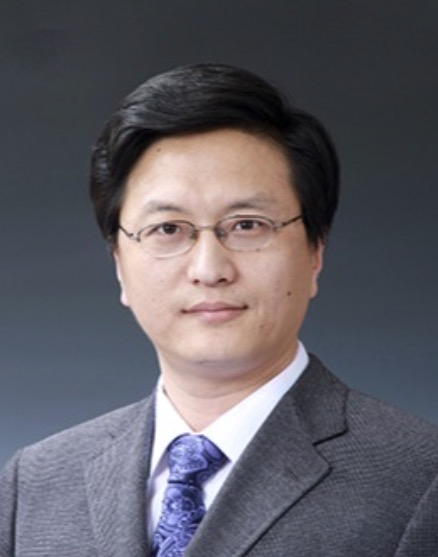 Jie Zhou (周杰)合作论文数Department of Automation, Tsinghua University27
 Yongming Rao合作论文数17
 Yansong Tang (唐彦嵩)合作论文数8
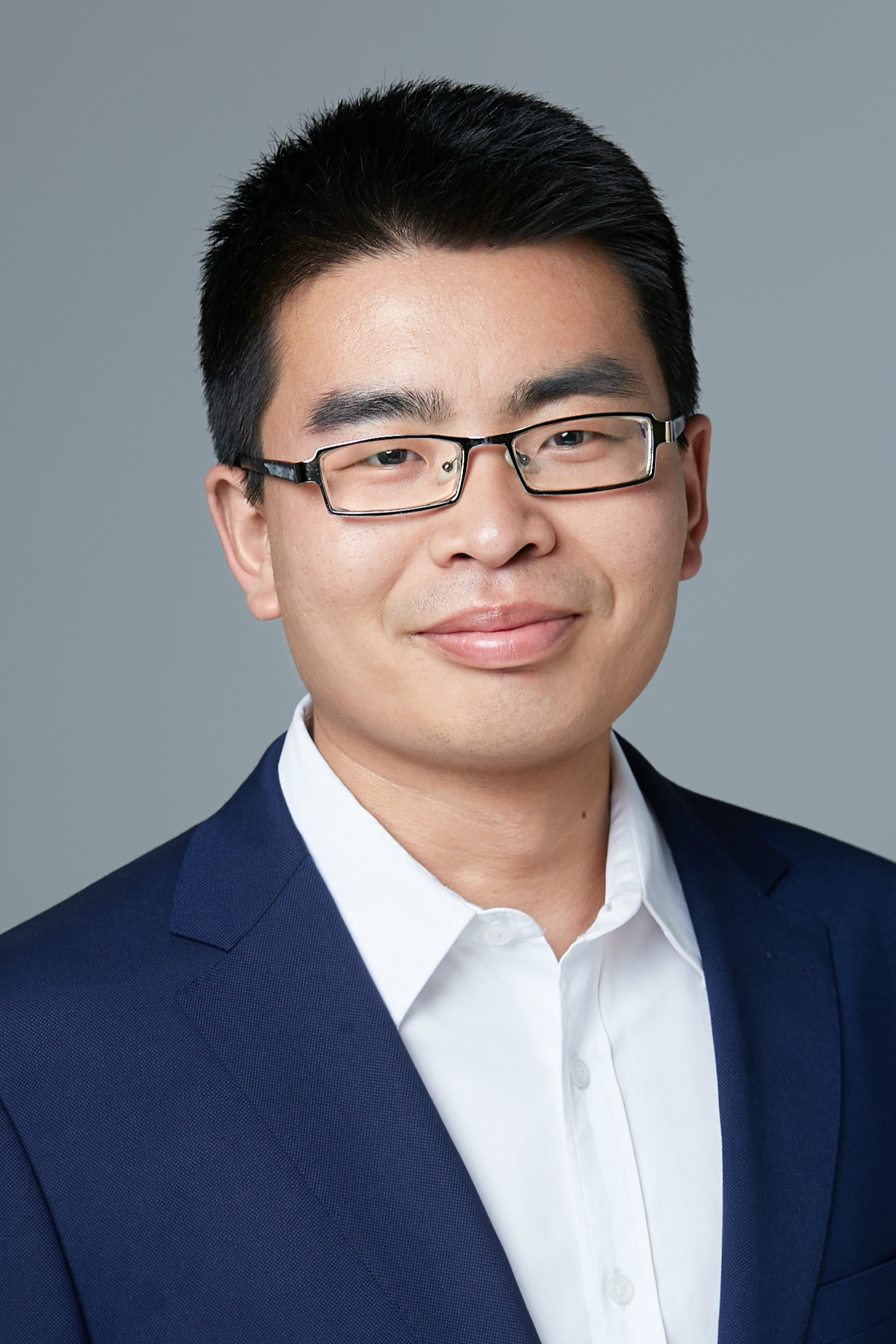 Zheng Zhu (朱政)合作论文数GigaAI5
 Xumin Yu合作论文数Department of Automation, Tsinghua University4
 Ao Li合作论文数3
 Yixuan Zhu合作论文数Department of Automation, Tsinghua University3
 Zuyan Liu合作论文数3Haolin Wang合作论文数2
 Shuai Shen合作论文数2
 Zibin Meng合作论文数2
 Ziyi Wang (王紫颐)合作论文数Department of Automation, Tsinghua University;State Key Lab of Intelligent Technologies and Systems, Tsinghua University;Beijing National Research Center for Information Science and Technology, Tsinghua University2
 Benlin Liu合作论文数Graphics and Imaging Laboratory, Paul G. Allen School of Computer Science & Engineering, University of Washington2
 Wanhua Li合作论文数Nanyang Technological University2
 Wenzhao Zheng (郑文钊)合作论文数Department of EECS, University of California, Berkeley2Zengyi Qin (秦增益)合作论文数2
 Lei Chen (陈磊)合作论文数Department of Automation, School of Information Science and Technology, Tsinghua University2Shilin Ma合作论文数1
 Minglei Shi (史明磊)合作论文数Department of Automation, School of Information Science and Technology, Tsinghua University1Lior Shapira合作论文数1Zhipeng Fan合作论文数1Weikang Shi合作论文数1Jingxuan Niu合作论文数1
 Zuobai Zhang (张作柏)合作论文数Mila - Québec AI Institute;Université de Montréal1
 Liang Zhang合作论文数School of Information, Renmin University of China1
 Haoyang Li合作论文数School of Information, Renmin University of China1
 Zenan Ling合作论文数Huazhong University of Science and Technology1
 Lujia Bai合作论文数1Hui Zhang合作论文数1Yangxiao Liang合作论文数1Shuai Zhao合作论文数1
 Zijun Yao (姚子俊)合作论文数Department of Computer Science and Technology, Tsinghua University1
 Zhengyan Zhang合作论文数DeepSeek1
 Fangwei Zhu合作论文数Dept. of Computer Sci.&Tech., BNRist, Tsinghua University1
 Weicheng Xue合作论文数Virginia Tech, Kevin T Crofton Dept Aerosp & Ocean Engn, 215 Randolph Hall,460 Old Turner St, Blacksburg, VA 24061 USA1Jiawen Deng合作论文数Department of Computer Science and Technology, Tsinghua University1
 Shuo Wang合作论文数1
 Zhenghao Liu (刘正皓)合作论文数Information Retrieval Lab, Department of Computer Science and Engineering, School of Computer Science and Engineering, Northeastern University1
 Yizhao Gao合作论文数Gaoling School of Artificial Intelligence, Renmin University of China;Beijing Key Laboratory of Big Data Management and Analysis Methods1
 Shengding Hu (胡声鼎)合作论文数ByteDance1
 Ganqu Cui (崔淦渠)合作论文数Shanghai AI Laboratory1
 Yuan Yao (姚远)合作论文数College of AI, Tsinghua University1
 Weilin Zhao (赵威霖)合作论文数Department of Computer Science and Technology, Tsinghua University1
 Haotian Yang合作论文数1Jiahong Leng合作论文数1Zixuan Ma (马子轩)合作论文数1




