Faculae are a dominant source of stellar activity noise in radial velocity measurements, yet their low contrast and broad surface distribution make them difficult to track in disc-integrated observations. We apply Spectral Ratio Analysis (SRA) to HARPS-N Sun-as-a-star observations to isolate and characterize the spectral imprint of facular regions over rotational timescales. The resulting SRA spectra show coherent, line-dependent variability sensitive to surface magnetic activity, with the Fe I 4377 Angstrom line exhibiting a particularly strong diagnostic response to facular coverage. We interpret the observed signatures using two complementary synthetic frameworks: composite PHOENIX spectra, from which we derive best-fit facular temperature contrasts in the range 200-400 K, and MPS-ATLAS spectra synthesized using MURaM simulations of the quiet Sun including a small-scale dynamo and magnetically-enhanced facular analogues with initial mean vertical magnetic fields of 100G, 200G, and 300G. Both approaches are benchmarked against facular filling factors measured from Solar Dynamics Observatory (SDO) disc-resolved images. We find good agreement between SDO-measured and SRA-inferred filling factors using the Fe I 4377 Angstrom line, with Pearson R coefficients of 0.587-0.927 across models and timescales. The estimated filling factors track the solar activity cycle, rising from 1.5
The Neptunian desert is a distinct lack of Neptune-sized planets at short orbital periods, purportedly carved by photoevaporation and tidal circularisation following high-eccentricity migration. Constraining these processes and how they vary across different hoststar spectral types requires detailed characterisation of the planets in the desert and around its boundaries. In this study, we confirm the planetary nature of a massive super-Neptune identified by TESS around the M0 dwarf TOI-672. We analysed photometry from TESS and ExTrA and precise radial velocity measurements taken with the recently commissioned Near-InfraRed Planet Searcher (NIRPS) and HARPS spectrographs. We measured a planetary orbital period of 3.634 days, a radius of 5.31−0.26+0.24 R⊕, and mass of 50.9−4.4+4.5 M⊕. Our findings place TOI-672 b within the Neptunian ridge, a pile-up of planets from 3-5 days at the Neptunian desert boundary. We used a novel approach to determine the desert boundaries in period-radius space and instellation-radius space, and for the first time, we compared the Neptunian desert boundaries for planets orbiting FGK versus M dwarf stars. We determined that the boundary ridge shifts slightly inwards from 3.3 ± 1.4 days for FGK host stars to 2.2 ± 1.0 days for M dwarf host stars. Statistically, these values do not significantly differ from each other, and the shift to shorter periods for M dwarf planets is smaller than what theoretical photoevaporation models predict. We also find that TOI-672 b is a single-planet system within the sensitivity limits of our RV and TTV datasets.
We present the characterization of two planetary systems orbiting the M dwarfs TOI-4336 A (M3.5V) and TOI-4342 (M0V), each hosting two transiting planets previously validated with TESS and ground-based observations. We refined the photometry of the TOI-4342 system using TESS and LCOGT data, and characterized the host stars with NIRPS and ESPRESSO spectroscopy. High-precision ESPRESSO radial velocities allowed us to constrain the planetary masses and investigate their potential compositions. The TOI-4336 A system is composed of a sub-Neptune with a period of 16.34 days, a radius of $2.14 \pm 0.08$ Re, and a mass of $3.33 \pm 0.36$ Me, along with an inner super-Earth on a 7.59-day orbit with a radius of $1.25 \pm 0.07$ Re and a mass of $1.55 \pm 0.13$ Me. The TOI-4342 system hosts two sub-Neptunes of similar sizes ($2.33 \pm 0.09$ Re and $2.35 \pm 0.09$ Re), with periods of 5.54 and 10.69 days. Their masses are measured to be $7.3 \pm 1.3$ Me and $4.8 \pm 1.4$ Me, respectively. The RVs also reveal a planet candidate around TOI-4342, likely non-transiting, with a period of 47.5 days and a minimum mass of $17.8 \pm 3.0$ Me. With precise radii and masses, we derived bulk densities and explored possible compositions. The TOI-4336 A sub-Neptune and super-Earth have densities of $1.87 \pm 0.30$ and $4.35 \pm 0.79$ g cm$^{-3}$, while the two similar-sized sub-Neptunes in TOI-4342 show distinct densities of $3.18 \pm 0.67$ and $2.01 \pm 0.63$ g cm$^{-3}$. All four planets are excellent targets for future atmospheric characterization with JWST, and their multi-planet nature makes them especially interesting for comparative planetology. Notably, TOI-4336 A b stands out as one of the best-known targets in its size and temperature regime, with a TSM of 138, comparable to benchmark planets such as K2-18 b and LHS 1140 b.
The radii of small exoplanets form two populations, super-Earths and sub-Neptunes, separated by a gap known as the radius valley. This feature could be produced by the removal of atmospheres by stellar or internal heating or by the lack of an initial envelope. We used transit photometry and radial velocity measurements to detect and characterize four exoplanets orbiting LHS 1903, a red dwarf star in the Milky Way's thick disk. These four planets have orbital periods ranging from 2.2 to 29.3 days and span the radius valley within a single planetary system. The derived densities indicate that LHS 1903 b is rocky, whereas LHS 1903 c and LHS 1903 d have extended atmospheres. The most distant planet from the host star, LHS 1903 e, has no gaseous envelope, indicating that it formed from gas-depleted material.
We report the discovery and characterisation of NGTS-39 b (TIC 453147896 b), a warm Jupiter transiting a Sun-like star on a 58.2 day, eccentric (e = 0.386 +/- 0.019) orbit. NGTS-39 b was first identified from a TESS single-transit event, and subsequently confirmed with NGTS photometry and radial-velocity measurements from CORALIE and HARPS. The host star is a bright (Tmag = 11.02) F9 dwarf with an effective temperature of Teff = 6053 +67/-30 K. NGTS-39 b is a Jupiter-sized gas giant with a radius of 1.088 +/- 0.012 RJ and a mass of 1.467 +/- 0.081 MJ. Its equilibrium temperature is 519 +6/-5 K, placing it between short-period hot Jupiters and cold, Jupiter-like giants. The high orbital eccentricity and intermediate equilibrium temperature of NGTS-39 b make it a valuable test case for formation and migration models, particularly in the poorly sampled regime of long-period gas giants. The RV data show a linear trend of gamma dot = -17.75 m s^-1 yr^-1, which indicates the presence of an outer companion. The discovery of NGTS-39 b contributes to the small but growing population of transiting warm Jupiters with P > 50 days orbiting bright stars.
Context. Gas giant planets orbiting low-mass stars (T-eff less than or similar to 4600 K) are uncommon outcomes of planet formation. Increasing the sample of well-characterised giants around early M dwarfs will enable population-level studies of their properties, offering valuable insights into their formation and evolutionary histories. Aims. We aim to confirm and characterise giant exoplanets transiting M dwarfs identified by the TESS mission. To this end, we have started the Gas giAnts Transiting 1Ow-mass Stars (GATOS) programme within the NIRPS guaranteed time observations (GTO). Methods. High-resolution spectroscopic data were obtained in the optical and near-infrared (nIR), combining HARPS and NIRPS. We derived radial velocities (RVs) via the cross-correlation function and implemented a novel post-processing procedure to further mitigate telluric contamination in the nIR. The resulting RVs were jointly fit with TESS and ground-based photometry to derive the orbital and physical parameters of the systems. Results. We present the GATOS programme and its first results. We confirm two gas giants transiting the low-mass stars TOI-3288 A (K9V, T-eff = 3933 +/- 48 K) and TOI-4666 (M2.5V, T-eff = 3512 +/- 36 K). TOI-3288 A hosts a hot Jupiter with a mass of 2.11 +/- 0.08 M-Jup and a radius of 1.00 +/- 0.03 R-Jup, with an orbital period of 1.43 days (T-eq = 1059 +/- 20 K). TOI-4666 hosts a 0.70 +/- 0.06 M-Jup warm Jupiter (T-eq = 713 +/- 14 K) with a radius of 1.11 +/- 0.04 R-Jup, with an orbital period of 2.91 days. At a population level, we identify a decrease in planetary mass with spectral type, whereby late M dwarfs host less massive giant planets than early M dwarfs. More massive gas giants that deviate from this trend are preferentially hosted by more metal-rich stars. Furthermore, we find an increased binarity fraction among low-mass stars hosting gas giants, which may play a role in enhancing giant planet formation around low-mass stars. Conclusions. These mass characterisations contribute to the growing catalogue of well-defined giant exoplanets around low-mass stars. The observed population trends agree with theoretical predictions, whereby higher metallicity can compensate for lower disc masses, and wide binary systems may influence planet formation and migration through Kozai-Lidov cycles or disc instabilities.
Context. Characterizing the masses, radii, and compositions of small planets orbiting M dwarfs is key to understanding their formation and identifying the best targets for atmospheric follow-up with facilities such as JWST. Aims. We present the characterization of two planetary systems orbiting the M dwarfs TOI-4336 A (M3.5V) and TOI-4342 (M0V), each hosting two transiting planets previously validated with TESS and ground-based observations. Methods. We refined the photometry of the TOI-4342 system using TESS and LCOGT data, and characterized the host stars with NIRPS and ESPRESSO spectroscopy. High-precision ESPRESSO radial velocities (RVs) allowed us to constrain the planetary masses and investigate their potential compositions. Results. The TOI-4336 A system is composed of a sub-Neptune with a period of 16.34 days, a radius of 2.14 ± 0.08 R⊕, and a mass of 3.33 ± 0.36 M⊕, along with an inner super-Earth on a 7.59-day orbit with a radius of 1.25 ± 0.07 R⊕ and a mass of 1.55 ± 0.13 M⊕. The TOI-4342 system hosts two sub-Neptunes of similar sizes (2.33 ± 0.09 R⊕ and 2.35 ± 0.09 R⊕), with periods of 5.54 and 10.69 days. Their masses are measured to be 7.3 ± 1.3 M⊕ and 4.8 ± 1.4 M⊕, respectively. The RVs also reveal a planet candidate around TOI-4342, most likely non-transiting, with a period of 47.5 days and a minimum mass of 17.8 ± 3.0 M⊕. Conclusions. With precise radii and masses, we derived bulk densities and explored possible compositions. The TOI-4336 A subNeptune and super-Earth have densities of 1.87 ± 0.30 and 4.35 ± 0.79 g cm−3, while the two similar-sized sub-Neptunes in TOI-4342 show distinct densities of 3.18 ± 0.67 and 2.01 ± 0.63 g cm−3. Using an inference model, we find that TOI-4336 A b, TOI-4342 b, and TOI-4342 c have an atmosphere mass fraction (AMF) of ∼3.7%, ∼1.8%, and ∼2.9%, respectively, while the super-Earth TOI-4336 A c could contain ∼2% of water or have a core-to-mass fraction (CMF) of ∼31%. All four planets are excellent targets for future atmospheric characterization with JWST, and their multi-planet nature makes them especially interesting for comparative planetology. Notably, TOI-4336 A b stands out as one of the best known targets in its size and temperature regime, with a transmission spectroscopy metric (TSM) of 138, comparable to benchmark planets such as K2-18 b and LHS 1140 b. Its inner sibling, TOI-4336 A c, may also be of interest for emission spectroscopy and exploring the “cosmic shoreline”, similarly to the Rocky Worlds DDT JWST program.
Context. Condensates are ubiquitous to all Solar System planets with significant (>10 mbar) atmospheres. The same is true for most exoplanets with characterised atmospheres, with even ultra-hot exoplanets being able to form clouds on their cooler nightsides. One high-interest condensate is titanium, a highly refractory element that as an oxide (TiO) is a potent optical absorber long believed to be a driver of thermal inversions in highly irradiated exoplanet atmospheres. Observations have shown that some ultra-hot Jupiters have strong thermal inversions despite being significantly Ti-depleted, likely due to cold trapping, raising doubts about whether TiO is the main cause of their inverted temperature structures. Aims. Our aim was to retrieve the titanium-to-iron ratio of the dayside atmosphere of the ultra-hot Jupiter WASP-189b to determine whether the full titanium budget is accounted for in the gas phase. Methods. We analysed thermal emission observations of WASP-189b taken with the HARPS and NIRPS spectrographs using different atmospheric retrieval prescriptions to infer the planet’s atmospheric thermal structure and composition. Results. We observed Fe and Ti signals in cross-correlation and measured a sub-solar Ti/Fe ratio for WASP-189b using both free and chemical equilibrium retrieval approaches. We find the Ti/Fe of the planetary atmosphere to be between 28% and 81% (1-σ bounds) that of the stellar value. Conclusions. The slight underabundance of Ti with respect to Fe on the dayside atmosphere of WASP-189b suggests that some titanium is missing from the gas phase, potentially due to a partial nightside cold trap. In the context of the ultra-hot Jupiter population, the onset of titanium in exoplanetary atmospheres appears to occur progressively, coinciding not with when thermal inversions begin but rather when the vapourisation threshold of titanium is reached on the nightside.
Ground-based spectrographs operating in the near-infrared (NIR) regime are hampered by various absorption and emission features of Earth's atmosphere. While considerable attention has been paid to mitigating telluric absorption, correcting telluric emission features remains non-trivial and can significantly affect the observation of faint targets. We aim to develop and implement automated algorithms for sky background emission correction in the context of high-resolution spectroscopy. These empirical-based algorithms have been officially integrated into both NIRPS data reduction pipelines: NIRPS DRS and APERO DRS. Designed for flexibility, these techniques can be incorporated into the reduction workflow of any high-resolution spectrograph to improve the radial velocity (RV) performance. In our approach, a reference sky spectrum is first created by deep-stacking NIRPS sky calibration frames on a common wavelength grid and calculating the weighted median flux per pixel, separately for both the high-accuracy and high-efficiency instrument modes. This process is repeated for all spectral orders and for both the object and sky-calibration fibres: fibre A and fibre B, respectively. In this reference sky spectrum, the sky emission lines can be identified and used to construct a static library. During the data reduction process, the emission features in the library are individually scaled in terms of flux using two distinct techniques, each specific to the two DRS pipelines. Finally, they are locally subtracted from the science observations to minimise their noise contribution to the final spectrum. We find that the correction algorithms significantly improve the RV measurements obtained using both the cross-correlation function and line-by-line techniques, enabling NIRPS to achieve submetre-per-second precision in the NIR. The techniques have been successfully validated and demonstrated.
The measurement of exoplanet masses using the radial velocity (RV) technique is currently limited by stellar activity, which introduces quasiperiodic variability signals that must be modeled and removed to enhance the sensitivity of the RV measurements to exoplanet signals. Neural networks have previously been demonstrated effective in modeling stellar activity signals in HARPS-N solar data using white light cross correlation functions (CCFs). Building on this work, we train a neural network on 6 yr of HARPS-N solar data with additional parameters commonly associated to stellar activity, including chromatic CCFs, line shape metrics, spectral activity indicators, total solar irradiance (TSI) light curves from SORCE and TSIS-1, and TSI time derivatives. Our results show that parameters such as the bisector inverse slope and Na D equivalent widths (EWs) do not significantly improve the neural network's ability to predict activity-induced RV variations compared to using the white light CCFs alone. However, parameters such as unsigned magnetic flux, the TSI and its time derivative, S-index, H alpha EW, chromatic CCFs, contrast, and FWHM do improve the neural network's ability to predict RV scatter. Our new model reduces the RV scatter in a held-out test set from 147.1 cm s-1 to 93.3 cm s-1, consistent with supergranulation noise levels reported in previous studies. These results suggest that finding effective tracers for (super)granulation will be critical to train models capable of further mitigating RV jitter, and necessary for characterizing Earth analogs.
Small temperate planets are prime targets for exoplanet studies due to their possible similarities with the rocky planets in the Solar system. M dwarfs are promising hosts since the planetary signals are within our current detection capabilities. Gliese 12 b is a Venus-sized temperate planet orbiting a quiet M dwarf. We present here the first precise mass measurement of this small exoplanet. We performed a detailed analysis using HARPS-N (High Accuracy Radial velocity Planet Searcher for the Northern Hemisphere), ESPRESSO (Echelle Spectrograph for Rocky Exoplanets and Stable Spectroscopic Observations), and CARMENES (Calar Alto high-Resolution search for M dwarfs with Exoearths with Near-infrared and optical Echelle Spectrographs) radial velocities, along with new and archival TESS (Transiting Exoplanet Survey Satellite), CHEOPS (CHaracterising ExOPlanet Satellite), and MuSCAT2/3 (Multicolor Simultaneous Camera for studying Atmospheres of Transiting exoplanets) photometry data. From fitting the available data, we find that the planet has a radius of R-p = 0.93 +/- 0.06 R(circle plus )and a mass of M-p = 0.95(-0.30 )(+0.29)M(circle plus )(a3.2 sigma measurement of the semi-amplitude K = 0.67 +/- 0.21 m s(-1)), and is on an orbit with a period of 2.761418(-0.000055)(+0.000060)d. A variety of techniques were utilized to attenuate stellar activity signals. Gliese 12 b has an equilibrium temperature of T-eq = 317 +/- 8K, assuming an albedo of zero, and a density consistent with that of Earth and Venus (rho(p )= 6.4 +/- 2.4 g cm(-3)). We find that Gliese 12 b has a predominantly rocky interior and simulations indicate that it is unlikely to have retained any of its primordial gaseous envelope. The bulk properties of Gliese 12 b place it in an extremely sparsely populated region of both mass-radius and density-T-eq parameter space, making it a prime target for follow-up observations, including Lyman-alpha studies.
The Neptunian desert is a distinct lack of Neptune-sized planets at short orbital periods, purportedly carved by photoevaporation and tidal circularisation following high-eccentricity migration. Constraining these processes and how they vary across different hoststar spectral types requires detailed characterisation of the planets in the desert and around its boundaries. In this study, we confirm the planetary nature of a massive super-Neptune identified by TESS around the M0 dwarf TOI-672. We analysed photometry from TESS and ExTrA and precise radial velocity measurements taken with the recently commissioned Near-InfraRed Planet Searcher (NIRPS) and HARPS spectrographs. We measured a planetary orbital period of 3.634 days, a radius of 5.31(-0.26)(+0.24) R-circle plus, and mass of 50.9(-4.4)(+4.5) M-circle plus. Our findings place TOI-672 b within the Neptunian ridge, a pile-up of planets from 3-5 days at the Neptunian desert boundary. We used a novel approach to determine the desert boundaries in period-radius space and instellation-radius space, and for the first time, we compared the Neptunian desert boundaries for planets orbiting FGK versus M dwarf stars. We determined that the boundary ridge shifts slightly inwards from 3.3 +/- 1.4 days for FGK host stars to 2.2 +/- 1.0 days for M dwarf host stars. Statistically, these values do not significantly differ from each other, and the shift to shorter periods for M dwarf planets is smaller than what theoretical photoevaporation models predict. We also find that TOI-672 b is a single-planet system within the sensitivity limits of our RV and TTV datasets.
Context. Characterizing the masses, radii, and compositions of small planets orbiting M dwarfs is key to understanding their formation and identifying the best targets for atmospheric follow-up with facilities such as JWST. Methods. We refined the photometry of the TOI-4342 system using TESS and LCOGT data, and characterized the host stars with NIRPS and ESPRESSO spectroscopy. High-precision ESPRESSO radial velocities (RVs) allowed us to constrain the planetary masses and investigate their potential compositions. Results. The TOI-4336 A system is composed of a sub-Neptune with a period of 16.34 days, a radius of 2.14 +/- 0.08 R-circle plus, and a mass of 3.33 +/- 0.36 M-circle plus, along with an inner super-Earth on a 7.59-day orbit with a radius of 1.25 +/- 0.07 R-circle plus and a mass of 1.55 +/- 0.13 M-circle plus. The TOI-4342 system hosts two sub-Neptunes of similar sizes (2.33 +/- 0.09 R-circle plus and 2.35 +/- 0.09 R-circle plus), with periods of 5.54 and 10.69 days. Their masses are measured to be 7.3 +/- 1.3 M-circle plus and 4.8 +/- 1.4 M-circle plus, respectively. The RVs also reveal a planet candidate around TOI-4342, most likely non-transiting, with a period of 47.5 days and a minimum mass of 17.8 +/- 3.0 M-circle plus. Conclusions. With precise radii and masses, we derived bulk densities and explored possible compositions. The TOI-4336 A subNeptune and super-Earth have densities of 1.87 +/- 0.30 and 4.35 +/- 0.79 g cm(-3), while the two similar-sized sub-Neptunes in TOI-4342 show distinct densities of 3.18 +/- 0.67 and 2.01 +/- 0.63 g cm(-3). Using an inference model, we find that TOI-4336 A b, TOI-4342 b, and TOI-4342 c have an atmosphere mass fraction (AMF) of similar to 3.7%, similar to 1.8%, and similar to 2.9%, respectively, while the super-Earth TOI-4336 A c could contain similar to 2% of water or have a core-to-mass fraction (CMF) of similar to 31%. All four planets are excellent targets for future atmospheric characterization with JWST, and their multi-planet nature makes them especially interesting for comparative planetology. Notably, TOI-4336 A b stands out as one of the best known targets in its size and temperature regime, with a transmission spectroscopy metric (TSM) of 138, comparable to benchmark planets such as K2-18 b and LHS 1140 b. Its inner sibling, TOI-4336 A c, may also be of interest for emission spectroscopy and exploring the "cosmic shoreline", similarly to the Rocky Worlds DDT JWST program.
High-precision high-fidelity spectrographs are the most powerful instruments for exoplanets detection and characterization. The sub-m/s radial-velocity precision, required to detect Earth-mass exoplanets, necessitates tackling all the sources of instrumental and stellar instabilities. We present the new high-precision high-fidelity spectrographs ESPRESSO, NIRPS, ANDES and RISTRETTO designed, developed, and operated with support of PlanetS.
We present the discovery of the planetary system orbiting the bright (V = 7.2), nearby (35 pc), Sun-like star HD 60779, which has a mass of 1.050 +/- 0.044 solar masses and a radius of 1.129 +/- 0.013 solar radii. We report two TESS transits and a subsequent CHEOPS transit of HD 60779 b, a sub-Neptune with a radius of 3.250 (+0.100 / -0.098) Earth radii on a 29.986175 (+0.000030 / -0.000033) day orbit. Additionally, 286 HARPS-N radial velocity measurements reveal the mass of planet b (14.7 +1.1 / -1.0 Earth masses) and the presence of an outer planet, HD 60779 c, with an orbital period of 104.25 (+0.30 / -0.29) days and a minimum mass (m sin i) of 27.7 +/- 1.6 Earth masses. Both planets' orbits are consistent with being circular, suggesting that they have a dynamically quiet history. The data are not sufficient to determine whether planet c transits. HD 60779's uniquely high systemic radial velocity (129.75 +/- 0.12 km/s) allows its Lyman-alpha emission to avoid absorption by the interstellar medium, making it a prime candidate for probing atmospheric escape from HD 60779 b. HD 60779 is also the third-brightest host of a sub-Neptune with orbital period greater than 25 days and with both mass and radius measured, distinguishing it in terms of accessibility to spectroscopic characterization.
Tracing the compositional link between terrestrial super-Earths and their host stars provides clues about their dominant formation pathway. By constraining the stellar abundances of refractory elements, we can predict the core mass fractions (CMFs) of their super-Earths. The level of agreement between this prediction and the planetary CMF derived from their masses and radii can reveal past formation processes, such as mantle stripping and water-rich formation plus sequestration in the planet core. We present the first results from the Near Infrared Planet Searcher (NIRPS) GTO CMF subprogram: an intensive radial velocity campaign to refine masses and compute host stellar abundances of three hot super-Earths around M dwarfs (GJ1132 b, GJ1252 b, and LTT 3780 b). We calculated masses of 1.69 ± 0.15 M⊕, 1.54 ± 0.18 M⊕, and 2.34 ± 0.10 M⊕ respectively. We measured the CMFs of these and six further hot super-Earths with masses already available in the literature to a precision of 10–15%. We compared them to CMF predictions made from measuring the Fe, Mg, and Si abundances of their host stars measured from the NIRPS spectra. The CMFs of these planets are smaller than expected from their host stellar abundances to a statistically significant degree. This discrepancy is suggestive of significant reservoirs of water, and while these planets are too hot to harbor surface water, they likely have interior water mass fractions of ~1%.
Context . Detecting the tiny Doppler shifts induced by Earth-mass planets in stellar radial-velocity measurements remains extremely challenging due to stellar activity. Despite substantial progress in statistical and machine-learning techniques, many deep-learning methods performing well on simulated data remain difficult to apply reliably on real stellar spectra. Aims . The aim of this work is to develop a deep-learning framework that generalizes to real, unseen spectra and improves the detectability of Earth-mass planets in radial-velocity data. Methods . We train artificial neural networks on HARPS-N solar spectra with injected planetary signals, using physics-motivated spectral representations based on flux and line-formation temperature, together with their velocity gradients. Two training strategies are explored: hold-out testing, which provides a direct assessment of generalization to unseen spectra, and cross-validation, which evaluates performance across multiple folds of the dataset. The robustness of the model is enhanced by optimizing the hyperparameters based on genetic-algorithms, and the predictive uncertainty is quantified using the Monte Carlo dropout. Results . Our most precise neural network model reliably retrieves, under the cross-validation strategy, the amplitudes, phases, and orbital periods of planetary signals with amplitudes greater than or equal to 25 cm/s and periods between 10 and 550 days. In addition, in all cases tested here, the successfully recovered signals correspond to the most significant peaks in the periodograms of the Doppler-shift predictions. Temperature-based spectral-shell representations consistently outperform flux-based shells, particularly in terms of predictive uncertainty and generalization to unseen data. As a byproduct, we release doppleriann , a Python package that implements the proposed framework. Conclusions . Our results demonstrate that combining physically motivated spectral representations with deep learning provides a promising pathway toward the detection of Earth-mass planets in radial-velocity data from real observations, supported by a modeling framework that is both physically grounded and statistically rigorous, incorporating uncertainty quantification and optimized training strategies.
The TRAPPIST-1 system is well-known for its seven transiting Earth-sized exoplanets. It has been extensively studied and characterized, notably with transit timing variations (TTVs) to precisely measure the mass of the planets. Using near-infrared spectroscopic observations obtained as part of the SPIRou Legacy Survey and the NIRPS Guaranteed Time Observation programs, we aimed to verify those values through radial velocity (RV) measurements of the system. Our RV analysis reveals that the current data do not have the precision required to individually detect the TRAPPIST-1 planets. However, we confidently detect (Δln𝒵=7.53, 1860:1 odds) the combined RV signature of the planets by informing their relative masses on the TTV analysis, with TRAPPIST-1 b as a proxy of the whole system. For the first time, the RV signal of the TRAPPIST-1 system is recovered: we find a RV semi-amplitude of K_b=3.65^+0.78_-0.83 m s^-1 corresponding to a planetary mass of M_p, b=1.31±0.29 M_⊕, demonstrating that the RV measurements are consistent with the TTV model (M_p, b; TTV=1.374±0.069 M_⊕). Additionally, the NIRPS RVs constrain the presence of giant planets beyond the snow line, excluding Saturn-mass planets out to 2.7-yr orbits and Neptune-mass objects out to 20 d. Through RV, we determined the stellar activity period to be of 3.22^+0.22_-0.20 d. Its agreement with photometric measurements (K2 and TESS) confirms stellar rotation as the origin of the ∼3.3-d periodicity observed for TRAPPIST-1. We further investigated stellar activity with SPIRou polarimetric measurements, placing an upper limit on the longitudinal field (|B_l|<40 G, 3σ). This limit is compatible with a weak multipolar large-scale magnetic geometry, as observed in some of the later-type rapidly rotating M dwarfs.
Precise measurements of a star's radial velocity (RV) made using extremely stable, high resolution, optical or near infrared spectrographs can be used to determine the masses and orbital parameters of gravitationally-bound extra-solar planets (exoplanets). Indeed, RV surveys and follow up efforts have provided the vast majority of published exoplanet mass measurements and in doing so have enabled studies into exoplanet interior and atmospheric compositions. Here we review the current state of the RV field, with particular attention paid to: -The evolution of precise RV methodologies over the past two decades -Modern RV spectrograph designs that can be calibrated to a stability level of better than 50 cm/s over timescales of years -RV data reduction and post-processing techniques that minimize the impact of instrument systematics and stellar variability -Techniques for detecting exoplanets in RV data and disentangling planetary signals from stellar variability
 Stéphane Udry合作论文数Department of Astronomy, Universite de Geneve212
 Francesco Pepe合作论文数Department of Astronomy, University of Geneva195
 Christophe Lovis合作论文数Department of Astronomy, University of Geneva;Geneva Observatory, University of Geneva179
 Nuno C. Santos合作论文数Departamento de Física e Astronomia, Faculdade de Ciências, Universidade do Porto;Instituto de Astrofísica e Ciências do Espaço144
 Damien Ségransan合作论文数Department of Astronomy, University of Geneva137
 François Bouchy合作论文数Department of Astronomy, University of Geneva130
 Alessandro Sozzetti合作论文数Istituto Nazionale di Astrofisica, Osservatorio Astrofisico di Torino124
 David Latham合作论文数Department of Astronomy, Faculty of Arts and Sciences, Harvard University;Harvard-Smithsonian Center for Astrophysics;Smithsonian Astrophysical Observatory111
 P. Figueira合作论文数Observatoire de Geneve;Universite de Geneve;Observatoire de Geneve, Universite de Geneve110
 Andrew Cameron合作论文数School of Physics and Astronomy, University of St Andrews105
 A. Mortier合作论文数84
 Mercedes López-Morales合作论文数Center for Astrophysics | Harvard & Smithsonian;Smithsonian Astrophysical Observatory in the Atomic and Molecular Physics Department83
 Ken Rice合作论文数School of Physics and Astronomy, The University of Edinburgh75
 L. Malavolta合作论文数Department of Mental Health, AUSL Modena75Haywood Raphaëlle D合作论文数73
 Rosario Cosentino合作论文数Osservatorio Astrofisico di Catania;TNG - Telescopio Nazionale Galileo, INAF72
 Vardan Adibekyan合作论文数Instituto de Astrofísica e Ciências do Espaço;Faculty of Sciences, Universidade do Porto72
 David Charbonneau合作论文数Department of Astronomy, Faculty of Arts and Sciences, Harvard University71
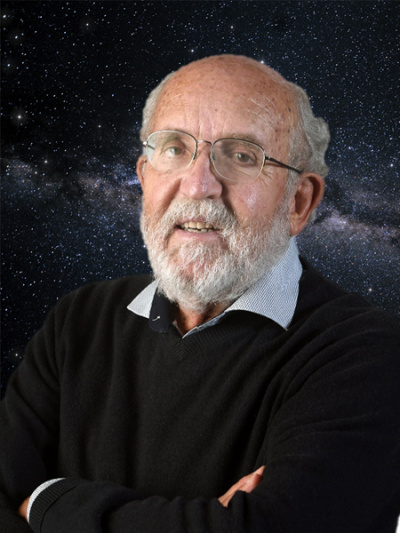 Michel Mayor合作论文数Department of Astronomy, University of Geneva70
 David Ehrenreich合作论文数Department of Astronomy, Université de Genève70S. C. C. Barros合作论文数Queen's University Belfast69
 Giampaolo Piotto合作论文数Dipartimento di Fisica e Astronomiaa, University of Padua;PhD School in Astronomy, University of Padova64
 Didier Queloz合作论文数Battcock Centre for Experimental Astrophysics, Cavendish Laboratory, University of Cambridge62G. Lo Curto合作论文数European Southern Observatory61Ennio Poretti合作论文数Osservatorio Astronomico di Brera, INAF60
 Aldo Bonomo合作论文数Osservatorio Astrofisico di Torino, INAF59
 David Phillips合作论文数Harvard-Smithsonian Center for Astrophysics58
 Dimitar D. Sasselov合作论文数Department of Astronomy, Faculty of Arts and Sciences, Harvard University57S. G. Sousa合作论文数56
 Lars A. Buchhave合作论文数National Space Institute, Technical University of Denmark56
 Xavier Bonfils合作论文数Centre National de la Recherche Scientifique;Institut de Planétologie et d'Astrophysique de Grenoble55G. Micela合作论文数54
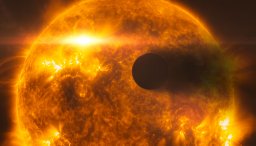 Vincent Bourrier合作论文数Observ Astron, Univ Geneva53
 Olivier Demangeon合作论文数Dept Fis & Astron, Univ Porto53
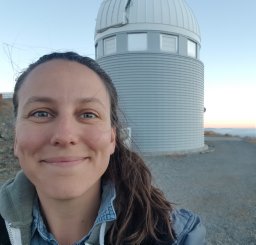 Louise D. Nielsen合作论文数Dept Phys, Univ Oxford51M. Damasso合作论文数50
 Elisa Delgado Mena合作论文数Centro de Astrobiología49
 Enric Pallé合作论文数Research Division, Instituto de Astrofisica de Canarias48Adriano Ghedina合作论文数48
 Andrew Vanderburg合作论文数Department of Physic, Massachusetts Institute of Technology;Smithsonian Astrophysical Observatory46Ryan Cloutier合作论文数46Michael Cretignier合作论文数45
 Sara Seager合作论文数Department of Physics, Massachusetts Institute of Technology;Department of Aeronautics and Astronautics, Massachusetts Institute of Technology;Department of Planetary Science, Massachusetts Institute of Technology43
 Magali Deleuil合作论文数Laboratoire d'Astrophysique de Marseille, Aix-Marseille Université;Institut Universitaire de France43
 Courtney Dressing合作论文数Department of Astronomy, University of California, Berkeley42Ares Osborn合作论文数41Isabelle Boisse合作论文数41Romain Allart合作论文数Observ Univ Geneve, 51 Chemin Maillettes, CH-1290 Versoix, Switzerland40
 Josh Winn合作论文数Department of Astrophysical Sciences, Princeton University40




