Raman spectra obtained in real world applications are often a noisy combination of several spectra of various substances in a tested sample. Unmixing such spectra into individual components corresponding to each of the substances is of great value and has been a longstanding challenge in Raman spectroscopy. Existing unmixing methods are predominantly designed to invert an overdetermined mixed model and therefore require multiple mixed spectra as input. However, open domain and/or non-cooperative detection applications in Raman spectroscopy such as controlled substance detection, call for single-channel solutions which can identify individual components from thousands of candidates by analyzing only a single noisy mixed spectrum. To our knowledge, sparse regression is the only existing solution which can cope with this scenario, yet it has very low tolerance to noises and can hardly be applicable in practice. To address these limitations, we introduce a novel neural approach for single-channel Raman spectrum unmixing inspired by speech separation. It aims at solving underdetermined systems and can decompose a noisy mixed spectrum from a library of thousands of components (substances). The core of our method is a deep separation neural network (RSSNet) which takes a mixed spectrum as input and outputs spectra of pure components. We created two synthetic datasets of single-channel Raman spectra unmixing and demonstrated feasibility and superiority of RSSNet on these datasets (outperform competing methods by >4dB). Furthermore, we verified that RSSNet, trained solely on synthetic data, can successfully unmix real-world mixed spectra of mixtures of mineral powders, exhibiting strong generalization. Our approach represents a new paradigm for Raman unmixing and enables new possibilities for fast detection of Raman mixtures.
Reference-guided video editing takes a source video, a text instruction, and a reference image as inputs, requiring the model to faithfully apply the instructed edits while preserving original motion and unedited content. Existing methods fall into two paradigms, each with inherent limitations: decoupled encoders suffer from modality gaps when processing instructions and visual content independently, while unified vision-language encoders lose fine-grained spatial details by relying solely on final-layer representations. We observe that VLM layers encode complementary information hierarchically—early layers capture localized spatial details essential for precise editing, while deeper layers encode global semantics for instruction comprehension. Building on this insight, we present \textbf{MiVE} (\textbf{M}ult\textbf{i}scale \textbf{V}ision-language features for reference-guided video \textbf{E}diting), a framework that repurposes VLMs as multiscale feature extractors. MiVE extracts hierarchical features from Qwen3-VL and integrates them into a unified self-attention Diffusion Transformer, eliminating the modality mismatch inherent in cross-attention designs. Experiments demonstrate that MiVE achieves state-of-the-art performance by ranking highest in human preference, outperforming both academic methods and commercial systems.
Retrieval Augmented Generation enhances the response accuracy of Large Language Models (LLMs) by integrating retrieval and generation modules with external knowledge, demonstrating particular strength in real-time queries and Visual Question Answering tasks. However, the effectiveness of RAG is frequently hindered by the precision of the retriever: many retrieved samples fed into the generation phase are irrelevant or misleading, posing a critical bottleneck to LLMs’ performance. To address this challenge, we introduce \textbf{VaccineRAG}, a novel Chain-of-Thought-based retrieval-augmented generation dataset. On one hand, VaccineRAG employs a benchmark to evaluate models using data with varying positive/negative sample ratios, systematically exposing inherent weaknesses in current LLMs. On the other hand, it enhances models’ sample-discrimination capabilities by prompting LLMs to generate explicit Chain-of-Thought (CoT) analysis for each sample before producing final answers. Furthermore, to enhance the model’s ability to learn long-sequence complex CoT content, we propose \textbf{Partial-GRPO}. By modeling the outputs of LLMs as multiple components rather than a single whole, our model can make more informed preference selections for complex sequences, thereby enhancing its capacity to learn complex CoT. Comprehensive evaluations and ablation studies on VaccineRAG validate the effectiveness of the proposed scheme.
Visible-thermal (RGB-T) object detection is a crucial technology for applications such as autonomous driving, where multimodal fusion enhances performance in challenging conditions like low light. However, the security of RGB-T detectors, particularly in the physical world, has been largely overlooked. This paper proposes a novel approach to RGB-T physical attacks using adversarial clothing with a non-overlapping RGB-T pattern (NORP). To simulate full-view (0^∘–360^∘) RGB-T attacks, we construct 3D RGB-T models for human and adversarial clothing. NORP is a new adversarial pattern design using distinct visible and thermal materials without overlap, avoiding the light reduction in overlapping RGB-T patterns (ORP). To optimize the NORP on adversarial clothing, we propose a spatial discrete-continuous optimization (SDCO) method. We systematically evaluated our method on RGB-T detectors with different fusion architectures, demonstrating high attack success rates both in the digital and physical worlds. Additionally, we introduce a fusion-stage ensemble method that enhances the transferability of adversarial attacks across unseen RGB-T detectors with different fusion architectures.
The U-Net style models have been widely used in many applications. A critical step in these models is to reconstruct the lower-level features using a top-down decoder. This reconstruction requires precise fusion of high-level semantics and low-level details. Existing attention-based fusion methods typically derive attention weights from the top-down decoder features (global) alone or the correlation between the top-down decoder features and the bottom-up encoder features (local), then modulate the encoder features using these weights. In this work, we explore a different paradigm: deriving attention weights from the difference between the two feature streams. To this end, we propose two difference-based gating approaches: Feature-difference gating (FDG), which directly uses the absolute difference between global and local features to generate adaptive gating maps, and Entropy-difference gating (EDG), which measures the representational certainty of each stream via information entropy and uses their signed entropy difference to derive the attention weights. Both methods produce coupled gating maps that simultaneously modulate the global and local features. Experiments on different tasks including medical image segmentation, remote sensing image cloud removal and speech separation showed that both methods outperformed existing attention-based fusion methods, and EDG performed better. The results suggested a new paradigm for multi-scale feature fusion in the U-Net style structures.
Recently, we have witnessed progress in hiding road vehicles against object detectors through adversarial camouflage in the digital world. The extension of this technique to the physical world is crucial for testing the robustness of autonomous driving systems. However, existing methods do not show good performances when applied to the physical world. This is partly due to insufficient photorealism in training examples, and lack of proper physical realization methods for camouflage. To generate a robust adversarial camouflage suitable for real vehicles, we propose a novel method called physical adversarial vehicle camouflage (PAV-Camou). We propose to adjust the mapping from the coordinates in the 2D map to those of corresponding 3D model. This process is critical for mitigating texture distortion and ensuring the camouflage's effectiveness when applied in the real world. Then we combine two renderers with different characteristics to obtain adversarial examples that are photorealistic and closely mimic real-world lighting and texture properties. The method ensures that the generated textures remain effective under diverse environmental conditions. Our adversarial camouflage can be optimized and printed in the form of 2D patterns, allowing for direct application on real vehicles. Extensive experiments demonstrated that our proposed method achieved good performance in both the digital world and the physical world.
The rapid development and widespread adoption of Audio Large Language Models (ALLMs) require a rigorous assessment of their trustworthiness. However, existing evaluation frameworks, primarily designed for text, are not equipped to handle the unique vulnerabilities introduced by audio’s acoustic properties. We find that significant trustworthiness risks in ALLMs arise from non-semantic acoustic cues, such as timbre, accent, and background noise, which can be used to manipulate model behavior. To address this gap, we propose AudioTrust, the first framework for large-scale and systematic evaluation of ALLM trustworthiness concerning these audio-specific risks. AudioTrust spans six key dimensions: fairness, hallucination, safety, privacy, robustness, and authenticition. It is implemented through 26 distinct sub-tasks and a curated dataset of over 4,420 audio samples collected from real-world scenarios (e.g., daily conversations, emergency calls, and voice assistant interactions), purposefully constructed to probe the trustworthiness of ALLMs across multiple dimensions. Our comprehensive evaluation includes 18 distinct experimental configurations and employs human-validated automated pipelines to objectively and scalably quantify model outputs. Experimental results reveal the boundaries and limitations of 14 state-of-the-art (SOTA) open-source and closed-source ALLMs when confronted with diverse high-risk audio scenarios, thereby offering critical insights into the secure and trustworthy deployment of future audio models. Our platform and benchmark are publicly available at https://anonymous.4open.science/r/AudioTrust-8715/.
Large Language Model safety alignment predominantly operates on a binary assumption that requests are either safe or unsafe. This classification proves insufficient when models encounter ethical dilemmas, where the capacity to reason through moral trade-offs creates a distinct attack surface. We formalize this vulnerability through TRIAL, a multi-turn red-teaming methodology that embeds harmful requests within ethical framings. TRIAL achieves consistently high attack success rates across models by exploiting the model’s own ethical reasoning to frame harmful actions as morally necessary compromises. Building on these insights, we introduce ERR (Ethical Reasoning Robustness), a defense framework that distinguishes between instrumental responses that enable harmful outcomes and explanatory responses that analyze ethical frameworks without endorsing harmful acts. ERR employs a Layer-Stratified Harm-Gated LoRA architecture, achieving robust defense against reasoning-based attacks while preserving model utility.
Knowledge Graphs (KGs) often suffer from unreliable knowledge, which restricts their utility. Triple Classification (TC) aims to determine the validity of triples from KGs. Recently, text-based methods learn entity and relation representations from natural language descriptions, significantly improving the generalization capabilities of TC models and setting new benchmarks in performance. However, there are still two critical challenges. First, existing methods often ignore the effective semantic interaction among different KG components. Second, most approaches adopt single binary classification training objective, leading to insufficient semantic representation learning. To address these challenges, we propose SASA, a novel framework designed to enhance TC models via separated attention mechanism and semantic-aware contrastive learning (CL). Specifically, we first propose separated attention mechanism to encode triples into decoupled contextual representations and then fuse them through a more effective interactive way. Then, we introduce semantic-aware hierarchical CL as auxiliary training objective to guide models in improving their discriminative capabilities and achieving sufficient semantic learning, considering both local level and global level CL. Experimental results across two benchmark datasets demonstrate that SASA significantly outperforms state-of-the-art methods. In terms of accuracy, we advance the state-of-the-art by +5.9% on FB15k-237 and +3.4% on YAGO3-10.
Accurate segmentation of neural structures in Electron Microscopy (EM) images is paramount for neuroscience. However, this task is challenged by intricate morphologies, low signal-to-noise ratios, and scarce annotations, limiting the accuracy and generalization of existing methods. To address these challenges, we seek to leverage the priors learned by visual foundation models on a vast amount of natural images to better tackle this task. Specifically, we propose a novel framework that can effectively transfer knowledge from Segment Anything 2 (SAM2), which is pre-trained on natural images, to the EM domain. We first use SAM2 to extract powerful, general-purpose features. To bridge the domain gap, we introduce a Feature-Guided Attention module that leverages semantic cues from SAM2 to guide a lightweight encoder, the Fine-Grained Encoder (FGE), in focusing on these challenging regions. Finally, a dual-affinity decoder generates both coarse and refined affinity maps. Experimental results demonstrate that our method achieves performance comparable to state-of-the-art (SOTA) approaches with the SAM2 weights frozen. Upon further fine-tuning on EM data, our method significantly outperforms existing SOTA methods. This study validates that transferring representations pre-trained on natural images, when combined with targeted domain-adaptive guidance, can effectively address the specific challenges in neuron segmentation.
Mirror Illusion Art is a novel reflection-conditioned 3D illusion where one object yields two target appearances (front and mirror). The task is formulated as inverse design from two target 2D images (front and mirror) to a printable 3D object with geometry and texture. Prior topology-driven and shadow-based approaches demand substantial manual effort, optimize shape only, and often yield non-smooth or incomplete geometry. To address these challenges, we propose AutoMIA, an automated Mirror Illusion Art design pipeline that jointly optimizes shape and color. To stabilize optimization and suppress artifacts, four mechanisms are introduced: (1) projection-alignment component (PAC) selection to reduce surface noise, (2) position-weighted adaptive (PWA) suppression for background noise, (3) internal voxel preservation (IVP) to prevent internal fractures, and (4) shape-color decoupled (SCD) optimization that balance shape and color optimization. AutoMIA generate diverse smooth Mirror Illusion artworks successfully both in the digital and physical world, with only around 76s design time and 2.6 GB memory on average using a single RTX 3090, advancing inverse graphics and computational design.
Object detection and instance segmentation tasks are closely related. Existing top-down instance segmentation methods usually follow a detect-then-segment paradigm, where an initial detector is used to recognize and localize objects with bounding boxes, followed by the segmentation of an instance mask within each bounding box. In such methods, the detection accuracy directly influences the subsequent segmentation performance. However, previous research has seldom explored the impact of the instance segmentation task on object detection. In this paper, we present a turbo-inference strategy for the top-down methods that leverages the complementary information between detection and segmentation tasks iteratively. Specifically we design two modules: turbo-detection head and turbo-segmentation head, which facilitate communication between the tasks. The two modules form a closed loop that interlaces the detection and segmentation results without retraining the model. Comprehensive experiments on the COCO, iFLYTEK, and Cityscapes datasets demonstrate that our method substantially enhances both detection and segmentation accuracies with a certain increase in computational cost. The proposed method represents a tradeoff between prediction accuracy and inference speed. Codes are available at https://github.com/zhaozhen2333/Turbo-Learning.git.
While denoising diffusion probabilistic models have proven powerful in many generative tasks, they still lag behind Generative Adversarial Networks (GANs) in vocoder performance, especially when synthesizing singing voice. Existing diffusion vocoders rely on end-to-end waveform reconstruction at linear amplitude scale, which conflicts with the logarithmic nature of human audio perception. This leads to the final denoising step recovering much more information than earlier steps, as reported in existing vocoder studies. To address this, we propose a novel two-stage approach: the first stage uses diffusion to generate a full-resolution log magnitude spectrogram alone, leaving the second stage a typical phase recovery problem. The spectrogram is designed to have increased frame rate, intentionally introducing spectral redundancies to simplify phase recovery, enabling even conventional algorithms like Griffin-Lim to perform nearly on par with neural methods. This results in an efficient, straightforward vocoding pipeline that integrates seamlessly with existing diffusion frameworks, without requiring custom noise schedules or distributions. Experiments demonstrated that this streamlined approach outperformed existing diffusion vocoders in all evaluation metrics by a large margin, while achieving comparable performance to GAN-based counterparts. Moreover, it exhibits particularly outstanding performance on high-pitched vocals like opera.
Adversarial examples present significant challenges to the security of Deep Neural Network (DNN) applications. Specifically, there are patch-based and texture-based attacks that are usually used to craft physical-world adversarial examples, posing real threats to security-critical applications such as person detection in surveillance and autonomous systems, because those attacks are physically realizable. Existing defense mechanisms face challenges in the adaptive attack setting, i.e., the attacks are specifically designed against them. In this paper, we propose Adversarial Spectrum Defense (ASD), a defense mechanism that leverages spectral decomposition via Discrete Wavelet Transform (DWT) to analyze adversarial patterns across multiple frequency scales. The multi-resolution and localization capability of DWT enables ASD to capture both high-frequency (fine-grained) and low-frequency (spatially pervasive) perturbations. By integrating this spectral analysis with the off-the-shelf Adversarial Training (AT) model, ASD provides a comprehensive defense strategy against both patch-based and texture-based adversarial attacks. Extensive experiments demonstrate that ASD+AT achieved state-of-the-art (SOTA) performance against various attacks, outperforming the APs of previous defense methods by 21.73%, in the face of strong adaptive adversaries specifically designed against ASD.
Large language and vision-language models have inspired end-to-end vision-language-action (VLA) systems in robotics, yet existing robot datasets remain costly, embodiment-specific, and insufficient, limiting robustness and generalization. Recent approaches address this by adopting a plan-then-execute paradigm, where high-level plans are generated before translating into low-level actions, but their success depends on fine-grained intermediate supervision that current datasets lack. To fill this gap, we present the RoboInter Manipulation Suite, a unified resource for data, benchmarking, and modeling of intermediate representations. It includes RoboInter-Tool, a lightweight GUI for semi-automatic per-frame annotation of embodied videos, and RoboInter-Data, a human-verified dataset with over 200k episodes across 571 diverse scenes, offering dense per-frame alignment across more than nine intermediate categories and surpassing prior work in both scale and quality. Building on this foundation, RoboInter-VQA introduces 8 spatial and 20 temporal embodied QA categories to benchmark and enhance the embodied capabilities of current large vision-language models, while RoboInter-VLA provides a flexible plan-then-execute framework with modular and end-to-end variants that link planning to execution. Together, these contributions establish RoboInter Manipulation Suite as a foundation for advancing generalizable and robust robotic learning through fine-grained intermediate supervision.
To address the scarcity of high-quality part annotations in existing datasets, we introduce PartImageNet++ (PIN++), a dataset that provides detailed part annotations for all categories in ImageNet-1K. With 100 annotated images per category, totaling 100K images, PIN++ represents the most comprehensive dataset covering a diverse range of object categories. Leveraging PIN++, we propose a Multi-scale Part-supervised recognition Model (MPM) for robust classification on ImageNet-1K. We first trained a part segmentation network using PIN++ and used it to generate pseudo part labels for the remaining unannotated images. MPM then integrated a conventional recognition architecture with auxiliary bypass layers, jointly supervised by both pseudo part labels and the original part annotations. Furthermore, we conducted extensive experiments on PIN++, including part segmentation, object segmentation, and few-shot learning, exploring various ways to leverage part annotations in downstream tasks. Experimental results demonstrated that our approach not only enhanced part-based models for robust object recognition but also established strong baselines for multiple downstream tasks, highlighting the potential of part annotations in improving model performance. The dataset and the code are available at https://github.com/LixiaoTHU/PartImageNetPP.
Query-based universal sound separation is fundamental to intelligent auditory systems, aiming to isolate specific sources from mixtures. Despite recent advances, existing methods continue to suffer from residual interference in complex acoustic scenes. This performance limitation stems largely from a data bottleneck: in-the-wild datasets contain weak labels and severe co-occurrence of events. These flaws induce models to learn spurious correlations between background noise and target categories instead of robust acoustic features. To address this, we propose an automated pipeline that eliminates co-occurrence of events by mining high-purity single-event segments from in-the-wild datasets via a semantically consistent synthesis protocol. Utilizing this pipeline, we constructed Hive, a high-quality synthetic dataset comprising 2.4k hours of raw audio. Experimental results demonstrate that, compared with the state-of-the-art model SAM-Audio which was trained on a huge dataset ∼500 times larger than Hive, certain open-source models trained on Hive achieve competitive separation accuracy and perceptual quality. Moreover, these models exhibited remarkable zero-shot generalization on out-of-distribution evaluation benchmarks. These findings highlight that prioritizing purity of supervised signals enables significant data efficiency, offering a new paradigm for training robust auditory foundation models with reduced computational costs. Code and dataset are available at https://shandaai.github.io/Hive.
Real-world target speaker extraction (TSE) remains challenging because target speech, interference, and enrollment are recorded under mismatched acoustic conditions with reverberation, noise, and irregular conversational overlap. This paper describes the SonicAGI submission to the REAL-TSE Challenge (IEEE SLT 2026). We take a data-centric approach that combines fully simulated mixtures from clean speech with real meeting overlaps, and use a frozen offline enhancer to provide a denoised mirror of real targets for auxiliary supervision. For the online track, we introduce SwiftNet-Lookahead, which inserts a single bounded-lookahead module before a strictly causal iterative separator and keeps the total system latency at 96 ms. For the offline track, we use a frame-level enrollment cross-attention USEF-TFGridNet with a magnitude-domain fusion stage that trades off perceptual quality and speaker fidelity. In the official evaluation, SwiftNet-Lookahead ranks second in Track 1 and USEF-TFGridNet ranks fifth in Track 2, both exceeding the challenge baselines. These results suggest that real-data-oriented training and track-specific modeling are effective for conversational TSE.
Mixture of Experts architectures have recently advanced the scalability and adaptability of Large Language Models for continual multimodal learning. However, extending these models to accommodate sequential tasks remains challenging. As new tasks arrive, naive model expansion leads to rapid parameter growth, while modifying shared routing components often causes catastrophic forgetting, undermining previously learned knowledge. To address these issues, we propose CoPE, a continual learning framework for LLMs that requires no replay data of previous tasks and ensures both parameter efficiency and robust knowledge retention. Our approach introduces the Probe-Guided Knowledge Extension mechanism, which uses probe experts to dynamically determine when and where new experts should be added, enabling adaptive and minimal parameter expansion tailored to task complexity. To support inference without task labels, we further incorporate a Probabilistic Task Locator that dynamically matches inputs to the correct task-specific components. To handle the practical issue that task labels are unknown during inference, we leverage a VAE-based reconstruction strategy to identify the most suitable router by matching input distributions, allowing automatic and accurate expert allocation. This design mitigates routing conflicts and catastrophic forgetting, enabling robust continual learning without explicit task labels. Extensive experiments on the CoIN benchmark, covering eight diverse VQA tasks, demonstrate that CoPE delivers strong continual learning performance with a compact model size, significantly reducing forgetting and parameter overhead compared to prior methods. These results showcase the effectiveness and scalability of our approach for parameter-efficient continual learning in large language models. Our code will be open-sourced soon.
 Jianmin Li (李建民)合作论文数32
 Bo Zhang (张钹)合作论文数Department of Computer Science and Technology, School of Information Science and Technology, Tsinghua University32
 Kai Li (李凯)合作论文数Department of Computer Science and Technology, Tsinghua University24Xiao Li (李潇)合作论文数20
 Jun Zhu (朱军)合作论文数State Key Laboratory of Intelligent Technology and Systems, Department of Computer Science and Technology, School of Information Science and Technology, Tsinghua University16
 Zhanhao Hu (胡展豪)合作论文数Department of Electrical Engineering and Computer Sciences, University of California, Berkeley;Institute for Data Science, College of Computing, Data Science, and Society, University of California, Berkeley15
 Jun Wang (王鈞)合作论文数Department of Computer Science, College of Science and Engineering, City University of Hong Kong;School of Data Science, City University of Hong Kong15
 Xiaopei Zhu合作论文数Department of Computer Science and Techonology, Tsinghua University14
 Hang Su (苏航)合作论文数Department of Computer Science and Technology, Tsinghua University13
 Yulong Wang合作论文数Ant Financial Group13
 Fangzhou Liao合作论文数Fastdiag.Ai10Ming Liang (梁鸣)合作论文数10
 Chufeng Tang (唐楚峰)合作论文数Beijing National Research Center for Information Science and Technology, Tsinghua University;Department of Computer Science and Technology, Tsinghua University;Huawei Technologies Co., Ltd;State Key Laboratory of Intelligent Technology and Systems, Tsinghua University10Gang Zhang合作论文数Tsinghua University10
 Hang Chen (陈航)合作论文数School of Electronic Information Engineering, Beihang University9
 Jian Yang (杨健)合作论文数Department of Computer Science and Technology, College of Computer Science, Nankai University;School of Computer Science and Engineering, Nanjing University of Science and Technology9
 Runxuan Yang合作论文数8
 Yichao Wu合作论文数Sensetime Group Limited7
 Xiang Li (李翔)合作论文数College of Computer Science, Nankai University7
 Zhaoxiang Zhang (张兆翔)合作论文数National Laboratory of Pattern Recognition, Institute of Automation, Chinese Academy of Sciences;University of Chinese Academy of Sciences7
 Si Liu (刘偲)合作论文数Institute of Artificial Intelligence, Beihang University7
 Jianfeng Wang合作论文数Department of Computer Science, University of Oxford6
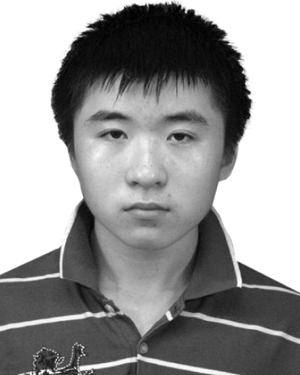 Han Liu合作论文数6
 Junjie Yan (闫俊杰)合作论文数MiniMax6
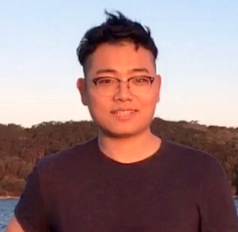 Liang Ding (丁亮)合作论文数Generative AI6
 Tianyu Pang (庞天宇)合作论文数Tencent Hunyuan6
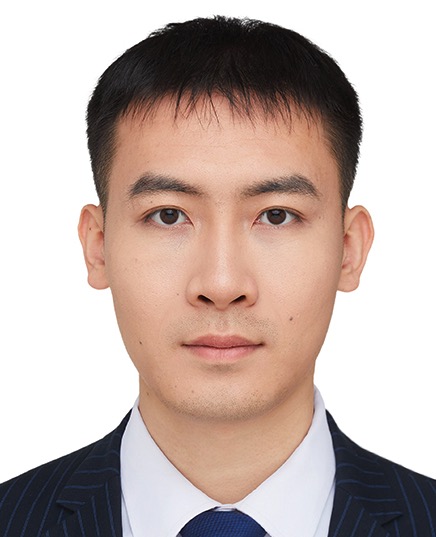 Yinpeng Dong (董胤蓬)合作论文数College of AI, Tsinghua University6
 Zhigang Zeng (曾志刚)合作论文数School of Artificial Intelligence and Automation, Huazhong University of Science and Technology6Bingning Wang (王炳宁)合作论文数Baichuan Inc.6
 Wei Zhang (张伟)合作论文数School of Computer Science and Technology, East China Normal University5
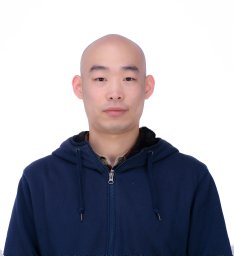 Qingtian Zhang合作论文数Tsinghua Univ, Inst Microelect, Beijing 100084, Peoples R China5
 Jianwei Zhang (张建伟)合作论文数Department of Informatics, Faculty of Mathematics, Informatics and Natural Science, University of Hamburg5Liang Tang (唐亮)合作论文数5Yuqiu Liu合作论文数4chen guo合作论文数4
 Ting Liu合作论文数Meitu Inc.4
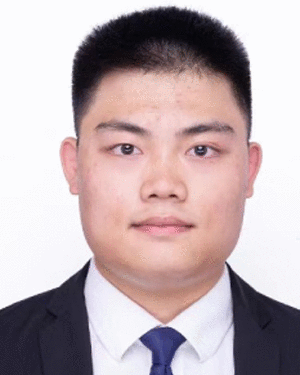 Jianjin Xu合作论文数4
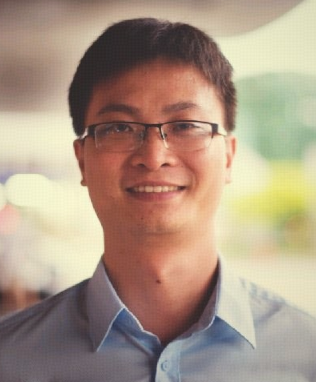 Jie Shi合作论文数Huawei Singapore4
 Qiongxiu Li合作论文数4
 Alan L. Yuille合作论文数Department of Cognitive Science, Krieger School of Arts & Sciences, Johns Hopkins University4
 Peng Qi (齐鹏)合作论文数4
 Haoran Chen合作论文数State Key Lab. of Inf. Photonics & Opt. Communi-cations, Beijing Univ. of Posts & Telecommun.;c;State Key Lab. of Inf. Photonics & Opt. Communi-cations, Beijing Univ. of Posts & Telecommun.4Jianguo Li合作论文数4
 Simone Frintrop合作论文数Department of Informatics, Faculty of Mathematics, Informatics and Natural Sciences, Universitat Hamburg4Shangqi Guo (郭尚其)合作论文数Dept. of Automation, Tsinghua Univerity4
 Huaping Liu (刘华平)合作论文数State Key Laboratory of Intelligent Technology and Systems, Department of Computer Science and Technology, Tsinghua University;Beijing National Research Center for Information Science and Technology, Tsinghua University4
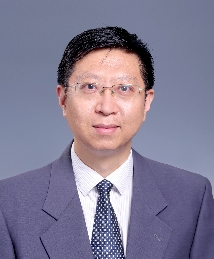 Feng Chen (陈峰)合作论文数Department of Automation, Tsinghua University4
 Xiaolu Zhang合作论文数Ant Financial4
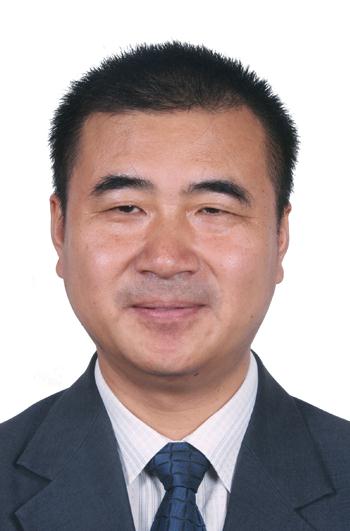 Fuchun Sun (孙富春)合作论文数Department of Computer Science and Technology, Tsinghua University4




