While 3D Gaussian Splatting (3DGS) has demonstrated impressive real-time rendering performance, its efficacy remains constrained by a reliance on heuristic density control. Despite numerous refinements to these handcrafted rules, such methods inherently lack the flexibility to adapt to diverse scenes with complex geometries. In this paper, we propose a paradigm shift for density control from rigid heuristics to fully learnable policies. Specifically, we introduce LeGS, a framework that reformulates density control as a parameterized policy network optimized via Reinforcement Learning (RL). Central to our approach is the tailored effective reward function grounded in sensitivity analysis, which precisely quantifies the marginal contribution of individual Gaussians to reconstruction quality. To maintain computational tractability, we derive a closed-form solution that reduces the complexity of reward calculation from O(N^2) to O(N). Extensive experiments on the Mip-NeRF 360, Tanks & Temples, and Deep Blending datasets demonstrate that LeGS significantly outperforms state-of-the-art methods, striking a superior balance between reconstruction quality and efficiency. The code will be released at https://github.com/AaronNZH/LeGS
Humanoid Visual Search (HVS) requires agents to actively explore immersive 360^∘ environments. While prior methods treat this as a monolithic task relying on cumulative, multi-turn Chain-of-Thought (CoT) reasoning, they impose heavy cognitive burdens and require expensive trajectory-level annotations. In this paper, we propose Imagining in 360^∘, a novel framework that decouples the exploration process into a specialized Imaginator and an Actor. The Imaginator functions as a probabilistic predictor of spatial priors; instead of maintaining a cumulative reasoning chain, it infers the semantic layout of both observed and unobserved regions in a single step. By sampling multiple hypotheses within this semantic space, we provide the Actor with a distribution of effective spatial information, offering robust guidance that hedges against uncertainty during active search. This decoupled architecture significantly lowers data engineering costs by eliminating the need for full-trajectory CoT annotations, enabling the generation of over 1.96 million curated training samples. Extensive experiments demonstrate that explicitly modeling semantic spatial priors drastically improves search efficiency and success rates in complex, in-the-wild environments.
Sparse-view 3D modeling represents a fundamental tension between reconstruction fidelity and generative plausibility. While feed-forward reconstruction excels in efficiency and input alignment, it often lacks the global priors needed for structural completeness. Conversely, diffusion-based generation provides rich geometric details but struggles with multi-view consistency. We present RecGen3D, a framework that combines these two paradigms into a cooperative system. To overcome inherent conflicts in coordinate spaces, 3D representations, and training objectives, we align both models within a shared canonical space. We employ decoupled cooperative learning, which maintains stable training while enabling seamless collaboration during inference. Specifically, the reconstruction module is adapted to provide canonical geometric anchors, while the diffusion generator leverages latent-augmented conditioning to refine and complete the geometric structure. Experimental results demonstrate that RecGen3D achieves superior fidelity and robustness, outperforming existing methods in creating complete and consistent 3D models from sparse observations.
Spatio-temporal reasoning in vision-language models requires visual representations that preserve physical geometry rather than merely semantic appearance. Recent multimodal models incorporate geometric information through structural branches, 3D-aware supervision, reasoning-stage fusion, or long-horizon memory. While these approaches demonstrate the importance of geometry for spatial intelligence, they typically treat geometric cues as a shared signal across all visual tokens. We note that this overlooks a finer-grained challenge: different visual tokens require different geometric evidence depending on their spatial roles. To address this limitation, we introduce GeoWeaver, a pre-reasoning geometric grounding framework that treats geometry as a representational prerequisite for spatio-temporal reasoning. GeoWeaver constructs a multi-level geometry bank from a frozen geometry encoder and performs token-adaptive geometric evidence allocation, enabling each visual token to retrieve the most relevant geometric abstractions. The selected evidence is incorporated into visual tokens via a residual grounding operation prior to language modeling, yielding geometry-grounded representations for downstream reasoning. Extensive evaluations on spatial reasoning benchmarks demonstrate that GeoWeaver consistently enhances geometry-aware reasoning while retaining general multimodal capabilities. This indicates that geometric information yields the greatest benefit not as a late-fusion auxiliary signal but as a fundamental prerequisite that shapes the representational foundation on which large language models perform reasoning. All source code and models will be released at https://github.com/yahooo-m/GeoWeaver .
Passive non-line-of-sight (NLOS) imaging has garnered significant interest as a promising technique for cost-effective "corner-turning sensing". Existing methods, however, face fundamental limitations: data-driven models generally suffer from limited generalization and interpretability, while physics-based approaches typically produce low-fidelity reconstructions. To address these challenges, this paper proposes a hybrid physics-data-driven imaging (HPDI) framework. HPDI employs a dual-path architecture that integrates a physics-informed coarse-to-fine pathway (CTFP) with a data-driven implicit reconstruction pathway (IRP). The former executes a staged progression from physics-informed coarse reconstruction to final refinement, while the latter encodes scene-specific statistical priors in an end-to-end manner. An adaptive fusion network synergistically integrates the physical insights of CTFP and the statistical abstractions of IRP, yielding enhanced reconstruction performance. To enable comprehensive evaluation, we construct multiple datasets covering diverse acquisition conditions (with/without occluder) and representative scenarios (sparse/complex). Experimental results demonstrate that HPDI consistently outperforms state-of-the-art methods in reconstruction fidelity, while exhibiting enhanced generalization under distribution shifts and higher data efficiency. This work represents a significant step toward harnessing the complementary strengths of physics-informed modeling and data-driven learning, thereby advancing the development of high-performance NLOS imaging.
Gaussian Splatting demonstrates impressive results in multi-view reconstruction based on Gaussian explicit representations. However, the current Gaussian primitives only have a single view-dependent color and an opacity to represent the appearance and geometry of the scene, resulting in a non compact representation. In this paper, we introduce a new method called SVGS (Spatially Varying Gaussian Splatting) that utilizes spatially varying colors and opacity in a single Gaussian primitive to improve its representation ability. We have implemented bilinear interpolation, movable kernels, and tiny neural networks as spatially varying functions. SVGS employs 2D Gaussian surfels as primitives, which significantly enhances novel-view synthesis while maintaining high-quality geometric reconstruction. This approach is particularly effective in practical applications, as scenes combining complex textures with relatively simple geometry occur frequently in real-world environments. Quantitative and qualitative experimental results demonstrate that all three functions outperform the baseline, with the best movable kernels achieving superior novel view synthesis performance on multiple datasets, highlighting the strong potential of spatially varying functions.
Recent advances in reasoning models have demonstrated remarkable capabilities on mathematical and coding tasks. However, their effectiveness in embodied domains, where the agent must continuously interact with environments and process observation-action interleaved trajectories, remains largely unexplored. We present Embodied-Reasoner, a reasoning model for interactive embodied tasks. Unlike mathematical reasoning that relies primarily on logical deduction, embodied scenarios demand spatial understanding, temporal reasoning, and ongoing self-reflection based on interaction history. To address these challenges, we synthesize 9.3k coherent Observation-Thought-Action trajectories containing 64k ego-centric images and 90k diverse reasoning processes (analysis, spatial reasoning, reflection, planning, and verification). We develop a three-stage training recipe that progressively enhances the model’s capabilities through imitation learning, rejection sampling tuning on self-exploration trajectories, and reflection tuning. The evaluation shows that our model significantly outperforms advanced visual reasoning models, e.g., exceeds OpenAI o1, o3-mini, and Claude-3.7 by +9%, 24%, and +13%. Analysis reveals that our model exhibits fewer repeated searches and logical inconsistencies, with particular advantages in complex long-horizon tasks. Real-world testing further validates the effectiveness of our approach.
A dexterous hand capable of generalizable grasping objects is fundamental for the development of general-purpose embodied AI. However, previous methods focus narrowly on low-level grasp stability metrics, neglecting affordance-aware positioning and human-like poses which are crucial for downstream manipulation. To address these limitations, we propose AffordDex, a novel framework with two-stage training that learns a universal grasping policy with an inherent understanding of both motion priors and object affordances. In the first stage, a trajectory imitator is pre-trained on a large corpus of human hand motions to instill a strong prior for natural movement. In the second stage, a residual module is trained to adapt these general human-like motions to specific object instances. This refinement is critically guided by two components: our Negative Affordance-aware Segmentation (NAA) module, which identifies functionally inappropriate contact regions, and a privileged teacher-student distillation process that ensures the final vision-based policy is highly successful. Extensive experiments demonstrate that AffordDex not only achieves universal dexterous grasping but also remains remarkably human-like in posture and functionally appropriate in contact location. As a result, AffordDex significantly outperforms state-of-the-art baselines across seen objects, unseen instances, and even entirely novel categories.
Piecewise parametric surfaces have long been established as prevalent geometric representations; however, they often require surface refinement or sophisticated quadrangulation to accurately represent complex geometries. Geometric deep learning has shown that neural networks can provide greater representational power than conventional methods. Nevertheless, approaches using a single parametric surface for shape fitting struggle to capture fine-grained geometric details, while multi-patch methods fail to ensure seamless connections between adjacent patches. We present Neural Piecewise Parametric Surfaces (NeuPPS), the first piece-wise neural surface representation that allows for coarse patch layouts composed of arbitrary n-sided surface patches to model complex surface geometries with high precision, offering enhanced flexibility compared with traditional parametric surfaces. This new surface representation guarantees, by construction, the continuity between adjacent patches, a property that other neural patch-based approaches cannot ensure. Two novel components are introduced: a learnable feature complex and a continuous mapping function approximated by multi-layer perceptrons (MLPs). We apply the proposed NeuPPS to surface fitting and shape space learning tasks. Extensive experiments demonstrate the advantages of NeuPPS over traditional parametric representations and existing patch-based learning approaches.
3D generative models of faces trained on in-the-wild image collections have improved greatly in recent times, offering better visual fidelity and view consistency. Making such generative models animatable is a hard yet rewarding task, with applications in virtual AI agents, character animation, and telepresence. However, it is not trivial to learn a well-behaved animation model with the generative setting, as the learned latent space aims to best capture the data distribution, often omitting details such as dynamic appearance and entangling animation with other factors that affect controllability. We present GAIA: Generative Animatable Interactive Avatars, which is able to generate high-fidelity 3D head avatars for both realistic animation and rendering. To achieve consistency during animation, we learn to generate Gaussians embedded in an underlying morphable model for human heads via a shared UV parameterization. For modeling realistic animation, we further design the generator to learn expression-conditioned details for both geometric deformation and dynamic appearance. Finally, facing an inevitable entanglement problem between facial identity and expression, we propose a novel two-branch architecture that encourages the generator to disentangle identity and expression. On existing benchmarks, GAIA achieves state-of-the-art performance in visual quality as well as realistic animation. The generated Gaussian-based avatar supports highly efficient animation and rendering, making it readily available for interactive animation and appearance editing.
This paper explores the evolution of Geodesign in addressing spatial and environmental challenges from its early foundations to the recent integration of artificial intelligence (AI). AI enhances existing Geodesign methods by automating spatial data analysis, improving land use classification, refining heat island effect assessment, optimizing energy use, facilitating green infrastructure planning, and generating design scenarios. Despite the transformative potential of AI in Geodesign, challenges related to data quality, model interpretability, and ethical concerns such as privacy and bias persist. This paper highlights case studies that demonstrate the application of AI in Geodesign, offering insights into its role in understanding existing systems and designing future changes. The paper concludes by advocating for the responsible and transparent integration of AI to ensure equitable and effective Geodesign outcomes.
The performance of unsupervised 3D object classification and bounding box regression relies heavily on the quality of initial pseudo-labels. Traditionally, the labels of classification and regression are represented by a single set of candidate boxes generated by motion or geometry heuristics. However, due to the similarity of many objects to the background in shape or lack of motion, the labels often fail to achieve high accuracy in two tasks simultaneously. Using these labels to directly train the network results in decreased detection performance. To address this challenge, we introduce Motal that performs unsupervised 3D object detection by Modality and task-specific know ledge transfer. Motal decouples the pseudo-labels into two sets of candidates, from which Motal discovers classification knowledge by motion and image appearance prior, and discovers box regression knowledge by geometry prior, respectively. Motal finally transfers all knowledge to a single student network by a TMT (Task-specific Masked Training) scheme, attaining high performance in both classification and regression. Motal can greatly enhance various unsupervised methods by about 2 × mAP. For example, on the WOD test set, Motal improves the state-of-the-art CPD by 2 1. 5 6% mAP L1 (from 20.54% to 42.10%) and 1 9. 9 0% mAP L2 (from 18.18% to 38.08%). These achievements highlight the significance of our method.
Many of the 1 billion people living in coastal areas lower than 10 m above sea level worldwide are at risk from changing climate and increasing storm intensity. Efficient and accurate mapping of coastal inundation and wave runup is of societal significance, benefiting flood hazard mitigation and climate change adaptation. Conventional methods of flood monitoring rely on in-situ water level gages installed in rivers and along the coasts. Such field measurements are sparse, and thus are unable to resolve spatial variations of coastal flooding and wave runup on beaches and structures. Recent advances in computer vision technology powered by deep-learning algorithms enable real-time flood detection and quantification using photos and videos that are widely available from traffic cameras, webcams, social media, and un-crewed aerial vehicles (Jafari et al. 2021, Liang et al. 2023). Although use of video for flood monitoring is recent, videos from cameras mounted on shore-based towers have been employed for decades by the nearshore community to monitor the surf and swash zones and to quantify wave runup on the beach. However, automated edge detection methods used to track the moving edge of the swash typically require manual quality control post-processing, which restricts the ability to monitor wave runup over large numbers of transects and long periods of time. The goal of this study is to overcome the limitations of conventional methods of flood and swash monitoring by leveraging a new deep- learning framework for efficient mapping of inundation and swash motion at the water and land interface.
The Automatic Lip-reading task aims to recognize spoken words through visual cues from the speaker's lip movements. This crucial task complements audio-based speech recognition systems and can substitute them when sound is unavailable. Event-based lip-reading methods have gained increasing attention due to the advantages of event cameras, such as high temporal resolution and low power consumption. However, existing methods often fail to fully utilize the spatial information in event data due to its sparsity and the presence of random activations. To address this, we propose a novel Spectral-guided Spatial Enhancement Network (SSE- Net). SSE-Net introduces two core innovations: the Spectrum-guided Spatial Feature Enhance Module (SSEM) and the Multi-Scale Spatial Interaction Module (MS-SIM). SSEM employs frequency domain enhancement and spatial feature enhancement strategies to augment spatial features crucial for event-based lipreading tasks. MS-SIM conducts the fusion and interaction of multi-level semantics, enriching the contextual information of lip representations. We conducted experiments on the event-based lip-reading dataset DVS-Lip with our proposed method and demonstrated its superiority over other state-of-the-art event-based lip-reading methods.
Deducing the 3D face from a skull is a challenging task in forensic science and archaeology. This article proposes an end-to-end 3D face reconstruction pipeline and an exploration method that can conveniently create textured, realistic faces that match the given skull. To this end, we propose a tissue-guided face creation and adaptation scheme. With the help of the state-of-the-art text-to-image diffusion model and parametric face model, we first generate an initial reference 3D face, whose biological profile aligns with the given skull. Then, with the help of tissue thickness distribution, we modify these initial faces to match the skull through a latent optimization process. The joint distribution of tissue thickness is learned on a set of skull landmarks using a collection of scanned skull-face pairs. We also develop an efficient face adaptation tool to allow users to interactively adjust tissue thickness either globally or at local regions to explore different plausible faces. Experiments conducted on a real skull-face dataset demonstrated the effectiveness of our proposed pipeline in terms of reconstruction accuracy, diversity, and stability.
In this paper, we present WonderHuman to reconstruct dynamic human avatars from a monocular video for high-fidelity novel view synthesis. Previous dynamic human avatar reconstruction methods typically require the input video to have full coverage of the observed human body. However, in daily practice, one typically has access to limited viewpoints, such as monocular front-view videos, making it a cumbersome task for previous methods to reconstruct the unseen parts of the human avatar. To tackle the issue, we present WonderHuman, which leverages 2D generative diffusion model priors to achieve high-quality, photorealistic reconstructions of dynamic human avatars from monocular videos, including accurate rendering of unseen body parts. Our approach introduces a Dual-Space Optimization technique, applying Score Distillation Sampling (SDS) in both canonical and observation spaces to ensure visual consistency and enhance realism in dynamic human reconstruction. Additionally, we present a View Selection strategy and Pose Feature Injection to enforce the consistency between SDS predictions and observed data, ensuring pose-dependent effects and higher fidelity in the reconstructed avatar. In the experiments, our method achieves SOTA performance in producing photorealistic renderings from the given monocular video, particularly for those challenging unseen parts.
The emergence of multimodal large language models (MLLMs) has driven breakthroughs in egocentric vision applications. These applications necessitate persistent, context-aware understanding of objects, as users interact with tools in dynamic and cluttered environments. However, existing embodied benchmarks primarily focus on static scene exploration, emphasizing object's appearance and spatial attributes while neglecting the assessment of dynamic changes arising from users' interactions. To address this gap, we introduce EOC-Bench, an innovative benchmark designed to systematically evaluate object-centric embodied cognition in dynamic egocentric scenarios. Specially, EOC-Bench features 3,277 meticulously annotated QA pairs categorized into three temporal categories: Past, Present, and Future, covering 11 fine-grained evaluation dimensions and 3 visual object referencing types. To ensure thorough assessment, we develop a mixed-format human-in-the-loop annotation framework with four types of questions and design a novel multi-scale temporal accuracy metric for open-ended temporal evaluation. Based on EOC-Bench, we conduct comprehensive evaluations of various proprietary, open-source, and object-level MLLMs. EOC-Bench serves as a crucial tool for advancing the embodied object cognitive capabilities of MLLMs, establishing a robust foundation for developing reliable core models for embodied systems.
Multispectral imaging plays a critical role in a range of intelligent transportation applications, including advanced driver assistance systems (ADAS), traffic monitoring, and night vision. However, accurate visible and thermal (RGB-T) image registration poses a significant challenge due to the considerable modality differences. In this paper, we present a novel joint Self-Correlation and Cross-Correspondence Estimation Framework (SC3EF), leveraging both local representative features and global contextual cues to effectively generate RGB-T correspondences. For this purpose, we design a convolution-transformer-based pipeline to extract local representative features and encode global correlations of intra-modality for inter-modality correspondence estimation between unaligned visible and thermal images. After merging the local and global correspondence estimation results, we further employ a hierarchical optical flow estimation decoder to progressively refine the estimated dense correspondence maps. Extensive experiments demonstrate the effectiveness of our proposed method, outperforming the current state-of-the-art (SOTA) methods on representative RGB-T datasets. Furthermore, it also shows competitive generalization capabilities across challenging scenarios, including large parallax, severe occlusions, adverse weather, and other cross-modal datasets (e.g., RGB-N and RGB-D).
The Single-eye Expression Recognition task stands as a crucial vision task, aimed at decoding human emotional states through careful examination of the eye region. Nevertheless, traditional cameras face challenges in detecting and capturing relevant biological information, especially under demanding lighting conditions such as dim environments, high exposure scenarios, or when other radiation sources are present. In this regard, we use a new type of sensor data that can resist extreme lighting conditions, namely event camera data, to improve the performance of single-eye expression recognition. To this end, we propose a novel Hierarchical Event-RGB Interaction Network (HI-Net), to fully integrate RGB and event data to overcome the extreme lighting challenges faced by the single-eye expression recognition task. The HI-Net contains two novel designs: Event-RGB Semantic Interaction Mechanism (ER-SIM) and Hierarchical Semantics Modeling (HSM) Scheme. The former aims to achieve interaction between Event and RGB modality semantics, while the latter aims to obtain high-quality modality semantic representations. In the ER-SIM, we employ an effective cross-attention mechanism to facilitate information fusion, to adaptively integrate and complement multi-scale Event and RGB semantics to cope with extreme lighting conditions. In HSM Scheme, we first explore multi-scale contextual semantics for the event modality and the RGB modality respectively. Then, we perform a semantics interaction strategy for these multi-scale contextual semantics, to enhance each modality's semantic representation. Extensive experiments demonstrate that our HI-Net significantly outperforms many state-of-the-art methods on the single-eye expression recognition task, especially under degraded lighting conditions.
 Cheng Wang (王程)合作论文数Department of Computer Science and Technology, Xiamen University;Institute of Artificial Intelligence, Xiamen University21
 Chenglu Wen (温程璐)合作论文数Spatial Sensing & Computing Lab, School of Informatics, Xiamen University19
 Yanpeng Cao (曹彦鹏)合作论文数School of Mechanical Engineering, Zhejiang University11
 Wenping Wang合作论文数Department of Computer Science & Engineering, College of Engineering, Texas A&M University11
 Hai Wu (吴海)合作论文数Pengcheng Laboratory10
 Hongchen Tan (谭红臣)合作论文数School of Future Technology, Dalian University of Technology10
 Hong Qin (秦洪)合作论文数Department of Computer Science, State University of New York at Stony Brook;Center for Visual Computing, State University of New York at Stony Brook10
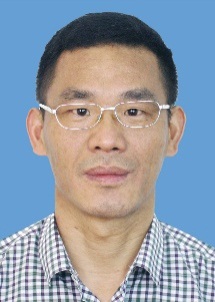 Jiangxin Yang (杨将新)合作论文数Institute of Manufacturing Technology and Equipment Automation, School of Mechanical Engineering, Zhejiang University10
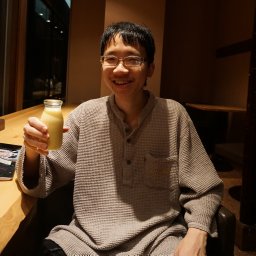 YongQing Liang合作论文数Utah State Univ.;c;Utah State Univ.9
 Xianfeng David Gu合作论文数Department of Computer Science, Stony Brook University;Department of Applied Mathematics, Stony Brook University9
 Baocai Yin (尹宝才)合作论文数School of Information Science and Technology,Beijing University of Technology8
 Yanlong Cao (曹衍龙)合作论文数School of Mechanical Engineering, Zhejiang University8
 Wuyi Yu合作论文数8
 Maoqing Li (李茂青)合作论文数Department of Automation, Xiamen University, Xiamen, 361005, China8
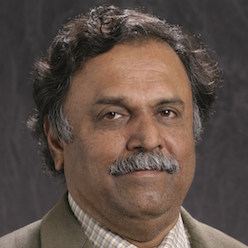 S.S. Iyengar合作论文数Knight Foundation School of Computing and Information Sciences, Florida International University7Zhongqiang Li合作论文数Louisiana State Univ, Div Elect & Comp Engn, Coll Engn, Baton Rouge, LA 70803 USA6
 Jian Xu合作论文数6
 Ming Cheng (程明)合作论文数Department of Computer Science and Technology, School of Informatics, Xiamen University6Qing Li合作论文数School of Software, Tsinghua University5
 Yuan Liu (刘缘)合作论文数Department of Computer Science, University of Hong Kong5
 Qin Chen合作论文数Department of Civil & Environmental Engineering, College of Engineering, Northeastern University;Marine Science Center, Department of Marine and Environmental Sciences, College of Engineering, Northeastern University;Coastal Hazards Research Collaboratory, Louisiana State University;Department of Civil and Environmental Engineering, Louisiana State University;Center for Computation & Technology, Louisiana State University5
 Yanping Li合作论文数Global Institute for Water Security at the University of Saskatchewan, 11 Innovation Blvd, Saskatoon, SK, S7N 3H5, Canada5
 Xiaohu Guo合作论文数Department of Computer Science, Erik Jonsson School of Engineering and Computer Science, University of Texas at Dallas5
 Yunfan Bao合作论文数5
 Zewei He合作论文数Key Laboratory of Advanced Manufacturing Technology of Zhejiang Province, School of Mechanical Engineering, Zhejiang University, Hangzhou 310027, China4
 Navid H Jafari合作论文数Louisiana State University4
 Xiuping Liu (刘秀平)合作论文数School of Mathematical Sciences, Dalian University of Technology4
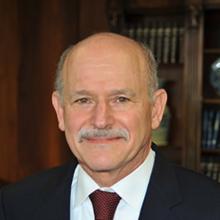 Steven B Heymsfield合作论文数Pennington Biomedical Research Center, Louisiana State University4Jian Zhang合作论文数4Huanhuan Xu合作论文数4Shaomian Yao合作论文数3
 Xuelun Shen合作论文数Spatial Sensing & Computing Lab, School of Informatics, Xiamen university3
 Congyi Zhang合作论文数Department of Computer Science, Faculty of Science, The University of British Columbia;Department of Computer Science, The University of Hong Kong3
 Emre Yilmaz合作论文数3Alexandra Ramos合作论文数Louisiana State Univ, Sch Vet Med, Dept Comparat Biomed Sci, Baton Rouge, LA 70803 USA3
 Shangshu Yu合作论文数Xiamen Univ, Sch Informat, Fujian Key Lab Sensing & Comp Smart City, Xiamen 361005, Peoples R China3
 Cheng Lin (林铖)合作论文数School of Computer Science and Engineering, Macau University of Science and Technology3ZhangYu Ye (叶章宇)合作论文数3
 Junli Zhao (赵君莉)合作论文数School of Sciences, Chang'an University3
 Yaowei Wang (王耀威)合作论文数School of Computer Science and Technology, Harbin Institute of Technology (Shenzhen);Network Intelligence Research Department, Pengcheng Laboratory;Visual Intelligence Institute, Pengcheng Laboratory;Institute of Advanced Technology, University of Science and Technology of China3
 PRAVEEN RAMAKRISHNAN GEETHAKUMARI合作论文数Department of Pharmacology and Experimental Therapeutics (CD),, Thomas Jefferson University;Department of Internal Medicine, Albert Einstein Healthcare Network (PRG);Cancer Center, Albert Einstein Healthcare Network;Center for Health Promotion and Prevention Research, University of Texas School of Public Health;University of Texas School of Public Health, Thomas Jefferson University3
 Wenkai Han合作论文数Anhui Normal University, Anhui Normal University3Yi Zhang (张毅)合作论文数School of Physics, Dalian University of Technology3
 Scott Schaefer合作论文数Department of Computer Science, Rice University3
 Jun Li (李军)合作论文数School of Geospatial Artificial Intelligence, East China Normal University;Department of Geography, Geomatics and Environment, University of Toronto3
 Yueting Zhuang (庄越挺)合作论文数College of Artificial Intelligence, Zhejiang University;AI Collaboration & Innovation Center of Ministry of Education, Zhejiang University3
 Ying He合作论文数3Farrukh T. Awan合作论文数Arthur G. James Cancer Hospital, Ohio State University3
 Ji-Ming Feng (冯继明)合作论文数Dept Comparat Biomed Sci, Louisiana State Univ3




