This paper studies end-to-end latency minimization for a multi-band radar sensing and deep neural network (DNN) inference pipeline. Unlike conventional stage-wise designs that treat radar sensing and DNN inference as two sequential stages, the proposed framework exploits cross-stage parallelism by allowing the inference branch associated with a sensed band to start as soon as that band completes sensing, without waiting for all bands to finish. To characterize this interaction, we formulate a joint scheduling problem that couples sensing-time allocation, branch release timing, and non-preemptive multi-core execution of a directed acyclic graph (DAG) under sensing-feasibility, precedence, and core-capacity constraints. Since the resulting problem is combinatorial and strongly time-coupled, we further develop a release-aware heuristic that evaluates each sensing decision according to its downstream impact on the DAG makespan, together with a greedy list scheduler for multi-core DAG execution under release times. Simulation results show that the proposed design can effectively exploit cross-stage parallelism and reduce end-to-end latency relative to a decoupled baseline in many heterogeneous sensing scenarios, while also clarifying the operating regimes in which the latency gain becomes limited.
Federated learning (FL) enables multiple devices to collaboratively train a global model without sharing local data. However, due to limited local computing capability and communication bandwidth, FL suffers from high learning latency, especially when the model size is large. To address these issues, we propose APQ-FL, an adaptive model pruning and quantization method for wireless FL, to reduce the neural network size and improve communication efficiency. Moreover, device selection and wireless resource allocation are also integrated. We first present a convergence analysis of FL with model pruning and quantized transmission, and then jointly optimize the pruning ratio, quantization bit width, device selection, and wireless bandwidth allocation to minimize the convergence upper bound under latency and bandwidth constraints. We prove that the optimized quantization bit width can be obtained via binary search, and derive the closed-form solutions for the optimal pruning ratio and bandwidth allocation. Subsequently, we propose an efficient device selection strategy and further introduce its fairness-aware extension, APQ-FL-Fair. Experiments show that APQ-FL and APQ-FL-Fair improve test accuracy by 4.96%–15.33% while reducing 23.14%–74.45% communication overhead compared to other methods, and exhibit stable and superior performance even under stringent latency constraints.
Wirelessly-connected robotic systems empower robots with real-time intelligence by leveraging remote computing resources for decision-making. However, the data exchange between robots and edge servers often overwhelms communication links, introducing latency that degrades task performance. To tackle this, goal-oriented semantic communication (GSC) has been introduced for wirelessly-connected robotic systems to extract and transmit only goal-relevant semantic representations. While this improves task effectiveness, it generally overlooks practical safety requirements. Meanwhile, existing robotics research often treats safety primarily as a control-level problem, without systematically considering safety across sensing, communication, and control in a closed-loop manner. To bridge this gap, we investigate how to enable safety-aware goal-oriented semantic (SA-GS) sensing, communication, and control co-design in wirelessly-connected robotic systems, aiming to maximize the robotic task effectiveness subject to practical safety requirements. We first introduce an architecture for wirelessly-connected robotic systems and representative use cases. We then summarize general safety requirements and effectiveness metrics across the use cases. Next, we systematically analyze the unique safety and effectiveness challenges in sensing, communication, and control. Based on these, we further present potential SA-GS research directions. Finally, an Unmanned Aerial Vehicle (UAV) target tracking case study validates that one of the presented SA-GS research directions, i.e., semantic-based C&C packet execution, could significantly improve safety rate and tracking success rate by more than 2 times and 4.5 times, respectively.
Industry 5.0 envisions a cyber-physical future where humans and robots collaborate harmoniously, empowered by 6G connectivity and intelligent automation. Central to this vision is the ability to autonomously configure complex production pipelines based on diverse and evolving human intents. Existing orchestration technologies exhibit critical shortcomings in terms of self-learning, validation, error diagnosis, and rectification capabilities. To this end, we propose an Agentic AI orchestration framework that interprets human intents and dynamically assembles optimal technology pipelines using a self-improving, retrieval-augmented Large Language Model (LLM) and a Bayesian contextual-bandit selector. This enables dynamic adaptation in unpredictable factory environments. Our solution is validated in a cyber-physical testbed integrating Digital Twins (DTs), distributed AI, robotics, and real-world network infrastructure. Compared to baseline LLMs, our system reduces orchestration iterations by over 94% for a given intent and by around 90% for an unseen intent, showing rapid convergence and strong generalization. Real-world deployments mirror DT results, confirming both the fidelity of the simulation and the practical value of intent-driven orchestration for human-centric manufacturing.
As Large Language Models (LLMs) are increasingly adopted in edge intelligence to power domain-specific applications and personalized services, the quality and efficiency of the LLM post-training phase-including fine-tuning and inference, have become critical due to constrained resources. Although recent advances in federated parameter-efficient fine-tuning (FL PEFT) and low-latency inference have improved individual task performance, fine-tuning and inference are still handled as isolated workloads, which overlooks their interdependence and results in redundant deployments and delayed improvement in inference quality. To address these limitations, we introduce a new co-execution framework and instantiate it with CoLLM, a system that unifies FL PEFT and inference on shared edge replicas and model parameters. CoLLM addresses key challenges at both replica and cluster levels through: (1) an intra-replica model sharing mechanism that enables real-time model parameter reuse via unmerged inference and shadow adapter strategies; and (2) a two-timescale inter-replica coordination algorithm that adaptively balances fine-tuning and inference workloads to jointly optimize long-term model quality gains and short-term inference efficiency. Extensive evaluation across diverse LLMs and real-world traces show that CoLLM consistently outperforms state-of-the-art LLM systems, achieving up to 3x higher goodput, demonstrating its effectiveness in enabling seamless LLM post-training for edge intelligence.
The explosive mobile traffic growth has led to dense network deployments, characterized by multiple-input-multiple-output (MIMO) systems. While existing studies have modelled and optimized single-cell multi-user MIMO (MU-MIMO) performance, this approach becomes insufficient as network density increases. This necessitates the exploration of multi-cell MU-MIMO systems. With the growth of uplink traffic, optimizing uplink performance in multi-cell MU-MIMO becomes critical, where almost all existing studies have solely considered beamforming techniques and neglected the joint optimization of MU-MIMO and resource allocation. To address this gap, we first propose a decentralized multi-agent deep reinforcement learning (MADRL) approach to jointly optimize uplink MU-MIMO user equipment (UE) paring and physical resource block (PRB) allocation in multi-cell MIMO systems, ensuring both interference management and fairness among all UEs. Simulations demonstrate that our proposed approach improves uplink throughput by 14.5% under random location distribution and 39% under high-interference location distribution compared to the traditional round-robin scheduling with random PRB allocation approach.
Efficient multi-user multi-task video transmission is an important research topic within the realm of current wireless communication systems. To reduce the transmission burden and save communication resources, we propose a goal-oriented semantic communication framework for optical flow-based multi-user multi-task video transmission (OF-GSC). At the transmitter, we design a semantic encoder that consists of a motion extractor and a patch-level optical flow-based semantic representation extractor to effectively identify and select important semantic representations. At the receiver, we design a transformer-based semantic decoder for high-quality video reconstruction and video classification tasks. To minimize the communication time, we develop a deep deterministic policy gradient (DDPG)-based bandwidth allocation algorithm for multi-user transmission. For video reconstruction tasks, our OF-GSC framework achieves a significant improvement in the received video quality, as evidenced by a 13.47
Obstacle avoidance is a fundamental task in mobile robotics and has been extensively studied over the past decades. However, existing studies are fundamentally limited by an exclusive reliance on robot’s onboard sensors, which restricts the field of view and lacks the global understanding of dynamic environments. How to leverage the base station (BS) to enable sensing and control of mobile robots for reliable obstacle avoidance remains largely underexplored. To fill this gap, we investigate an integrated sensing and communication (ISAC)-enabled BS for the unmanned aerial vehicle (UAV) obstacle avoidance task, and propose a goal-oriented semantic communication (GOSC) framework for the BS to transmit sensing and command and control (C&C) signals efficiently and effectively. Our GOSC framework establishes a closed loop for sensing–C&C generation–sensing and C&C transmission: For sensing, a Kalman filter (KF) is applied to continuously predict UAV positions, mitigating the reliance of UAV position acquisition on continuous sensing signal transmission, and enhancing position estimation accuracy through sensing–prediction fusion. Based on the refined estimation position provided by the KF, we develop a Mahalanobis distance-based dynamic window approach (MD-DWA) to generate precise C&C signals under uncertainty, in which we derive the mathematical expression of the minimum Mahalanobis distance required to guarantee collision avoidance. Finally, for efficient sensing and C&C signal transmission, we propose an effectiveness-aware deep Q-network (E-DQN) to determine the transmission of sensing and C&C signals based on their value of information (VoI). The VoI of sensing signals is quantified by the reduction in uncertainty entropy of UAV’s position estimation, while the VoI of C&C signals is measured by their contribution to UAV navigation improvement. Extensive simulations validate the effectiveness of our proposed GOSC framework. Compared to the conventional ISAC transmission framework that transmits sensing and C&C signals at every time slot, GOSC achieves the same 100% task success rate while reducing the number of transmitted sensing and C&C signals by 92.4% and the number of transmission time slots by 85.5%.
Recently, video-based vehicle and license plate (LP) recognition have become a core requirement in city-scale traffic monitoring. However, constrained wireless resources have imposed a severe video transmission bottleneck, degrading its performance. To address the challenge, we propose a goal-oriented semantic Communication (GSC) framework for the joint vehicle and LP recognition task, which extracts semantic information, compresses, and protects each region based on its importance to the task. Specifically, we design a semantic information extraction module to remove spatial and temporal redundancy in the input video, which is irrelevant to the task. Then, we design an importance ranking module that ranks the importance of various semantic information regions based on the shapley value. Guided by the importance, the designed semantic-based encoding module allocates higher compression quality and stronger protection to regions critical for the task. Simulation results validate that our proposed GSC framework significantly outperforms H.264/H.265+LDPC, achieving a 250.02% and 133.32% increase in joint recognition accuracy, and a 99.26% and 98.87% reduction in communication cost, respectively.
Wireless goal-oriented semantic communication (GSC) has emerged as a promising paradigm by directly optimizing task performance. However, existing GSC frameworks typically operate on entire images and rely on labeled data for classification tasks, which can limit their compression efficiency and increase the risk of overfitting. This paper proposes a novel semi-supervised wireless GSC framework for the unlabeled image foreground classification task. In our proposed framework, a foreground-aware masked autoencoder (MAE) is developed to prioritize semantically important foreground objects, thereby reducing transmission overhead. To enable accurate reconstruction and classification under a limited data size, we further propose a semi-supervised autoencoder (SSAE) that decodes the semantic latent tensor and refines image details by leveraging three complementary information sources, followed by fine-tuning a pre-trained image classification model. The entire pipeline, from foreground masking to classification, is trained in a semi-supervised manner to significantly reduce the need for manual labeling. Simulation results validate that the proposed GSC framework achieves over 90
With the emergence of next-generation communication technologies, the integration of AI into next-generation wireless networks is becoming an important step toward achieving distributed intelligence. Different distributed learning frameworks, such as federated learning (FL) and split learning (SL), enable collaborative model training by distributing computation between user equipment (UEs) and edge servers. However, FL suffers from high communication overhead due to frequent model synchronization, while SL introduces significant latency at the split layer and is sensitive to channel conditions. The effects of wireless channel dynamics on distributed learning performance and the communication-computation trade-offs across different split layers remain insufficiently studied in practical scenarios. In this work, we present a Federated Split Learning Testbed (FSLT) over 5G wireless networks that integrates FL and SL within an OpenAirInterface (OAI) software-defined radio platform. FSLT enables empirical evaluation of learning–communication trade-offs under realistic wireless conditions. The framework distributes neural network layers between UEs and edge servers, allowing investigation of channel variability, latency, and split-point selection on training performance. Experiments on an avatar skeleton extraction task demonstrate that FSLT reduces communication load by 5%-8% compared with FL and achieves faster convergence than SL under dynamic channel conditions. These results provide practical insights into optimizing distributed learning over 5G edge systems and pave the way toward AI-native 6G networks.
Efficient video transmission is essential for seamless communication and collaboration within the visually-driven digital landscape. To achieve low latency and high-quality video transmission over a bandwidth-constrained noisy wireless channel, we propose a stable diffusion (SD)-based goal-oriented semantic communication (GSC) framework. In this framework, we first design a semantic encoder that effectively identify the keyframes from video and extract the relevant semantic information (SI) to reduce the transmission data size. We then develop a semantic decoder to reconstruct the keyframes from the received SI and further generate the full video from the reconstructed keyframes using frame interpolation to ensure high-quality reconstruction. Recognizing the impact of wireless channel noise on SI transmission, we also propose an SD-based denoiser for GSC (SD-GSC) condition on an instantaneous channel gain to remove the channel noise from the received noisy SI under a known channel. For scenarios with an unknown channel, we further propose a parallel SD denoiser for GSC (PSD-GSC) to jointly learn the distribution of channel gains and denoise the received SI. It is shown that, with the known channel, our proposed SD-GSC outperforms state-of-the-art ADJSCC, Latent-Diff DNSC, DeepWiVe and DVST, improving Peak Signalto-Noise Ratio (PSNR) by 69%, 58%, 33% and 38%, reducing mean squared error (MSE) by 52%, 50%, 41% and 45%, and reducing Frechet Video Distance (FVD) by 38%, 32%, 22% and 24%, respectively. With the unknown channel, our PSD-GSC achieves a 17% improvement in PSNR, a 29% reduction in MSE, and a 19% reduction in FVD compared to MMSE equalizerenhanced SD-GSC. These significant performance improvements demonstrate the robustness and superiority of our proposed methods in enhancing video transmission quality and efficiency under various channel conditions.
Federated learning (FL) offers new opportunities in machine learning, particularly in addressing data privacy concerns. In contrast to conventional event-based federated learning, time-triggered federated learning (TT-Fed), as a general form of both asynchronous and synchronous FL, clusters users into different tiers based on fixed time intervals. However, the FL network consists of a growing number of user devices with limited wireless bandwidth, consequently magnifying issues such as stragglers and communication overhead. In this paper, we introduce adaptive model pruning to wireless TT-Fed systems and study the problem of jointly optimizing the pruning ratio and bandwidth allocation to minimize the training loss while ensuring minimal learning latency. To answer this question, we perform convergence analysis on the gradient l_2 norm of the TT-Fed model based on model pruning. Based on the obtained convergence upper bound, a joint optimization problem of pruning ratio and wireless bandwidth is formulated to minimize the model training loss under a given delay threshold. Then, we derive closed-form solutions for wireless bandwidth and pruning ratio using Karush-Kuhn-Tucker(KKT) conditions. The simulation results show that model pruning could reduce the communication cost by 40
Molecular communication (MC) is a promising paradigm for applications where traditional electromagnetic communications are impractical. However, decoding chemical signals, especially in multi-transmitter systems, remains a key challenge due to interference and complex propagation dynamics. In this paper, we develop a one-dimensional fractal convolutional neural network (fCNN) to detect the concentrations of multiple types of molecules based on the absorbance spectra measured at a receiver. Our model is trained by both experimental and simulated datasets, with the latter enhanced by noise modeling to mimic real-world measurements. We demonstrate that a noiseaugmented simulated dataset can effectively be a substitute for experimental data, achieving similar decoding accuracy. Our approach successfully detects bit sequences in both binary and quadruple concentration shift keying (BCSK and QCSK) scenarios, even when transmitters are desynchronized, highlighting the potential of machine learning for robust MC signal detection.
Federated fine-tuning of pre-trained Large Language Models (LLMs) enables task-specific adaptation across diverse datasets while preserving privacy. However, challenges such as high computational and memory demands, heterogeneous client resources, bandwidth constraints, and ineffective global aggregation hinder its efficiency. To address these issues, we propose HAFLQ (Heterogeneous Adaptive Federated LoRA Fine-tuned LLM with Quantization), featuring four technical innovations. First, a salience-driven adaptive quantization scheme ranks transformer blocks by Hessian-based importance scores, applying block-wise quantization (e.g., INT8 for low-salience blocks, FP32 for critical ones) tailored to each client’s GPU capacity. Second, an importance-based parameter management mechanism enables clients with limited resources to selectively freeze low-importance LoRA rank-1 matrices (identified via gradient-sensitivity metrics) while training only critical ones, avoiding truncation-induced performance loss. Third, bandwidth-adaptive communication quantization allocates higher precision (32/16-bit) to important parameters and lower precision (8/4-bit) to less critical ones based on wireless channel conditions, prioritizing transmission of high-impact rank-1 matrices. Fourth, adaptive rank-1 matrix-level aggregation weights client contributions by Frobenius norm and aggregates only updated matrices, preventing information dilution from zero-padding approaches. Experiments on text classification tasks show that HAFLQ outperforms existing heterogeneous federated learning baselines in convergence speed and accuracy under bandwidth-sufficient conditions. Under bandwidth-constrained scenarios, HAFLQ reduces memory usage by 31% via adaptive LLM quantization and communication cost by 49% via adaptive communication quantization, while the complete framework achieves 50% relative accuracy improvement over the zero-padding aggregation baseline (from 59% to 89%).
How to achieve a reliable transmission in scenarios with severe interference and channel fading remains a challenge. Meanwhile, semantic communications have become a promising technique that transmits semantic features rather than original data. This paper proposes a novel, reliable image transmission by boosting multipath semantic-oriented communications. The novelty of the proposed multiple path semantic communications (MP-SCS) lies in its ability to fuse multiple weak semantic transmissions through a feature pyramid cascaded (FPC) and multiple channel aggregation blocks, thereby reducing the impact of channel fading and improving decoding quality. Based on MP-SCS, three MP-SCS-assisted frameworks, namely S-CoMP, S-LBMP, and S-ARQ, are further proposed to cope with the existing wireless systems and tackle unreliable transmission environments. The simulation results demonstrate that the MP-SCS outperforms conventional multiple-path-based communications, especially with very low SINR or lengthy communication distances. Specifically, S-CoMP obtains a similar image reconstruction quality to conventional JP-CoMP with no hardware requirements. S-LBMP obtains the same transmission quality as traditional SCS with lower transmission power. S-ARQ enhances the transmission quality and reduces the number of retransmissions. We further implement the S-ARQ in the USRP testbed, and the experimental results exhibit a consistent trend with the simulation.
The emergence of the Metaverse brings new opportunities for enhancing productivity and creativity through real-time updates and personalized content. However, it also leads to the generation of massive volumes of dynamic information, placing unprecedented demands on existing communication networks. Current bit-oriented communication systems are not designed to cope with such high levels of semantic complexity and data volume, ultimately limiting the responsiveness and interactivity of Metaverse applications. To address this research gap, we propose a goal-oriented semantic communication framework enabled by generative AI and optimal transport for Metaverse construction (GSC). The proposed GSC framework includes an hourglass network-based (HgNet) encoder to extract semantic information of objects in the Metaverse and a semantic decoder to construct the Metaverse content after wireless transmission, enabling efficient communication and real-time object behaviour updates to the scenery for the Metaverse construction task. To overcome the wireless channel noise at the receiver, we design an optimal transport (OT)-enabled semantic denoiser, which enhances the accuracy of the Metaverse scenery through wireless communication. The results of our computer experiments demonstrate that compared to the conventional Metaverse construction, our proposed GSC framework significantly reduces wireless Metaverse construction latency by 92.6%, while improving the Metaverse object status accuracy and viewing experience by 45.6% and 44.7%, respectively.
To provide Uplink Centric Broadband Communication (UCBC), New Radio Unlicensed (NR-U) network has been standardized to exploit the unlicensed spectrum using Listen Before Talk (LBT) scheme to fairly coexist with the incumbent Wireless Fidelity (WiFi) network. Existing access schemes over unlicensed spectrum are required to perform Clear Channel Assessment (CCA) before transmissions, where fixed Energy Detection (ED) thresholds are adopted to identify the channel as idle or busy. However, fixed ED thresholds setting prevents devices from accessing the channel effectively and efficiently, which leads to the hidden node (HN) and exposed node (EN) problems. In this paper, we first develop a centralized double Deep Q-Network (DDQN) algorithm to optimize the uplink system throughput, where the agent is deployed at the central server to dynamically adjust the ED thresholds for NR-U and WiFi networks. Considering that heterogeneous NR-U and WiFi networks, in practice, may not be able to share the raw data with the central server directly due to data privacy, we then develop a vertical federated DDQN algorithm, where two agents are deployed in the NR-U and WiFi networks, respectively. Our results have shown that the uplink system throughput increases by over 100%, where cell throughput of NR-U network rises by 150%, and cell throughput of WiFi network decreases by 30%. To guarantee the cell throughput of WiFi network, we redesign the reward function to punish the agent when the cell throughput of WiFi network is below the threshold, and our revised design can still provide 70% uplink system throughput gain, where cell throughput of NR-U network rises by 100%, and cell throughput of WiFi network rises by 35%.
Molecular communication (MC) is the exchange of information via signaling molecules, forming the backbone of biological networks and underpinning the development of the Internet of Bio-Nano Things (IoBNT). A critical challenge in engineering MC systems is the reliable detection of molecular signals in realistic environments, where slow diffusion, reaction noise, and memory effects in the channel not only cause intersymbol interference (ISI) but also lead to low signal-to-noise ratios, baseline drifts, and saturation of ligand–receptor interfaces. Conventional detection methods relying on equilibrium measurements are often too slow to capture dynamic concentration changes that encode the information and are vulnerable to ISI and receptor saturation. To evaluate dynamic detection strategies under these conditions on a practical electronic receiver, we require a device that operates directly in electrolyte, supports specific ligand–receptor binding, and can be integrated with controlled microfluidic flow. In this study, we experimentally implement and systematically compare two dynamic detection strategies, i.e., Derivative-Based Detection (DD) and Frequency-Domain Detection (FD), using an integrated microfluidic testbed featuring a GFET-based MC receiver. The GFET, functionalized with single-stranded DNA (ssDNA) probes for selectively capturing complementary, information-carrying target ssDNA molecules, transduces hybridization events into electrical signals in real time. We characterize the receiver's response and evaluate the performance of DD and FD against a conventional Difference-Based Detection (BD) benchmark across various communication scenarios with different flow rates and data rates. Our results demonstrate that DD and FD significantly outperform BD, particularly in high-ISI regimes. DD achieves superior detection performance when the signal-to-noise ratio (SNR) is high and temporal transitions are sharp, offering rapid pre-equilibrium detection. Conversely, FD, which analyzes the power spectral density (PSD) of binding‑induced current fluctuations, maintains superior robustness in low‑SNR and high‑ISI regimes where time‑domain signatures cannot be reliably resolved. This work provides the first experimental validation of DD and FD for GFET-based MC receivers, enabling a practical pathway toward reliable MC in complex, physiologically relevant environments.
As wireless communication networks grow in scale and complexity, diverse resource allocation tasks become increasingly critical. Multi-Agent Reinforcement Learning (MARL) provides a promising solution for distributed control, yet it often requires costly real-world interactions and lacks generalization across diverse tasks. Meanwhile, recent advances in Diffusion Models (DMs) have demonstrated strong capabilities in modeling complex dynamics and supporting high-fidelity simulation. Motivated by these challenges and opportunities, we propose a Communication-based Diffusion World Model (NetWorld) to enable few-shot generalization across heterogeneous MARL tasks in wireless networks. To improve applicability to large-scale distributed networks, NetWorld adopts the Distributed Training with Decentralized Execution (DTDE) paradigm and is organized into a two-stage framework: (i) pre-training a classifier-guided conditional diffusion world model on multi-task offline datasets, and (ii) performing trajectory planning entirely within this world model to avoid additional online interaction. Cross-task heterogeneity is handled via shared latent processing for observations, two-hot discretization for task-specific actions and rewards, and an inverse dynamics model for action recovery. We further introduce a lightweight Mean Field (MF) communication mechanism to reduce non-stationarity and promote coordinated behaviors with low overhead. Experiments on three representative tasks demonstrate improved performance and sample efficiency over MARL baselines, indicating strong scalability and practical potential for wireless network optimization.
 Arumugam Nallanathan合作论文数Centre for Networks, Communications and Systems, School of Electronic Engineering and Computer Science, Faculty of Science and Engineering, Queen Mary University of London114
 Maged Elkashlan合作论文数School of Electronic Engineering and Computer Science, Queen Mary University of London48
 Hamid Aghvami合作论文数Department of Engineering, Faculty of Natural, Mathematical & Engineering Sciences, King’s College London25
 Jie Jia (贾杰)合作论文数School of Computer Science and Engineering, Northeastem University16
 Cunhua Pan (潘存华)合作论文数School of Information Science and Engineering, Southeast University15
 Nan Jiang合作论文数School of Electronic Engineering and Computer Science, Queen Mary University of London14
 Dadi Bi合作论文数Kings Coll London, Dept Engn, London WC2R 2LS, England13
 Xingwei Wang (王兴伟)合作论文数School of Computer Science and Engineering, Northeastern University13
 Xiaonan Liu (刘筱楠)合作论文数College of Life Science, Shandong Agricultural University13
 Yan Liu合作论文数State Key Laboratory of High Performance Ceramics and Superfine Microstructures, Shanghai Institute of Ceramics, Chinese Academy of Sciences12
 George Karagiannidis合作论文数Department of Electrical and Computer Engineering, Aristotle University of Thessaloniki;The Artificial Intelligence & Cyber Systems Research Center, Lebanese American University11
 Jinhong Yuan合作论文数School of Electrical Engineering and Telecommunications, University of New South Wales11
 Fenghe Hu合作论文数10
 Zhe Wang合作论文数Centre for Telecommunications Research, King's College London10
 Weisi Guo合作论文数Centre for Autonomous and Cyber-Physical Systems, Cranfield University10
 Adam Noel合作论文数School of Engineering, Faculty of Science, Engineering and Medicine, The University of Warwick10
 Mischa Dohler合作论文数King’s College London;Ericsson Inc10
 Lifeng Wang (王礼锋)合作论文数School of Information Science and Engineering, Fudan University9
 Toktam Mahmoodi合作论文数Centre for Telecommunications Research, Department of Informatics, King's College London9
 Hong Ren (任红)合作论文数School of Information Science and Engineering, Southeast University;Department of Communication Engineering, Southeast University8
 Hui Zhou (周辉)合作论文数Electronic Information School, Wuhan University8
 Robert Schober合作论文数Department of Electrical-Electronic-Communication Engineering, Institute for Digital Communications, Friedrich-Alexander-University Erlangen-Nuremberg8
 Lisheng Fan (范立生)合作论文数School of Computer Science and Cyber Engineering, Guangzhou University8
 Trung Q. Duong合作论文数Faculty of Engineering and Applied Science, Memorial University of Newfoundland;School of Electronics, Electrical Engineering and Computer Science, Faculty of Engineering and physical Sciences, Queen's University Belfast7
 Yasaman Omid合作论文数6
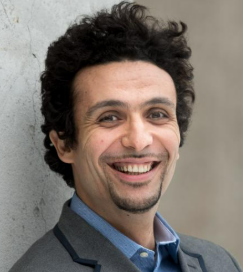 Mehdi Bennis合作论文数Centre for Wireless Communications, Faculty of Information Technology and Electrical Engineering, University of Oulu6
 Zhiguo Ding合作论文数School of Electrical & Electronic Engineering, College of Engineering, Nanyang Technological University6
 Na Yan合作论文数5
 Yuanwei Liu合作论文数Department of Electrical and Computer Engineering, The University of Hong Kong5
 Ranjan K. Mallik合作论文数Department of Electrical Engineering, Indian Institute of Technology Delhi5
 Jian Chen (陈健)合作论文数School of Telecommunications Engineering, Xidian University5
 Praneeth Kumar Susarla合作论文数Faculty of Information Technology and Electrical Engineering, University of Oulu4
 Sunila Akbar合作论文数Department of Electrical and Computer Engineering, University of Toronto4
 Jingjing Cui (崔静静)合作论文数School of Information Science and Technology, Southwest Jiaotong University4
 Tong Bai (白桐)合作论文数School of Cyber Science and Technology, Beihang University4
 Xiaoli Chu合作论文数Department of Electronic and Electrical Engineering, Faculty of Engineering, The University of Sheffield4
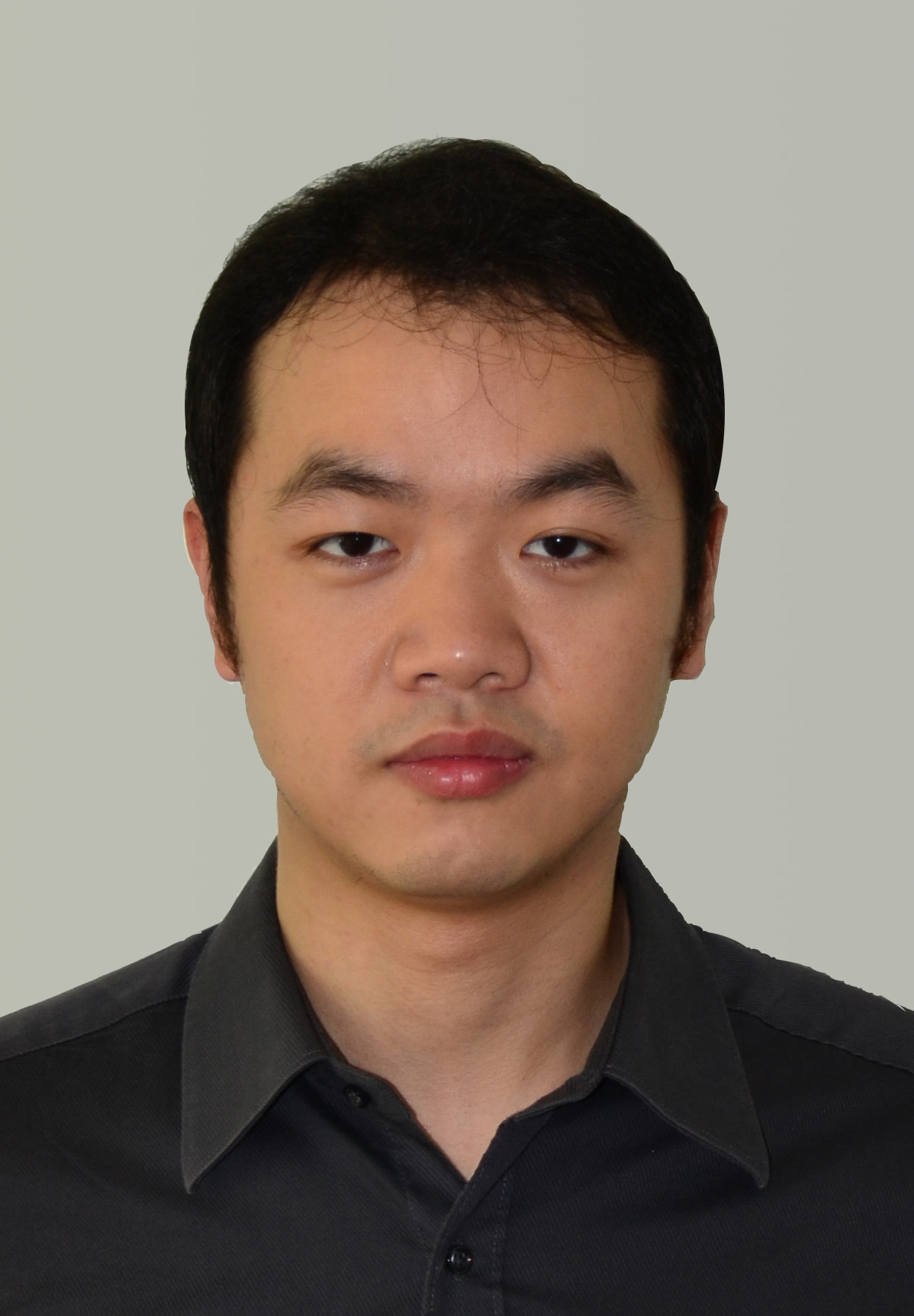 Kang Xin (康鑫)合作论文数National Key Laboratory of Science and Technology on Communications, University of Electronic Science and Technology of China4
 Lajos Hanzo合作论文数University of Southampton4
 Hancheng Lu (卢汉成)合作论文数Department of Electronic Engineering and Information Science, University of Science and Technology of China4
 Chan-Byoung Chae合作论文数Intelligence Networking Lab. School of Integrated Technology, College of Computing, Yonsei University4
 Muhammad Imran合作论文数James Watt School of Engineering, University of Glasgow;University of Oklahoma4
 Xuanxuan Tang合作论文数4
 Shenghui Song (宋勝輝)合作论文数Division of Integrative Systems and Design, Department of Electronic and Computer Engineering, School of Engineering, Hong Kong University of Science and Technology;Division of Integrative Systems and Design, Hong Kong University of Science and Technology4
 Marco Di Renzo合作论文数Laboratory of Signals and Systems, CentraleSupelec;Center for Telecommunications Research, Department of Engineering, Faculty of Natural, Mathematical & Engineering Sciences, King's College London4
 Kyeong Jin Kim合作论文数Samsung Research America4
 Tony Q. S. Quek合作论文数FCC Lab, Singapore University of Technology and Design4
 Liqiang Zhao (赵力强)合作论文数College of Communication Engineering, Xidian University;State Key Laboratory of Integrated Service Networks, Xidian University4




