Large-scale approximate nearest neighbor search (ANNS) has become a fundamental operation in a wide range of modern applications, including recommendation systems and large language models. Partition-based indexes have emerged as a popular solution for billion-scale ANNS tasks, serving as the basis for many ANNS approaches. However, our analysis indicates that, to achieve optimal search performance on billion-scale datasets, an extremely large number of partitions (tens or even hundreds of millions) is often required for fine-grained partitioning of the feature space. Relying on full-precision distance calculations for constructing and querying such a large number of partitions imposes significant time costs. In this work, we propose a novel geometric distance inference mechanism that leverages geometric relationships to expedite distance computations between the vector and space partitions. By reusing intermediate or offline-computed distance information, this method substantially reduces the overhead of full-precision calculations. We also introduce a clustering paradigm for generating space partitions that incorporates this geometric distance pattern, which can be seamlessly integrated with other indexing schemes such as vector quantization and proximity graphs. Through detailed complexity analysis and extensive experiments on billion-scale datasets, we confirm the efficiency of our geometric index (GI) design. Empirical results show that GI-based solutions consistently surpass various baseline methods on search efficiency. In particular, they offer considerable acceleration (exceeding a factor of 2.0) at high recall levels (e.g., Recall10@10 = 95%) to partition-based solutions, while also demonstrating comparable or superior query throughput relative to leading graph-based indexes.
The widespread adoption of mixed-precision quantization in large language models (LLMs) has created demand for hardware that can efficiently perform multiply-accumulate (MAC) operations across mixed datatypes and switch datatypes at runtime. Existing FPGA-based MAC solutions fall short due to limitations in fixed-datatype design, inefficient spatial or temporal resource sharing, and poor support for mixed-precision execution. These limitations collectively lead to under-utilization of DSP resources, limiting achievable parallelism and throughput. In this work, we present XtraMAC, a novel MAC architecture that unifies integer, floating-point, and mixed-precision operations within a single, datatype-adaptive microarchitecture. XtraMAC decomposes all supported MAC formats into a shared integer mantissa product with lightweight sign and exponent handling, enabling dynamic operand packing and efficient DSP resource sharing with constant latency and initiation interval of one across all datatypes. Evaluated on an AMD Xilinx U55c FPGA, XtraMAC achieves 1.4-2.0x higher compute density, reduces per-operation LUT, FF, and DSP consumption by 27-51%, and delivers up to 1.9x greater energy efficiency and 1.2x speedup on representative mixed-precision LLM workloads. The implementation of XtraMAC is open-sourced at https://github.com/Xtra-Computing/XtraMAC.
The rapid growth of model parameters presents a significant challenge when deploying large generative models on GPU. Existing LLM runtime memory management solutions tend to maximize batch size to saturate GPU device utilization. Nevertheless, this practice leads to situations where the KV Cache of certain sequences cannot be accommodated on GPUs with limited memory capacity during the model inference, requiring temporary eviction from GPU memory (referred to as KV Cache spillover). However, without careful consideration of the LLM inference's runtime pattern, current LLM inference memory management solutions face issues like one-size-fits-all spillover handling approach for different platforms, under-utilization of GPU in prefill stage, and suboptimal sequence selection due to direct employment of swap or recomputation. In this article, we introduce FuseSpill, a holistic KV Cache management solution designed to boost LLM inference on memory-constrained GPU by efficiently handling KV Cache spillover. Specifically, FuseSpill consists of a spillover cost model that analyzes the system cost of spillover handling techniques quantitatively, a KV cache swap orchestrator to further refine the basic swap technique to sophisticated disaggregate KV Cache across heterogeneous devices for decoding iterations, a multi-executor scheduler to effectively coordinate task executors across devices, and a response length predictor to exploit the length-aware sequence selection strategy when KV Cache spillover occurs. The experimental results demonstrate that our implementation outperforms existing solutions, delivering a 20% to 40% increase in throughput while simultaneously reducing inference latency of spillover sequences.
Large language models (LLMs) now scale to trillions of parameters, driving weight storage into the terabyte regime and creating an acute mismatch with GPU memory capacity. Although lossless compression is widely effective in other domains, it remains underutilized in LLM systems. Through a comprehensive entropy study across models from 1.5B to 405B parameters and numeric formats ranging from bf16 to int4 and AWQ/SQ8, we find that LLM weights contain far less intrinsic randomness than their stored bitwidth implies, their effective entropy is 2-10x lower, indicating that up to a 10x footprint reduction is theoretically achievable without altering any weight values. Leveraging this insight, we introduce a tile-level, on-the-fly lossless decompression framework based on Asymmetric Numeral Systems that aligns decoding with the GEMM tiling pattern of GPU inference. Our design achieves bit-rates within 0.01-0.1 bits of the Shannon limit across a wide range of LLM numerical formats, demonstrating that nearly all statistical redundancy is eliminated. Integrated into the SGLang serving framework with multi-GPU support, our approach increases the maximum batch size of Qwen-14B from 47 to 75, improving throughput by up to 1.2x. On Mixtral-176B, the feasible batch size increases from 20 to 95 (4.8x), yielding up to 1.6x throughput improvement. Compared to state-of-the-art lossless compression approaches NeuZip and DFloat11, our design further improves throughput by up to 11x.
Graph Random Walks (GRWs) offer efficient approximations of key graph properties and have been widely adopted in many applications. However, GRW workloads are notoriously difficult to accelerate due to their strong data dependencies, irregular memory access patterns, and imbalanced execution behavior. While recent work explores FPGA-based accelerators for GRWs, existing solutions fall far short of hardware potential due to inefficient pipelining and static scheduling. This paper presents RidgeWalker, a high-performance GRW accelerator designed for datacenter FPGAs. The key insight behind RidgeWalker is that the Markov property of GRWs allows decomposition into stateless, fine-grained tasks that can be executed out-of-order without compromising correctness. Building on this insight, RidgeWalker introduces an asynchronous pipeline architecture with a feedback-driven scheduler grounded in queuing theory. This design enables perfect pipelining and adaptive load balancing. We prototype RidgeWalker on FPGAs and evaluate its performance across a range of GRW algorithms and real-world graph datasets. Experimental results demonstrate that RidgeWalker achieves an average speedup of 7.0x over state-of-the-art FPGA solutions and 8.1x over GPU solutions, with peak speedups of up to 71.0x and 22.9x, respectively. The source code is publicly available at https://github.com/ Xtra- Computing/RidgeWalker.
Deep learning on 3D point clouds plays a vital role in a wide range of applications such as AR/VR visualization, 3D cloth virtual try-on, and game rendering. As some applications require low latency, the point cloud services are also deployed on datacenter with powerful GPUs. While the queries of point cloud services show various workload change patterns due to different degrees of sparsity, current batching-based serving schemes result in either long latency or low throughput. We propose a scheme called Volans to address the above challenges and effectively support point cloud services. Volans comprises a workload predictor, a topology deployer, and a progress-aware scheduler. The predictor grids the input query and estimates the workload changes. Afterward, the deployer splits the model into several stages and determines the batch size for each stage based on the workload changes. The scheduler reduces the QoS violation when queries run slower due to unpredicted workload spikes. Experiments show that Volans enhances the peak supported throughput by up to 31.1% while maintaining the required 99%-ile latencies compared to state-of-the-art techniques.
High-Level Synthesis (HLS) compiles algorithmic C/C++ descriptions into hardware, with Quality of Results (QoR) – latency and resource utilization – critically governed by pragma configurations and code structure. Existing LLM-based HLS approaches train for functional correctness but ignore QoR entirely. We observe that reinforcement learning (RL) for HLS does not require absolute synthesis results – only relative comparisons between candidates. Based on this insight, we propose HLS-Seek, a QoR-aware NL-to-HLS framework that replaces expensive synthesis-in-the-loop RL with a comparative proxy reward model achieving 99.53% Pareto-dominance accuracy. To prevent reward hacking, we introduce uncertainty-aware Monte Carlo (MC) dropout switching that selectively invokes real Vitis HLS synthesis for low-confidence candidates and online updates the proxy, creating a self-improving reward system. HLS-Seek achieves 81.5% syntax correctness pass@1 and 81.4% Func@5 on HLS-eval with only 7B parameters, surpassing GPT-5.1 and other frontier models while achieving 8.5× faster training than real-reward RL. On QoR evaluation, HLS-Seek achieves the lowest latency on 16/30 kernels and Pareto-dominates HLS-specific baselines on 9 kernels.
Image–text matching has become a research hotspot for multimodal matching tasks. Existing image–text matching models suffer from feature redundancy in intra-modal modeling of images. This redundant information not only dilutes the important region weights but also is introduced as irrelevant or distracting information. In addition, the syntactic structure of the text is made difficult to analyze by the model due to the lack of syntactic information, which affects the dependencies between words. To address the above problems, the syntactic-guided optimization of image–text matching for intra-modal modeling (SGIM) is proposed. Multi-view filtering of image features is used based on the differences in information richness in each region of the image. The importance weights of each region are adjusted. To obtain an enhanced representation of the image features, multi-view information is fused. A syntactic dependency enhancement method is proposed based on the contextual relationships between text words. To avoid the loss of long-range textual context, the attention distribution of the entire sentence is adjusted. The experimental results show that the SGIM model achieves a minimum improvement of 4.8
Efficient graph processing is critical in various modern applications, such as social network analysis, recommendation systems, and large-scale data mining. Traditional single-FPGA systems struggle to handle the increasing size and complexity of real-world graphs due to limitations in memory and computational resources. Existing multi-FPGA solutions face significant challenges, including high communication overhead caused by irregular data transfer patterns and workload imbalances stemming from skewed graph distributions. These inefficiencies hinder scalability and performance, highlighting a critical research gap. To address these issues, we introduce Clementi, an efficient multi-FPGA graph processing framework that features customized fine-grained pipelines for computation and cross-FPGA communication. Clementi uniquely integrates an accurate performance model for execution time prediction, enabling a novel scheduling method that balances workload distribution and minimizes communication overhead by overlapping communication and computation stages. Experimental results demonstrate that Clementi achieves speedups of up to 8.75× compared to state-of-the-art multi-FPGA designs, indicating significant improvements in processing efficiency as the number of FPGAs increases. This near-linear scalability underscores the framework' s potential to enhance graph processing capabilities in practical applications. Clementi is open-sourced at https://github.com/Xtra-Computing/Clementi.
High-Level Synthesis (HLS) enables hardware design from C/C++ kernels but requires extensive transformations, such as restructuring code, inserting pragmas, adapting data types, and repairing non-synthesizable constructs, to achieve efficient FPGA implementations. While large language models (LLMs) show promise in automating these transformations, progress has been limited by the absence of large-scale, well-structured datasets. Existing HLS datasets focus primarily on resource estimation, lack paired C and HLS examples with testbenches, and cover only a narrow set of optimizations. We introduce HLStrans, the first benchmark-scale dataset for LLM-driven C-to-HLS synthesis. HLStrans contains over 124K paired C and HLS programs for real-world applications, with full testbenches and synthesis-based annotations of latency and resource usage. The dataset systematically captures five categories of transformations and is enriched by an automated augmentation pipeline combining LLMs, Monte Carlo Tree Search (MCTS), and Design Space Exploration (DSE). We benchmark state-of-the-art LLMs on HLStrans, demonstrating that retrieval and fine-tuning significantly improve success rates and performance.
Content-addressable memory (CAM) is a type of fast memory unique in its ability to perform parallel searches of stored data based on content rather than specific memory addresses. They have been used in many domains, such as networking, databases, and graph processing. Field-programmable gate arrays (FPGAs) are an attractive platform for implementing CAMs because of their low latency, reconfigurability, and energy-efficient nature. However, such implementations also face significant challenges, including high resource utilization, limited scalability, and suboptimal performance due to the extensive use of look-up tables (LUTs) and block RAMs (BRAMs). These issues stem from the inherent limitations of FPGA architectures when handling the parallel operations required by CAMs, often leading to inefficient designs that cannot meet the demands of high-speed, data-intensive applications. To address these challenges, we propose a novel configurable CAM architecture that leverages the digital signal processing (DSP) blocks available in modern FPGAs as the core resource. By utilizing DSP blocks’ data storage and logic capabilities, our approach enables configurable CAM architecture with efficient multi-query support while significantly reducing search and update latency for data-intensive applications. The DSP-based CAM architecture offers enhanced scalability, higher operating frequency, and improved performance compared to traditional LUT and BRAM-based designs. In addition, we demonstrate the effectiveness of our proposed CAM architecture with a triangle counting application on real graphs. This innovative use of DSP blocks also opens up new possibilities for highperformance, data-intensive applications on FPGAs. Our proposed design is open-sourced at: https://github.com/Xtra-Computing/DSP_CAM/.
While full-graph training is effective for graph learning, it typically demands substantial memory resources. Existing multi-GPU training frameworks struggle with scalability because they require retaining data for each layer within GPU memory. In this work, we present HongTu, a memory-efficient system that supports out-of-memory full-graph GNN training on GPUs. HongTu offloads vertex data to CPU memory and employs partition parallelism training that splits and assigns large graphs to multiple GPUs. To reduce runtime memory consumption with optimal performance, HongTu utilizes a hybrid solution combining recomputation, caching, and computation-reordering, enabling efficient layer-wise intermediate data management. To address the increased communication caused by duplicated neighbor access among partitions, HongTu employs a deduplicated communication framework that converts host-GPU transfers into more efficient inter/intra-GPU data access. Additionally, HongTu tackles the load-imbalance issues in out-of-memory full-graph training, featuring a multi-objective graph partition algorithm that balances memory consumption and data transfer and maximizes the effectiveness of communication deduplication. Experiments on a 4x A100 GPU server show that HongTu can effectively train graphs with billion edges while reducing host-GPU data communication by 25% to 71% . Compared to the full-graph GNN system running on 16 CPU nodes, HongTu achieves speedups ranging from 11.4x to 21.3x.
The effectiveness of in-memory dynamic graph storage (DGS) for supporting concurrent graph read and write queries is crucial for real-time graph analytics and updates. Various methods have been proposed, for example, LLAMA, Aspen, LiveGraph, Teseo, and Sortledton. These approaches differ significantly in their support for read and write operations, space overhead, and concurrency control. However, there has been no systematic study to explore the trade-offs among these dimensions. In this paper, we evaluate the effectiveness of individual techniques and identify the performance factors affecting these storage methods by proposing a common abstraction for DGS design and implementing a generic test framework based on this abstraction. Our findings highlight several key insights: 1) Existing DGS methods exhibit substantial space overhead. For example, Aspen consumes 3.3-10.8x more memory than CSR, while the optimal fine-grained methods consume 4.1-8.9x more memory than CSR, indicating a significant memory overhead. 2) Existing methods often overlook memory access impact of modern architectures, leading to performance degradation compared to continuous storage methods. 3) Fine-grained concurrency control methods, in particular, suffer from severe efficiency and space issues due to maintaining versions and performing checks for each neighbor. These methods also experience significant contention on high-degree vertices. Our systematic study reveals these performance bottlenecks and outlines future directions to improve DGS for real-time graph analytics.
Trajectory representation learning (TRL) maps trajectories to vector embeddings and facilitates tasks such as trajectory classification and similarity search. State-of-the-art (SOTA) TRL methods transform raw GPS trajectories to grid or road trajectories to capture high-level travel semantics, i.e., regions and roads. However, they lose fine-grained spatial-temporal details as multiple GPS points are grouped into a single grid cell or road segment. To tackle this problem, we propose the BLU rred Encoding method, dubbed BLUE, which gradually reduces the precision of GPS coordinates to create hierarchical patches with multiple levels. The low-level patches are small and preserve fine-grained spatial-temporal details, while the high-level patches are large and capture overall travel patterns. To complement different patch levels with each other, our BLUE is an encoder-decoder model with a pyramid structure. At each patch level, a Transformer is used to learn the trajectory embedding at the current level, while pooling prepares inputs for the higher level in the encoder, and up-resolution provides guidance for the lower level in the decoder. BLUE is trained using the trajectory reconstruction task with the MSE loss. We compare BLUE with 8 SOTA TRL methods for 3 downstream tasks, the results show that BLUE consistently achieves higher accuracy than all baselines, outperforming the best-performing baselines by an average of 30.90%. Our code is available at https://github.com/slzhou-xy/BLUE.
Quantized Deep Neural Networks (DNNs) have progressed to utilize sub-8-bit data types, achieving notable reductions in both memory usage and computational expenses. Nevertheless, the efficient execution of sub-8-bit convolution operations remains insufficiently optimized, especially in the context of Single Instruction Multiple Data (SIMD) architectures. This paper introduces HiPACK, which takes the packing for efficient convolution as foundation to reduce the required number of operations, and address the challenges of SIMD incompatibility in sub-8-bit direct convolution by decoupling the unpacking phase from multiplication operations, optimizing the caching of intermediate data, determining the ideal segmentation, and employing a dual interleaved register (DIR) mechanism to facilitate parallel multiplication through SIMD. Collectively, these optimizations significantly enhance computational efficiency and diminish operational overhead. Evaluation on the BCM2711 ARM processor reveals speedups of up to 4.6x compared to floating-point calculations and 1.7x when measured against state-of-the-art solutions, thus accelerating model inference. Our implementation is open-sourced and available at: https://github.com/Xtra-Computing/HIPACK.
Gradient Boosted Decision Trees (GBDTs) are classical machine learning algorithms widely employed in recommendation systems, database queries, etc. Due to the extensive memory access involved in histogram-based GBDT training methods, high-bandwidth GPUs have been widely adopted to accelerate the training. However, when handling millions of feature data, it requires significant memory to store the training data and histograms, posing challenges for training on limited GPU memories. In this paper, we develop a GPU-based GBDT framework named ScalaGBM, aiming to accelerate high-dimensional data training with less memory usage. We first employ a CSR-like data format and CSR-based histogram construction to reduce the memory occupation of the training data. Then, we reorganize the training workflow with a double buffer structure to reduce the overall memory consumption for the histogram. Finally, we develop multi-dimensional parallel histogram construction and global optimal split point reduction to speed up the training process. Experimental results demonstrate that ScalaGBM handles real-world datasets with over 100 million instances of 50 million features with a single commercial GPU while existing GBDT frameworks all run into out-of-memory errors. Meanwhile, ScalaGBM achieves a maximum speedup of 39× over state-of-the-art GBDT counterparts without sacrificing the training quality. The code is available at https://github.com/Xtra-Computing/thundergbm.
The increasing demand for efficient summarization tools in resource-constrained environments highlights the need for effective solutions. While large language models (LLMs) deliver superior summarization quality, their high computational resource requirements limit practical use applications. In contrast, small language models (SLMs) present a more accessible alternative, capable of real-time summarization on edge devices. However, their summarization capabilities and comparative performance against LLMs remain underexplored. This paper addresses this gap by presenting a comprehensive evaluation of 19 SLMs for news summarization across 2,000 news samples, focusing on relevance, coherence, factual consistency, and summary length. Our findings reveal significant variations in SLM performance, with top-performing models such as Phi3-Mini and Llama3.2-3B-Ins achieving results comparable to those of 70B LLMs while generating more concise summaries. Notably, SLMs are better suited for simple prompts, as overly complex prompts may lead to a decline in summary quality. Additionally, our analysis indicates that instruction tuning does not consistently enhance the news summarization capabilities of SLMs. This research not only contributes to the understanding of SLMs but also provides practical insights for researchers seeking efficient summarization solutions that balance performance and resource use.
With the rise of machine learning models, particularly generative models like sequence-to-vector models, there is a high demand for constructing efficient approximate nearest neighbor search (ANNS) indexes on the embedding vectors they generate. Despite the development of numerous indexes for efficient vector retrieval, the complex distributions of vectors generated by these models and their impact on ANNS tasks remain underexplored. In this work, we address the challenges faced by current advanced ANNS approaches when dealing with vectors characterized by imbalanced distributions, which negatively impact search efficiency. We identify the difficulty in indexing and searching certain vectors using previous ANNS graph indexes due to skewed distributions and propose a novel index, Vista, that improves efficiency by introducing dynamic index construction patterns based on vector distribution. Our experimental evaluation confirms Vista's efficiency advantage, demonstrating that on both public and industrial-grade real-world imbalanced datasets, Vista achieves several to tens of times performance improvement compared to advanced ANNS indexes while ensuring high search accuracy and good scalability.
 Deming Chen (陈德铭)合作论文数Department of Electrical and Computer Engineering, The Grainger College of Engineering, University of Illinois at Urbana-Champaign;Inspirit IoT, Inc.28
 Jian Feng (冯健)合作论文数School of Civil Engineering, Southeast University22
 Bingsheng He (何丙胜)合作论文数Department of Computer Science, School of Computing, National University of Singapore15
 Weng Fai Wong合作论文数Department of Computer Science, School of Computing, National University of Singapore13
 Callie Hao合作论文数School of Electrical and Computer Engineering, College of Engineering, Georgia Institute of Technology12
 Jiong He合作论文数Alibaba Group (Singapore)8
 Xinyu Chen合作论文数National University of Singapore8
 Xiaofan Zhang合作论文数Google DeepMind7
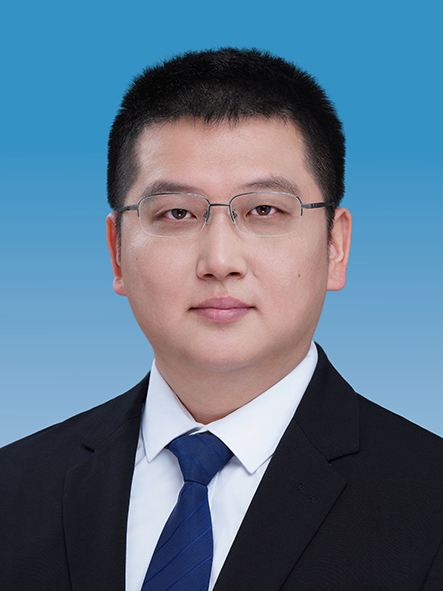 Ye Lu (卢冶)合作论文数College of Computer Science, Nankai University7
 Kyle Rupnow合作论文数Google7
 Swathi T. Gurumani合作论文数Advanced Digital Sciences Center7
 Ruichu Cai (蔡瑞初)合作论文数Data Mining and Information Retrieval Laboratory, School of Computer Science and Technology, Guangdong University of Technology;School of Computer Science, Guangdong University of Technology7Hongshi Tan合作论文数National University of Singapore, Singapore Singapore6Xinheng Liu合作论文数University of Illinois at Urbana Champaign6
 Jinjun Xiong合作论文数College of AI, Cyber and Computing, The University of Texas at San Antonio6
 Prakhar Ganesh合作论文数McGill University;Mila;Apple5
 Tan Nguyen合作论文数Adv Digital Sci Ctr, Singapore, Singapore5
 Tao Li (李涛)合作论文数College of Computer Science, Nankai University5
 Yun (Eric) Liang (梁云)合作论文数Center for Energy-efficient Computing and Applications, School of Electronics Engineering and Computer Science, Peking University;School of Integrated Circuits, Peking University5
 Marianne Winslett合作论文数Siebel School of Computing and Data Science, The Grainger College of Engineering, University of Illinois Urbana-Champaign;R3i Capital5
 Guofeng Li (李国峰)合作论文数College Of Eleetronic Information And Optical Engineering, Nankai University5
 Wen-Mei W. Hwu合作论文数Coordinated Science Laboratory, Department of Electrical and Computer Engineering, University of Illinois at Urbana-Champaign;MulticoreWare;Parallel Computing Institute, University of Illinois at Urbana-Champaign;Impact Technologies, Inc.;NVIDIA5Qiuzhi Sun合作论文数4Huachao Xu合作论文数Tianjini Key Laboratory of Optoelectronic Sensor and Sensing Network Technology, College of Electronic Information and Optical Engineering, Nankai University, China4Jinlong Hu合作论文数Tianjin Univ Technol, Sch Elect & Elect Engn, Tianjin 300384, Peoples R China4
 Pooya Sareh合作论文数Corresponding author.4
 Yuhong (Jesse) Li合作论文数Coordinated Science Lab, Department of Electrical & Computer Engineering, The Grainger College of Engineering, University of Illinois Urbana-Champaign4Jiayi Yan合作论文数3Tao Du合作论文数3Xianggang MENG (孟祥刚)合作论文数3Teng GAO (高腾)合作论文数3
 Linzi Fan合作论文数Southeast University, Southeast Univ3
 Ke Liang (梁科)合作论文数College of Electronic Information and Optical Engineering, Nankai University3
 Le Zhang (张乐)合作论文数School of Information and Communication Engineering, University of Electronic Science and Technology of China3
 Zhenjie Zhang合作论文数Neuron Mobility3
 Chunrong Zhong (钟春蓉)合作论文数School of Public Health, Nanchang University2Hongyan Cai合作论文数2Feng Cheng合作论文数2
 Zining Zhang合作论文数2
 Kaiqi Zhang合作论文数Department of Electrical and Computer Engineering, University of California at Santa Barbara2Qiange Wang合作论文数Northeastern Univ2
 Cole Hawkins合作论文数University of California, Santa Barbara2yuting zhang合作论文数2Xin Lou合作论文数2
 Xiaodong Feng合作论文数2Yang YU (余洋)合作论文数2
 Simon D. Guest合作论文数Department of Engineering, University of Cambridge2
 Gong Cheng (程塨)合作论文数School of Automation, Northwestern Polytechnical University2
 Bajaj Ronak合作论文数School of Computer Engineering, Nanyang Technological University2




