Rapid quantification of hazardous trace metals in waste oil remains challenging because of the high viscosity and severe matrix effects of oily substrates. Here, we developed a quantum dot-enhanced double-pulse laser-induced breakdown spectroscopy (DP-QDELIBS) platform for ultrasensitive and matrix-tolerant metal analysis in waste oil. AgNC@AgAux core-shell quantum dots were used as an interfacial enhancement layer to improve laser energy coupling and initial plasma formation, and a second laser pulse was introduced to reheat the primary plasma and further amplify metal emission. Compared with conventional single-pulse LIBS, DP-QDELIBS achieved signal enhancement factors of up to 47 for Mg emission lines. Ablation morphology analysis indicated that the enhancement was associated with porous microstructures generated by intensified interfacial charge transfer and localized plasma expansion. Under optimized conditions, the method showed good linearity for representative metals, with coefficients of determination above 0.97 and limits of detection of 0.02 ppm for Mg, 0.06 ppm for Ca, 0.05 ppm for Cr, and 0.05 ppm for Ba. Analysis of real industrial waste-oil samples, including engine oils and brake fluids, showed strong agreement with inductively coupled plasma optical emission spectrometry (R2 > 0.97). These results demonstrate the potential of DP-QDELIBS for rapid screening of hazardous metals in complex oily wastes and for waste-oil risk assessment and management.
Real-world viability assessment of airborne biological particles remains challenging due to limitations in current optical sensing approaches. Existing methods rely on single-view sensors, which cannot adequately characterize the complex multidimensional properties of biological particles. This study develops, to our knowledge, the first multi-view sensor framework combining visible to far-infrared spectral information for enhanced viability detection. We created comprehensive datasets, MulSen-BiPA, using Moniliaceae strains and Cordyceps strain under controlled viability conditions within plume environments. A novel deep learning architecture, RT-TSFNet, was designed to leverage the physical complementarity between structural-chemical information from shorter wavelengths and thermodynamic-energetic data from longer wavelengths. Implementation on NVIDIA Jetson Nano demonstrates practical deployability for field applications, with 94.14% average assessment accuracy across MulSen-BiPA.
To meet demands for high-capacity optical transmission, multi-state orbital angular momentum shift keying (OAM-SK) systems offer an effective solution. However, atmospheric turbulence (AT) degrades vortex beams (VBs), reducing transmission quality and limiting long-distance transmission. In this paper, we propose a trellis-coded OAM-SK multiplexing system based on spatial indexing and a multi-task neural network (MTNN). Virtual channels and spatial indexes within the constellation space of trellis-coded modulation create a source-interaction framework, and the MTNN suppresses AT effects. The system can directly extract information from virtual channels via spatial indexing without increasing channel overhead. Additionally, it employs a designed Spatial-OAM encoder to reduce the dimensionality of encoded multi-state OAM during two-source multiplexing, which can lower detection complexity, improve transmission capacity, and distance. Experimental results show that the system can effectively utilize spatial indexes for inter-source switching while suppressing turbulent effects, without increasing channel redundancy. For Cn2≤ 2×10-13m-2/3, the MTNN maintains spatial index classification accuracy above 99.28%. We then encode 16-bit multi-state OAM using a 16,000-length pseudo-random binary sequence. Through the Spatial-OAM encoder, the proposed scheme can convert 16-bit multi-state OAM modes into 4-bit single OAM modes, followed by multiplexing without altering transmission characteristics. Furthermore, when Cn2=5×10-14m-2/3, the bit error rate (BER) is 1.5 × 10⁻³ at a transmission distance of 1000m, demonstrating the system's potential for long-distance transmission.
Reflective tomography lidar (RTL) bypasses the diffraction limit and atmospheric turbulence through non-coherent active illumination for long-range remote sensing, yet sparse angular sampling in dynamic space situational awareness triggers the "missing cone" problem, rendering inverse reconstruction ill-posed. In the paper, we propose a physics-informed dual-domain wavelet unrolling (DDWU) framework that couples wavelet-domain statistical regularization with projection-domain data consistency. Exploiting the sparsity gap between localized true edges and distributed aliasing streaks in high-frequency wavelet sub-bands, DDWU regularizes the ill-posed retrieval while preserving fine structural details. This hybrid architecture recovers high-fidelity structure from only 20% Nyquist sampling while suppressing turbulence and speckle artifacts. Field experiments at 10.38km validate 1.7cm resolution, establishing a robust methodology for non-cooperative long-range sensing that bridges data-driven restoration and physical measurement mechanisms.
Laser-induced breakdown spectroscopy (LIBS) technology has been widely applied across various fields due to its rapid and straightforward analytical capabilities. However, this technology is susceptible to noise interference during the detection process, which will seriously affect the quantitative analysis accuracy. To mitigate the influence of noise and improve the analysis accuracy, we propose a Gradient Histogram Constraint Truncated Weighted Nuclear Norm Minimization (GHCTWNNM) algorithm for LIBS spectra denoising. Here, we innovatively convert the denoising problem of 1D spectra data into a 2D image denoising problem, where we can take advantage of the superior image denoising technology to enhance the denoising effect of LIBS spectra. On the basis of the traditional WNNM algorithm, we introduce the truncation threshold and gradient histogram constraints, which not only improve the computational efficiency but also prevent distortion issues caused by excessive smoothing of image texture details. Subsequently, we derived the solution of the GHCTWNNM algorithm using the Alternating Direction Method of Multipliers (ADMM) method. The experimental results demonstrate that the GHCTWNNM algorithm achieves a remarkable improvement in denoising performance, with an increase of approximately 6 dB in Delta SNR compared to the WNNM algorithm. Moreover, in comparison with nine other image denoising algorithms, GHCTWNNM not only delivers superior denoising capabilities but also exhibits greater adaptability to different noise environments, especially in a high background noise environment. Additionally, the R2 of the Al element quantitative analysis result has increased by 0.26 after applying the GHCTWNNM denoising method. In summary, the LIBS denoising method based on the GHCTWNNM algorithm can effectively enhance the spectra SNR and significantly reduce the errors in quantitative analysis caused by noise, thereby enhancing the accuracy and reliability of LIBS. This provides a strong basis for its wide application and further development in various related fields.
The discovery of the vortex beam carrying orbital angular momentum (OAM) has made it a popular research object for enhancing the transmission capacity in free-space optical communication. However, the atmospheric turbulence effect in space has become a negative factor affecting the transmission quality of the vortex beam. Therefore, this paper proposes an anti-turbulence method of vortex beam OAM coding based on the trellis-coded modulation technique. Instead of traditional OAM coding of the bit stream, the source information is first modulated into constellation symbols after error correction coding, and then OAM coding is performed based on the constellation symbols and detected using a convolutional neural network. The experimental results confirm that the scheme proposed in this paper has a better bit error rate (BER) performance compared with the traditional scheme under different turbulence intensities, as well as more stable turbulence suppression at different transmission distances, and the BER performance shows a more significant improvement after increasing the number of samples, which provides a reference for studying the anti-turbulence effect of vortex beams based on coding techniques.
Reflective Tomography LiDAR (RTL) imaging, an innovative LiDAR technology, offers the significant advantage of an imaging resolution independent of detection distance and receiving optical aperture, evolving from Computed Tomography (CT) principles. However, distinct from transmissive imaging, RTL requires precise alignment of multi-angle echo data around the target’s rotation center before image reconstruction. This paper presents an adaptive contour closure algorithm for automated multi-angle echo data registration in RTL. A 10.38 km remote RTL imaging experiment validates the algorithm’s efficacy, showing that it improves the quality factor of reconstructed images by over 23% and effectively suppresses interference from target/detector jitter, laser pulse transmission/reception fluctuations, and atmospheric turbulence. These results support the development of advanced space target perception capabilities and drive the transition of space-based LiDAR from “point” measurements to “volumetric” perception, marking a crucial advancement in space exploration and surveillance.
Photoelectric imaging systems usually pursue a small-sized point spread function (PSF) to acquire high-quality images, but it also poses safety hazards for the camera in certain scenarios. For instance, ultrahigh intensity light focused on the sensor may cause irreversible damage when the camera is subjected to unexpected laser irradiation. Furthermore, clear images captured are vulnerable to privacy breaches during online transmission. In this paper, we report a concept of the OpSecureCam with protection capability versus both laser damage and privacy breaches via PSF engineering. The design recipe of the PSF with simultaneous enhancements in energy spread ratio and information flux is derived. An end-to-end framework is developed under theoretical guidance to jointly optimize the PSF and the decoding network, maximizing both protection capability and imaging quality of the OpSecureCam. A wavefront coding system is built to realize the concept, wherein the pupil phase distribution is obtained through a hybrid phase retrieval method based on Gerchberg-Saxton and stochastic gradient descent algorithms. Experiment results demonstrate that the OpSecureCam reduces the peak intensity of the jamming laser on its sensor by 99.73%, while the encoded images are robust against various blind deblurring methods. After being decoded by the matched network, the intricate structures of the image are restored with high quality for target identification or information extraction, including text, QR code, and human face. Our work offers a compact and efficient solution to enhance the adaptability of imaging systems, which holds potential for applications in autonomous driving and security monitoring.
Despite the wide applications of full-waveform light detection and ranging (FW-LiDAR) on target detection and recognizing, topographical mapping, and ecological management, etc., the mapping between the echo waveform and the properties of the targets, even for typical three-dimensional (3D) targets, has not been established. The mechanics of the modulation of targets on the echo waveform is thus ambiguous, constraining the retrieval of target properties in FW-LiDAR. This paper derived the formula of echo waveform modulated by typical 3D targets, namely, a rectangular prism, a regular hexagonal prism, and a cone. The modulation of shape, size, position, and attitude of 3D targets on the echo waveform has been investigated extensively. The results showed that, for prisms, variations in the echo waveforms under various factors essentially arise from changes in the inclination angles of their reflective surfaces and their positions relative to the laser spot. For cones, their echo waveforms can be approximated and analyzed using isosceles triangular micro-facets. The work in this paper is helpful in probing the modulation of 3D targets on echo waveform, as well as extracting the properties of 3D targets in FW-LiDAR domains, which are significant in areas ranging from topographical mapping to space debris monitoring.
Point cloud single-view reconstruction (PC-SVR) generates high-quality point clouds from low-cost 2D images, offering a cost-effective solution to the expensive and inefficient acquisition of point cloud for real-world scene typically achieved through expensive LiDAR systems. However, current models that generate point clouds from real-world 2D images (e.g. maritime vessels) still have shortcomings in terms of quality and model generalization. In this paper, we proposed a image-conditioned denoising diffusion probabilistic model (ICDDPM) for real-world complex point cloud single view reconstruction to address these issues. We re-designed the structure of classic diffusion model, use latent shape vectors to seamlessly integrate 2D image encoder, point cloud encoder, and conditional diffusion model, to cater PC-SVR task. By guiding the diffusion process with the 2D images, which serve as crucial conditional information, ICDDPM achieves end-to-end point cloud generation with superior quality. 2D images are also employed as input in the reverse diffusion process to further achieve point cloud generation. We conducted qualitative and quantitative experiments on synthetic dataset ShapeNet and real-world dataset PASCAL3D+ (focused on experiments of vessel point cloud data specifically). The results indicate that the ICDDPM model demonstrates superior performance compared to state-of-the-art models. It is capable of generating point clouds with a greater level of global and local details from various 2D image data. Additionally, the model exhibits strong generalization abilities and requires fewer computational resources.
Plasmonic materials enable flexible optical manipulation owing to their unique plasmon resonance, making them highly promising for photoelectronic imaging attenuation. However, designing plasmonic materials capable of multifaceted imaging attenuation remains challenging. This study theoretically designed and experimentally prepared a unique dual nonmetallic plasmonic Ti 3 C 2 T x /TiN hybrid. The composite material exhibited excellent performance in multifrequency, active/passive, and polarized multifunctional imaging attenuation. TiN nanoclusters were chemically bonded to Ti 3 C 2 T x nanosheets through an ultrasonic‐assisted method to form a Ti 3 C 2 T x /TiN hybrid. The strong nonmetallic plasmonic coupling within these hybrids enables superior absorption and excellent photothermal conversion. Consequently, MXene/TiN aerosols demonstrated an improvement of approximately 14% in imaging attenuation compared with traditional oil–water aerosols in visible‐light imaging. In addition, the hybrid exhibited strong electromagnetic wave absorption, covering nearly the entire 8.96–18 GHz range. Moreover, polarization imaging attenuation improved by 8.3% compared with that of oil–water aerosols, as evidenced by algorithmically dehazed images. Furthermore, the material effectively provided “high‐temperature thermal concealment” for far‐infrared active imaging attenuation. This study paves the way for developing multifunctional imaging attenuation materials, with significant potential for future imaging attenuation technologies. image
Bimetallic core-shell quantum dots (QDs) hold great promise in elucidating the bimetallic synergism and optoelectronic devices. The synthesis and properties of AgNC@AgAux QDs of core-shell heterostructure are reported. Significantly enhanced photoluminescence emission on these heterostructures is observed. These enhancements are attributed to electron injection and the surface plasmon-induced strong local electric field, which are observed through time-resolved transient absorption spectroscopy. X-ray absorption near edge structure spectra and density functional theory confirms the electron injection from the Ag core to the AgAux shell. On the other hand, the plasmon resonance of the AgNC@AgAux QDs has been studied by finite-element method analysis and time-resolved photoluminescence spectra. There are 94.06 times fluorescence enhancement and 32.40 times quantum yield improvement of oxygen content correlation compared to AgAu3 QDs. It shows a perfect correlation coefficient of 98.85% for the detection of heavy metal Cu2+ ions. Such Bimetallic core-shell heterostructures have great potential for future optoelectronic devices, optical imaging, and other energy-environmental applications.
To achieve stringent performance requirements in next generation wireless networks, such as ultra-high data rates, ubiquitous connectivity, and extremely high reliability, this paper proposes a radically novel rate splitting assisted dual-polarized stacked metasurface (RS-DPSM) transceiver architecture. In this architecture, a multi-layer dual-polarized metasurface is stacked at the active antennas and its two inherent polarizations are implemented to enable RS's common and private messages in parallel. In sharp contrast to the conventional multiple-input multiple-output (MIMO) and metasurface-based transceiver designs, our proposed transceiver is capable of enhancing the channel capacity and introducing multi-dimensional degrees of freedom (DoFs) in the power, spatial, and polarization domains, thus enabling multi-functional, broad-spectrum, and all-time/domain/space communications without requiring massive radio-frequency (RF) chains. In addition, we derive new analytical expressions for the upper bounds of RS-DPSM transceiver's channel capacity and ergodic sum rate, and provide some key insights. To highlight its potential benefits, we apply the proposed RS-DPSM transceiver to anti-jamming communications, and formulate a generalized sum rate maximization problem under the jammer's imperfect angular channel state information and unknown cross-polarization discrimination. To enable an efficient resource management under the above practical conditions, we present a low-complexity optimization framework by leveraging the discretization method, properties of the quadratic function, reduced-majorization-minimization algorithm, and block successive upper-bound minimization, which admit the semi-closed-form solutions. Finally, our numerical simulations verify the superiority of our proposed transceiver architecture and optimization framework over key benchmarks.
Dynamic control of bound states in the continuum (BICs) is usually achieved by engineering structural geometries of lossless optical systems, leading to a passive nature for most current BIC devices. Introducing materials with tunable permittivity, i.e., refractive index and loss, may offer a new degree of freedom in designing reconfigurable BIC metadevices with active functionalities. However, achieving loss-accompanied or loss-driven BIC manipulation while preserving its ultrahigh Q factor is extremely challenging. Here, we report a loss-compatible BIC manipulation mechanism based on far-field interference in a mirror-assisted photonic crystal slab, wherein the loss of tunable material not only harmoniously coexists with ultrahigh Q factor, but also serves as a pivotal joystick of BIC dynamics in momentum space. By modulating loss and refractive index of tunable material through the amorphous-crystalline phase transition, simulation results show the active switching of topological charge for BICs, as well as the multidimensional control of chiroptical effect for quasi-BICs, including steerable response/emission direction and chirality continuum with far-field ellipticity ranging from -0.944 to +0.943. Our findings suggest a distinct route to construct BIC metadevices with active functionalities and foster deeper exploration of intrinsic loss applications within the ultrahigh-Q photonic system.
Single object tracking (SOT) within dynamic point cloud sequences is critically important in autonomous driving, remote sensing navigation, and smart industrial applications, etc. Point cloud collected via various LiDAR becomes sparse due to sensor-related and environmental disturbances, leading to tracking inaccuracies driven by the limited robustness of existing SOT algorithms. To mitigate these challenges, we propose a Voxel Pillar Multi-frame Cross Attention Network (VPMCAN) designed for sparse point cloud robust tracking. VPMCAN employs a voxel-based encoding of pillar information for feature extraction and utilizes a dense pyramid network for the extraction of multi-scale sparse data. The integration of multi-frame and cross-attention mechanisms during feature fusion allows for an effective balance between global and local features, significantly enhancing the target's long-term tracking robustness. Additionally, VPMCAN's design prioritizes lightweight architecture, to ensure hardware-friendly implementation. To showcase its efficacy, we constructed a maritime point cloud video sequences dataset and conducted extensive experiments across KITTI, nuScenes and Waymo datasets. Results reveal VPMCAN's optimal performance in non-sparse scenes and a remarkable 32.5% improvement over state-of-the-art algorithms in sparse scenes, averaging over a 20% performance increase. This highlights the efficacy of the lightweight point cloud SOT algorithm in robustly tracking sparse targets, suggesting promising practical applications.
Wavefront coding imaging offers a promising path for laser protection of electro-optical imaging systems. However, current designs mainly focus on a single wavelength, since achieving diffractive achromats for dual requirements of optimal imaging and laser protection capabilities has been challenging. In addition, their laser protection effect is merely predicted rather than validated through actual laser-damage experiments. In this Letter, we report a broadband laser-damage-resistant diffractive camera with high imaging quality whose laser protection capability is verified in laser-damage test. A deep optics framework is constructed to co-design the learnable diffractive optical element (DOE) and image recovery neural network (NN) in an end-to-end manner. The NN is developed with two stages to maximize the restoration quality of the blurred images with variable laser glare. We fabricated the DOE using lithography. Simulation and experiment results both demonstrate that the diffractive camera can reduce the peak intensity of laser on sensor in spectrum of 473-688 nm by over 99%, thereby enhancing the laser-damage threshold by two orders of magnitude. Meanwhile, it also maintains high imaging quality of a typical peak signal-to-noise ratio exceeding 24 dB. The anti-laser camera renders great potential in imaging scenarios that may involve lasers, such as autopilots, drones, and security mentoring.
 Shilong Xu合作论文数74
 Nanxiang Zhao (赵楠翔)合作论文数67
 YouLin Gu (顾有林)合作论文数67
 Jiajie Fang合作论文数35Xiao Dong合作论文数College of Optoelectric Science and Engineering, National University of Defense Technology, Changsha, 410073 China33
 Xinyuan Zhang合作论文数30Xinying Zhao合作论文数28
 Fei Han合作论文数23
 Chen Xi合作论文数23Guo Liren合作论文数22
 Ahui Hou (侯阿慧)合作论文数21Wanying Ding合作论文数19
 Xinyu Wang合作论文数Department of Computer Science and Technology, Tsinghua University17WuHu Lei (雷武虎)合作论文数16XiaoHong Tao (陶小红)合作论文数14Yicheng Wang (王一程)合作论文数13Haihao He合作论文数13
 Luda Zhao (赵禄达)合作论文数13Minle Li合作论文数13Peng Wang合作论文数13Xiaochun Cai (蔡晓春)合作论文数13Li Le合作论文数12Guolong Chen合作论文数11Hao Cao合作论文数10Zhenglei Dou合作论文数9
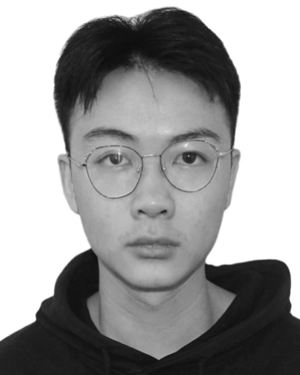 You-Long Chen合作论文数9YiZheng Zhao (赵义正)合作论文数合肥电子工程学院9Yong Wang (王勇)合作论文数9
 Rong Shu (束蓉)合作论文数Shanghai Ninth People's Hospital, School of Medicine, Shanghai Jiao Tong University9
 Jian-Yu Wang (王建宇)合作论文数Shanghai Institute of Technical Physics, Chinese Academy of Sciences;Hangzhou Institute for Advanced Study, University of Chinese Academy of Sciences9
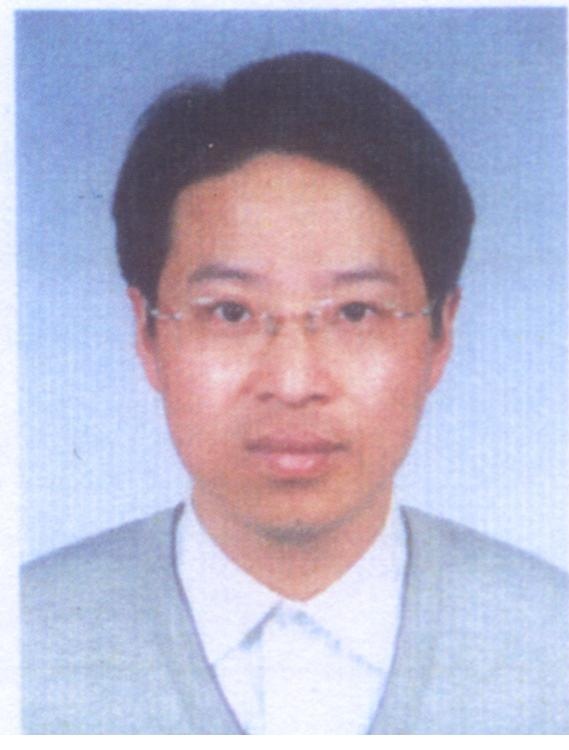 Guanglie Hong (洪光烈)合作论文数Shanghai Institute of Technical Physics, Chinese Academy of Sciences;University of Chinese Academy of Sciences9Shiqi Hao (郝士琦)合作论文数9
 Zhi Lin (林志)合作论文数College of Electronic Engineering, National University of Defense Technology8
 Xing Yang合作论文数8XiuQiao Chen (陈修桥)合作论文数8DuJuan Sun (孙杜娟)合作论文数7Yuhao Xia (夏宇浩)合作论文数6Qishu Qian合作论文数6Yifan Liu合作论文数6
 Yushuang Zhang合作论文数6
 Kang An (安康)合作论文数National University of Defense Technology6ZHAO Fu-cai (赵福才)合作论文数6
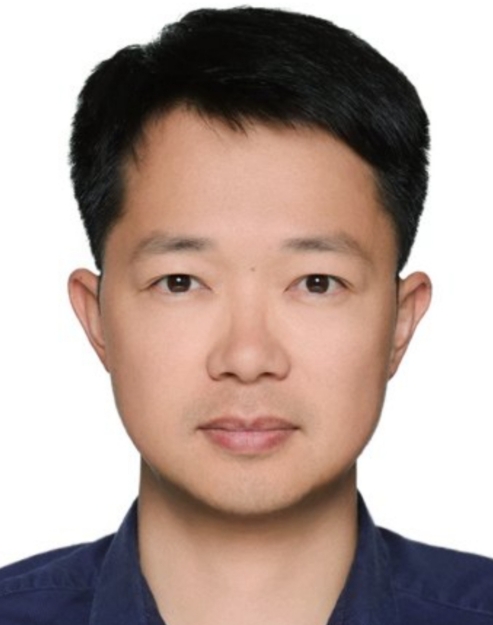 Genghua Huang (黄庚华)合作论文数Shanghai Institute of Technical Physics, Chinese Academy of Sciences6
 Zhiming Zheng (郑之明)合作论文数Hefei Institutes of Physical Science, Chinese Academy of Sciences;University of Chinese Academy of Sciences6Ge Ye合作论文数6Le Li (李乐)合作论文数6
 Mengdao Xing (邢孟道)合作论文数School of Electronic Engineering, Xidian University;Academy of Advanced Interdisciplinary Research, Xidian University6




