目的:观察大直径球头人工髋关节置换术后初期临床效果。方法回顾性分析4021髋全髋置换患者的临床资料,评价22、28、32、36 mm球头假体的临床效果。连续观察其中100例全髋置换患者的临床资料,将其随机分为28 mm(小直径)球头组和36 mm(大直径)球头组,记录术中情况和术中术后的不良事件,并进行统计学比较。结果22、28、32、36 mm球头组术后Harris评分均较术前增加( P均<0.01)。大直径头组(≤28 mm)术后脱位、骨溶解均少于小直径头组(≥32 mm)。36 mm球头组术中剐蹭、膝关节痛VAS、髋臼假体直径、腹股沟痛均多于28 mm球头组(P<0.05、0.01)。结论大直径球头全髋关节假体治疗髋关节疾病的近期疗效满意,但需要避免髋臼杯假体选择过大的问题,其远期临床结果有待观察。
概述<br> 阿司匹林是一个具有100多年历史的古老药物,在消炎止痛,解热,心血管保护,抗肿瘤等多个方面都具有疗效。由于阿司匹林具有抗血小板凝集的作用,因此其在骨科抗凝领域也占有一席之地。随着骨科界对血栓栓塞症的认识逐渐深入,骨科同仁对骨科手术后血栓的预防更加重视。多种抗凝药物应运而生,阿司匹林这一古老药物也被列为骨科抗凝药物的选择之一。但是,阿司匹林作为抗凝措施的一部分是否合适一直处于争论中。最典型的两个观点就是:美国胸科医师协会(American College of Chest Physicians ,ACCP)和美国骨科医师协会( American Academy of Orthopaedic Surgeons , AAOS)的抗凝争论。
[目的]通过对髋关节表面置换术病例的随访及分析,探讨该术式的临床应用及疗效.[方法]自2004年1月~2009年1月之间32例患者32髋施行了金属对金属的髋关节表面置换手术,其中男12例,女20例,平均年龄44.8岁(19~ 65岁),平均体重指数(BMI) 25.2 (18.7~33.1),术前诊断为股骨头缺血性坏死13例,髋臼发育不良继发骨关节炎19例.手术所采用的表面置换系统的髋臼侧均为生物型固定,股骨侧均为骨水泥型固定且带有导向柄.术后平均随访56个月(37~75个月).[结果]1例髋臼发育不良继发骨关节炎男性患者因术后1个月出现股骨颈骨折而改行全髋关节置换术,其余病例至随访结束尚无出现松动、翻修,患者Harris评分较术前有显著提高,髋关节功能恢复良好.[结论]金属对金属髋关节表面置换术具有良好的临床疗效,但必须严格选择手术适应证并规范手术技术.
<正>胫股关节不稳定是导致全膝关节置换术(total knee arthroplasty,TKA)术后膝关节功能障碍的常见原因之一。目前国际常用的膝关节协会评分(Knee Society Scoring,KSS)系统将TKA术后明确的胫股关节不稳定界定为膝关节冠状位松弛超过15°及
Total hip arthroplasty (THA) remains an available surgical option for failed treatment of acetabular fractures. We retrospectively analyzed 53 patients who underwent THA because of failed treatment of acetabular fractures. The mean duration of follow-up monitoring was 64 months (range, 32-123 months) in 49 patients. The average Harris hip score increased from 49.5 before surgery to 90.1 at the latest follow-up examination. Postoperative complications included 1 dislocation, 3 sciatic nerve injuries, and 3 class III instances of heterotopic ossification. There was only 1 revision due to aseptic loosening of the acetabular and femoral component. Despite the technically demanding nature of the procedure, the results of acetabular reconstruction are encouraging in these patients; complication rates are low, and patient satisfaction level is high.
Objective To investigate the influence of the insert design of knee prosthesis on the kinematics of knee after total knee arthroplasty(TKA).Methods Forty-two knees in 28 patients with knee osteoarthritis undergoing TKA using the GENESISⅡ were included in this study,mean follow-up of 27.7 months.The cases were divided into two groups according to the type of insert,one was high flexion insert group(23 knees) and the other was standard insert group(19 knees).The motion of flexion and extension of the two groups was observed by cyclic fluoroscopy and stored as DICOM data.The DICOM data was analyzed by Image J medical image processing software and measured by CorelDRAW mapping software.To investigate the influence of the insert design of knee prosthesis on kinematics of the knee after TKA by comparing the parameters of the two groups during the movement of knee joint,including tibial internal rotation and patellar tilt.Results The ROM of standard insert group and high flexion insert group had no difference.Both groups had no differences in tibial internal rotation and patellar tilt during the 0°-120° range of motion.The two groups appeared statistically significant in patellar tilt when flexion extended to 130°(P=0.034).There was no diffence bewteen the two groups on tibial internal rotation.Conclusion The insert design has a certain influence on patellar tilt,but no influence on tibial rotation after TKA.
骨关节炎(osteoarthritis,OA)是中老年人群最常见的老年疾患之一.随着老龄社会的到来,OA的发病率以惊人的速度逐年增长,60岁以上的人口中50%的人群在X线片上有OA的表现,其中35%~50%有临床症状,在75岁以上的人群中80%以上有OA的症状.
女性,73岁,左膝关节疼痛20年,合并内翻畸形,屈伸活动受限10~80°,X线片示髌骨增生明显,软骨面硬化,胫股关节增生,内侧关节间隙变窄、消失(图1).某医院给其行胫骨高位截骨术、钢板螺钉内固定,数周后钢板断裂,截骨端硬化(图2);二次手术,数周后伤口感染,保守换药无效;三次手术、清创,清除内固定物及胫骨截骨近端骨块,翻转植入骨肿瘤型膝关节人工假体(图3),数周后感染仍未能控制,伤口合并窦道.
一、概述 随着社会人口的老龄化以及交通事故发生率的逐年上升,股骨粗隆间骨折正日益受到人们的关注.目前全部髋关节骨折的发生率约为80/100 000,而预计未来50年这一数字将会上升1倍[1].股骨粗隆间骨折占全部髋关节骨折的50%,特别是合并严重骨质疏松的高龄患者是该类人群的主体[2].年轻患者相对少见,发生骨折的主要原因是高能量机动车事故以及高处坠落伤,预后相对良好[3,4].
Objective To research the influence of the total hip arthroplasty on the blood coagulation and the activity of fibrinolysis to give theoretical data for evaluating the risk of thromboembolic disease in total hip arthroplasty by determining the blood coagulation and the activity of anticoagulation during operation. Methods Fifty patients receiving total hip arthroplasty and 50 normal controls were determined coagulation indexes (prothrombin time, APTT, fibrinogen), anticoagulation indexes(antithrombin Ⅲ, Ⅱ a), and fibrinolysis index(D-dimer). Results There were no statistic differences in prothrombin time, APTT, antithrombin Ⅲ and Ⅱ a levels between two groups during operation (P>0.05). Fibrinogen decreased obviously after operation(P<0.05) and increased 24 hours and 3 days after operation(P<0.05). D-dimer increased 24 hours after operation (P<0.05) and returned normal 3 days later(P>0.05). Conclusion The activity of blood coagulation increases, the activity of blood anticoagulation does not change significantly, and the activity of fibrinolysis increases in perioperative period, which increases the tendency of thromboembolic disease.
Objective To study surgical technique and choice of prosthesis in the second stage revision with infections of artificial hip replacement. Methods From January 1999 to December 2007, 32 patients with infections after unilateral hip replacement underwent the second stage revision, including 19 males and 13 females, with a mean age of 56 years (32-80 years). Bone defect in acetabular side by Paprosky classification were 13 cases(type Ⅰ), 9 cases(Ⅱ A), 5 cases(Ⅱ C), 1 cases(ⅢA), 4 cases(Ⅲ B). Cemeritless prosthesis was applied in 22 cases with type Ⅰ-Ⅱ A bone defect. Cemented prosthesis was applied in 10 cases with type Ⅱ C-Ⅲ B bone defect followed by acetabular reconstruction by allograft, mesh and cage or ring. Bone defect in femoral side by Paprosky classification were 11 cases(Ⅰ), 4 cases(Ⅱ A), 1 case (Ⅱ B), 5 cases(Ⅱ C), 6 cases(Ⅲ A), 3 cases(Ⅲ B), 2 cases(Ⅲ C). Cemented prosthesis was applied in 8 cases with type Ⅱ C (5 cases) and Ⅲ B(3 cases) bone defect. Cementless prosthesis was applied in the other cases, including proximal fixation(5 cases with type Ⅰ ), extensive prouscoating(6 cases with Ⅰ, 4 cases with Ⅱ A, 1 case with Ⅱ B) and distal fixation (6 cases with Ⅲ A, 2 cases with Ⅲ C). Results All cases were followed up i-10 years. Among them, 2 patients suffered recurrent infections, and underwent debridement and conservative treatment, with sinus tract at final follow-up. Harris score were 65 and 78, respectively. The other 30 cases got satisfactory results. Harris score was increased from average 48 (31-78) preoperatively to 85 (80-95) postoperatively. At final follow-up, 30 prosthesis had no subsidence, migration and loosening on X-ray images. Conclusion The success rate of two stage revision with infections of artificial hip replacement is satisfactory. The key point of revision is to choose proper prosthesis according to bone defect type after the infection is under better control.
[Objective]To investigate the indications,complications and mid-term results of total knee arthroplasties using rotating hinge knee prosthesis. [Methods]Thirty total knee arthroplasties using rotating hinge prosthesis were performed in twenty-eight patients from July 1998 to July 2008.Seven patients were male and twenty-one patients were female.The average age was 62 years(42-75 years).The diagnosis included osteoarthritis in 8 patients,rheumatoid arthritis in 2 patients,traumatic arthritis in 3 patients,Paget's disease patient,serious genu valgum in 7 patients and 10 failure TKAs.All patients were followed up for 12 to 120 months.The patients were evaluated according to knee score system and the complications were observed.[Results]The pain was relieved and function was improved in all knees.The average knee pain score increased from 19.5 to 77.9,and knee function score from 22.5 to 50.5.Range of motion of knees increased from 58.4°to 72.8°.No revision was needed in all patients,The complications included anterior knee pain(8 cases),extension lag(5 cases),prosthesis broken(1 case) and patella tendon rupture(1 case).[Conclusion]The mid-term results of total knee arthroplasty using rotating hinge knee for severe knee deformity are satisfactory.Complications should be prevented carefully.
Objective To study the application and effects of bone cement spacer on the treatment of infections following artificial hip replacement. Methods Among the 36 eases of infections following uni-lateral hip replacement, 20 patients were males and 16 were females. The average age of prosthesis removing was 52 years. The time interval between the hip replacement and the infection varied form 2 weeks to 19 years. 34 eases took out the total hip prosthesis in the first-stage procedure; 1 case took out the acetabular 5 month later due to re-infection; 1 case took out the total hip prosthesis 1 month later due to re-infection. The spacers were made from bone cement mixed by 5%-10% vancomycin, implanted the femoral medullary cav-ity. Lavage the indwelling tubes if there were more purulent secretions. Patients were given routine intra-venous vancomyein, twice a day, or sensitive antibiotics according to the bacterial culture Results . Two weeks later, the medication was changed to other sensitive antibiotics or oral Rifampin for 4 to 8 weeks. The lavage was generally maintained for 3 to 7 days. The patients were allowed to walk unbearing 1 week postoperation, unbearing at least 2 months. Results Infections in 34 patients were effectively controlled after 3 to 19 months respectively. Among them, 2 presented spacer fracture (the stent was the intramedullary pin); 1 showed spacer dislocation; 2 patients (a Steinmann pin and a original femoral prosthesis as the stents for each) rejected revision; 2 patients had continued infections, received spacer removal and Girdstone opera-tion, and then 1 infection was effectively controlled, the other died due to complication. The successful rate was 94.7%. Conclusion Bone cement spacers are able to raise the successful rate to control the infection through slow local release of high-concentration antibiotics significantly and are helpful to maintain joint sta-bility, restrict the formation of scars, avoid lower limb length inequality, reimplant the prosthesis easily.
Objective To evaluate the clinical outcome of debridement with Prosthesis retention, one-stage, two-stage revision, and resection arthroplasty for the infected hip replacement. Methods Forty-six patients admitted for infected total hip arthroplasty from June 1993 to June 2008 were reviewed. There were 27 males and 19 females, with an average age of 55.8 years. Preoperative investigations for infection included ESR, CRP, ECT and joint fluid culture from sinus or aspiration. Patients were treated with debride-ment with prosthesis retention, one-stage revision, two-stage revision, or resection arthroplasty to eradicate the infection. For infection evaluation, wound healing, Harris score, and laboratory tests were collected. Re-suits There was evidence of deep infection in infected hip prostheses in 29 patients whose joint fluid cul-ture revealed Staphylococcus epidermidis (37.9%) remained in the first place, following by Staphylococcus aureus (24.2%). The mean duration of follow-up was 61.6 months (range 12 to 179 months). The Harris score at final follow-up was 76.5 (range 2 to 99). Eleven patients suffered a relapse occurred at a mean time of 39.5 months (2 to 127 months) when primary infections were diagnosed. The infection control rates of debridement with prosthesis retention, one-stage revision and two-stage revision were 16.7%, 54.5% and 93.3% respectively. The rate of peri-prosthetie fracture and dislocation were equally 13.3% after two-stage revision arthroplasty. No recurrent infection occurred after resection arthroplasties were performaneed. Con-clusion Debridement with prosthesis retention and one-stage revision can he successful in appropriately se-lected patients. Two-stage revision of an infected hip arthroplasty can achieve a high success rate with the risk of peri-prosthetie fracture and dislocation. Staphylococcus epidermidis and Staphylococcus aureus are the causative agents of the infected hip arthroplasty.
骨水泥固定是Charnley低磨损人工髋关节一个有机组成部分,到目前为止,还没有肯定的长期随访结果说明生物学固定效果优于骨水泥固定,特别是髋关节股骨侧假体的固定.骨水泥固定仍然是目前最常用的固定方法之一,而骨水泥层的强度及假体-水泥和骨-水泥两个界面的稳定则是影响股骨侧假体固定效果的重要因素.本文就影响股骨侧假体骨水泥固定的一些关键问题作一综述.
[目的]研究改良的髋臼旋转截骨术治疗髋臼发育不良的方法及有效性。[方法]自2002年10月~2007年8月采用改良的Ninomiya方法治疗27例髋臼发育不良的患者,其中男3例3髋,女24例27髋;平均年龄29.4岁(15~42岁)。术前、术后拍摄骨盆正位、双髋侧位及外展位像,测量髋臼的CE角(中心边缘角)和AC角(臼顶倾斜角),记录髋关节旋转中心及Shenton氏线变化、骨关节炎的严重程度并进行随访,行髋关节Harris评分并进行评价。[结果]所有患者截骨术后股骨头覆盖均得到改善,CE角由术前的3.2°(-15°~15°)矫正为28.5°(20°~40°),AC角由术前的26.6°(15°~38°)矫正为3.9°(0°~12°),髋臼旋转中心内移率为63.3%(19/30),Shenton氏线不连续率由67%降为23%。平均随访4.2年(1.5~7年),1髋失随访,28髋疼痛减轻、骨关节炎得到控制,1髋疼痛加重,Harris评分由术前82.7分(67~96分)改善为97.8分(87~100分)。术后2例患者出现耻骨纤维愈合,1例出现耻骨下支应力骨折,无截骨块或大粗隆不愈合病例。[结论]改良的髋臼旋转截骨术能有效地治疗髋臼发育不良,是一种有效、安全的手术方式。
[Objective]To evaluate the accuracy of the components position in mini-incision surgery (MIS) total hip arthroplasty (THA) by posterior-lateral single incision approach.[Method]From September 2005 to March 2006,26 patients (30 hips) were performed with MIS THA by posterior-lateral single incision approach, and 34 patients (35 hips) were performed with standard incision THA. The mean age of patients was 52±14.4 years ranging from 22 to 72 years in MIS group, and 48±11.7 years ranging from 30 to 65 years in standard group. Operation time,blood loss, length of incision, operation related complications,position of the components were analyzed.[Result]There were no significant differences in age, sex, BMI betweem the two groups. Twenty-five patients (MIS group) and 32 patients (standard group) were followed from 18 to 24 months (mean 20.1 months). The operation time was similar in two groups. The blood loss in MIS group was 497±64.9ml and 675±181.4ml in standard group(P0.05). No severe complication was found in the two groups. The obliquity angle of the cup was 37.7±6.8 degrees in MIS group and 40.3±5.8 degrees in standard group. Anteversion angle of the cup was 10.8±7.2 degrees in MIS group and 13.2±8.9 degrees in standard group. Rotation center of the hip was shift superiorly -1.4±2.5 mm in MIS group and -1.5±3.8 mm in standard group. After operation the leg was lengthened by 1.1±7.1mm in MIS group and 1.5±8.4mm in standard group. There was 1 case femoral stem inversion in MIS group and 2 cases in standard group, 2 cases eversion in MIS group and 3 cases in standard group, 27 and 30 cases that stem was in good position in the MIS group and standard group accordingly . There was no significant difference of the data in the two groups.[Conclusion]The advantages of MIS THA are less traumatic, less blood loss, no influence of the component position. But should be indicated in selected patients, used by experienced surgeon.
Objective To explore the affective factors towards the patients' knee flexion and the technique to obtain the most relative flexion degree after TKA(total knee arthroplasty).Methods From March 2002 to March 2007,85 patients(102 knees)underwent high flexion total knee arthroplasty,including 16 males(17 knees)and 69 females(85 knees)with the age range from 35 to 79 years(mean,64.9 years).Osteoarthritis occurred in 94 knees and Rheumatoid arthritis in 8 knees.82 knees were complicated with vagus deformity mean,12.8°±3.1°),7 knees with valgus deformity(mean,5.1°±2.4°),and 31.with flexion defortuity mean,15.6°±4.9°).5 knees suffered bone defect.The range of motion(ROM)in OA patients ranged from 61°to 135°,with the mean 110.5°,while in RA patients ranged 41°to 120°.with the mean 85.5°.All the procedures used the NexGen prosthesis(Zimmer,LPS-Flex).HSS scores were used to evaluate the clinical effect.Position of the prosthesis,alignment of the lower limb and the repair of bone defect were evaluated by X-ray.Results 66 cases(81.knees)were followed up with a mean period of 39 months(range,24-60months).According to the HSS knee scoring system,the scores were 69.6±7.4 preoperative and 90.9±4.8postoperative,respectively,including 64 knees rated as excellent,11.as good,4 as fair and 2 88 poor.In this case the excelient-good rate was 92.6%.The knee ROM also increased from 100.5°before operation to 136.8°during operation and 127.5°after operation respectively.Conclusion The increase in the knee ROM is very important to improve the patients' quality of daily life after TKA,which is affected by the following factors,such as ROM preoperative,thorough procedure,individualized prosthesis and rigorous rehabilitation.But to the patients with obese,history of knee surgery or AS,postoperative ROM may be limited to some extent.
目的 评价复方倍他米松注射液关节腔注射治疗膝骨关节炎的疗效和安全性.方法 多中心、开放性临床试验入选膝骨关节炎患者181例,男40例(22.1%),女141例(77.9%).受试者给予复方倍他米松注射液(得宝松)1 mL,膝关节腔内注射,并在治疗后8、15和29 d进行访视.结果 治疗后8、15和29 d与治疗前比较,患者WOMAC各项指标、疾病状况总体评价均有明显下降,对比组之间的差异均具有统计学意义(P<0.01),并且随着观察时间延长,评分呈逐渐下降趋势.治疗后29d与治疗前比较SF-36各维度得分均有显著提高.不良事件的发生率为3.9%,未发现与药物相关不良事件发生,未出现严重不良事件.结论 复方倍他米松注射液(得宝松)膝关节腔注射,能够很好地缓解膝骨关节炎WOMAC疼痛、僵硬等症状,起效时间短,长期疗效较稳定,并且安全性评估结果也比较好。
目的 探讨在全髋关节置换术后感染Ⅱ期翻修术中使用抗生素骨水泥间隔物的方法和有效性.方法 采用抗生素骨水泥间隔物治疗30例30髋行全髋关节置换术后感染的患者,感染治愈后行Ⅱ期人工关节翻修术并进行随访. 结果 29例用抗生素间隔物治疗,感染得到有效治疗,1例失败.其中27例患者行Ⅱ期翻修术,Harris评分由间隔物置入前的34.6分提高到Ⅱ期置换术后的81.8分,但1例感染复发. 结论 抗生素骨水泥间隔物能有效地治疗感染,维持软组织的张力,为Ⅱ期翻修手术创造良好的条件.
 Yixin Zhou (周一新)合作论文数Beijing Jishuitan Hospital;Peking University Health Science Center31
 Hong Zhang (张洪)合作论文数Fourth Medical Center of PLA General Hospital16
 Deyong Huang合作论文数15
 Hui Xu (徐辉)合作论文数Beijing Jishuitan Hospital13JianHua Yin (殷建华)合作论文数12
 Wei Li (李为)合作论文数Beijing Jishuitan Hospital12YuJun Li (李玉军)合作论文数10Yi Jiang (蒋毅)合作论文数10Ye Huang (黄野)合作论文数8ChunYu Zhang (张春雨)合作论文数7BaoXin Dou (窦宝信)合作论文数6
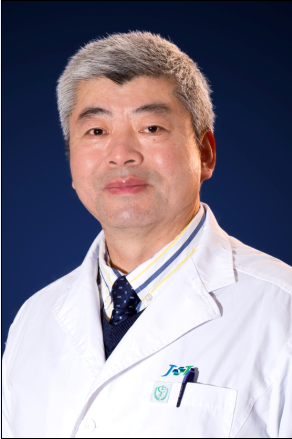 Xiaozhong Guo (郭晓忠)合作论文数Beijing Jishuitan Hospital6Yan Xue (薛延)合作论文数5Qing Liu (刘庆)合作论文数5Song-jie Ji合作论文数4Li Yao合作论文数4
 Guixing Qiu (邱贵兴)合作论文数Peking Union Medical College Hospital4Qiang Liu (刘强)合作论文数3Yong-cheng HU (胡永成)合作论文数3ShengJie Guo (郭盛杰)合作论文数3BingFang Ceng (曾炳芳)合作论文数3NanSheng Yu (余楠生)合作论文数3FuLin Tang (唐福林)合作论文数3
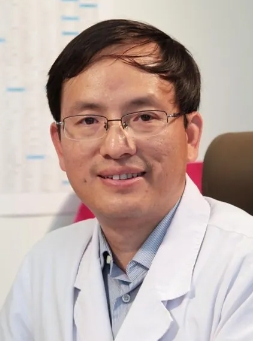 Feng Huang (黄烽)合作论文数Chinese PLA General Hospital3
 Fuxing Pei (裴福兴)合作论文数West China Hospital, Sichuan University3
 Jiang-Lin Zhang (张江林)合作论文数3
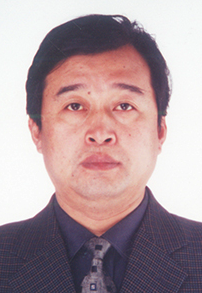 Kunzheng Wang (王坤正)合作论文数The Second Affiliated Hospital of Xi'an Jiaotong University (Xibei Hospital);Xi'an Jiaotong University Health Science Center3
 Donghai Wu (吴东海)合作论文数China-Japan Friendship Hospital3
 Zhanguo Li (栗占国)合作论文数Institute of Rheumatology and Immunology, Peking University People's Hospital;Department of Rheumatology and Immunology, Peking University People's Hospital;Center of Clinical Immunology, Peking University People's Hospital3
 Fengchun Zhang (张奉春)合作论文数Peking Union Medical College Hospital3Qingming Yang (杨庆铭)合作论文数3
 Yin Su (苏茵)合作论文数Peking University People's Hospital3Baicheng Chen (陈百成)合作论文数3
 Anmin Chen (陈安民)合作论文数Tongji Hospital, Tongji Medical College, Huazhong University of Science and Technology3
 Wenjie Zheng (郑文洁)合作论文数Peking Union Medical College Hospital3danhui zhao (赵丹惠)合作论文数2Liang Zhang合作论文数2Qian KANG (康倩)合作论文数2DaQing Yin (尹大庆)合作论文数2
 Dongfeng Liang (梁东风)合作论文数2KeRong Dai (戴尅戎)合作论文数2Jing Tang (唐竞)合作论文数2Qian Wang (王芊)合作论文数2Dong Li (李东)合作论文数2
 HuiQiong Zhou (周惠琼)合作论文数Fourth Medical Center Of PLA General Hospital2




