Continual learning is plagued by catastrophic forgetting. While storing representative exemplars is an effective mitigation strategy, such exemplars often lack cross-task representativeness and their knowledge may interfere with new task learning. This issue is particularly prominent in tabular settings under high-heterogeneity feature spaces. Inspired by the neurobiological framework of memory and forgetting, we propose a Tabular Continual Learning method from high-heterogeneity feature spaces via Memory and Forgetting dual-driven (MFTCL). Specifically, MFTCL combines two complementary strategies. First, a memory storage strategy based on evidence theory is designed to select exemplars that preserve both intra-task and cross-task representativeness. Second, an adaptive active forgetting strategy based on task similarity is developed to integrate network parameters, reducing interference from old knowledge during new task learning. Extensive comparisons on three benchmark tabular datasets (Isolet, Helena, and Nslkdd) validate the effectiveness of MFTCL in high-heterogeneity feature spaces. Further, a case study on five tabular datasets for disease diagnosis confirms its practical applicability. On the Helena dataset (heterogeneity rate: [0.61, 1.00]), MFTCL consistently outperforms all baseline methods across all evaluation metrics. Notably, it reduces the Forgetting Rate of Average Area Under the Curve (AAUCF) by at least 34.51%.
Froth flotation is a critical mineral processing technique for separating and recovering valuable minerals from ore. To provide guidance for flotation process control, monitoring models must continuously adapt to unpredictable feed fluctuations. However, traditional computer vision methods struggle with data distribution shifts caused by varying feed conditions, leading to severe performance degradation in long-term industrial deployment. This article proposes the continual learning visual sensing network (CLVS), a framework that continuously updates sensing models from streaming industrial data while mitigating catastrophic forgetting. CLVS incorporates two key innovations: 1) A froth visual Transformer developed according to froth formation principles, which explicitly models cluster motion patterns across frames to improve representation robustness under varying feed conditions; and 2) a memory-attention-distillation-based continual learning strategy that exploits memory attention for rehearsal sample selection and knowledge transfer, enabling stable continual adaptation without relying on class-probability-based dark knowledge. Experiments on an industrial lead-zinc flotation dataset containing 32 971 input-output pairs across four distribution shifts demonstrate that CLVS consistently outperforms six state-of-the-art continual learning methods, achieving up to 14.04%, 20.51%, and 7.90% improvements in average R2 accuracy for Zn, Pb, and Fe tailing grade estimation, respectively. These results demonstrate the effectiveness of CLVS in maintaining reliable monitoring performance under nonstationary conditions, highlighting its practical potential for real-time industrial flotation monitoring.
Robotics education increasingly requires learners to connect design choices to measurable task outcomes under realistic engineering constraints. In practice, however, educational robotics laboratories often face limited reusability of build-and-train workflows when robot configurations or task contexts change, while deep reinforcement learning (DRL) further raises the barrier through unstable training dynamics and difficult-to-interpret process traces. This article presents Xmobot, a configurable mobile robot platform and reusable build-and-train workflow for educational robotics, together with a tool-grounded agentic learning-support system for iterative DRL development. The proposed system retrieves standardized evidence from training logs, assesses run quality through an interpretable fuzzy-logic model, uses a constrained large language model (LLM) to generate structured experiment plans and learner-facing explanations, and applies deterministic constraint validation to ensure traceable and recoverable reward-design iteration. It also provides instructor-facing analytics that aggregate run-level evidence and intervention histories into compact diagnostic views for monitoring and feedback. In an IsaacLab mobile navigation study over a fixed ten-run horizon, the full tool-grounded system achieved zero constraint violations, a valid-plan rate of 1.000, reached the predefined task-success criterion by run 9, and obtained the highest final success rate (0.659), outperforming Manual (0.339), LLM-Chat (0.277), C-noFuzzy (0.370), and C-noValidate (0.612) in this experimental setting. These results suggest that the proposed framework supports more dependable and interpretable DRL iteration while also making robotics education more actionable for learner reflection, instructor monitoring, and formative feedback.
Deep learning has greatly advanced intelligent fault diagnosis (FD), yet deploying it in industrial settings remains difficult because complementary multi-sensor information must be effectively utilized under strict computational limits. This paper proposes a Lightweight Multi-Level Information Fusion Approach for Fault Diagnosis (LMIF-FD) of circulating water pumps in industrial circulating water systems. The method combines data-level fusion, MobileNetV3-small (M3S), and a multi-scale 1D-ResNet (ML1R) to capture rich temporal and frequency features. Tri-axial vibration signals are first normalized and fused in the time domain, then transformed into RGB images using continuous wavelet transform (CWT) for frequency enhancement. These signals are fed into ML1R and M3S, and their outputs are combined via feature-level fusion. LMIF-FD effectively extracts discriminative fault patterns while substantially reducing model complexity and computational load. Experimental results on real and public datasets validate its diagnostic accuracy, real-time capability, and robustness under challenging industrial conditions.
The zinc rougher stage is the first stage in the flotation circuit. The grade at this point reflects circuit conditions and provides the primary feedback for control. In practice, the on-stream XRF reports grade every 18 min. Grades between samples are unobserved, which can delay operational adjustments when conditions worsen. To bridge this interval, we present the Multiscale Fusion iCrossformer (MFiC), a deep-learning model for real-time grade prediction from froth image sequences. The core of MFiC model, iCrossformer, augmented with Double Channel Attention (DCA), jointly captures temporal-feature dependencies by coupling a temporal-prior channel with a feature-prior channel. A multiscale fusion module integrates multi-scale temporal cues, and KAN performs the final nonlinear grade regression. Evaluated on a real-plant zinc flotation dataset, MFiC yields consistent gains over the baseline-reducing RMSE by 14.02 % and MAE by 15.30 %, and increasing R2 by 7.94 %-thereby supporting continuous grade prediction between XRF measurements.
Froth flotation is a widely used mineral beneficiation technique, where effective process monitoring is essential for optimizing mineral separation. However, in practical industry, manual labeling suffers from noises, leading to a significant portion of incorrectly labeled data. Though deep learning monitoring models are powerful in capturing complex visual patterns, their high capacity makes them vulnerable to overfitting noisy labels, hindering robust model development. To address this challenge, this study proposes a noise-robust contrastive ensemble learning method for practical industrial process monitoring. The method first constructs multiple diverse monitoring models in distinct representation spaces using a novel disparity contrastive learning strategy. Then, clean and mislabeled data for each sub-model are distinguished by measuring the inter-model consensus and intra-model uncertainty of its peer models. Finally, a structure-consistency-based semi-supervised learning strategy is proposed to refine these sub-models by treating mislabeled data as unlabeled, encouraging representation-aligned predictions through mutual information maximization. Through iterative noisy-label identification and semi-supervised refinement, robust monitoring model are obtained even with heavily corrupted training data. Extensive experiments on industrial froth flotation data demonstrate the effectiveness and advantages of the proposed method compared to existing state-of-the-art noise-robust learning techniques.
Froth stability is a key factor influencing mineral recovery and concentrate grade in flotation processes, and the burst bubble rate is widely employed as an indirect indicator of stability. However, conventional twodimensional vision-based approaches exhibit limited robustness because they rely solely on RGB images and overlook depth cues that are critical for identifying bubble bursting events. This study proposes a robust burst bubble recognition framework based on RGB-D imaging and depth-guided feature extraction. Potential burst regions are first identified via bubble region of interest (BROI) selection and refinement. Three stereoscopic features - depth variation, stereo texture variation, and weighted lightness variation - are subsequently extracted from the refined BROIs and integrated into a logistic regression classifier for burst recognition. Experimental results demonstrate that the proposed method significantly outperforms existing 2D approaches and exhibits superior robustness under varying operating conditions.
Temporal knowledge graph reasoning aims to predict future facts based on given historical ones. When two entities that have had no historical interaction interact with each other, we call a new event occurs. Most existing methods suffer from limitations in predicting new events, as they only focus on direct historical interaction. To this end, we propose a temporal knowledge graph reasoning method by exploring semantic dependencies, abbreviated as SdTKG. It enriches the characterization of entities by capturing and representing potential semantic dependencies between entities with limited historical interactions. First, a potential semantic dependency graph and its encoder are constructed based on temporal path analysis to capture potential dependencies beyond direct historical interactions. Second, the entities with the similar stance to the target entity, which are mined by the potential semantic dependency graph, are used as positive samples; and then, self-supervised negative-free contrastive learning is employed on the positive samples to enhance the representation of potential semantic dependencies. Extensive experiments fully demonstrate that SdTKG is more competitive than ten state-of-the-art models. The mean reciprocal rank (MRR) values of SdTKG for relation prediction and new event prediction exceed those of the best baseline method 6.47% and 5.46% on average, respectively. The code is available at: https://github.com/yuhongcqupt/SdTKG.
GNN-to-MLP (G2M) distillation has been proven effective in alleviating the inference latency of Graph Neural Networks (GNNs) by distilling graph representations and knowledge from GNNs to MLPs. However, the existing methods face two notable issues: (1) the graph representation module of the methods neglects the importance of nodes, resulting in student MLPs lacking the ability to focus on significant nodes; (2) they ignore that G2M distillation is a cross-architecture knowledge distillation involving a model gap between teacher and student models, leading to low knowledge transferability. To address the above issues, this paper proposes a novel method called Hybrid Graph Representation and Latent Space Translation (GRLT). The proposed GRLT captures richer graph information and enhances knowledge transferability, thereby improving the performance of the student model. Specifically, we incorporate graph prior knowledge into the hybrid graph representation module to obtain structural embeddings of the graphs and the aggregated features of nodes. In addition, we introduce a latent space translation feature distillation module, which transforms conventional feature map distillation into a two-stage process by first aligning the consensus representations between the teacher and the student via the Generalized Procrustes Analysis (GPA) and then performing feature distillation through cosine similarity. This design reduces the model gap and enhances knowledge transferability. GRLT has been experimentally verified on seven datasets and achieves superior overall performance. When SAGE is used as the teacher model, the distilled student MLP obtains average performance improvements of 1.72%, 3.72%, and 22.41% over the state-of-the-art method NOSMOG, the teacher GNN, and the vanilla MLP, respectively.
Froth flotation requires reliable monitoring of bubble size and morphological characteristics (BSMCs), whose image-level distributions contain important process-state information but are often affected by segmentation errors, local froth disturbances, and process noise. In B-spline-based probability density function estimation (PDFE), each BSMC distribution can be represented by a finite-dimensional B-spline weight vector, which makes PDFE a useful feature-construction step for flotation process monitoring. Therefore, the density estimator should preserve dominant BSMC distributional structures while suppressing noise-induced local fluctuations that may cause oscillatory PDFs and unstable B-spline weight features. To address this issue, this article proposes Bayesian Adaptive B-spline-based optimal PDFE (BAB-OPDE) to obtain a smoother and more stable B-spline representation of BSMC distributions. BAB-OPDE introduces a Bayesian smoothing prior to regularize neighboring B-spline weights, uses variational inference to estimate the weights and uncertainty-related parameters, and applies adaptive basis selection to remove low-contribution basis functions for a compact representation. Numerical and real copper flotation experiments show that BAB-OPDE preserves the dominant long-tailed, multimodal, and joint distributional structures of BSMCs while reducing unnecessary local oscillations compared with fixed-basis B-spline PDFE. Quantitative comparisons further indicate that BAB-OPDE provides a favorable balance among fitting fidelity, smoothness, and compact B-spline representation. In the downstream five-class flotation condition monitoring task, the BAB-OPDE representation achieves the highest Accuracy and Macro-F1 among the compared BSMC representations, and the ablation without the smoothing prior shows a clear performance drop, confirming the importance of suppressing noise-driven fluctuations in the weight features. The source code supporting this study can be accessed at https://github.com/HaoxinLan/BAB-OPDE.
The production process of the aluminum electrolysis industry is a physical and chemical reaction process with high energy consumption. Anode effect (AE) is one of the primary faults in the aluminum electrolysis process, leading to increased energy consumption and greenhouse gas emissions. In particular, AE seriously endangers the stability of the electrolytic cell and the safe operation of aluminum electrolysis production. Anode current signals are multi-dimensional time series and essential information that can be collected in an aluminum reduction cell. These signals contain a large amount of information related to the operation of the aluminum reduction cell. This paper starts with the anode current signals to predict the occurrence of AE. By extracting the characteristics of anode current signal in continuous time and adopting the deep learning method, the model of predicting AE is established by using Spatial-Temporal Attention Dynamic Graph Convolutional Networks (STADGCN), which makes full use of the time and spatial information between the variables of anode current signals, On the premise of prediction 10 minutes in advance, the accuracy of the proposed model is as high as 92.59%, and the F1 score is 0.9313. It also has excellent generalization ability.
A common scenario in aluminum electrolysis process is that the collected dataset contains different behavioral policies and some risky policies, such industrial scenario brings new challenges for offline reinforcement learning to learn safety and feasible optimization policy. This article proposes an offline multiobjective reinforcement learning with multicategory policy constraint for operation optimization decision-making (OODM) of the aluminum electrolysis process. The learned optimization policy can surpass the behavior policy while also meet the strict safety requirements of industrial operations. To alleviate the distribution shift problem on multicategory behavioral policy, we present a multicategory policy constraint in the actor network that utilizes the mixture Gaussian variational autoencoder (GMVAE) to implement behavior cloning between the behavioral policy and the learned policy. Based on the actor-critic reinforcement learning architecture, we design two critic networks for multiobjective optimization. Except for the operational performance critic network, an additional safety critic network is introduced to guarantee that the learned policy satisfies the strict safety requirements of industrial operations. We also conduct extensive comparative experiments on the real-world aluminum electrolysis process. Experimental results demonstrate that the proposed method can achieve superior performance against the other offline reinforcement learning algorithms.
Froth apparent visual information plays a crucial role in flotation process monitoring. Using binocular camera to reconstruct the 3D surface structure of the froth layer provides richer stereoscopic information, enhancing the ability to perceive flotation working conditions. However, variations in froth layer height introduce gradual defocus blur into binocular froth images, which in turn affects the quality of visual information acquisition. To address this challenge, a blur-guided multi-attention network is proposed to improve denoising performance by precisely localizing and quantifying blur, and by incorporating a left-right consistency framework. Specifically, a blur-aware weighting module is designed to detect blurred regions and estimate local blur severity. To enhance the model's ability to learn from different blurred regions, a blur-guided multi-attention module is designed, enabling the model to focus on severely blurred areas, thereby improving feature learning and optimizing feature representation across different regions. A left-right consistency framework is proposed, which leverages the disparity information between the left and right views to further enhance the detail reconstruction of blurred regions. Experimental results on both the Holopix50k dataset and flotation froth images dataset demonstrate that the proposed method outperforms baseline models by approximately 5 % in performance, and industrial application experiments verify the model's effectiveness and feasibility for real-world deployment. Meanwhile, analysis of representative bad cases reveals limitations when dealing with mixed defocus and motion blur, suggesting an important direction for future improvements.
The arcing phenomenon between the pantograph and the catenary system in high-speed railways presents a significant threat to operational safety. Accurate segmentation of arc images is crucial for intelligent monitoring within the railway Internet of Things (IoT) ecosystem, yet it is challenged by the inherently ambiguous and blurry boundaries of the arc region. To address this, we propose a novel deep learning model, the fuzzy region enhanced contextual attention network (FRECA-Net). This model introduces a sophisticated architecture that significantly improves segmentation accuracy by incorporating an auxiliary encoder-decoder pathway and innovative attention mechanisms. The core contributions of our work are threefold. First, we employ a sequential axial attention mechanism with trainable positional encoding (TPE) to effectively capture both global and local feature information, mitigating performance degradation and feature distortion associated with single-axis attention. Second, we design a parallel axial attention encoder (PAAE) and a corresponding parallel axial attention decoder (PAAD) to globally refine feature representations and aggregate multilevel features. Third, and most critically, we introduce an FRECA module. This module dynamically identifies foreground, background, and ambiguous regions based on the network's own predictions, enabling targeted feature enhancement for blurry boundaries without requiring additional boundary labels. Furthermore, we develop a lightweight version, FRECA-Net-Lite, and validate its deployment on embedded platforms, demonstrating that its inference performance fully meets real-world engineering demands. Experimental results on a real-world dataset show that FRECA-Net markedly improves the segmentation accuracy of arc images, with exceptional performance in handling fuzzy edges. This work provides a robust solution for advancing intelligent fault diagnosis and predictive maintenance in modern Railway IoT (RIoT) systems.
Data-driven grade monitoring is widely utilized in the automated control of flotation process. The existing methods usually exploit the temporal or spatial correlation of multisource temporal data to facilitate grade monitoring. However, these methods generally consider one of the two correlations or separately process them and neglect the synchronization between temporal and spatial correlations, resulting in a suboptimal performance. To address this issue, a graph diffusion gated (GDGRNet) recurrent network with temporal-spatial correlation coupling for grade monitoring of froth flotation is proposed. First, a digraph sequence is constructed to represent the potential dependency among the multisource temporal data. Subsequently, a GDGRNet is developed to synchronously capture the temporal and spatial correlations within the constructed digraph sequence, coupling the two correlations to facilitate grade monitoring. Specifically, a graph diffusion mechanism is presented and embedded into a gated recurrent unit (GRU) to synchronously capture the temporal and spatial correlations between multisource temporal data. Extensive experiments are conducted on a real-world flotation dataset and two public datasets, and the results demonstrate that our GDGRNet outperforms state-of-the-art approaches. On the flotation dataset, the proposed GDGRNet achieves an improvement of at least 2 % in R-2 as well as a reduction of approximately 2.8 % in root mean square error (RMSE), demonstrating superior monitoring accuracy.
In flotation process, froth appearance features play a critical role in condition recognition. However, due to the high dimensionality and complex coupling among froth image features, it is difficult to accurately identify key features that truly reflect flotation conditions. Moreover, most existing feature selection methods ignore the directional and causal interactions among features, resulting in limited interpretability and suboptimal performance. In this paper, a Causal-Driven Direction-Aware Graph Attention Network is proposed for froth image feature selection in flotation processes. Granger causality analysis is first employed to characterize temporal causal relationships among multidimensional froth image features, based on which a directed causal feature graph is constructed. Then, a direction-aware graph attention network is designed to model feature interactions under causal constraints, ensuring that information aggregation follows physically meaningful directions. In addition, a group-wise competitive feature masking mechanism and a correlation-constrained multi-objective loss function are introduced to suppress feature redundancy. The proposed method is validated on industrial flotation froth image datasets, and experimental results demonstrate that the CD-DA-GAT achieves higher recognition accuracy and better feature interpretability compared with conventional feature selection methods.
Key performance indicator (KPI) forecasting is crucial for industrial process operation and decision-making. Existing methods usually assume real-time synchronization of all data variables. However, due to cost constraints in practice, time-polling detection schemes create extremely sparse, asynchronous data. Therefore, we introduce a novel KPI forecasting framework for time-polling multisource data through three key innovations: 1) a data reconstruction strategy transforming sparse time-polling data into source-independent time series; 2) a channel-dependent source-independent (CDSI) module enabling intrasource fusion while maintaining intersource separation; and 3) a sourcewise mean-initiated adaptive fusion (SMIAF) mechanism for stable weight learning under sparse data conditions. Experiments on a lead-zinc flotation process demonstrate KPI prediction improvements: 9.42% MSE reduction, 12.84% mean absolute error (MAE) reduction, and 2.64% $R^{2}$ improvement.
Belief rule based classification system (BRBCS) is a useful model to handle classification problems. However, there are two problems that limit its applications. On the one hand, existing nonoptimization based offline generation method can not fully extract information contained in historical data. On the other hand, there is lack of nonoptimization based online modification method. In some applications, optimization based online modification can be inapplicable because of its high computational expense. Nonoptimization based online modification is indispensable. In this article, the efficient data-driven methods of belief rule offline generation and online modification are proposed, which belong to nonoptimization based scope. The former changes traditional one-by-one observation into batch-by-batch observation. It directly generates a belief rule from a batch of historical data without batch fusing, so that more information can be extracted from a batch of historical data. The latter is based on multiweight extension and actual meaning of rule parameter. The multiweight extension is to handle the drawback that single weight is easy to cause quality degeneration of belief rules during process of online modification. The actual meaning of rule parameter is used to establish a heuristic mechanism of online parameter adjustment. The related experiments have demonstrated the effectiveness and advancement of proposed methods. BRBCS equipped with proposed methods can become more useful in some industrial applications.
Froth flotation is a complex industrial process involving multicell cascades. During the froth flotation process, a single-cell fault not only compromises its own functionality but may also propagate to adjacent cells, ultimately affecting the entire production line. Therefore, accurate and timely recognition of fault traces in the flotation process is critical for ensuring production stability. In this article, we propose a novel fault trace recognition framework using a dynamic edge weight-based cross-cell interaction graph Transformer and joint task learning. Initially, we propose a dynamic edge weighting method to update multicell node features, enhancing the model’s adaptability to dynamic industrial scenarios. Then, we introduce a cross-cell attention mechanism to decode the fault propagation path, explicitly capturing interaction-aware state features among multiple cells. Furthermore, we employ a two-stage joint task learning scheme, progressing from fault interval prediction to fault trace recognition, thereby significantly improving efficiency and accuracy. Finally, extensive experiments conducted on both benchmark datasets and real-world froth flotation processes demonstrate the effectiveness and robustness of the proposed method.
Four-Wheel Independent Steering and Driving (4WISD) systems offer exceptional maneuverability and high payload capacity, making them well-suited for dynamic and constrained industrial environments. However, traditional navigation approaches that rely on fixed infrastructures often lack adaptability to dynamic layouts and unforeseen obstacles. This paper presents an autonomous navigation framework for 4WISD-equipped Autonomous Mobile Robots (AMRs), integrating perception, planning, and control modules. The perception module employs a dual-LiDAR configuration for comprehensive environmental sensing, enabling robust identification of traversable areas and dynamic obstacles. The planning module introduces a Hybrid Dynamic Window and Artificial Potential Field (Hybrid DW-APF) method, ensuring kinematic feasibility, trajectory smoothness, and obstacle avoidance with a recovery mechanism for cluttered environments. The control module leverages a fuzzy logic-based strategy to adapt motion modes such as diagonal motion and in-place rotation, ensuring precise wheel velocity and steering angle regulation. Experimental evaluations demonstrate significant improvements in navigation accuracy, obstacle adaptability, and computational efficiency. Real-world validations on a custom-designed 4WISD platform further confirm the system’s maneuverability and robustness, offering flexible, accurate, and autonomous solutions for industrial robotics.
 Weihua Gui (桂卫华)合作论文数Central South University239
 Chunhua Yang (阳春华)合作论文数School of Automation, Central South University115
 Xiaofang Chen (陈晓方)合作论文数School of Automation, Central South University92
 Zhaohui Tang (唐朝晖)合作论文数School of Automation, Central South University91
 Shiwen Xie (谢世文)合作论文数School of Automation, Central South University84
 Zhaohui Jiang (蒋朝辉)合作论文数School of Automation, Central South University58
 Hu Zhang合作论文数36
 Lihui Cen (岑丽辉)合作论文数School of Automation, Central South University33
 Mingxi Ai合作论文数Cent South Univ, Sch Automat, Changsha 410083, Peoples R China24
 Jinping Liu (刘金平)合作论文数College of Information Science and Engineering, Hunan Normal University23
 Degang Xu (徐德刚)合作论文数School of Automation, Central South University21
 Xiaoli Wang (王晓丽)合作论文数School of Automation, Central South University19
 Weichao Yue合作论文数School of Information Science and EngineeringCentral South UniversityChangsha410083China18
 Jie Wang合作论文数Central South University18
 Zhang Jin (张劲)合作论文数18
 Yalin Wang (王雅琳)合作论文数School of Automation, Central South University17
 Xiaoliang Gao合作论文数School of Automation, Central South University, Changsha, China15
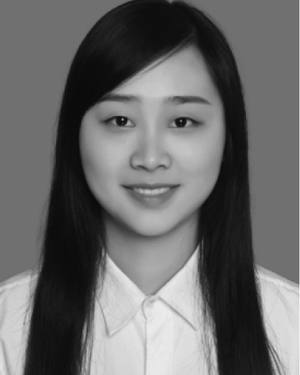 Xiaoxue Wan合作论文数12
 Xiaofan Liu (刘晓凡)合作论文数School of Aerospace Science and Technology, Xidian University12
 Fanbiao Li (李繁飙)合作论文数School of Automation, Central South University12
 Dong Pan (潘冬)合作论文数School of Automation, Central South University12
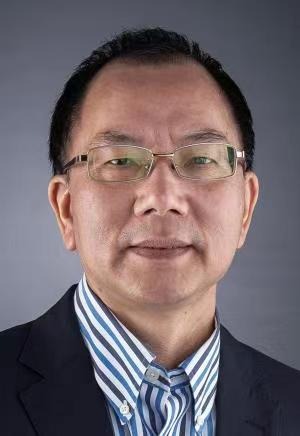 Tingwen Huang (黄廷文)合作论文数Faculty of Computer Science and Control Engineering, Shenzhen University of Advanced Technology12
 Hongliang Zhang (张红亮)合作论文数Institute of Light Metals and Industrial Electrochemistry, School of Metallurgy and Environment, Central South University12
 Zhipeng Chen (陈致蓬)合作论文数School of Automation, Central South University11
 Tao Peng (彭涛)合作论文数School of Automation, Central South University11
 Zhaohui Zeng (曾朝晖)合作论文数School of Computer Science, Xiangtan University10
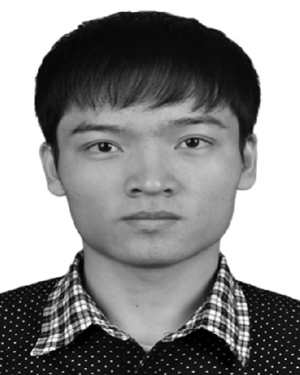 Yubo Sun合作论文数10
 Jin Luo合作论文数10Tianyu Ma (马天雨)合作论文数School of Physics and Electronics, Hunan Normal University10
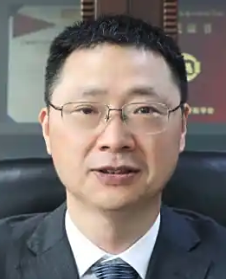 Guoyin Wang (王国胤)合作论文数Chongqing Normal University10
 Sen Xie合作论文数9
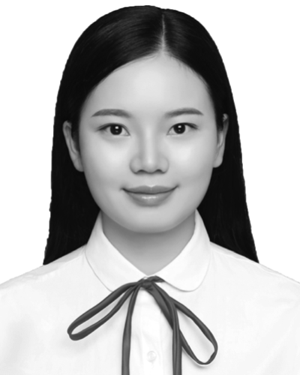 Ke Jiang合作论文数School of Automation, Central South University, Changsha, China9
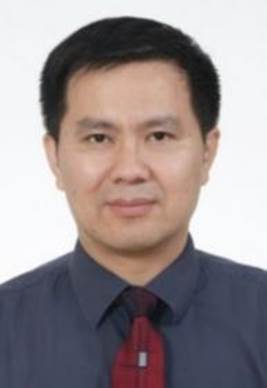 Min Wu (吴敏)合作论文数Institute of Advanced Control and Intelligent Automation, School of Automation, China University of Geosciences, Wuhan9Binfang Cao (曹斌芳)合作论文数8
 Jean Paul Niyoyita合作论文数College of Science and Technology, University of Rwanda, Kigali 3286, Rwanda8
 Zeyang Yin (殷泽阳)合作论文数School of Automation, Central South University8
 Ning Chen (陈宁)合作论文数School of Automation, Central South University8
 Lei He (何雷)合作论文数School of Public Administration, Central South University7Hong Yu合作论文数College of Computer Science and Technology, Chongqing University of Posts and Telecommunications7
 Yongxiang Lei合作论文数School of Automation, Central South University, Changsha 410083, China6
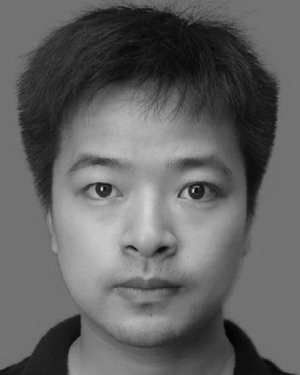 Guoyong Zhang合作论文数Cent South Univ, Sch Comp Sci & Engn, Changsha 410083, Peoples R China6
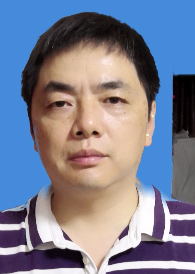 Yonggang Li (李勇刚)合作论文数School of Automation, Central South University6
 Hong Yu (于红)合作论文数School of Software, Dalian University of Technology;International School of Information Science and Engineering, Dalian University of Technology - Ritsumeikan University6
 Steven X. Ding合作论文数Institute of Automatic Control and Complex Systems, Faculty of Engineering, University of Duisburg-Essen6Yuze Zhong合作论文数5
 Jue Shi合作论文数5
 Can Tian合作论文数5Jintian Yin合作论文数5




