SCWR (supercritical water cooled reactor) is one of the Generation IV reactors. This review summarizes the results of SCWR design concept development through numerical simulations carried out by the author-led team at the University of Tokyo and Waseda University from 1989 to 2014. They are core design, subchannel analysis, statistical thermal design, fuel rod design, development of fuel integrity criteria, plant system and heat balance, plant dynamics analysis, plant control, startup system, stability analysis, safety principle, safety criteria, safety analysis, transient subchannel analysis and fast reactor SCWR. A brief summary of experimental results on thermal hydraulics, materials and water chemistry follows. Discussion includes SCPR study by Japanese BWR manufacturers, comments on the 2005 INEEL SCWR report, misconceptions about SCWR and commercialization challenges. The SCWR is an innovation in light water reactors based on supercritical coal-fired power plant technology that has been in use worldwide for over half a century. This review covers most of the SCWR design and analysis. For researchers, it is a good subject to understand the design and analysis of light water reactors.
One month after the TEPCO accident, the number of the disaster-related deaths in Fukushima Prefecture exceeded that in Miyagi and Iwate which were not affected by the radiation, due to increase in disuse syndrome during the prolonged evacuation by the accident. About 90% of the deaths were the elderly. The risk and benefit of the evacuation of 11 municipalities in Fukushima are analyzed using data published by the Japanese gov-ernment. The total loss of life expectancy (LLE) of the disaster-related deaths is 5,100,000 person-days. The LLE avoided by the evacuation is estimated from the cumulative doses of 172 locations. The average cumulative dose avoided is 205 mSv in 10 years. Total LLE avoided for 100,000 evacuees is 1,850,000 person-days. It is 2.8 times less than that accompanies evacuation. The delay in lifting the evacuation orders caused many disaster-related deaths among the elderly. The long-term evacuation of the TEPCO accident followed the dose rate recommended by ICRP, but is not justified.Discussions are provided for future improvements: (1) Lifetime fatal cancer probability from radiation exposure in the elderly is one-fifth of the average. Current guidelines do not take that into account. The dif-ference needs to be incorporated into the nuclear emergency guidelines. (2) Radiation protection measures cannot describe other health risks, but the present guides are developed from the perspective of radiation pro-tection. (3) Need to revise emergency guides to consider other health risks such as disuse syndrome of Fukushima, unnecessary abortions of Chernobyl and mental and psychological problems. (4) Risk communica-tion with the general public does not work in a nuclear accident. (5) Exempt the ALARA principle from the public in low-dose area in the event of a nuclear accident. (6) Allow evacuees to participate in decontamination and restoration work. The lesson is important for countries where nuclear power plants are located in agricultural areas and are aging.
Single pass core design for Supercritical-pressure light water-cooled fast reactor (Super FR) is proposed. The whole core is cooled with upward coolant flow in one through flow pattern like PWR. Compared with the previous two pass core design; this new flow pattern significantly simplifies the core concept in terms of upper core structure, coolant flow scheme as well as refueling procedure. In single pass core design, supercritical-pressure water at approximately 25.0 MPa enters the core at 280 degrees C and heated up in one through upward flow to the average outlet temperature at 500 degrees C. Great coolant density change in vertical direction will cause significant axial power offset during the cycle. Meanwhile, Pu accumulated in the UO2 also introduces great power increase in blanket assemblies during cycle, which requires large amount of flow for heat removal and makes the outlet temperature of blanket low at beginning of equilibrium cycle (BOEC). To deal with these issues, some MOX fuel is applied in the bottom region of blanket assemblies to mitigate the power change in blanket assembly and to increase the coolant outlet. With exclusive refueling and shuffling scheme as well as partial length control rod design, neutronics & TH coupled calculation shows satisfactory results that can fulfil the requirement of design for both 500 degrees C outlet temperature and negative coolant void reactivity. (C) 2015 Elsevier Ltd. All rights reserved.
This paper analyzes the thermal hydraulic performance of channels with different cross sectional geometries, which were adopted by tightly packed fuel rods assembly for high breeding at operating pressure of PWR and BWR. The calculations were carried out to assess the geometrical effect of coolant channels on thermal-hydraulic parameters by using a CFD code STAR-CCM+. It is found that one type of channel geometry (geometry B) is superior to others because of broad design area of power, cladding temperature and pressure drop. (C) 2014 Elsevier B.V. All rights reserved.
The subchannel analysis with turbulent mixing rate law of supercritical pressure fluid (SPF) is carried out for supercritical-pressurized light water cooled and moderated reactor (Super LWR). It is different from the turbulent mixing rate law of pressurized water reactor (PWR), which is widely adopted in Super LWR subchannel analysis study, the density difference between adjacent subchannels is taken into account for turbulent mixing rate law of SPF. MCSTs are evaluated on three kinds of fuel assemblies with different pin power distribution patterns, gap spacings and mass flow rates. Compared with that calculated by employing turbulent mixing rate law of PWR, the increase in MCST is smaller even when peaking factor is large and gap spacing is uneven. The sensitivities of MCST on non-uniformity of the subchannel area and power peaking are reduced. (C) 2015 Elsevier B.V. All rights reserved.
In mammals, short photoperiod is associated with high depression- and anxiety-like behaviours with low levels of the brain serotonin and its precursor tryptophan (Trp). Because the brain Trp levels are regulated by its ratio to large neutral amino acids (Trp:LNAA) in circulation, this study elucidated whether diets of various protein sources that contain different Trp:LNAA affect depression- and anxiety-like behaviours in C57BL/6J mice under short-day conditions (SD). In the control mice on a casein diet, time spent in the central area in the open field test (OFT) was lower in the mice under SD than in those under long-day conditions (LD), indicating that SD exposure induces anxiety-like behaviour. The SD-induced anxiety-like behaviour was countered by an α-lactalbumin diet given under SD. In the mice that were on a gluten diet before transition to SD, the time spent in the central area in the OFT under SD was higher than that in the SD control mice. Alternatively, mice that ingested soya protein before the transition to SD had lower immobility in the forced swim test, a depression-like behaviour, compared with the SD control. Analysis of Trp:LNAA revealed lower Trp:LNAA in the SD control compared with the LD control, which was counteracted by an α-lactalbumin diet under SD. Furthermore, mice on gluten or soya protein diets before transition to SD exhibited high Trp:LNAA levels in plasma under SD. In conclusion, ingestion of specific proteins at different times relative to photoperiodic transition may modulate anxiety- and/or depression-like behaviours, partially through changes in plasma Trp:LNAA.
Sensitivity calculation on melt behavior and lower head response at Fukushima Daiichi unit 1 reactor was performed with methods for estimation of leakages and consequences of releases (MELCOR) 2.1 and moving particle semi-implicit (MPS) method. Four sensitivity cases were calculated, considering safety relief valve (SRV) seizure, penetrations and debris porosity. The results indicated that the lower head failed due to creep rupture, not considering penetrations; otherwise it would have failed due to penetration tube rupture and ejection at an earlier time, resulting in part of debris dropping into the cavity of the drywell. The temperature of residual debris in pressure vessel kept low, and the vessel wall did not suffer creep failure up to 15hours after reactor scram from which moment the water injection became available. Another aspect was that reactor pressure vessel (RPV) depressurization postponed the lower head creep failure time, and the low debris porosity brought forward the penetration rupture time. Either lower head creep failure or penetration rupture and ejection occurred in the central part of the pressure vessel. In MPS calculation, a slice of debris bed together with lower head, including an instrument guide tube, was chosen as the computational domain. Detailed temperature profiles in debris bed, penetration and vessel wall were obtained. The penetration rupture time calculated by MPS was earlier than the MELCOR result, while the vessel wall creep failure time was later.
Passive safety systems of a Super Fast Reactor are studied. The passive safety systems consist of isolation condenser (IC), automatic depressurization system (ADS), core make-up tank (CMT), gravity driven cooling system (GDCS), and passive containment cooling system (PCCS). Two accidents of total loss of feedwater flow and 100% cold-leg break large LOCA are analyzed by using the passive systems and the criteria of maximum cladding surface temperature (MCST) and maximum core pressure are satisfied. The isolation condenser can be used for mitigation of the accident of total loss of feedwater flow at both supercritical and subcritical pressures. The ADS is used for depressurization leading to a loss of coolant during line switching to operation of the isolation condenser at subcritical pressure. Use of CMT during line switching recovers the lost coolant. In case of large LOCA, GDCS can be used for core reflooding. Coolant vaporization in the core released to containment through the break is condensed by passive containment cooling system. The condensate flows to the GDCS pool by gravity force. The maximum cladding surface temperature (MCST) of the accident satisfies the criterion. (C) 2015 Elsevier B.V. All rights reserved.
•Development of MPS eutectic model for solid–solid interaction.•Analysis of experiments dealing with eutectic behavior of Pb–Sn by MPS simulation.•The analysis has revealed the mechanism of eutectic melting due to eutectic reaction.
VOF numerical simulations were conducted for a three-fluid dam break problem to investigate the scaling effect on mixing and stratification processes of three immiscible fluids by gravity. Two liquids (silicone oil and salt water) were initially separated with a vertical partition plate and filled in a rectangle container. Computational fluid dynamics analysis was conducted with Star CCM+ version 9.02. The contact angle affects the interfacial motion significantly in a relatively small-scale domain, while the interfacial tension affects it in a relatively large-scale domain.
This paper analyzes the geometrical effect of coolant channels in the tightly packed fuel rods assembly (TA) which works at operating pressures of supercritical-pressure light water cooled fast breeding reactor (Super FBR), PWR and BWR. It is well known that high breeding by light water coolant is very challenging due to its high moderating property. The TA is good for high breeding because of the small area fraction of coolant to fuel (less than 0.1). However, with the reduction of coolant area, thermal hydraulic characteristics become more limiting. By ameliorating the geometry of the coolant channel, it is expected to improve the performance on thermal hydraulics. In this study, three types of coolant channel geometry are analyzed: geometry A is circular; geometry B is triangle-like shape with rounded-corner; geometry C is also triangle-like shape but with sharper corner. A CFD code STAR-CCM+ is used to carry out the simulations for each geometry at each operating pressure. Assessments are based on the thermal hydraulic parameters such as cladding temperatures, pressure drop and CHF. It is found that geometry B is superior to others at all operating pressures because of the broad design area of power, cladding temperature and pressure drop, and is able to meet the thermal hydraulic requirements in design of high breeding reactors.
•The improved core of Super Fast Reactor with high power density is analyzed.•We analyzed four types of the limiting fuel rods.•The influence of Pu enrichment and compressive stress to yield strength ratio are analyzed.•The improved fuel rod design of the new core is suggested.
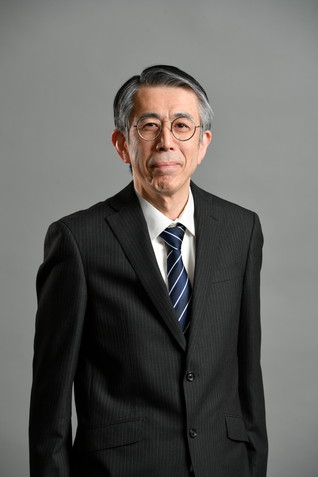 Seiichi Koshizuka (越塚誠一)合作论文数Department of Systems Innovation, Faculty of Engineering, The University of Tokyo130
 Yuki Ishiwatari合作论文数62Jie Liu合作论文数31Satoshi Ikejiri合作论文数16Akifumi Yamaji合作论文数15Shigehiro An合作论文数12Tatjana Jevremovic合作论文数11
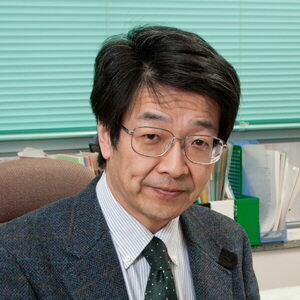 Kazuo Furuta合作论文数Graduate School of Engineering, The University of Tokyo10
 Heng Xie (解衡)合作论文数Institute of Nuclear and New Energy Technology, Tsinghua University9Y Togo合作论文数7
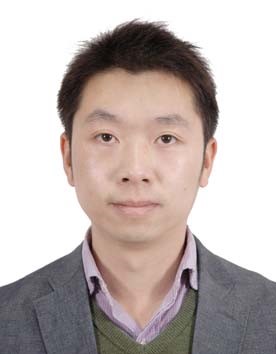 Ronghua Chen (陈荣华)合作论文数Department of Nuclear Science and Technology, School of Energy and Power Engineering, Xi'an Jiaotong University7
 Shunsuke Kondo (近藤俊輔)合作论文数Department of Experimental Therapeutics, National Cancer Center Hospital7
 Wenxi Tian (田文喜)合作论文数School of Energy and Power Engineering, Xi'an Jiaotong University;School of Nuclear Science and Technology, Xi'an Jiaotong University;Shaanxi Key Laboratory of Advanced Nuclear Energy and Technology7S Kondo合作论文数6
 Masahiro Furuya (古谷正裕)合作论文数Graduate School of Advanced Science and Engineering, Waseda University6Masatsugu Akiyama合作论文数6Hiroyuki Hashikura合作论文数6Jaewoon Yoo合作论文数6A. Yamaji合作论文数6Riqiang Duan (段日强)合作论文数5Jue Yang合作论文数5
 Jianhui Wu (伍建辉)合作论文数University of Chinese Academy of Sciences;Shanghai Institute of Applied Physics, Chinese Academy of Sciences4Sutanto合作论文数4
 Guanghui Su (苏光辉)合作论文数Department of Nuclear Science and Technology, School of Energy and Power Engineering, Xi'an Jiaotong University4Masanori Yamakawa合作论文数4Hideo Mori合作论文数4Han Young Yoon合作论文数4
 Suizheng Qiu (秋穗正)合作论文数School of Energy and Power Engineering, Xi'an Jiaotong University;School of Nuclear Science and Technology, Xi'an Jiaotong University4Masato Akiba合作论文数3Shuichi Iwata合作论文数3S Tanaka合作论文数3Shinichi MOROOKA合作论文数3qingjie liu合作论文数3
 Rui Guo合作论文数3
 Masahiro Kondo合作论文数3Hirokazu Ikeda合作论文数3Mitsuru Uesaka合作论文数3
 Liangzhi Cao (曹良志)合作论文数School of Energy and Power Engineering, Xi'an Jiaotong University;Nuclear Engineering Computational Physics Lab, Xi'an Jiaotong University3Yukihito Suzuki合作论文数3Hai-Tao Ju合作论文数3
 Shinya Nagasaki合作论文数Department of Engineering Physics, Faculty of Engineering, McMaster University3
 Takayuki Terai合作论文数Faculty & Graduate School of Engineering, The University of Tokyo3Tin Tin Yi合作论文数3Keisuke Okumura (奥村啓介)合作论文数Fukushima Research and Engineering Institute, Collaborative Laboratories for Advanced Decommissioning Science, Japan Atomic Energy Agency3Haruki Madarame合作论文数3akio shioiri合作论文数2S Koshizuka合作论文数2a n shigehiro合作论文数2




