Public research results on large-scale supervised finetuning of AI agents remain relatively rare, since the collection of agent training data presents unique challenges. In this work, we argue that the bottleneck is not a lack of underlying data sources, but that a large variety of data is fragmented across heterogeneous formats, tools, and interfaces. To this end, we introduce the Agent Data Protocol (ADP), a light-weight representation language that serves as an "interlingua" between agent datasets in diverse formats and unified agent training pipelines downstream. The design of ADP is expressive enough to capture a large variety of tasks, including API/tool use, browsing, coding, software engineering, and general agentic workflows, while remaining simple to parse and train on without engineering at a per-dataset level. In experiments, we unified a broad collection of 13 existing agent training datasets into ADP format, and converted the standardized ADP data into training-ready formats for multiple agent frameworks. We performed supervised finetuning on the unified data, and demonstrated an average performance gain of $\sim$20\% over corresponding base models, and delivers state-of-the-art or near-SOTA performance on standard coding, browsing, tool use, and research benchmarks, without domain-specific tuning. All code and data are released publicly, in the hope that ADP could help lower the barrier to standardized, scalable, and reproducible agent training.
Early prediction of student performance (EPSP) has garnered significant attention due to its educational value, especially its importance in academic early warning systems. State-of-the-art data mining methods have achieved remarkable success by optimizing feature selection and model enhancements. However, these methods often face challenges, including the cold-start problem, limited exploration of the intrinsic relationships among features, and poor generalization. In this work, we explore the utilization of Large Language Models (LLMs) as information integrators to address these challenges and propose a novel model called Large Language Model Empowered Early Prediction of Student Performance (LLM-EPSP). Specifically, for the cold-start problem, LLM-EPSP benefits from the inherent advantages of LLMs, which stem from their extensive pretraining on diverse datasets. This enables the model to make informed predictions even with limited initial data. For exploring intrinsic relationships among features, LLM-EPSP employs feature fusion techniques to uncover underlying connections between various features, ensuring a comprehensive and robust analysis. To enhance the generalization capabilities of LLM-EPSP, we develop predefined templates that facilitate its adaptation to a wide range of educational contexts. We evaluate our method on two real-world datasets: (1) OULAD, which includes data on 22 courses and 32,593 students, and (2) the UCI Machine Learning Repository, which contains 23 types of features from 649 students. Extensive validation demonstrates that LLM-EPSP considerably outperforms baseline approaches across diverse scenarios. Further analysis results also demonstrate the robustness and versatility of LLM-EPSP, suggesting its enormous potential in practical applications.
Multimodal contrastive learning has enabled zero-shot visual classification by aligning images with textual categories. However, in hierarchically structured label spaces, existing methods often produce predictions that are inconsistent across taxonomic levels. For example, a model may predict a fine-grained category whose parent category contradicts its simultaneously predicted higher-level label. By analysis, the issue originates from false negative labels when contrastive comparison involves multiple taxonomic levels. To this end, we propose to restrict contrastive comparisons to categories within the same taxonomic level. In addition, we adopt a group-balanced design, ensuring each taxonomic level receives adequate optimization. As a result, the proposed framework improves both hierarchical consistency and classification accuracy from coarse to fine granularity. We train our model with TreeOfLife-10M based on BioCLIP and evaluate it across multiple hierarchical classification benchmarks, where the model demonstrates significantly improved hierarchical consistency in both Euclidean and hyperbolic spaces. Notably, on iNaturalist 2021 (iNat21), our method improves average accuracy across levels by 30.47
Agent skills occupy a privileged position in the agent workflow, as agents are expected to implicitly follow and execute them, rendering third-party skills a vulnerable attack surface. Existing studies have revealed unsafe agent behaviors induced by skill-based attacks, but they primarily evaluate poisoned skills within a single task execution and enumerate harms through ad-hoc risk lists. To bridge these gaps, we introduce SkillHarm, a benchmark of skill-based attacks across the skill-use lifecycle, paired with a systematic taxonomy of skill-relevant risks. SkillHarm evaluates two attack scenarios: Fixed-Payload Poisoning (FPP), where a fixed poisoned skill package directly compromises any task session that invokes it, and Self-Mutating Poisoning (SMP), where an initially benign execution silently mutates persistent skill content, deferring harm until a subsequent reuse. It further defines 12 risk types based on the agent workflow component targeted by the harm: data pipelines, system environments, and agent autonomy. To instantiate these attacks at scale, we build AutoSkillHarm, an automated construction pipeline with coding agents driven by natural-language harnesses. The resulting benchmark contains 879 attack samples across 71 skills. Experiments show that current agents remain vulnerable with attack success rates up to 86.3
Generative foundation models (GenFMs), such as large language models and text-to-image systems, have demonstrated remarkable capabilities in various downstream applications. As they are increasingly deployed in high-stakes applications, assessing their trustworthiness has become both a critical necessity and a substantial challenge. Existing evaluation efforts are fragmented, rapidly outdated, and often lack extensibility across modalities. This raises a fundamental question: how can we systematically, reliably, and continuously assess the trustworthiness of rapidly advancing GenFMs across diverse modalities and use cases? To address these gaps, we introduce TrustGen, a dynamic and modular benchmarking system designed to systematically evaluate the trustworthiness of GenFMs across text-to-image, large language, and vision-language modalities. TrustGen standardizes trust evaluation through a unified taxonomy of over 25 fine-grained dimensions—including truthfulness, safety, fairness, robustness, privacy, and machine ethics—while supporting dynamic data generation and adaptive evaluation through three core modules: Metadata Curator, Test Case Builder, and Contextual Variator. Taking TrustGen into action to evaluate the trustworthiness of 39 models reveals four key insights. (1) State-of-the-art GenFMs achieve promising overall trust performance, yet significant limitations remain in specific dimensions such as hallucination resistance, fairness, and privacy preservation. (2) Contrary to prevailing assumptions, open-source models now rival and occasionally surpass proprietary systems in trustworthiness metrics. (3) The trust gap among top-performing models is narrowing, likely due to increased industry convergence on best practices. (4) Trustworthiness is not an isolated property; it interacts complexly with other behaviors, such as helpfulness and ethical decision-making. TrustGen is a transformative step toward standardized, scalable, and actionable trustworthiness evaluation, supporting dynamic assessments across diverse modalities and trust dimensions that evolve alongside the generative AI landscape.
Although computer-use agents (CUAs) hold significant potential to automate increasingly complex OS workflows, they can demonstrate unsafe unintended behaviors that deviate from expected outcomes even under benign input contexts. However, exploration of this risk remains largely anecdotal, lacking concrete characterization and automated methods to proactively surface long-tail unintended behaviors under realistic CUA scenarios. To fill this gap, we introduce the first conceptual and methodological framework for unintended CUA behaviors, by defining their key characteristics, automatically eliciting them, and analyzing how they arise from benign inputs. We propose AutoElicit: an agentic framework that iteratively perturbs benign instructions using CUA execution feedback, and elicits severe harms while keeping perturbations realistic and benign. Using AutoElicit, we surface hundreds of harmful unintended behaviors from state-of-the-art CUAs such as Claude 4.5 Haiku and Opus. We further evaluate the transferability of human-verified successful perturbations, identifying persistent susceptibility to unintended behaviors across various other frontier CUAs. This work establishes a foundation for systematically analyzing unintended behaviors in realistic computer-use settings.
Vision-language models (VLMs) achieve strong performance on spatial reasoning benchmarks, yet it remains unclear whether this reflects structured 3D understanding or reliance on statistical shortcuts in natural images. We introduce a representation-level analysis framework that constructs minimal contrastive pairs to measure how spatial axes are organized and disentangled within VLM embeddings. Our analysis across multiple model families reveals a consistent vertical-distance entanglement: models conflate vertical image position with distance, mirroring the perspective bias of natural photographs. This bias produces a significant accuracy gap between perspective-consistent and counter-heuristic examples, and intensifies under data scaling even as overall benchmark accuracy improves. We further show that models with similar benchmark scores can exhibit different internal representations, and that these differences predict accuracy and robustness across diverse spatial reasoning benchmarks. To isolate this bias from evaluation-set skew, we introduce SpatialTunnel, a synthetic benchmark designed to expose spatial shortcut biases by removing common correlations present in natural images. Experiments confirm that the entanglement is model-intrinsic, and that models with well-separated spatial axes exhibit greater robustness, suggesting that well-structured spatial representations lead to more reliable spatial reasoning across diverse benchmarks. Code and benchmark are available on the project page: https://cheolhong0916.github.io/whyfarlooksup.github.io/.
Vector graphics are prized for their resolution independence, compact storage, and direct editability, making differentiable optimization of their parametric primitives an attractive goal. Yet classical rasterization is discontinuous with respect to geometry, and existing remedies that smooth the forward pass demand increasingly elaborate heuristics as scene complexity grows. We trace this fragility to a gradient seesaw: design choices that improve forward geometric exactness can systematically degrade the induced gradient signal, and vice versa. To navigate this tension we introduce CubicSplat, a differentiable vector rasterizer that replaces Bézier closest-point solvers with uniform polyline surrogates whose geometric error is bounded at O(S^-2). The resulting static computation graph yields well-conditioned gradients by construction, while a compositing-derived visibility mechanism prunes degenerate primitives without auxiliary regularization. On DIV2K and Kodak benchmarks CubicSplat achieves state-of-the-art reconstruction quality with over 2 dB PSNR gain in the closed-fill setting, while training up to 4x faster than prior methods. The code is available at https://github.com/CubicSplat/repo
Latent visual reasoning involves visual evidence more directly in multimodal reasoning by inserting continuous latent tokens before textual generation. However, the necessity of these latent tokens at inference remains ambiguous. We show that replacing latent tokens with random noise or removing them completely causes little performance degradation across spatial reasoning benchmarks. Reinforcement learning further diminishes the latent generation behavior after post-training. These observations raise a central question: Is latent visual reasoning still meaningful? We argue that its value should be measured by how effectively latent tokens guide learning, rather than whether they persist as an inference-time format. Our analysis shows that latent reasoning is unevenly favorable across question types, yet hard task-level routing for applying latent generation is brittle. Motivated by these findings, we propose an attention-based reward that encourages generated latent tokens to interact with later text tokens during RL. This reward promotes latent utilization when the latent mode is activated while preserving the flexibility to use pure-text reasoning. Experiments show that our method improves performance across perception and visual reasoning benchmarks, even when latent tokens are rarely generated after post-training. Our results highlight that, without explicit expression at inference, latent visual reasoning can shape better visual grounding and more accurate textual reasoning in silence. Our code and trained models are publicly available at \href{https://github.com/ddydyd32/silent-lvr/tree/master}{GitHub} and \href{https://huggingface.co/collections/cornuHGF/silent-lvr}{Hugging Face}.
Social determinants of health (SDoH), encompassing factors such as employment status, housing instability, and transportation access, play a critical role in health outcomes, yet are seldom captured in structured form within electronic health records (EHRs). Relevant information is instead embedded in unstructured clinical notes, limiting its systematic use for identifying patients who may benefit from targeted social-work interventions. Large language models (LLMs) offer a potentially scalable approach to automated SDoH extraction, yet no comprehensive evaluation has examined how model family, usage paradigm, and task formulation jointly affect performance across benchmarks. This study aims to conduct a systematic evaluation of proprietary and open-weight LLMs for sentence-level SDoH phenotyping, comparing zero-shot prompting, few-shot in-context learning, supervised fine-tuning, and retrieval-augmented generation (RAG) across a synthetic SDoH benchmark and real-world clinical notes from MIMIC-III. A diverse set of proprietary models (GPT-4o, GPT-5.2, Claude-4.5-Sonnet) and open-weight models (Phi-4-14B, Qwen3-8B, Qwen3-14B, LLaMA3.3-70B, QwQ-32B, Mixtral-8×7B) were evaluated on two corpora: a synthetic SDoH test set and 5328 social-history–related clinical notes from MIMIC-III. The SDoH classification task covered six categories (employment status, housing, transportation, parental status, relationship status, and social support). Models were evaluated under four paradigms: zero-shot prompting, few-shot in-context learning, supervised fine-tuning, and RAG. Two task formulations were also examined—single-label versus multi-label prediction, and detection of any SDoH versus adverse SDoH only. In zero-shot and few-shot settings, open-weight models of moderate size were competitive with or superior to proprietary baselines: Phi-4-14B achieved a macro-F1 of 0.91 on the synthetic test set in the adverse SDoH setting, exceeding GPT-4o (macro-F1 0.86), while Phi-4-14B and Qwen3-14B attained the highest macro-F1 on MIMIC-III for adverse SDoH (0.47). On MIMIC-III, GPT-5.2 in the zero-shot multi-label setting achieved the highest any-SDoH macro-F1 (0.68), while Claude-4.5-Sonnet in the few-shot setting achieved the highest adverse-SDoH macro-F1 (0.65), both exceeding FLAN-T5XL fine-tuned on gold-annotated data (0.57 and 0.53, respectively). Supervised fine-tuning substantially improved in-distribution performance (Phi-4-14B macro-F1: 0.99) but degraded performance on MIMICIII (macro-F1: 0.06), indicating a pronounced domain mismatch. Multi-label prompting improved any SDoH detection for 6 of 7 models on MIMIC-III but was counterproductive for adverse SDoH in smaller models. RAG improved MIMIC-III performance for Phi-4-14B and Qwen3-14B but reduced accuracy on the synthetic test set. Open-weight LLMs of moderate size obtained performance competitive with proprietary models on both benchmarks and thus represent a viable, privacy-preserving alternative to proprietary models for SDoH phenotyping. Supervised fine-tuning on synthetic data achieves near-ceiling performance on controlled benchmarks but generalizes poorly to authentic clinical documentation, underscoring the continued need for domain-representative training data. Multi-label prompting and few-shot exemplars offer the most reliable gains on real-world clinical notes, providing practical guidance for deploying LLMs under clinical privacy and resource constraints.
A long-term goal of language agents is to learn and improve through their own experience, ultimately outperforming humans in complex, real-world tasks. However, training agents from experience data with reinforcement learning remains difficult in many environments, which either lack verifiable rewards (e.g., websites) or require inefficient long-horizon rollouts (e.g., multi-turn tool use). As a result, most current agents rely on supervised fine-tuning on expert data, which is challenging to scale and generalizes poorly. This limitation stems from the nature of expert demonstrations: they capture only a narrow range of scenarios, and expose the agent to limited environment diversity. We address this limitation with a middle-ground paradigm we call : interaction data generated by the agent's own actions, where the resulting future states serve as supervision without reward signals. Within this paradigm, we study two strategies of using such data: (1) implicit world modeling, which uses collected states to ground the policy in environment dynamics; and (2) self-reflection, where the agent learns from its suboptimal actions to improve reasoning and decision-making. Evaluation across eight diverse environments and multiple model families shows that our approaches consistently improve effectiveness and out-of-domain generalization, highlighting the value of early experience. Moreover, in environments with verifiable rewards, our results provide promising signals that early experience offers a strong foundation for subsequent reinforcement learning, making it a practical bridge between imitation learning and fully experience-driven agents.
Learning dense representations that are simultaneously effective, robust, and interpretable remains a central challenge in dense retrieval. Standard bi-encoder retrievers map each document into a single monolithic vector, which is computationally attractive but tends to entangle multiple latent semantic factors inside one embedding. This entanglement weakens interpretability, reduces controllability of candidate generation, and makes the ranking process vulnerable to hard negatives that are semantically similar to the query yet mismatched in topical intent. We propose CoDiS, a convex dictionary-based sparse topic decomposition architecture for dense retrieval. CoDiS inserts a learnable intermediate topic layer between corpus encoding and document-level matching, where dictionary atoms are obtained through a sparse autoencoder with convex constraints and are therefore grounded in sparse combinations of observed document embeddings rather than unconstrained latent prototypes. This design turns the intermediate representation into a corpus-grounded sparse semantic basis that can be inspected, analyzed, and used for topic-aware candidate filtering. The topic layer is trained jointly with contrastive dense retrieval objectives so that sparse reconstruction and downstream relevance discrimination reinforce one another. Experiments on the BEIR benchmark show that CoDiS achieves strong overall effectiveness and produces especially large gains on datasets characterized by topic diversity, semantic ambiguity, and hard-negative interference. Additional qualitative analyses indicate that the learned sparse activations improve topic coherence and expose meaningful intermediate semantic structure. These results suggest that convex sparse topic decomposition is a useful inductive bias for interpretable and robust neural dense retrieval.
Language agents spend substantial inference time solving individual tasks, yet the experience acquired in one episode is often underutilized in future episodes. Continual learning expects an agent to accumulate reusable experience across a stream of tasks, improve over time, and avoid interference from irrelevant experiences. Unfortunately, existing benchmarks struggle to evaluate continual learning in language agents rigorously. Most efforts focus on retrieval and reasoning over long-context conversations or documents, while recent lifelong-adaptation benchmarks often rely on naive task streams with limited analysis of cross-task relationships, making it difficult to understand what an agent learns and reuses over time. This paper presents an evaluation framework AgentCL for continual learning in agents, centered on controlled task streams and metrics for transfer gains. AgentCL constructs compositional streams where earlier sub-solutions, evidence, or workflows are intentionally reusable in later tasks, and contrasts them with naive streams where such reusability is not guaranteed. We use the benchmark to evaluate non-parametric memory designs for continual learning. To diagnose how memory design choices affect continual learning, we develop MemProbe, a probing method that stores interactions, insights, and skills, while filtering unreliable experiences during consolidation. Empirical analysis across coding, deep research, and language understanding/reasoning tasks shows that naive streams offer limited ability to distinguish memory designs, whereas controlled streams more clearly distinguish their plasticity. Meanwhile, naive and held-out settings often yield limited gains and can expose memory-induced degradation. These results highlight the need for stronger memory designs that balance plasticity and stable reuse.
Computer-use agents (CUAs) promise to automate complex tasks across operating systems (OS) and the web, but remain vulnerable to indirect prompt injection, where attackers embed malicious content into the environment to hijack agent behavior. Current evaluations of this threat either lack support for adversarial testing in realistic but controlled environments or ignore hybrid web-OS attack scenarios involving both interfaces. To address this, we propose RedTeamCUA, an adversarial testing framework featuring a novel hybrid sandbox that integrates a VM-based OS environment with Docker-based web platforms. Our sandbox supports key features tailored for red teaming, such as flexible adversarial scenario configuration, and a setting that decouples adversarial evaluation from navigational limitations of CUAs by initializing tests directly at the point of an adversarial injection. Using RedTeamCUA, we develop RTC-Bench, a comprehensive benchmark with 864 examples that investigate realistic, hybrid web-OS attack scenarios and fundamental security vulnerabilities. Benchmarking current frontier CUAs identifies significant vulnerabilities: Claude 3.7 Sonnet | CUA demonstrates an Attack Success Rate (ASR) of 42.9%, while Operator, the most secure CUA evaluated, still exhibits an ASR of 7.6%. Notably, CUAs often attempt to execute adversarial tasks with an Attempt Rate as high as 92.5%, although failing to complete them due to capability limitations. Nevertheless, we observe concerning ASRs of up to 50% in realistic end-to-end settings, indicating that CUA threats can already result in tangible risks to users and computer systems. Overall, RedTeamCUA provides an essential framework for advancing realistic, controlled, and systematic analysis of CUA vulnerabilities, highlighting the urgent need for robust defenses to indirect prompt injection prior to real-world deployment.
Deep research agents extend the role of search engines from retrieving keyword-matched pages to synthesizing knowledge, fundamentally changing how humans interact with information. However, frontier systems remain proprietary, while existing open agents often generalize poorly across different task types, leaving unclear how to train a broadly capable deep research agent. We release QUEST, a family of open models (ranging from 2B to 35B) that serve as general-purpose deep research agents designed to handle a wide range of long-horizon search tasks, with strong capabilities in fact seeking, citation grounding, and report synthesis. To build QUEST, we propose an effective training recipe combining mid-training, supervised fine-tuning, and reinforcement learning. Central to this recipe is a curated data synthesis pipeline based on unified rubric trees, which applies to different task types and enables synthesizing training data with verifiable rewards without human annotation. In addition, QUEST incorporates a built-in context management mechanism that enables effective long-horizon reasoning and knowledge synthesis. Using only 8K synthesized tasks, QUEST approaches or even surpasses frontier closed-source agents across eight deep research benchmarks spanning diverse task types, and achieves the best overall performance among recent open-weight agents. We released everything: models, data, and training scripts.
While Large Language Models (LLMs) excel in natural language tasks, single-agent architectures face an inherent optimization conflict between maximizing generative response quality and mitigating factual hallucinations. To address this, we propose the Multi-Agent Collaborative Framework (MA-CF), a structured prompt-driven pipeline that decomposes generation into distinct phases of drafting, parallelized evaluation, and final synthesis. By architecturally decoupling factuality verification from linguistic assessment into separate agent roles, MA-CF empirically mitigates the suboptimal trade-offs and consensus biases observed in both monolithic single-agent systems and traditional multi-agent debate frameworks. We evaluated MA-CF using small-scale backbones (Llama3.1-8B, Qwen3-8B) against single-agent baselines, iterative debate architectures, and large-scale models across three datasets: PreciseWiki (N = 2000), LongWiki (N = 250), and HaluEval 2.0 (N = 800). Experimental results demonstrate substantial quantitative improvements. On the LongWiki dataset, MA-CF increased Llama3.1-8B's Recall@32 from 15.38% to 35.22% and F1@32 from 22.63% to 44.22%. On the cross-domain HaluEval 2.0 benchmark, the framework improved the Average Factual Rate from 65.24% to 73.28%. Furthermore, on the PreciseWiki dataset, MA-CF significantly improved the model's ability to reject unanswerable queries, effectively reducing the probability of model error. Significantly, our findings confirm that a strategic ensemble of 8B-parameter models can match or surpass the hallucination mitigation capabilities of 671B-parameter models (e.g., DeepSeek-V3), offering a computationally efficient architecture for deploying reliable LLM systems in resource-constrained information environments.
Humans excel at remembering concrete experiences along spatiotemporal contexts and performing reasoning across those events, i.e., the capacity for episodic memory. In contrast, memory in language agents remains mainly semantic, and current agents are not yet capable of effectively recollecting and reasoning over interaction histories. We identify and formalize the core challenges of episodic recollection and reasoning from this gap, and observe that existing work often overlooks episodicity, lacks explicit event modeling, or overemphasizes simple retrieval rather than complex reasoning. We present REMem, a two-phase framework for constructing and reasoning with episodic memory: 1) Offline indexing, where REMem converts experiences into a hybrid memory graph that flexibly links time-aware gists and facts. 2) Online inference, where REMem employs an agentic retriever with carefully curated tools for iterative retrieval over the memory graph. Comprehensive evaluation across four episodic memory benchmarks shows that REMem substantially outperforms state-of-the-art memory systems such as Mem0 and HippoRAG 2, showing 3.4% and 13.4% absolute improvements on episodic recollection and reasoning tasks, respectively. Moreover, REMem also demonstrates more robust refusal behavior for unanswerable questions.
Large language model agents increasingly operate in dynamic environments where tool interfaces, APIs, and user requirements change after deployment. Existing self-evolution methods mainly follow two paradigms: harness-based approaches, which externalize feedback into editable memories or skills for rapid adaptation, and parameter-based approaches, which internalize experience into model parameters for deeper capability improvement. However, using either mechanism alone creates a trade-off between flexibility and performance. This paper asks how an agent can coordinate both channels to achieve robust self-evolution. We present COVE, a unified agent self-evolution framework that combines harness-based and parameter-based learning through task-aware routing, stage-aware scheduling, and knowledge optimization. Through this design, COVE treats self-evolution not as indiscriminate accumulation of experience, but as a coordinated process that matches tasks and knowledge types to appropriate learning mechanisms. Experiments across multiple task categories show that COVE outperforms single-channel evolution strategies, demonstrating more robust and efficient improvement under changing environments.
Computer-using agents (CUAs) must plan task workflows across diverse and evolving applications, yet progress is limited by the lack of large-scale, high-quality training data. Existing datasets are narrow, static, and costly to annotate, while synthetic data often yields oversimplified or misaligned behaviors. We present Watch & Learn (W&L), a framework that converts readily available Internet videos of human computer use into executable UI trajectories at scale. Instead of directly generating actions or relying on handcrafted heuristics, we cast trajectory annotation as an inverse dynamics problem that predicts user actions from consecutive screen states, which simplifies learning and generalizes across domains. Through a task-aware retrieval and labeling pipeline, W&L yields over 53K high-quality trajectories that enhance CUAs both as in-context exemplars and as supervised training data. On OSWorld, it consistently improves general-purpose and specialized CUAs, while on WindowsAgentArena it achieves state-of-the-art performance among 7B-scale models under the 15-step limit. These results show that web-scale human demonstration videos can serve as a practical and scalable foundation for advancing real-world CUAs.
Morphological traits are physical characteristics of biological organisms that provide vital clues on how organisms interact with their environment. Yet extracting these traits remains a slow, expert-driven process, limiting their use in large-scale ecological studies. A major bottleneck is the absence of high-quality datasets linking biological images to trait-level annotations. In this work, we demonstrate that sparse autoencoders trained on foundation-model features yield monosemantic, spatially grounded neurons that consistently activate on meaningful morphological parts. Leveraging this property, we introduce a trait annotation pipeline that localizes salient regions and uses vision-language prompting to generate interpretable trait descriptions. Using this approach, we construct Bioscan-Traits, a dataset of 80K trait annotations spanning 19K insect images from BIOSCAN-5M. Human evaluation confirms the biological plausibility of the generated morphological descriptions. When used to fine-tune BioCLIP, a biologically grounded vision-language model, Bioscan-Traits improves zero-shot species classification on the in-the-wild Insects benchmark, underscoring the value of trait-level supervision for enhancing model generalization.
 Qi Liu (刘淇)合作论文数School of Data Science, University of Science and Technology of China;State Key Laboratory of Cognitive Intelligence, School of Computer Science and Technology, University of Science and Technology of China;Anhui Province Key Laboratory of Big Data Analysis and Application, School of Computer Science and Technology, University of Science and Technology of China54
 Huan Sun合作论文数Department of Computer Science and Engineering, College of Engineering, The Ohio State University50
 Zhenya Huang (黄振亚)合作论文数School of Computer Science and Technology, University of Science and Technology of China;School of Data Science, University of Science and Technology of China47
 En-Hong Chen (陈恩红)合作论文数Anhui Province Key Laboratory of Big Data Analysis and Application, School of Computer Science and Technology, University of Science and Technology of China36
 Shijin Wang (王士进)合作论文数iFLYTEK Co., Ltd.;School of Artificial Intelligence and Data Science, University of Science and Technology of China22
 Xifeng Yan合作论文数Department of Computer Science, University of California at Santa Barbara21
 ShuangHong Shen合作论文数School of Computer Science and Technology, University of Science and Technology of China20
 Kai Zhang合作论文数NeoCognition19
 Wei-Lun (Harry) Chao (趙偉崙)合作论文数Department of Computer Science and Engineering, College of Engineering, Ohio State University19
 Tanya Berger-Wolf合作论文数Department of Computer Science and Engineering, College of Engineering, The Ohio State University;Translational Data Analytics Institute, The Ohio State University;ConservationX Labs17
 Yu Gu (谷雨)合作论文数The Ohio State University17
 Samuel Stevens合作论文数Univ Edinburgh, Scotland/Univ Edinburgh15
 Guoping Hu (胡国平)合作论文数iFLYTEK Co., Ltd.;School of Computer Science and Technology, University of Science and Technology of China14
 Ziru Chen (陈子如)合作论文数SunLab, The Ohio State University13
 Wenhu Chen (陈文虎)合作论文数Computer Science Department, University of Waterloo;Vector Institute13
 Boyuan Zheng合作论文数College of Engineering, The Ohio State University11Yu Yin合作论文数Anhui Province Key Laboratory of Big Data Analysis and Application, School of Computer Science and Technology, University of Science and Technology of China11
 Chan Hee (Luke) Song合作论文数NVIDIA11
 Bernal Jiménez Gutiérrez合作论文数College of Engineering, The Ohio State University11
 Boyu Gou合作论文数10
 Junyu Lu (卢俊宇)合作论文数School of Computer Science and Technology, Dalian University of Technology;Tencent10
 Xilin Chen (陈熙霖)合作论文数Institute of Computing Technology, Chinese Academy of Sciences;University of Chinese Academy of Sciences10
 Shiguang Shan (山世光)合作论文数Key Lab of Intelligent Information Processing, Institute of Computing Technology, Chinese Academy of Sciences;School of Computer, University of Chinese Academy of Sciences10
 Gagan Agrawal合作论文数University of Maryland, College Park10
 Xiang Deng合作论文数The Ohio State University10Linbo Zhu合作论文数9
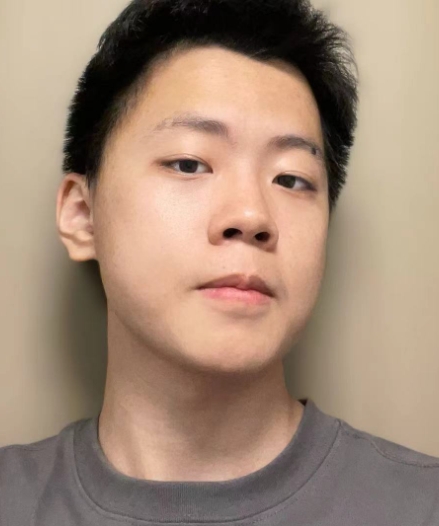 Jian Xie (谢健)合作论文数School of Computer Science, Fudan University;Knowledge Works Lab, Fudan University;The Ohio State University9
 Vardaan Pahuja合作论文数Université de Montréal9
 Xiang Yue (岳翔)合作论文数Language Technologies Institute, School of Computer Science, Carnegie Mellon University;The Ohio State University9
 Song Gao (高松)合作论文数Department of Geography, University of Wisconsin-Madison8
 Yuting Ning合作论文数The Ohio State University8
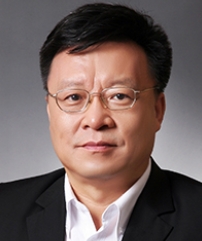 Wen Gao (高文)合作论文数School of Electronics Engineering and Computer Science, Peking University;Pengcheng Laboratory, Peking University;School of Artificial Intelligence, Xidian University8
 Chuck Stewart合作论文数Department of Computer Science, Rensselaer Polytechnic Institute8
 Yiheng Shu (舒意恒)合作论文数The Ohio State University;Google7Izzeddin Gür合作论文数Google Research7
 Runze Wu (吴润泽)合作论文数User Profiling Group, Fuxi AI Lab, NetEase Games7
 Frederic Jurie合作论文数Computer Science Department, University of Caen Normandie7
 William Wang (王威廉)合作论文数Department of Computer Science, University of California, Santa Barbara;ChipAgents7
 Semih Yavuz合作论文数Salesforce7
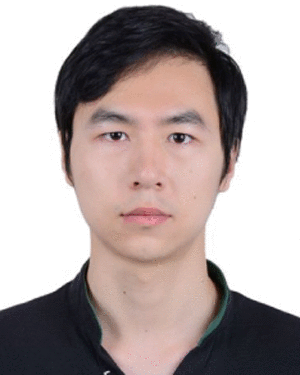 Fei Wang合作论文数School of Computer Science and Technology, University of Science and Technology of China;State Key Laboratory of Cognitive Intelligence, University of Science and Technology of China6Zeyi Liao合作论文数6
 Tianshu Zhang合作论文数Dreese Laboratories, College of Engineering, The Ohio State University6
 Shijie Chen合作论文数Dept. of Computer Science and Engineering, Southern University of Science and Technology6
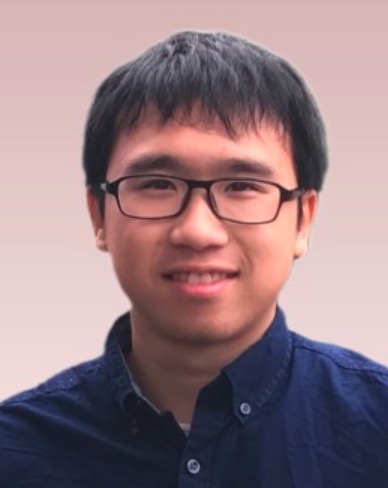 Hanwen Zha合作论文数Llama Team, Meta6
 You Chen合作论文数Department of Biomedical Informatics, Vanderbilt University Medical Center;Optimization of Health ProcEsses and Networks Laboratory6Rui Li合作论文数School of Computer Science and Technology, University of Science and Technology of China;State Key Laboratory of Cognitive Intelligence, University of Science and Technology of China6
 Dawn Song (宋晓东)合作论文数Department of Electrical Engineering and Computer Science, University of California, Berkeley6
 Boshi Wang (汪博石)合作论文数The Ohio State University6
 Hilmar Lapp合作论文数Novartis Research Foundation Genomics Institute6




