We propose a new frontier: Neural Computers (NCs) – an emerging machine form that unifies computation, memory, and I/O in a learned runtime state. Unlike conventional computers, which execute explicit programs, agents, which act over external execution environments, and world models, which learn environment dynamics, NCs aim to make the model itself the running computer. Our long-term goal is the Completely Neural Computer (CNC): the mature, general-purpose realization of this emerging machine form, with stable execution, explicit reprogramming, and durable capability reuse. As an initial step, we study whether early NC primitives can be learned solely from collected I/O traces, without instrumented program state. Concretely, we instantiate NCs as video models that roll out screen frames from instructions, pixels, and user actions (when available) in CLI and GUI settings. These implementations show that learned runtimes can acquire early interface primitives, especially I/O alignment and short-horizon control, while routine reuse, controlled updates, and symbolic stability remain open. We outline a roadmap toward CNCs around these challenges. If overcome, CNCs could establish a new computing paradigm beyond today's agents, world models, and conventional computers.
Scaling inference-time computation has enabled Large Language Models (LLMs) to achieve strong reasoning performance, but their inherently sequential decoding incurs substantial latency, motivating parallelization of the generation process. However, existing parallel reasoning approaches suffer from performance degradation compared to their sequential counterparts, and often rely on specialized inference engines. We introduce ThreadWeaver, a framework for adaptive parallel reasoning that matches the accuracy of comparably sized sequential reasoning models while significantly reducing inference latency via three key innovations: 1) a two-stage parallel trajectory generator that produces high-quality parallel chain-of-thought data for supervised fine-tuning; 2) a trie-based rollout design that enables parallel reasoning on any off-the-shelf autoregressive inference engine; and 3) a parallelization-aware reinforcement learning framework that trains the model to balance reasoning accuracy with effective parallelization. Across six challenging math reasoning benchmarks, ThreadWeaver trained on top of Qwen3-8B achieves performance on par with cutting-edge sequential reasoning models (79.9% on AIME24 and 71.9% on average) while delivering up to 1.53x speedup in token latency, establishing a new Pareto frontier between accuracy and efficiency.
Large Language Models (LLMs) are deployed as autonomous agents in increasingly complex applications, where enabling long horizon memory is critical for achieving strong performance. However, a significant gap exists between practical applications and current evaluation standards for agent memory: existing benchmarks primarily focus on dialogue centric, human agent interactions. In reality, agent memory consists of a continuous stream of agent environment interactions that are primarily composed of machine generated representations. To bridge this gap, we introduce AMA Bench (Agent Memory with Any Length) to evaluate long horizon memory for LLMs in real agentic applications. It features two key components: (1) a set of real world agentic trajectories across representative agentic applications paired with expert curated QA, and (2) a set of synthetic agentic trajectories that scale to arbitrary horizons paired with rule based QA. Our comprehensive study shows that existing memory systems underperform on AMA Bench primarily because they suffer from a loss of causality and objective information, and are constrained by the lossy nature of similarity based retrieval employed by many memory systems. To address these limitations, we propose AMA Agent, an effective memory system featuring a causality graph and tool augmented retrieval. Our results demonstrate that AMA Agent achieves 57.22% average accuracy on AMA Bench, surpassing the strongest memory system baselines by 11.16%.
Large Language Models (LLMs) have shown great potential in reasoning tasks through test-time scaling methods like self-consistency with majority voting. However, this approach often leads to diminishing returns in accuracy and high computational overhead. To address these challenges, we introduce Deep Think with Confidence (DeepConf), a simple yet powerful method that enhances both reasoning efficiency and performance at test time. DeepConf leverages model-internal confidence signals to dynamically filter out low-quality reasoning traces during or after generation. It requires no additional model training or hyperparameter tuning and can be seamlessly integrated into existing serving frameworks. We evaluate DeepConf across a variety of tasks and the latest open-source models, including Qwen3 and GPT-OSS series. Notably, on challenging benchmarks such as AIME 2025, DeepConf@512 achieves up to 99.9\% accuracy and reduces generated tokens by up to 84.7\% compared to full parallel thinking. Anonymous code is available at https://anonymous.4open.science/r/deepconf-anonymous-E4E3
Previous work shows that the chain of continuous thought (continuous CoT) improves the reasoning capability of large language models (LLMs) by enabling implicit parallel thinking, and a subsequent work provided theoretical insight by showing that a two-layer transformer equipped with continuous CoT can efficiently solve directed graph reachability by maintaining a superposition of multiple reasoning traces in the continuous thought. However, it remains unclear how the superposition mechanism is naturally learned from gradient-based training methods. To fill this gap, we theoretically analyze the training dynamics of a simplified two-layer transformer on the directed graph reachability problem to unveil how the superposition mechanism emerges during training in two training stages -- (i) a *thought-generation* stage that autoregressively expands the continuous thought, and (ii) a *prediction* stage that converts the thought into the final answer. Our analysis reveals that during training using continuous thought, the index-matching logit, an important quantity which reflects the strength of the model's local search ability, will first increase and then remain bounded under mild assumptions. The bounded index-matching logit effectively balances exploration and exploitation during the reasoning process: the model will exploit local problem structures to identify plausible search traces, and assign comparable weights to multiple such traces to explore when it is uncertain about which solution is correct, which results in superposition. Our experimental results tracking the growth of logits further validate our theory.
The paradigm shift in large language models (LLMs) from instinctive responses to chain-of-thought (CoT) reasoning has fueled two prevailing assumptions: (1) reasoning capabilities only emerge in sufficiently large models, and (2) such capabilities require training on massive datasets. While the first assumption has already been challenged by recent sub-billion-parameter reasoning models such as Qwen3-0.6B and DeepSeek distilled variants, the second remains largely unquestioned. In this work, we revisit the necessity of scaling to extremely large corpora (>10T tokens) for reasoning emergence. By carefully curating and resampling open-source datasets that we identify as beneficial under our designed metrics, we demonstrate that strong reasoning abilities can emerge with far less data. Specifically, we show that only ~2T tokens of high-quality data are sufficient, and pre-training with 4.2T tokens on the dataset resampled from these ~2T tokens, followed by a established post-training procedure, enables the development of X-LLM-R1, a series of sub-billion-parameter reasoning models that substantially outperform prior models trained on fully open-sourced data. For example, X-LLM-R1-950M achieves an AIME score of 15.5, compared to just 0.6 for OLMo-2-1.48B and 0.3 for SmolLM-2-1.7B. Remarkably, despite being trained on only 11.7% of the tokens compared to Qwen3’s proprietary 36T-token corpus for pretraining, X-LLM-R1-950M matches or surpasses Qwen3-0.6B across multiple reasoning benchmarks. To facilitate further research in this direction, we release the complete training recipe, data sources, data mixing ratio, and model checkpoints, together with the key insights obtained throughout this study.
Fine-grained sparsity promises higher parametric capacity without proportional per-token compute, but often suffers from training instability, load balancing, and communication overhead. We introduce \textbf{STEM} (\emph{Scaling Transformers with Embedding Modules}), a static, token-indexed approach that replaces the FFN up-projection with a layer-local embedding lookup while keeping the gate and down-projection dense. This removes runtime routing, enables CPU offload with asynchronous prefetch, and decouples capacity from both per-token FLOPs and cross-device communication. Empirically, STEM trains stably despite extreme sparsity. It improves downstream performance over dense baselines while reducing per-token FLOPs and parameter accesses (eliminating roughly one-third of FFN parameters). STEM learns embedding spaces with large angular spread which enhances it knowledge storage capacity. In addition, STEM strengthens long-context performance: as sequence length grows, more distinct parameters are activated, yielding practical test-time capacity scaling. Across 350M and 1B model scales, STEM delivers up to $\sim$3--4\% improvements in average downstream performance, with notable gains on knowledge and reasoning-heavy benchmarks (ARC-Challenge, OpenBookQA, GSM8K, MMLU). Overall, STEM is an effective way of scaling parametric memory while remaining simpler to train and deploy than existing fine-grained sparse models.
While the phenomenon of grokking, i.e., delayed generalization, has been studied extensively, it remains an open problem whether there is a mathematical framework that characterizes what kind of features will emerge, how and in which conditions it happens, and is still closely connected with the gradient dynamics of the training, for complex structured inputs. We propose a novel framework, named \ours{}, that captures three key stages for the grokking behavior of 2-layer nonlinear networks: (I) \underline{\textbf{L}}azy learning, (II) \underline{\textbf{i}}ndependent feature learning and (III) \underline{\textbf{i}}nteractive feature learning. At the lazy learning stage, top layer overfits to random hidden representation and the model appears to memorize. During lazy learning, the \emph{backpropagated gradient} $G_F$ from the top layer carries information about the target label, with a specific structure that enables each hidden node to learn their representation \emph{independently}. Interestingly, the independent dynamics follows exactly the \emph{gradient ascent} of an energy function $\mathcal{E}$, and its local maxima are precisely the emerging features. We study whether these local-optima induced features are generalizable, their representation power, and how they change on sample size, in group arithmetic tasks. When hidden nodes start to interact in the later stage of learning, we provably show how $G_F$ changes to focus on missing features that need to be learned. Our study sheds lights on roles played by key hyperparameters such as weight decay, learning rate and sample sizes in grokking, leads to provable scaling laws of feature emergence, memorization and generalization, and reveals the underlying cause why recent optimizers such as Muon can be effective, from the first principles of gradient dynamics. Our analysis can be extended to multi-layer architectures.
Next token prediction has been the standard training objective used in large language model pretraining. Representations are learned as a result of optimizing for token-level perplexity. We propose Continuous Concept Mixing (CoCoMix), a novel pretraining framework that combines discrete next token prediction with continuous concepts. Specifically, CoCoMix predicts continuous concepts learned from a pretrained sparse autoencoder and mixes them into the model's hidden state by interleaving with token hidden representations. Through experiments on multiple benchmarks, including language modeling and downstream reasoning tasks, we show that CoCoMix is more sample efficient and consistently outperforms standard next token prediction, knowledge distillation and inserting pause tokens. We find that combining both concept learning and interleaving in an end-to-end framework is critical to performance gains. Furthermore, CoCoMix enhances interpretability and steerability by allowing direct inspection and modification of the predicted concept, offering a transparent way to guide the model's internal reasoning process.
Masked diffusion large language models (dLLMs) are emerging as promising alternatives to autoregressive LLMs, offering competitive performance while supporting unique generation capabilities such as inpainting. We explore how inpainting can inform RL algorithm design for dLLMs. Aligning LLMs with reinforcement learning faces an exploration challenge: sparse reward signals and sample waste when models fail to discover correct solutions. While this inefficiency affects LLMs broadly, dLLMs offer a distinctive opportunity—their inpainting ability can guide exploration. We introduce IGPO (Inpainting Guided Policy Optimization), an RL framework that strategically inserts partial ground-truth reasoning traces during online sampling. Unlike providing full solutions, inpainting steers exploration toward promising trajectory spaces while preserving self-generated reasoning, bridging supervised fine-tuning and reinforcement learning. We apply IGPO to group-based optimization methods such as GRPO, where exploration failures cause zero advantages and gradients. IGPO restores meaningful gradients while improving sample efficiency. We also propose supervised fine-tuning on synthetically rewritten concise traces that better align with dLLM generation patterns. With additional techniques including entropy-based filtering, our training recipe yields substantial gains across four mathematical benchmarks—GSM8K, Math500, AMC and Minerva—achieving new state-of-the-art results for full-attention masked dLLMs.
Diffusion large language models (dLLMs) are emerging as an efficient alternative to autoregressive models due to their ability to decode multiple tokens in parallel. However, aligning dLLMs with human preferences or task-specific rewards via reinforcement learning (RL) is challenging because their intractable log-likelihood precludes the direct application of standard policy gradient methods. While prior work uses surrogates like the evidence lower bound (ELBO), these one-sided approximations can introduce significant policy gradient bias. To address this, we propose the Sandwiched Policy Gradient (SPG) that leverages both an upper and a lower bound of the true log-likelihood. Experiments show that SPG significantly outperforms baselines based on ELBO or one-step estimation. Specifically, SPG improves the accuracy over state-of-the-art RL methods for dLLMs by 3.6% on GSM8K, 2.6% on MATH500, 18.4% on Countdown, and 27.0% on Sudoku.
Reasoning LLMs-as-Judges, which can benefit from inference-time scaling, provide a promising path for extending the success of reasoning models to non-verifiable domains where the output correctness/quality cannot be directly checked. However, while reasoning judges have shown better performance on static evaluation benchmarks, their effectiveness in actual policy training has not been systematically examined. Therefore, we conduct a rigorous study to investigate the actual impact of non-reasoning and reasoning judges in reinforcement-learning-based LLM alignment. Our controlled synthetic setting, where a "gold-standard" judge (gpt-oss-120b) provides preference annotations to train smaller judges, reveals key differences between non-reasoning and reasoning judges: non-reasoning judges lead to reward hacking easily, while reasoning judges can lead to policies that achieve strong performance when evaluated by the gold-standard judge. Interestingly, we find that the reasoning-judge-trained policies achieve such strong performance by learning to generate highly effective adversarial outputs that can also score well on popular benchmarks such as Arena-Hard by deceiving other LLM-judges. Combined with our further analysis, our study highlights both important findings and room for improvements for applying (reasoning) LLM-judges in non-verifiable LLM post-training.
Large Language Models (LLMs), while demonstrating remarkable capabilities across various applications, present significant challenges during inference due to their substantial model size, especially when deployed on edge devices. Activation sparsity offers a promising solution to reduce computation and memory movement, enabling more efficient inference, particularly for small-batch on-device applications. However, current approaches face limitations with non-ReLU activation function, which are foundational to most advanced LLMs, or require heavy continual training. Additionally, the difficulty in predicting active channels and limited achievable sparsity ratios constrain the effectiveness of activation sparsity-based methods. In this paper, we introduce R-Sparse, a training-free activation sparsity approach capable of achieving high sparsity levels in advanced LLMs. We conducted two preliminary investigations into how different components contribute to the output within a single linear layer and found two key observations: (i) the non-sparse components of the input function can be regarded as a few bias terms, and (ii) The full computation can be effectively approximated by an appropriate combination of input channels and weight singular values. Building on this, we replace the linear layers in LLMs with a rank-aware sparse inference method that leverages the sparsity of input channels and singular value components, eliminating the need for active channel prediction like the output sparsity based approaches. Experiments on Llama-2/3 and Mistral models across ten diverse tasks demonstrate that R-Sparse achieves comparable performance at 50\% model-level sparsity, resulting in a significant 43\% end-to-end efficient improvements with customized kernels.
Large language models (LLMs) have recently demonstrated remarkable success in mathematical reasoning. Despite progress in methods like chain-of-thought prompting and self-consistency sampling, these advances often focus on final correctness without ensuring that the underlying reasoning process is coherent and reliable. This paper introduces Step-KTO, a training framework that combines process-level and outcome-level binary feedback to guide LLMs toward more trustworthy reasoning trajectories. By providing binary evaluations for both the intermediate reasoning steps and the final answer, Step-KTO encourages the model to adhere to logical progressions rather than relying on superficial shortcuts. Our experiments on challenging mathematical benchmarks show that Step-KTO significantly improves both final answer accuracy and the quality of intermediate reasoning steps. For example, on the MATH-500 dataset, Step-KTO achieves a notable improvement in Pass@1 accuracy over strong baselines. These results highlight the promise of integrating stepwise process feedback into LLM training, paving the way toward more interpretable and dependable reasoning capabilities.
The optimal bit-width for achieving the best trade-off between quantized model size and accuracy has been a subject of ongoing debate. While some advocate for 4-bit quantization, others propose that 1.58-bit offers superior results. However, the lack of a cohesive framework for different bits has left such conclusions relatively tenuous. We present ParetoQ, the first unified framework that facilitates rigorous comparisons across 1-bit, 1.58-bit, 2-bit, 3-bit, and 4-bit quantization settings. Our findings reveal a notable learning transition between 2 and 3 bits: For 3-bits and above, the fine-tuned models stay close to their original pre-trained distributions, whereas for learning 2-bit networks or below, the representations change drastically. By optimizing training schemes and refining quantization functions, ParetoQ surpasses all previous methods tailored to specific bit widths. Remarkably, our ParetoQ ternary 600M-parameter model even outperforms the previous SoTA ternary 3B-parameter model in accuracy, using only one-fifth of the parameters. Extensive experimentation shows that ternary, 2-bit, and 3-bit quantization maintains comparable performance in the size-accuracy trade-off and generally exceeds 4-bit and binary quantization. Considering hardware constraints, 2-bit quantization offers promising potential for memory reduction and speedup.
In cognition theory, human thinking is governed by two systems: the fast and intuitive System 1 and the slower but more deliberative System 2. Analogously, Large Language Models (LLMs) can operate in two reasoning modes: outputting only the solutions (\emph{fast mode}) or both the reasoning chain and the final solution (\emph{slow mode}). We present \dualformer, a single Transformer model that seamlessly integrates both the fast and slow reasoning modes by training on randomized reasoning traces, where different parts of the traces are strategically dropped during training. At inference time, \dualformer can be easily configured to execute in either fast or slow mode, or automatically decide which mode to engage (\emph{auto mode}). It outperforms baselines in both performance and computational efficiency across all three modes: \textbf{(1)} in slow mode, \dualformer achieves $97.6\%$ optimal rate on unseen $30 \times 30$ maze tasks, surpassing the \searchformer baseline (93.3\%) trained on data with complete reasoning traces, with $45.5\%$ fewer reasoning steps; \textbf{(2)} in fast mode, \dualformer achieves $80\%$ optimal rate, significantly outperforming the Solution-Only model trained on solution-only data, which has an optimal rate of only 30\%; \textbf{(3)} in auto mode, \dualformer achieves $96.6\%$ optimal rate with $59.9\%$ fewer steps than \searchformer. For math reasoning problems, our techniques have also achieved improved performance with LLM fine-tuning, demonstrating its generalization beyond task-specific models. We open source our code at https://github.com/facebookresearch/dualformer.
Contemporary evaluation techniques are inadequate for agentic systems. These approaches either focus exclusively on final outcomes -- ignoring the step-by-step nature of agentic systems, or require excessive manual labour. To address this, we introduce the Agent-as-a-Judge framework, wherein agentic systems are used to evaluate agentic systems. This is an organic extension of the LLM-as-a-Judge framework, incorporating agentic features that enable intermediate feedback for the entire task-solving process. We apply the Agent-as-a-Judge to the task of code generation. To overcome issues with existing benchmarks and provide a proof-of-concept testbed for Agent-as-a-Judge, we present DevAI, a new benchmark of 55 realistic automated AI development tasks. It includes rich manual annotations, like a total of 365 hierarchical user requirements. We benchmark three of the popular agentic systems using Agent-as-a-Judge and find it dramatically outperforms LLM-as-a-Judge and is as reliable as our human evaluation baseline. Altogether, we believe that Agent-as-a-Judge marks a concrete step forward for modern agentic systems -- by providing rich and reliable reward signals necessary for dynamic and scalable self-improvement.
Post-training quantization (PTQ) techniques applied to weights, activations, and the KV cache greatly reduce memory usage, latency, and power consumption of Large Language Models (LLMs), but may lead to large quantization errors when outliers are present. Rotating activation or weight matrices helps remove outliers and benefits quantization. In this work, we identify a collection of applicable rotation parameterizations that lead to identical outputs in full-precision Transformer architectures while enhancing quantization accuracy. In addition, we find that some random rotations lead to much better quantization than others, with an up to 13 points difference in downstream zero-shot reasoning performance. As a result, we propose SpinQuant, a novel approach that incorporates learned rotation matrices for optimal quantized network accuracy. With 4-bit quantization of weight, activation, and KV-cache, SpinQuant narrows the accuracy gap on zero-shot reasoning tasks with full precision to merely 2.9 points on the LLaMA-2 7B model, surpassing LLM-QAT by 19.1 points and SmoothQuant by 25.0 points. Furthermore, SpinQuant also outperforms concurrent work QuaRot, which applies random rotations to remove outliers. In particular, for LLaMA-3 8B models that are hard to quantize, SpinQuant reduces the gap to full precision by up to 45.1% relative to QuaRot. Code is available at https://github.com/facebookresearch/SpinQuant.
Large language models (LLMs) have advanced rapidly in recent years, driven by scale, abundant high-quality training data, and reinforcement learning. Yet this progress faces a fundamental bottleneck: the need for ever more data from which models can continue to learn. In this work, we propose a reinforcement learning approach that removes this dependency by enabling models to improve without additional data. Our method leverages a game-theoretic framework of self-play, where a model's capabilities are cast as performance in a competitive game and stronger policies emerge by having the model play against itself-a process we call Language Self-Play (LSP). Experiments with Llama-3.2-3B-Instruct on instruction-following, mathematics, and coding benchmarks show that pretrained models can be effectively improved with self-play alone.
Large Language Models (LLMs) have demonstrated remarkable performance in many applications, including challenging reasoning problems via chain-of-thought (CoT) techniques that generate ``thinking tokens'' before answering the questions. While existing theoretical works demonstrate that CoT with discrete tokens boosts the capability of LLMs, recent work on continuous CoT lacks a theoretical understanding of why it outperforms discrete counterparts in various reasoning tasks, such as directed graph reachability, a fundamental graph reasoning problem that includes many practical domain applications as special cases. In this paper, we prove that a two-layer transformer with $D$ steps of continuous CoT can solve the directed graph reachability problem, where $D$ is the diameter of the graph, while the best known result of constant-depth transformers with discrete CoT requires $O(n^2)$ decoding steps where $n$ is the number of vertices ($D<n$). In our construction, each continuous thought vector is a superposition state that encodes multiple search frontiers simultaneously (i.e., parallel breadth-first search (BFS)), while discrete CoT must choose a single path sampled from the superposition state, which leads to a sequential search that requires many more steps and may be trapped in local solutions. We also performed extensive experiments to verify that our theoretical construction aligns well with the empirical solution obtained via training dynamics. Notably, encoding of multiple search frontiers as a superposition state automatically emerges in training continuous CoT, without explicit supervision to guide the model to explore multiple paths simultaneously.
 Beidi Chen合作论文数Department of Electrical and Computer Engineering, College of Engineering, Carnegie Mellon University;FAIR, Meta14
 Jishen Zhao合作论文数Computer Science and Engineering Department, Jacobs School of Engineering, University of California, San Diego13
 Andrew Cohen合作论文数12
 Srinivasa Narasimhan合作论文数Illumination and Imaging Laboratory, The Robotics Institute, Carnegie Mellon University;School of Computer Science, Carnegie Mellon University12
 Xinyun Chen (陈昕昀)合作论文数Meta Superintelligence Labs11
 Qucheng Gong合作论文数Moonshot AI10
 Zechun Liu合作论文数Reality Labs, Meta Inc10
 Tianjun Zhang合作论文数RISE Lab, University of California, Berkeley;University of Michigan9
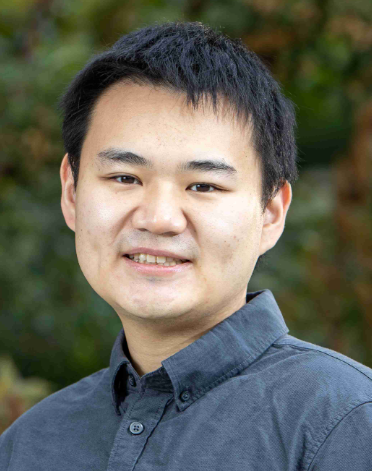 Simon Shaolei Du (杜少雷)合作论文数Paul G. Allen School of Computer Science & Engineering, University of Washington;XAI9Taoan Huang合作论文数8Xiaomeng Yang合作论文数8
 Aaron M. Ferber合作论文数AI for Science Institute, Cornell University8
 Kevin Yang合作论文数UC Berkeley;Meta AI8
 Linnan Wang (王林楠)合作论文数NVIDIA8
 Jiawei Zhao合作论文数Computing and Mathematical Sciences Department, Division of Engineering and Applied Science, California Institute of Technology8
 Hanxian Huang合作论文数Department of Computer Science and Engineering, University of California San Diego;STABLE Lab, University of California San Diego8
 Xinlei Chen (陈鑫磊)合作论文数XAI8
 Bistra Dilkina合作论文数Center for AI in Society, University of Southern California;Thomas Lord Department of Computer Science, Viterbi School of Engineering, University of Southern California8
 Hanlin Zhu (竺涵林)合作论文数Department of Electrical Engineering and Computer Science, University of California, Berkeley7
 Arman Zharmagambetov合作论文数Meta AI7
 Benoit Steiner合作论文数Anthropic;Facebook7
 Changsheng Zhao合作论文数Meta AI7
 Cheng Fu (傅成)合作论文数Google7
 Yi Wu (吴翼)合作论文数7
 Yuxin Wu (吴育昕)合作论文数7
 Vikas Chandra合作论文数Meta Reality Labs7
 Stuart Russell (斯图尔特·罗素)合作论文数Computer Science Division, Department of Electrical Engineering and Computer Sciences, University of California, Berkeley7
 Jiantao Jiao合作论文数Department of Electrical Engineering and Computer Sciences, University of California, Berkeley;Department of Statistics, University of California, Berkeley;NVIDIA7
 Sainbayar Sukhbaatar合作论文数Meta AI7Weiping Dou合作论文数6
 Jiang Zhu合作论文数Google LLC, Mountain View, CA 94043 USA6
 Peizhao Zhang (张培钊)合作论文数Meta Reality Labs, Facebook6
 Zhenyu Allen Zhang合作论文数xAI6
 Rodrigo Fonseca合作论文数Computer Science Department, Brown University;Microsoft Research6
 Jason Weston合作论文数Meta AI6
 Xian Li合作论文数Meta6
 Joseph E. Gonzalez合作论文数Division of Computer Science, Department of Electrical Engineering and Computer Science, University of California, Berkeley6
 Bichen Wu合作论文数6Hugh Leather合作论文数School of Informatics, The University of Edinburgh5
 Zhangyang “Atlas” Wang (汪张扬)合作论文数XTX Markets5
 Xiaoliang Dai合作论文数Facebook5
 Amy Zhang合作论文数Department of Electrical and Computer Engineering, University of Texas at Austin;Facebook5
 Peter Vajda合作论文数Meta SuperIntelligence Lab5
 Kurt Keutzer合作论文数Department of Electrical Engineering and Computer Sciences, University of California, Berkeley;Graduate School, University of California, Berkeley5
 Yangyang Shi合作论文数Meta Reality Labs5
 Larry Zitnick合作论文数Fundamental AI Research Team, Meta AI5
 Raghuraman Krishnamoorthi合作论文数5
 Yunyang Xiong合作论文数Facebook Reality Lab4
 Peter Renner合作论文数4




