老虎是哺乳动物,属于动物世界中现存体形较大的类型.老虎体态健硕、力大无比,冷酷凶猛,是众人皆知、百兽俯首的林中之王.虽然虎静卧打盹之时,毛茸茸的样子憨态可掬,但当虎张牙舞爪穿越于山林时,又莫可匹敌,所向披靡!那么,老虎为什么如此生性"嚣张"?它都历经了怎样的生命演变才成为百兽的主宰?让我们在虎年之际一起走进虎的世界,管窥其中的一番奇趣.
Despite the abundant number of enantiornithine fossils from the Jehol Biota, the cranial anatomy of these birds remains only superficially known. Similarly, data on dental replacement within this clade, and among toothed birds in general, is largely lacking. Here we describe a new and exquisitely preserved specimen of a bohaiornithid enantiornithine from the Lower Cretaceous Jiufotang Formation in Liaoning Province, northeastern China. The new specimen provides novel information on the cranial anatomy of these birds and unprecedented data on their tooth resorption, implantation, and replacement pattern, mostly visualized through computed laminography (CL) images. The new information demonstrates the presence of alternating tooth replacement with symmetrical signaling control, a pattern that is possibly shared by other enantiornithines. We also test the monophyly of Bohaiornithidae, one of the most species-rich groups of Jehol enantiornithines, through the addition of the new specimen. While our phylogenetic results support a monophyletic clade composed of several taxa traditionally included in this group (i.e., Bohaiornis, Sulcavis, Zhouornis, Longusunguis, and Parabohaiornis), it excludes Shenqiornis mengi, a species used to phylogenetically defined Bohaiornithidae. The fact that Shenqiornis is not resolved among the above-mentioned clade raises concerns about the usage of Bohaiornthidae as originally defined (i.e., most recent common ancestor of Shenqiornis mengi and Bohaiornis guoi, and all its descendants).
In studying the skeletal allometry of any vertebrate, it is important to sample the ontogenetic extremes to ensure the accuracy of parameter estimation; this is particularly true for fossil taxa, where sampling of ontogenetic series is incomplete and sporadic. Previous studies have examined allometry in the skull of the duck-billed dinosaur Gryposaurus notabilis, but these did not include individuals smaller than ~65% the maximum known size (based on linear dimensions). Here, we report on the two smallest known examples of this species (a mostly complete skeleton and a partial skull), which are ~37% the known maximal size of G. notabilis. Osteohistology indicates that these represent individuals ~2 years of age. Allometric analysis demonstrates that most aspects of the skull of G. notabilis grew isometrically, although the height of the nasal arch grew with positive allometry. Early in the ontogeny of G. notabilis, the dentary teeth possessed secondary ridges, which were lost later in life. This finding has important bearing on hadrosaurid tooth taxonomy. The limb proportions of G. notabilis largely grew isometrically (or with weak negative allometry, at most), like some other hadrosaurids, suggesting that the species did not undergo a gait shift with increasing age (unless it occurred very early in ontogeny). We argue that the lack of significant locomotory performance compensation exhibited by young hadrosaurids helps to explain why they apparently formed small, mutualistic aggregations, presumably for protection from large predators.
甘氏四川龙是四川盆地重要的兽脚类,其层位为侏罗系沙溪庙组上段.本文甘氏四川龙产自四川广元河西化石点,中等个体,体长5 m,选取了左侧肱骨骨干,制取横切面的化石薄片,在偏光显微镜下观察其骨组织显微结构特征,表现为:①甘氏四川龙的肱骨横截面上,由外到内可依次观察骨外膜骨、纤维板层骨(纤层骨)、骨骼重建区、骨内膜骨和髓腔.②薄片最外侧具有灰黑色絮状结构,可能为骨外膜骨的纤维层,其内不发育脉管,骨外膜骨的内层较薄,脉管和骨陷窝均较少,且排列不规则;纤层骨的厚度较大,其上发育大量的脉管,脉管以线状、丛状为主,有少量圆形和椭圆形;纤层骨被生长停滞线(LAGs)分为若干骨板,每层骨板厚度较大;在三角脊下方的纤层骨外侧区域有一处骨骼重建区,哈佛斯系统密集,最大代数可达3代.③具有三条LAGs(两条在纤层骨,一条在骨骼重建区),均较为浅淡;骨骼重建区厚度较薄,最大哈佛斯系统代数为3;骨内膜骨的胶原纤维整齐而平行,分层,外侧有脉管;髓腔无骨小梁,完全被方解石充填.上述骨组织特征表明:此甘氏四川龙个体的肱骨生长速度快,骨组织对运动和三角脊生长敏感,以骨组织重建来作适应和调整,年龄约为3~5岁,处于第二生长阶段初期.
The osteology and taxonomy of the lambeosaurine Sahaliyania elunchunorum from the upper Yuliangzi Formation (middle Maastrichtian) are reevaluated herein. Based on detailed morphological comparisons among hadrosauroids, we argue that Wulaga lambeosaurine specimens, most of which were previously ascribed to S. elunchunorum, display a combination of features that is typical of Amurosaurus riabinini from the upper Udurchukan Formation (middle Maastrichtian) at the Blagoveschensk locality. This combination includes several anterodorsally-posteroventrally oriented lateral foramina of the maxilla with a very large last one partially obscured by the ventral extremity of the jugal contact, a narrow infratemporal region of the jugal that is ∼70% as wide as the orbit, a relatively low anterior third of the strongly dorsally concave sagittal crest of the parietal, mesiodistally wide maxillary tooth crowns (∼1.2–1.3 teeth per cm), the sternal posterolateral process slightly shorter than the anteromedial plate, and a gently ventrally deflected preacetabular process of the ilium. Considering the osteological similarities and the fact that the Yuliangzi and Udurchukan formations were deposited synchronously in the same basin, S. elunchunorum is regarded here as a junior synonym of A. riabinini. Approximately 70% of the complete Amurosaurus fibulae from the Wulaga bonebed exhibit a total length of more than 85 cm that probably corresponds to the adult stages. Histological sections from these fibulae are moderately remodeled by dense secondary osteons, with poorly developed vascularization of primary osteons along fibrolamellar bone in the outer cortex. The phylogenetic analysis of Lambeosaurinae recovers a sister-taxon relationship between Amurosaurus and Lambeosaurus.
我国的东北地区自古以来物产丰富,动植物多样.这里还是我国古生物学领域聚焦的热点,白垩纪早期"热河生物群"的野外发现和科学研究一直吸引着全球古生物专家驻足和研究.近年来,还出土了众多化石,为我们开启中生代的生命之门提供了无数证据.
Ecology and biomechanics play central roles in the generation of phenotypic diversity. When unrelated taxa invade a similar ecological niche, biomechanical demands can drive convergent morphological transformations. Thus, examining convergence helps to elucidate the key catalysts of phenotypic change. Gliding mammals are often presented as a classic case of convergent evolution because they independently evolved in numerous clades, each possessing patagia ("wing" membranes) that generate lift during gliding. We use phylogenetic comparative methods to test whether the skeletal morphologies of the six clades of extant gliding mammals demonstrate convergence. Our results indicate that glider skeletons are convergent, with glider groups consistently evolving proportionally longer, more gracile limbs than arborealists, likely to increase patagial surface area. Nonetheless, we interpret gliders to represent incomplete convergence because (1) evolutionary model-fitting analyses do not indicate strong selective pressures for glider trait optima, (2) the three marsupial glider groups diverge rather than converge, and (3) the gliding groups remain separated in morphospace (rather than converging on a single morphotype), which is reflected by an unexpectedly high level of morphological disparity. That glider skeletons are morphologically diverse is further demonstrated by fossil gliders from the Mesozoic Era, which possess unique skeletal characteristics that are absent in extant gliders. Glider morphologies may be strongly influenced by factors such as body size and attachment location of patagia on the forelimb, which can vary among clades. Thus, convergence in gliders appears to be driven by a simple lengthening of the limbs, whereas additional skeletal traits reflect nuances of the gliding apparatus that are distinct among different evolutionary lineages. Our unexpected results add to growing evidence that incomplete convergence is prevalent in vertebrate clades, even among classic cases of convergence, and they highlight the importance of examining form-function relationships in light of phylogeny, biomechanics, and the fossil record.
ABSTRACT Tanius is the earliest named ornithischian genus from China. Since 1929, three species of this genus, namely T. sinensis (the type species), “T. chingkankouensis” and “T. laiyangensis”, have been reported based on remains from the Wangshi Group of Shandong, China, and were previously recognized as hadrosaurines. Following the recent achievement of consensus on the phylogenetic placement of T. sinensis outside Hadrosauridae, the assignments of the “T. chingkankouensis” and “T. laiyangensis” material of hadrosaurid origin to the genus Tanius become problematic. Related taxonomic issues of “T. laiyangensis” therefore need re‐appraisals. Here, we provide an overall taxonomic revision of “T. laiyangensis” from the Jingangkou Formation of northeast Shandong, by means of approaches of comparative anatomy, phylogeny and geometric morphometrics. Our osteological comparisons confirm the hadrosaurine affinity of “T. laiyangensis”, given the presence of a suite of characters largely typical of Hadrosaurinae in the single specimen (i.e., a nearly complete sacrum and a partial right ilium), including a dorsoventrally narrow central plate of the ilium with the depth/length ratio <0.80. In the proposed phylogenetic framework, “T. laiyangensis” is inferred to be a member of Kritosaurini within Hadrosaurinae, as the sister taxon to Secernosaurus koerneri. The relative warp analysis on the lateral outline of the supraacetabular process also reveals a close resemblance of shape between the two species. Based on these different lines of evidence and considering no identification of any diagnostic characters from the specimen, we argue that the “T. laiyangensis” material comes from an indeterminate kritosaurin hadrosaurine in Asia. Anat Rec, 303:790–800, 2020. © 2019 Wiley Periodicals, Inc.
We describe two nearly complete enantiornithine skeletons from the Lower Cretaceous Huajiying Formation (ca. 130.7 Ma) of northern Hebei province, China. Many morphological features indicate that these specimens represent a new taxon, here named Orienantius ritteri gen. et sp.. nov. The new fossils preserve their plumage as well as rare information about their soft tissues, including the wing's patagia. Multivariate analyses of their skeleton and flight feathers provide insight into the aerodynamic performance of these early enantiornithines, suggesting that these birds had evolved highly maneuverable, intermittent flap-gliding flight. Additionally, the presence in this new taxon of traits characteristic of younger enantiornithines and the broad phylogenetic spread of the Glade during the Huajiying Formation corroborates previous claims that a significant episode of taxonomic differentiation took place prior to the earliest known phases of this Glade's evolutionary history. (C) 2018 Elsevier Ltd. All rights reserved.
ABSTRACTThe Early Cretaceous (∼131 Million Years Ago) Protopteryx fengningensis is one of the oldest and most primitive enantiornithine birds; however, knowledge of its anatomy has largely been limited to the succinct description of two specimens (holotype and paratype). This study describes two new specimens of P. fengningensis preserving most of the skeleton and plumage, and it therefore adds significantly to understanding the morphology of this important species and the character evolution of enantiornithine birds. The well‐preserved plumage of these specimens also affords a quantitative assessment of the flight performance of P. fengningensis. Our aerodynamic considerations indicate that this early enantiornithine was capable of intermittent flight (bounding or flap‐gliding), thus marking the earliest occurrence of such energy‐saving aerial strategy. Anat Rec, 303:716–731, 2020. © 2019 American Association for Anatomy
A presumably mostly quadrupedal ankylopollexian iguanodontian, Bayannurosaurus perfectus gen. et sp. nov., is reported here, and is represented by an excellently well-preserved skeleton from the Lower Cretaceous Bayingebi Formation of Inner Mongolia, China. The diagnosis of the taxon includes several autapomorphies, notably a dorsally directed, strap-like posterodorsal process of the jugal and a horizontally oriented preacetabular process of the ilium. The nearly complete caudal series retains eight posterior-most caudals with procoelous, trapezoidal centra in dorsal view, and the last three caudals are fully fused. The discovery of B. perfectus opens a critical new window on the early evolution and intercontinental dispersal of Iguanodontia. The skeleton displays a transitional morphology between non-hadrosauriform ankylopollexians and Hadrosauriformes. A phylogenetic analysis indicates that Bayannurosaurus is positioned higher on the tree than Hypselospinus, but below Ouranosaurus just outside of Hadrosauriformes. The tree topology of Iguanodontia with temporal and spatial constraints reveals a possible biogeographic scenario supported by the statistical dispersal-vicariance analysis: around the J/K boundary, non-hadrosauriform ankylopollexians experienced multiple dispersal events from Europe to Asia, accompanying the coeval fall of the global sea level.
最近几十年,在中国东北地区,尤其是冀北、辽西和内蒙古中南部一带的侏罗-白垩纪的沉积地层中,科学家相继发现了多件举世罕见的早期哺乳动物化石.这些重大发现表明,在恐龙家族统治地球的侏罗纪同样生活着种类繁多的原始哺乳动物.它们大小如现生的老鼠,有些长着灵巧的指爪,善于攀援树栖;有些指爪强壮而短粗,可在地面掘土挖洞;还有一类酷似现生的河狸,凭借长长的尾巴在水中畅游.
Abstract A new anurognathid pterosaur, Vesperopterylus lamadongensis gen. et sp. nov., is erected based on a complete skeleton with a skull preserved. It is characterized by two short distinct ridges present on the ventral surface of the cervical vertebrae; coracoids slightly longer than scapula; humerus, wing phalanx 3 and tibia nearly the same in length; grooves clearly present on the posterior surface of the wing phalanges 1–3; and the first toe reversed. It is the first anurognathid pterosaur from China with a definitively short tail, and the first pterosaur with a reversed first toe. The reversed first toe of Vesperopterylus indicates that it had arboreal habitats. The discovery of Vesperopterylus lamadongensis from the Jiufotang Formation strongly expands the geological age range for anurognathid pterosaurs.
We describe an exquisitely preserved new avian fossil (BMNHC-PH-919) from the Lower Cretaceous Yixian Formation of eastern Inner Mongolia, China. Although morphologically similar to Cathayornithidae and other small-sized enantiornithines from China's Jehol Biota, many morphological features indicate that it represents a new species, here named Junornis houi. The new fossil displays most of its plumage including a pair of elongated, rachis-dominated tail feathers similarly present in a variety of other enantiornithines. BMNHC-PH-919 represents the first record of a Jehol enantiornithine from Inner Mongolia, thus extending the known distribution of these birds into the eastern portion of this region. Furthermore, its well-preserved skeleton and wing outline provide insight into the aerodynamic performance of enantiornithines, suggesting that these birds had evolved bounding flight-a flight mode common to passeriforms and other small living birds-as early as 125 million years ago.
The fossil of a gliding mammal from the Tiaojishan Formation of China displays many unique features of its ears, teeth and tooth-replacement pattern, illustrating the great diversity of stem mammals living in the Jurassic period.
The Huajiying Formation contains the earliest deposits of the Jehol Biota, representing the world's second oldest avifauna. This avifauna includes the early confuciusornithid Eoconfuciusornis zhengi, the oldest occurrence of this Glade and one of the earliest divergences of pygostylian birds. Although E. zhengi shows unique traits, the holotype's immature age makes comparisons with the better known Confuciusornis sanctus problematic. As a result, the taxonomic validity of E. zhengi is controversial. We describe a small, osteologically adult confuciusornithid from the same deposits as E. zhengi. The new fossil is most similar to E. zhengi but also shares traits with the stratigraphically younger Confuciusornis. The humerus of the new fossil is straighter and more slender, and bears a less dorsally-developed deltopectoral crest compared with similarly-sized and smaller specimens of Confuciusornis. The morphology of the humerus is intermediate between E. zhengi and Confuciusornis and its proximal portion is pierced by a small deltopectoral foramen, absent in the holotype of E. zhengi. However, this foramen is much smaller than in any other confuciusornithid. Shape analyses (geometric morphometrics) of the humerus of confuciusornithids of different ages and representatives of other basal avians and closely-related non-avian theropods supports our observations and indicate that the humeral differences between the holotype of E. zhengi and the new specimen are not easily explained as ontogenetic variation within a single species. However, the limited number of early confuciursornithids does not allow us to confidently interpret such differences as interspecific. Nonetheless, these analyses support the morphological distinctiveness of the early confuciusornithids from the Huajiying Formation and suggest a stepwise acquisition of the unique humeral morphology of Confuciusornithidae.
Stem mammaliaforms are Mesozoic forerunners to mammals, and they offer critical evidence for the anatomical evolution and ecological diversification during the earliest mammalian history. Two new eleutherodonts from the Late Jurassic period have skin membranes and skeletal features that are adapted for gliding. Characteristics of their digits provide evidence of roosting behaviour, as in dermopterans and bats, and their feet have a calcaneal calcar to support the uropagatium as in bats. The new volant taxa are phylogenetically nested with arboreal eleutherodonts. Together, they show an evolutionary experimentation similar to the iterative evolutions of gliders within arboreal groups of marsupial and placental mammals. However, gliding eleutherodonts possess rigid interclavicle-clavicle structures, convergent to the avian furculum, and they retain shoulder girdle plesiomorphies of mammaliaforms and monotremes. Forelimb mobility required by gliding occurs at the acromion-clavicle and glenohumeral joints, is different from and convergent to the shoulder mobility at the pivotal clavicle-sternal joint in marsupial and placental gliders.
近年来,有一类曾经承载过鲜活生命的宝石新宠进入了人们的眼帘,这就是化石类宝石.其中包括曾与恐龙同时代的硅化木、几千万年前开始形成的煤精、海洋中的珊瑚、化石级别的砗磲,还有一百多万年的猛犸象牙,这些都是大自然的珍宝. 近年来国内外珠宝市场风云变幻,随着全球宝石资源的日益匮乏,珍贵宝石的资源也日近桔竭.但是,有一类新型的宝石逐渐开始风靡,那就是化石类宝石.这些石头昔日因含有有机质曾承载着生命的灵性,这一点与有机宝石非常相似.只不过,今天这些化石类宝石已经完全石化,多数还达到了玉化的程度,所以才跻身于宝玉石行列.
 Qingjin Meng合作论文数13
 Zhiheng Li (李志恒)合作论文数10
 Di Liu (刘翟)合作论文数Wuhan Institute of Virology, Chinese Academy of Sciences;University of Chinese Academy of Sciences9
 Songnian Hu (胡松年)合作论文数University of Chinese Academy of Sciences;Institute of Microbiology, Chinese Academy of Sciences;King Abdullah University of Science and Technology8
 Luis M. Chiappe合作论文数Dinosaur Institute, Natural History Museum of Los Angeles County;Institute of the Environment & Sustainability, University of California, Los Angeles8
 Jun Yu (于军)合作论文数Beijing Institute of Genomics, Chinese Academy of Sciences8
 Hai Xing (邢海)合作论文数State Key Lab Palaeobiol & Stratig, Nanjing Inst Geol & Palaeontol7Xiao-yang TIAN (田晓阳)合作论文数6
 Ibrahim S Al-Mssallem合作论文数King Abdulaziz City for Science and Technology, KACST6Xiaowei Zhang (张晓伟)合作论文数6
 Zhe-Xi Luo合作论文数Department of Organismal Biology and Anatomy, The University of Chicago;Department of Geology, Center of Integrative Science and Education, Field Museum of Natural History5
 Qiang Ji (季强)合作论文数Institute of Geology, Chinese Academy of Geological Sciences;Hebei GEO University5Lin-Lin Pan (潘林林)合作论文数5
 Wanfei Liu (刘万飞)合作论文数Agricultural Genomics Institute at Shenzhen, Chinese Academy of Agricultural Sciences4
 David M Grossnickle合作论文数Committee on Evolutionary Biology, The University of Chicago4
 Lei Wang合作论文数Chinese Academy of Sciences4Gaoyuan Sun合作论文数4
 Xiaolin Wang (汪筱林)合作论文数Institute of Vertebrate Paleontology and Paleoanthropology, Chinese Academy of Sciences;University of Chinese Academy of Sciences;Changchun College of Geology;Yunnan University;University of Science and Technology Beijing4Fusen Li合作论文数3An Yin合作论文数3Xiaoguang Yu合作论文数3FU Li-ya (付丽娅)合作论文数3Yan Li (李岩)合作论文数3
 Qiang Lin (林强)合作论文数Agricultural Genomics Institute at Shenzhen, Chinese Academy of Agricultural Sciences3April I. Neander合作论文数3
 Zhang Tongwu合作论文数Laboratory of Translational Genomics, NCI3
 Shangang Jia (贾善刚)合作论文数College of Grassland Science and Technology, China Agricultural University3Qingguo Liu (刘庆国)合作论文数3Chengqi Xin合作论文数3
 Songmei Hu (胡松梅)合作论文数School of Archaeology, Shandong University;Institute of Cultural Heritage, Shandong University3
 Francisco Serrano合作论文数3
 Zhonghe Zhou (周忠和)合作论文数Institute of Vertebrate Paleontology and Paleoanthropology, Chinese Academy of Sciences;University of Chinese Academy of Sciences3ZHANG Li-fu合作论文数2Duojun Zhao合作论文数2
 Desui Miao合作论文数2Xueping Ji合作论文数2Quan-Zheng Yun合作论文数Beijing Ori Gene Sci & Technol Co Ltd, Beijing 102206, Peoples R China2LIU Di (刘迪)合作论文数2
 Huanming Yang (杨焕明)合作论文数Chinese Academy of Medical Sciences;BGI Group;Advanced Institute for Life and Health, Southeast University2
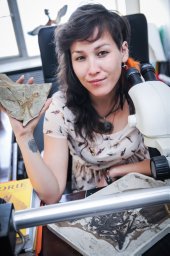 Jingmai O'Connor合作论文数Key Laboratory of Vertebrate Evolution and Human Origins of the Chinese Academy of Sciences, Chinese Academy of Sciences;Key Laboratory of Vertebrate Evolution and Human Origins of the Chinese Academy of Sciences, Chinese Academy of Sciences2
 Ba Abdullah Mohammed M合作论文数Faculty of Medicine, Imperial College2Jixiang Wang合作论文数2Sun Zhang合作论文数2Baopeng Wang (王宝鹏)合作论文数Beijing Museum of Natural History2
 Nina Jablonski合作论文数Department of Anthropology, College of the Liberal Arts, The Pennsylvania State University2
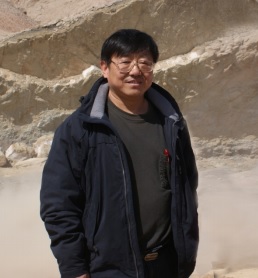 Jianjun Li (李建军)合作论文数北京自然博物馆2
 Dawei Huang (黄大卫)合作论文数College of Life Sciences, Nankai University2
 Jordan C. Mallon合作论文数2




