AIMS:Concern about rising greenhouse gas levels is increasing, and the healthcare sector represents a substantial contributor to global carbon footprints. As a result, the development of more sustainable oncology practices has become an urgent call to action. Since more than half of cancer patients receive radiation therapy (RT), understanding its potential environmental impact is essential. The aim of the present study is to estimate the carbon footprint produced by RT in the context of prostate cancer comparing moderate and extreme hypofractionated treatments. METHODS:Activity data for 100 prostate cancer patients treated with Varian Trilogy linear accelerator system were collected. Half of them underwent moderate hypofractionated RT (26 fractions) and half extreme hypofractionated RT (5 fractions). For each patient, the RT-related carbon footprint was calculated and differences between the two schedules were analyzed. RESULTS:The median carbon footprint for a moderate and an extreme hypofractionated treatment was 972.55 kgCO2e and 402.85 kgCO2e, respectively. The carbon footprint of extreme hypofractionated treatments was statistically lower compared to moderate hypofractionated treatments (p < 0.00001). Assuming that everyone traveled in an average-sized petrol car, the carbon footprint for patient travel represented the primary source of the carbon footprint, accounting for 81.3% and 91.6% of the total carbon footprint. CONCLUSION:These initial findings highlight that the biggest contributor to RT carbon footprint was patient travel. This result suggests how the adoption of extreme hypofractionated treatments may represent a possible way to reduce RT carbon footprint.
BACKGROUND AND PURPOSE:Re-irradiation is increasingly recognized as a viable and safe treatment option for prostate cancer (PCa) local recurrence. The aim of this study is to present the safety profile, feasibility, and efficacy of a third radiation therapy (RT) course with stereotactic image-guided technique for PCa local relapse through a retrospective analysis of a tertiary centre experience. MATERIALS AND METHODS:Inclusion criteria for the third RT course were as follows: (1) histologically confirmed PCa initial diagnosis; (2) history of two prior courses of RT targeting the prostate gland or the prostate bed; (3) no evidence of greater than grade 2 genitourinary (GU) or gastrointestinal (GI) late events from previous treatments; (4) diagnosis of local recurrence at the restaging imaging in hormone sensitive patients performed after second RT biochemical recurrence. Primary endpoint was incidence of adverse events (AEs) and secondary endpoints included biochemical recurrence-free survival (BRFS) and clinical progression-free survival (CPFS). RESULTS:From 2013 to 2024, 18 and five patients received a third RT course to a radiologicaly-detectable intraprostatic or prostate-bed recurrence, respectively. Androgen deprivation therapy (ADT) was not routinely used and only seven patients received concurrent ADT. Five patients had follow-up of less than 12 months. Of the remaining 18 patients, five were considered disease-free at a median follow-up of 48.5 months. Median BRFS following third RT was 22.6 months in patients with intraprostatic recurrence and 27.0 months in patients with prostate bed recurrence, while median CPFS was 30.9 months and 33.8 months, respectively. Three grade 3 acute GU events, two grade 3 late GU events, one grade 4 late GU event, and one grade 3 late GI event were recorded. No grade 5 events were observed. CONCLUSIONS:This unique series shows that a third RT can be proposed to highly selected patients as a salvage therapy in experienced centers with an acceptable safety profile, potentially prolonging relapse-free survival and ADT-free interval. Further studies are necessary to fully evaluate the most suitable patients population, optimal dose prescription, and dosimetric constraints to organs at risk.
BACKGROUND:Metastasis-directed therapy by stereotactic body radiotherapy (SBRT) has been shown to improve clinical outcomes in the oligometastatic prostate cancer setting. We aimed to investigate whether short-course androgen deprivation therapy (ADT) and SBRT at all oligometastatic sites versus SBRT alone improves clinical progression-free survival in men with metachronous oligorecurrent hormone-sensitive prostate cancer. METHODS:The RADIOSA study was a single-centre, randomised, open-label, controlled phase 2 trial done in the European Institute of Oncology, IRCCS, Milan, Italy. Key eligibility criteria were histologically proven initial diagnosis of adenocarcinoma of the prostate, biochemical progression after radical local prostate treatment, nodal relapse in the pelvis, extra-regional nodal relapse, bone metastases at next-generation imaging with a maximum of three lesions, Eastern Cooperative Oncology Group (ECOG) performance status 0-1, and age 18 years or older. Participants were stratified according to prostate-specific membrane antigen doubling time (≤3 vs >3 months), metastases localisation (node vs bone), and diagnostic imaging (positron emission tomography vs MRI) and were randomly assigned (1:1) using a computer-generated random number to SBRT alone or SBRT in combination with 6 months of ADT. For SBRT treatment, a schedule of 30 Gy in three fractions every other day (with the equivalent dose in 2 Gy fractions being 98·6 Gy, considering α/β ratio of 1·5 Gy and biologically effective dose of >100 Gy), or equivalent regimens depending on disease site location, was administered. Patients in the SBRT with ADT group received 6 months of ADT with a luteinising hormone-releasing hormone analogue within 1 week before the start of SBRT. The allocated treatment was not masked. The primary outcome measure was clinical progression-free survival. All analyses followed a modified intention-to-treat principle, consisting of all patients assigned to a treatment group who had available data. The trial is registered at ClinicalTrials.gov, NCT02680587, and is complete. FINDINGS:Between Aug 1, 2019, and April 30, 2023, 218 patients were assessed for eligibility, 113 were excluded, and 105 were enrolled and randomly assigned to an intervention (52 to SBRT only and 53 to SBRT with ADT). Three patients were lost to follow-up and 51 patients in each group were assessed for the primary outcome. The median age at study enrolment was 70 years (IQR 65-75); data on race and ethnicity were not collected. With a median follow-up of 31 months (IQR 16-36) for both groups, the median clinical progression-free survival was 15·1 months (95% CI 12·4-22·8) for the SBRT group versus 32·2 months (22·4-not reached) for the SBRT with ADT group (hazard ratio 0·43 [95% CI 0·26-0·72], p=0·0010]). One gastrointestinal grade 1 adverse event (SBRT group) and one genitourinary grade 3 adverse event (left ureter stenosis, SBRT with ADT group) were reported, with no late toxicities observed. 22 grade 1 ADT-related adverse events were reported, all of which had resolved at the last follow-up. No treatment-related deaths were recorded. INTERPRETATION:To our knowledge, the RADIOSA trial represents the first randomised trial in the metachronous oligometastatic hormone-sensitive prostate cancer setting to report improved clinical progression-free survival with the combination of SBRT and a short course of ADT, although carefully selected patients might still benefit from SBRT alone. By demonstrating improved clinical progression-free survival, the RADIOSA trial reinforces the role of metastasis-directed therapy in delaying systemic treatment escalation. Additionally, it underscores the need for further studies to determine the optimal duration of ADT and identify biomarkers predicting response to SBRT alone. FUNDING:Italian Association of Cancer Research.
The present work reports updated oncological results and patients-reported outcomes at 5 years of phase II trial "Short-term high precision RT for early prostate cancer with SIB to the dominant intraprostatic lesion (DIL) for patients with early-stage PCa”. Data from patients enrolled within AIRC IG-13218 (NCT01913717) trial were analyzed. Clinical and GU/GI toxicity assessment and PSA measurements were performed every 3 months for at least 2 years after RT end. QoL of enrolled patients was assessed by IPSS, EORTC QLQ-C30, EORTC QLQ-PR25, and IIEF-5. Patients’ score changes were calculated at the end of RT and at 1, 12, and 60 months after RT. A total of 65 patients were included. At a median follow-up of 5 years, OS resulted 86
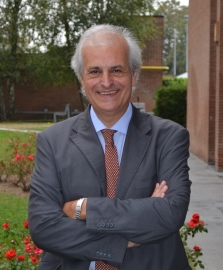 Roberto Orecchia合作论文数Dipartimento di Medical Imaging and Radiation Science, Istituto Europeo di Oncologia di Milano;Scuola di Specializzazione in Radioterapia, Università degli Studi di Milano;Centro Nazionale di Adroterapia Oncologica di Pavia148
 Federica Cattani合作论文数115
 Ottavio de Cobelli合作论文数Global Robotic Institute of Orlando;Urology Division, European Institute of Oncology;University of Milano108
 Cristiana Fodor合作论文数Department of Radiation Oncology, the Istituto Europeo di Oncologia Milan108
 Giulia Marvaso合作论文数Medical Radiation Oncology Unit, Magna Graecia University and Cancer Center97Jereczek-Fossa Barbara Alicja合作论文数95
 Raffaella Cambria合作论文数Department of Medical Physics, European Institute of Oncology76B. Jereczek Fossa合作论文数64
 Giuseppe Petralia合作论文数Divisione di Radiologia, Istituto Europeo di Oncologia45Cristina Garibaldi合作论文数Department of Medical Physics, IEO - Istituto Europeo di Oncologia45
 Delia Ciardo合作论文数Department of Radiation Oncology, European Institute of Oncology43
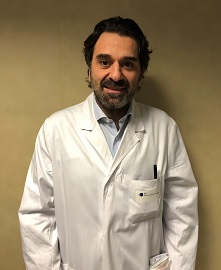 Gennaro Musi合作论文数Department of Urology, European Institute of Oncology41Stefania Comi合作论文数37Sara Gandini合作论文数36Elena Rondi合作论文数35Mattia Zaffaroni合作论文数32
 Stefania Volpe合作论文数Dept Oncol & Hemato Oncol, Univ Milan27
 Stefano Luzzago合作论文数26
 Francesco Alessandro Mistretta合作论文数26Giulia Corrao合作论文数26Maria Giulia Vincini合作论文数Division of Radiation Oncology, European Institute of Oncology IRCCS25A. Vavassori合作论文数24
 Andrea Vavassori合作论文数24
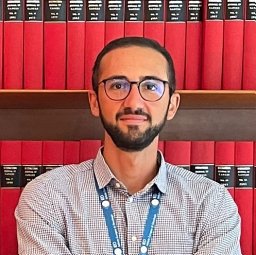 Matteo Pepa合作论文数IRCCS, European Institute of Oncology23Chiara Lorubbio合作论文数21
 Sarah Alessi合作论文数20
 Federico Mastroleo合作论文数Department of Translational Medicine, University of Piemonte Orientale19
 Giovanni Mazzola合作论文数Dipartimento di Medicina Clinica e delle Patologie Emergenti, Azienda Ospedaliera Universitaria Policlinico ″Paolo Giaccone″ di Palermo19Damaris Patricia Rojas合作论文数18G. Musi合作论文数17
 Giulia Riva合作论文数16Federica Gherardi合作论文数15
 Guido Baroni合作论文数Polytechnic University of Milan,Department of Electronics, Information and Bioengineering15
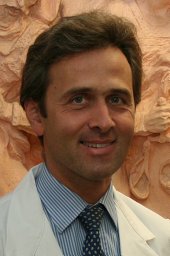 Deliu Victor Matei合作论文数Division of Urology, European Institute of Oncology14
 Paola Pricolo合作论文数14
 Giovanni Battista Ivaldi合作论文数Department of Radiotherapy, European Institute of Oncology14
 Bernardo Rocco合作论文数13D.P. Rojas合作论文数12Luigi Santoro合作论文数12Vischioni Barbara合作论文数12
 Fanetti Giuseppe合作论文数Medical Oncology Department, Alessandro Inno12Flavia Serafini合作论文数12Mario Ciocca合作论文数12Daniela Alterio合作论文数Division of Radiotherapy, European Institute of Oncology12F. Pansini合作论文数11Agnese Cecconi合作论文数11Timon Giorgia合作论文数11S. Vigorito合作论文数11Matteo Augugliaro合作论文数10




