Transformer-based methods for remote sensing image super-resolution (SR) face challenges in reconstructing high-frequency textures due to the interference from large flat regions, such as farmlands and water bodies. To address these limitations, we propose a channel-enhanced multiscale window attention mechanism, which is designed to minimize the impact of flat regions on high-frequency area reconstruction while effectively utilizing the intrinsic multiscale features of remote sensing images. To better capture the multiscale features of remote sensing images, we introduce a series of depthwise separable convolution kernels of varying sizes during the shallow feature extraction stage. Experimental results demonstrate that the proposed method achieves superior peak signal-to-noise ratio (PSNR) and structural similarity (SSIM) scores across multiple remote sensing benchmark datasets and scaling factors, validating its effectiveness.
State-of-the-art (SOTA) compressed video super-resolution (CVSR) models face persistent challenges, including prolonged inference time, complex training pipelines, and reliance on auxiliary information. As video frame rates continue to increase, the diminishing inter-frame differences further expose the limitations of traditional frame-to-frame information exploitation methods, which are inadequate for addressing current video super-resolution (VSR) demands. To overcome these challenges, we propose an efficient and scalable solution inspired by the structural and statistical similarities between hyperspectral images (HSI) and video data. Our approach introduces a compression-driven dimensionality reduction strategy that reduces computational complexity, accelerates inference, and enhances the extraction of temporal information across frames. The proposed modular architecture is designed for seamless integration with existing VSR frameworks, ensuring strong adaptability and transferability across diverse applications. Experimental results demonstrate that our method achieves performance on par with, or surpassing, the current SOTA models, while significantly reducing inference time. By addressing key bottlenecks in CVSR, our work offers a practical and efficient pathway for advancing VSR technology. Our code will be publicly available at https://github.com/handsomewzy/FCA2.
Modeling visual perception in a manner consistent with human subjective evaluation has become a central direction in both video quality assessment (VQA) and broader visual understanding tasks. While free-energy-guided self-repair mechanisms-reflecting human observational experience-have proven effective in image quality assessment, extending them to VQA remains non-trivial. In addition, biologically inspired paradigms such as holistic perception, local analysis, and gaze-driven scanning have achieved notable success in high-level vision tasks, yet their potential within the VQA context remains largely underexplored. To address these issues, we propose EyeSimVQA, a novel VQA framework that incorporates free-energy-based self-repair. It adopts a dual-branch architecture, with an aesthetic branch for global perceptual evaluation and a technical branch for fine-grained structural and semantic analysis. Each branch integrates specialized enhancement modules tailored to distinct visual inputs-resized full-frame images and patch-based fragments-to simulate adaptive repair behaviors. We also explore a principled strategy for incorporating high-level visual features without disrupting the original backbone. In addition, we design a biologically inspired prediction head that models sweeping gaze dynamics to better fuse global and local representations for quality prediction. Experiments on five public VQA benchmarks demonstrate that EyeSimVQA achieves competitive or superior performance compared to state-of-the-art methods, while offering improved interpretability through its biologically grounded design. Our code will be publicly available at https://github.com/handsomewzy/EyeSim-VQA
Existing nighttime unmanned aerial vehicle (UAV) trackers based on prompt learning rely solely on spatial localization supervision, which fails to provide fine-grained cues that point to target features and inevitably produces vague prompts. This limitation impairs the tracker's ability to accurately focus on the object features and results in trackers still performing poorly. To address this issue, we propose DPTrack, a prompt-based UAV tracker designed for nighttime scenarios by encoding the given object's attribute features into the directional kernel enriched with fine-grained cues to generate precise prompts. Specifically, drawing inspiration from visual bionics, DPTrack first hierarchically captures the object's topological structure, leveraging topological attributes to enrich the feature representation. Subsequently, an encoder condenses these topology-aware features into the directional kernel, which serves as the core guidance signal that explicitly encapsulates the object's fine-grained attribute cues. Finally, a kernel-guided prompt module built on channel–category correspondence attributes propagates the kernel across the features of the search region to pinpoint the positions of target features and convert them into precise prompts, integrating spatial gating for robust nighttime tracking. Extensive evaluations on established benchmarks demonstrate DPTrack's superior performance. Our code will be available at https://github.com/zzq-vipsl/DPTrack.
Existing nighttime aerial trackers based on prompt learning rely solely on spatial localization supervision, which fails to provide fine-grained cues that point to target features and inevitably produces vague prompts. This limitation impairs the tracker's ability to accurately focus on the object features and results in trackers still performing poorly. To address this issue, we propose DPTrack, a prompt-based aerial tracker designed for nighttime scenarios by encoding the given object's attribute features into the directional kernel enriched with fine-grained cues to generate precise prompts. Specifically, drawing inspiration from visual bionics, DPTrack first hierarchically captures the object's topological structure, leveraging topological attributes to enrich the feature representation. Subsequently, an encoder condenses these topology-aware features into the directional kernel, which serves as the core guidance signal that explicitly encapsulates the object's fine-grained attribute cues. Finally, a kernel-guided prompt module built on channel-category correspondence attributes propagates the kernel across the features of the search region to pinpoint the positions of target features and convert them into precise prompts, integrating spatial gating for robust nighttime tracking. Extensive evaluations on established benchmarks demonstrate DPTrack's superior performance. Our code will be available at https://github.com/zzq-vipsl/DPTrack.
Existing free-energy guided No-Reference Image Quality Assessment (NR-IQA) methods continue to face challenges in effectively restoring complexly distorted images. The features guiding the main network for quality assessment lack interpretability, and efficiently leveraging high-level feature information remains a significant challenge. As a novel class of state-of-the-art (SOTA) generative model, the diffusion model exhibits the capability to model intricate relationships, enhancing image restoration effectiveness. Moreover, the intermediate variables in the denoising iteration process exhibit clearer and more interpretable meanings for high-level visual information guidance. In view of these, we pioneer the exploration of the diffusion model into the domain of NR-IQA. We design a novel diffusion model for enhancing images with various types of distortions, resulting in higher quality and more interpretable high-level visual information. Our experiments demonstrate that the diffusion model establishes a clear mapping relationship between image reconstruction and image quality scores, which the network learns to guide quality assessment. Finally, to fully leverage high-level visual information, we design two complementary visual branches to collaboratively perform quality evaluation. Extensive experiments are conducted on seven public NR-IQA datasets, and the results demonstrate that the proposed model outperforms SOTA methods for NR-IQA. The codes will be available at https://github.com/handsomewzy/DiffV2IQA.
Existing hyperspectral image (HSI) super-resolution (SR) methods struggle to effectively capture the complex spectral-spatial relationships and low-level details, while diffusion models represent a promising generative model known for their exceptional performance in modeling complex relations and learning high and low-level visual features. The direct application of diffusion models to HSI SR is hampered by challenges such as difficulties in model convergence and protracted inference time. In this work, we introduce a novel Group-Autoencoder (GAE) framework that synergistically combines with the diffusion model to construct a highly effective HSI SR model (DMGASR). Our proposed GAE framework encodes high-dimensional HSI data into low-dimensional latent space where the diffusion model works, thereby alleviating the difficulty of training the diffusion model while maintaining band correlation and considerably reducing inference time. Experimental results on both natural and remote sensing hyperspectral datasets demonstrate that the proposed method is superior to other state-of-the-art methods both visually and metrically.
Remote-sensing images typically feature large dimensions and contain repeated texture patterns. To effectively capture finer details and encode comprehensive information, feature-extraction networks with larger receptive fields are essential for remote-sensing image super-resolution tasks. However, mainstream methods based on stacked Transformer modules suffer from limited receptive fields due to fixed window sizes, impairing long-range dependency capture and fine-grained texture reconstruction. In this paper, we propose a spatial-frequency joint attention network based on multi-window fusion (MWSFA). Specifically, our approach introduces a multi-window fusion strategy, which merges windows with similar textures to allow self-attention mechanisms to capture long-range dependencies effectively, therefore expanding the receptive field of the feature extractor. Additionally, we incorporate a frequency-domain self-attention branch in parallel with the original Transformer architecture. This branch leverages the global characteristics of the frequency domain to further extend the receptive field, enabling more comprehensive self-attention calculations across different frequency bands and better utilization of consistent frequency information. Extensive experiments on both synthetic and real remote-sensing datasets demonstrate that our method achieves superior visual reconstruction effects and higher evaluation metrics compared to other super-resolution methods.
In recent years, significant breakthroughs have been achieved in hyperspectral image (HSI) processing us-ing deep learning techniques, including classification, object detection, and anomaly detection. However, the practical application of deep learning in HSI processing is limited by challenges such as small-sample size and sample imbalance issues. To mitigate these limitations, we propose a novel data augmentation strategy called Feature-Preserving Generative Adversarial Network Data Augmentation (FPGANDA). What sets our data augmentation strategy apart from existing generative model-based approaches is that we preserve the main spectral bands of HSI data using a newly designed band selection method. Addition-ally, our proposed generative model generates synthetic spectral bands, which are combined with the real spectral bands using a mixture strategy to create augmented data. This approach ensures that the aug-mented data retain the main features of the original data while also incorporating diverse features from the generated data. We evaluate our method on three different HSI datasets, comparing it with state-of-the-art techniques. Experimental results demonstrate that our proposed method significantly improves classification performance in most scenes and exhibits remarkable compatibility.& COPY; 2023 Elsevier Ltd. All rights reserved.
With the emergence of blockchain-based multi-party trading scenarios, such as finance, government work, and supply chain management. Information on the blockchain poses a serious threat to users' privacy, and anonymous transactions become the most urgent need. At present, solutions to the realization of anonymous transactions can only achieve a certain degree of trader identity privacy and transaction content privacy, so we introduce zero knowledge proof to achieve complete privacy. At the same time, unconditional privacy provides conditions for cybercrime. Due to the great application potential of the blockchain in many fields, supporting privacy protection and supervision simultaneously in the blockchain is a bottleneck, and existing works can not solve the problem of coexistence of privacy protection and supervision. This paper takes the lead in studying the privacy and supervision in multi-party anonymous transactions, and proposes a distributed anonymous payment scheme with supervision (DAPS) based on zk-SNARK, signature, commitment and elliptic curve cryptography, which enables users to be anonymous under supervision in transactions. The advantages of DAPS are twofold: enhanced privacy and additional supervision. We formally discussed the security of the whole system framework provided by the zero-knowledge proof, and verified its feasibility and practicability in the open source blockchain framework BCOS.
 Wen Lu (路文)合作论文数School of Electronic Engineering, Xidian University6
 Maoguo Gong (公茂果)合作论文数School of Electronic Engineering, Xidian University;Key Laboratory of Collaborative Intelligence Systems, Ministry of Education of China, Xidian University;College of Mathematics Science, Inner Mongolia Normal University6
 Jie Li (李洁)合作论文数School of Electronic Engineering, Xidian University5
 Xinbo Gao (高新波)合作论文数School of Electronic Engineering, Xidian University5
 Lihuo He (何立火)合作论文数Video & Image Processing System Lab, School of Electronic Engineering, Xidian University4
 Mingyang Zhang (张明阳)合作论文数School of Electronic Engineering, Xidian University3
 Dongyang Li合作论文数1
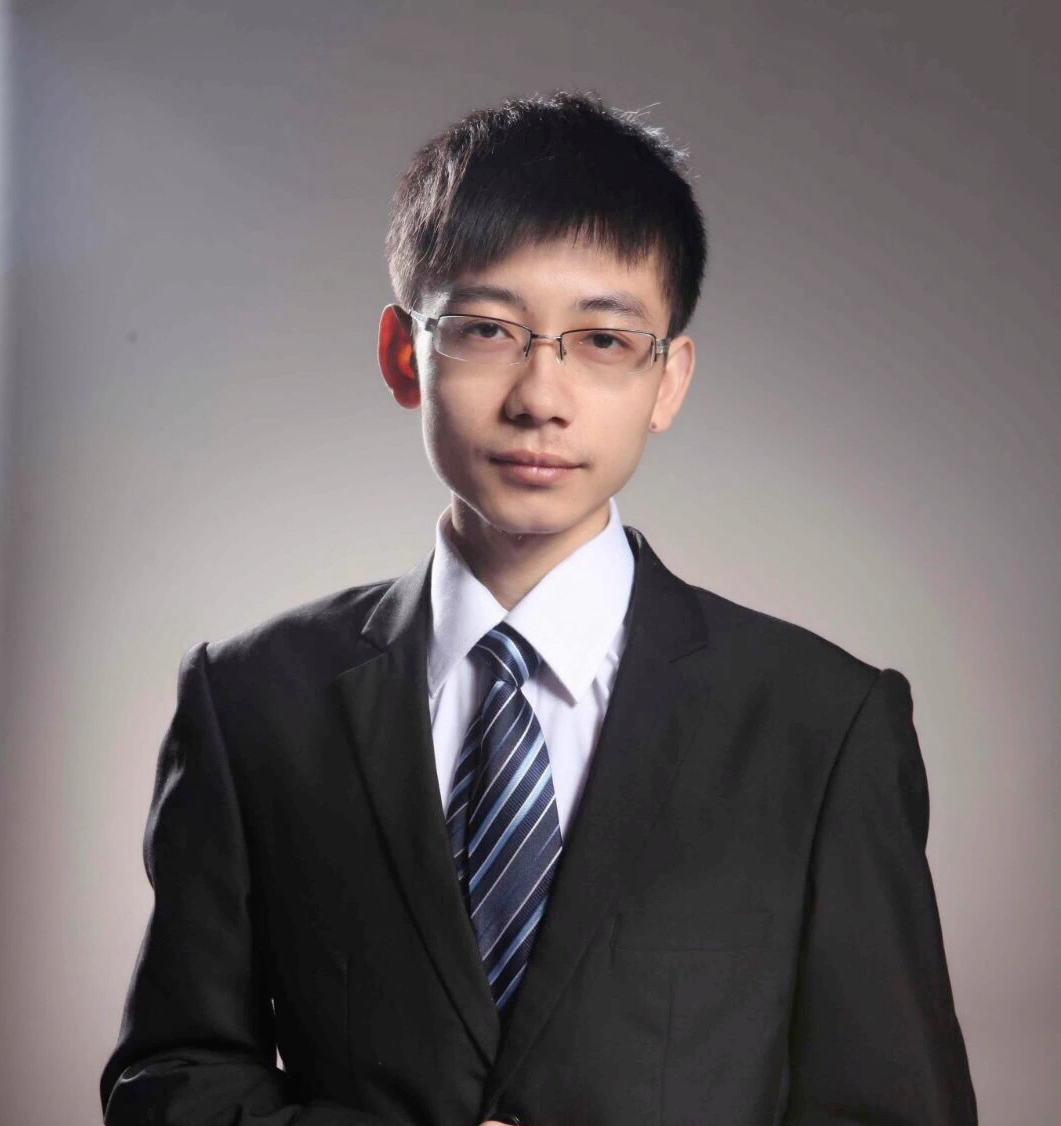 Hao Luo (罗浩)合作论文数Alibaba Damo Academy1
 Hao Li (李豪)合作论文数School of Electronic Engineering, Xidian University1
 Yue Wu (武越)合作论文数Key Laboratory of Collaborative Intelligent Systems of the Ministry of Education, School of Computer Science and Technology, Xidian University1
 Lichuan Ma (马立川)合作论文数School of Cyber Engineering, Xidian University1
 Qingqi Pei (裴庆祺)合作论文数School of Telecommunications Engineering, Xidian University;Guangzhou Institute of Technology, Xidian University1
 Huizhong Li (李辉忠)合作论文数FISCO BCOS1
 Leida Li (李雷达)合作论文数School of Artificial Intelligence, Xidian University1
 Shui Yu合作论文数School of Computer Science, Faculty of Engineering and Information Technology, University of Technology Sydney1




