Training-free anomalous sound detection (ASD) based on pre-trained audio embedding models has recently garnered significant attention, as it enables the detection of anomalous sounds using only normal reference data while offering improved robustness under domain shifts. However, existing embedding-based approaches almost exclusively rely on temporal mean pooling, while alternative pooling strategies have so far only been explored for spectrogram-based representations. Consequently, the role of temporal pooling in training-free ASD with pre-trained embeddings remains insufficiently understood. In this paper, we present a systematic evaluation of temporal pooling strategies across multiple state-of-the-art audio embedding models. We propose relative deviation pooling (RDP), an adaptive pooling method that emphasizes informative temporal deviations, and introduce a hybrid pooling strategy that combines RDP with generalized mean pooling. Experiments on five benchmark datasets demonstrate that the proposed methods consistently outperform mean pooling and achieve state-of-the-art performance for training-free ASD, including results that surpass all previously reported trained systems and ensembles on the DCASE2025 ASD dataset.
With the advent of new sequence models like Mamba and xLSTM, several studies have shown that these models match or outperform the state-of-the-art in single-channel speech enhancement and self-supervised audio representation learning. However, prior research has demonstrated that sequence models like LSTM and Mamba tend to overfit to the training set. To address this issue, previous works have shown that adding self-attention to LSTMs substantially improves generalization performance for single-channel speech enhancement. Nevertheless, neither the concept of hybrid Mamba and time-frequency attention models nor their generalization performance have been explored for speech enhancement. In this paper, we propose a novel hybrid architecture, MambAttention, which combines Mamba and shared time- and frequency-multi-head attention modules for generalizable single-channel speech enhancement. To train our model, we introduce VB-DemandEx, a dataset inspired by VoiceBank+Demand but with more challenging noise types and lower signal-to-noise ratios. Trained on VB-DemandEx, MambAttention significantly outperforms existing state-of-the-art discriminative LSTM-, xLSTM-, Mamba-, and Conformer-based systems of similar complexity across all reported metrics on two out-of-domain datasets: DNS 2020 without reverberation and EARS-WHAM_v2. MambAttention also matches or outperforms generative models such as diffusion models in generalization performance while being competitive with language model baselines. Ablation studies highlight the importance of weight sharing between time- and frequency-multi-head attention modules for generalization performance. Finally, we explore integrating the shared time- and frequency-multi-head attention modules with LSTM and xLSTM, which yields a notable performance improvement on the out-of-domain datasets. However, MambAttention remains superior for cross-corpus generalization across all reported evaluation metrics.
Conventional audio equalization is a static process that requires manual and cumbersome adjustments to adapt to changing listening contexts (e.g., mood, location, or social setting). In this paper, we introduce a Large Language Model (LLM)-based alternative that maps natural language text prompts to equalization settings. This enables a conversational approach to sound system control. By utilizing data collected from a controlled listening experiment, our models exploit in-context learning and parameter-efficient fine-tuning techniques to reliably align with population-preferred equalization settings. Our evaluation methods, which leverage distributional metrics that capture users' varied preferences, show statistically significant improvements in distributional alignment over random sampling and static preset baselines. These results indicate that LLMs could function as "artificial equalizers," contributing to the development of more accessible, context-aware, and expert-level audio tuning methods.
Modern neural networks have greatly improved performance across speech recognition benchmarks. However, gains are often driven by frequent words with limited semantic weight, which can obscure meaningful differences in word error rate, the primary evaluation metric. Errors in rare terms, named entities, and domain-specific vocabulary are more consequential, but remain hidden by aggregate metrics. This highlights the need for finer-grained error analysis, which depends on accurate alignment between reference and model transcripts. However, conventional alignment methods are not designed for such precision. We propose a novel alignment algorithm that couples dynamic programming with beam search scoring. Compared to traditional text alignment methods, our approach provides more accurate alignment of individual errors, enabling reliable error analysis. The algorithm is made available via PyPI.
Traditionally, hearing-aid speech enhancement (SE) algorithms rely on input-based feature estimation, often derived by a voice activity detector (VAD), to configure beamformers. Yet features extracted from noisy microphone signals can become unreliable in challenging acoustic scenes where users most need help. We introduce a novel paradigm in which the settings of a sound processing system are determined by evaluating characteristics of its output. To demonstrate this idea, we employ an output-based system that selects among a set of minimum power distortionless response (MPDR) beamformers. Although MPDR beamformers are typically avoided due to their sensitivity to steering errors, we show that they become effective within an output-based framework. We compare the proposed system to a conventional input-based minimum variance distortionless response (MVDR) baseline. Experimental results show that the proposed system consistently outperforms the MVDR baseline, particularly at low SNRs, in terms of SNR, ESTOI and PESQ.
Anomalous sound detection (ASD) benchmarks typically assume that the identity of the monitored machine is known at test time and that recordings are evaluated in a machine-wise manner. However, in realistic monitoring scenarios with multiple known machines operating concurrently, test recordings may not be reliably attributable to a specific machine, and requiring machine identity imposes deployment constraints such as dedicated sensors per machine. To reveal performance degradations and method-specific differences in robustness that are hidden under standard machine-wise evaluation, we consider a minimal modification of the ASD evaluation protocol in which test recordings from multiple machines are merged and evaluated jointly without access to machine identity at inference time. Training data and evaluation metrics remain unchanged, and machine identity labels are used only for post hoc evaluation. Experiments with representative ASD methods show that relaxing this assumption reveals performance degradations and method-specific differences in robustness that are hidden under standard machine-wise evaluation, and that these degradations are strongly related to implicit machine identification accuracy.
Recent advances in speech enhancement have shown that models combining Mamba and attention mechanisms yield superior cross-corpus generalization performance. At the same time, integrating Mamba in a U-Net structure has yielded state-of-the-art enhancement performance, while reducing both model size and computational complexity. Inspired by these insights, we propose RWSA-MambaUNet, a novel and efficient hybrid model combining Mamba and multi-head attention in a U-Net structure for improved cross-corpus performance. Resolution-wise shared attention (RWSA) refers to layerwise attention-sharing across corresponding time- and frequency resolutions. Our best-performing RWSA-MambaUNet model achieves state-of-the-art generalization performance on two out-of-domain test sets. Notably, our smallest model surpasses all baselines on the out-of-domain DNS 2020 test set in terms of PESQ, SSNR, and ESTOI, and on the out-of-domain EARS-WHAM_v2 test set in terms of SSNR, ESTOI, and SI-SDR, while using less than half the model parameters and a fraction of the FLOPs.
Local density-based score normalization is an effective component of distance-based embedding methods for anomalous sound detection, particularly when data densities vary across conditions or domains. In practice, however, performance depends strongly on neighborhood size. Increasing it can degrade detection accuracy when neighborhood expansion crosses cluster boundaries, violating the locality assumption of local density estimation. This observation motivates adapting the neighborhood size based on locality preservation rather than fixing it in advance. We realize this by proposing cluster exit detection, a lightweight mechanism that identifies distance discontinuities and selects neighborhood sizes accordingly. Experiments across multiple embedding models and datasets show improved robustness to neighborhood-size selection and consistent performance gains.
Anomaly detection aims to identify observations that deviate from expected behavior. Because anomalous events are inherently sparse, most frameworks are trained exclusively on normal data to learn a single reference model of normality. This implicitly assumes that normal behavior can be captured by a single, unconditional reference distribution. In practice, however, anomalies are often context-dependent: A specific observation may be normal under one operating condition, yet anomalous under another. As machine learning systems are deployed in dynamic and heterogeneous environments, these fixed-context assumptions introduce structural ambiguity, i.e., the inability to distinguish contextual variation from genuine abnormality under marginal modeling, leading to unstable performance and unreliable anomaly assessments. While modern sensing systems frequently collect multimodal data capturing complementary aspects of both system behavior and operating conditions, existing methods treat all data streams equally, without distinguishing contextual information from anomaly-relevant signals. As a result, abnormality is often evaluated without explicitly conditioning on operating conditions. We argue that multimodal anomaly detection should be reframed as a cross-modal contextual inference problem, in which modalities play asymmetric roles, separating context from observation, to define abnormality conditionally rather than relative to a single global reference. This perspective has implications for model design, evaluation protocols, and benchmark construction, and outline open research challenges toward robust, context-aware multimodal anomaly detection.
Detecting occurrences of keywords with keyword spotting (KWS) systems requires thresholding continuous detection scores. Selecting appropriate thresholds is a non-trivial task, typically relying on optimizing performance on a validation dataset. However, such greedy threshold selection often leads to suboptimal performance on unseen data, particularly in varying or noisy acoustic environments or few-shot settings. In this work, we investigate detection threshold estimation for template-based open-set few-shot KWS using dynamic time warping on noisy speech data. To mitigate the performance degradation caused by suboptimal thresholds, we propose a score calibration approach that operates at the embedding level by quantizing learned representations and applying quantization error-based normalization prior to DTW-based scoring and thresholding. Experiments on KWS-DailyTalk with simulated high frequency radio channels show that the proposed calibration approach simplifies the selection of robust detection thresholds and significantly improves the resulting performance.
Acoustic feedback is a persistent challenge in audio systems with both microphones and loudspeakers, such as hearing aids. Traditional adaptive feedback cancellation methods, while commonly used, still face limitations, which have recently been tackled with deep learning techniques. In this work, we extend our previously proposed Deep Feedback Cancellation (DFC) model to operate effectively on both speech and music signals. We further explore the benefits of pre-training and finetuning strategies, analyze critical system parameters influencing the convergence speed/steady-state performance trade-off, and conduct a comprehensive evaluation using both objective metrics and subjective listening tests. Additionally, we compare DFC not only against traditional methods but also DeepMFC, a recent DNN-based feedback cancellation system, demonstrating the advantages of our approach in diverse audio scenarios in terms of performance and computational complexity.
Models initialized from self-supervised pretraining may suffer from poor alignment with downstream tasks, reducing the extent to which subsequent fine-tuning can adapt pretrained features toward downstream objectives. To mitigate this, we introduce BiSSL, a novel bilevel training framework that enhances the alignment of self-supervised pretrained models with downstream tasks prior to fine-tuning. BiSSL acts as an intermediate training stage conducted after conventional self-supervised pretraining and is tasked with solving a bilevel optimization problem that incorporates the pretext and downstream training objectives in its lower- and upper-level objectives, respectively. This approach explicitly models the interdependence between the pretraining and fine-tuning stages within the conventional self-supervised learning pipeline, facilitating enhanced information sharing between them that ultimately leads to a model initialization better aligned with the downstream task. We propose a general training algorithm for BiSSL that is compatible with a broad range of pretext and downstream tasks. Using SimCLR and Bootstrap Your Own Latent to pretrain ResNet-50 backbones on the ImageNet dataset, we demonstrate that our proposed framework significantly improves accuracy on the vast majority of 12 downstream image classification datasets, as well as on object detection. Exploratory analyses alongside investigative experiments further provide compelling evidence that BiSSL enhances downstream alignment.
Reasoning about spatial audio with large language models requires a spatial audio encoder as an acoustic front-end to obtain audio embeddings for further processing. Such an encoder needs to capture all information required to detect the type of sound events, as well as the direction and distance of their corresponding sources. Accomplishing this with a single audio encoder is demanding as the information required for each of these tasks is mostly independent of each other. As a result, the performance obtained with a single encoder is often worse than when using task-specific audio encoders. In this work, we present DSpAST, a novel audio encoder based on SpatialAST that learns disentangled representations of spatial audio while having only 0.2% additional parameters. Experiments on SpatialSoundQA with the spatial audio reasoning system BAT demonstrate that DSpAST significantly outperforms SpatialAST.
We systematically investigate neural speech enhancement systems, ranging from very small (∼10 k parameters) to medium-large (∼2-5 M parameters), which specialize to acoustic conditions using contextual information such as speaker identity, noise type, speaker gender, spoken language, and SNR. By fine-tuning generalist models on specific data subsets, we find that specializing to a speaker's identity consistently yields the largest gains in estimated speech intelligibility and quality. In contrast, specializing to SNR, noise type, or gender offers only marginal benefits. Crucially, we show that a small model specialized to both a specific speaker and a specific noise type can match or exceed the performance of a generalist model ten times its size. Further, cross-lingual tests reveal that models specialized to a target language outperform multilingual generalists, suggesting that language is a salient feature for specialization. These findings highlight the potential of small, adaptive models for resource-constrained applications like hearing aids, which specialize on-the-fly to contextual information.
Sentence-level syntactic structure, or syntax, refers to the principles by which grammatically correct sentences are formed. In this paper, we investigate the impact of the absence of syntax on human auditory recognition performance. Specifically, we analyse the word recognition accuracy of human participants listening to short segments of Danish speech-in-noise, with and without syntax. In sufficiently noise-free conditions, information about a spoken word is transmitted to the brain, allowing near-perfect decoding, whereas noise induces information loss. To quantify the information loss, we compute the difference in mutual information between the transmitted and decoded information for speech material with and without syntax, leveraging the data processing inequality applied to a Markov chain representing the communication model comprising the speaker, the noisy channel, and the listener. Our results indicate that the absence of syntax accounts for a loss of up to approximately one-third of the total transmitted information, elucidating the importance of syntax in facilitating effective speech processing.
This paper addresses the near-end listening enhancement (NELE) problem, i.e., how to modify a clean speech signal prior to presentation in noise to improve perceptual aspects, particularly speech intelligibility. We introduce a general optimization problem that generalizes and extends those used in our previous NELE studies. The problem is concave and we derive its closed-form solution. Within this framework, we first revisit our previously proposed OptFractASII method, which redistributes speech energy across frequency to optimize a modified approximation of the Speech Intelligibility Index. We then derive a novel NELE method, TemporalASII, which reallocates energy across time frames to boost weak speech components. We propose to combine these methods into a cascaded system, ftASII, which redistributes speech energy across both time and frequency. Extensive objective speech intelligibility predictions and a subjective listening test show that ftASII outperforms state-of-the-art NELE methods. In particular, ftASII achieves intelligibility improvements from 5.4 dB to 10.0 dB in challenging real-world noise conditions.
Robust Voice Activity Detection (VAD) remains a challenging task, especially under noisy, diverse, and unseen acoustic conditions. Beyond algorithmic development, a key limitation in advancing VAD research is the lack of large-scale, systematically controlled, and publicly available datasets. To address this, we introduce LibriVAD – a scalable open-source dataset derived from LibriSpeech and augmented with diverse real-world and synthetic noise sources. LibriVAD enables systematic control over speech-to-noise ratio, silence-to-speech ratio (SSR), and noise diversity, and is released in three sizes (15 GB, 150 GB, and 1.5 TB) with two variants (LibriVAD-NonConcat and LibriVAD-Concat) to support different experimental setups. We benchmark multiple feature-model combinations, including waveform, Mel-Frequency Cepstral Coefficients (MFCC), and Gammatone filter bank cepstral coefficients, and introduce the Vision Transformer (ViT) architecture for VAD. Our experiments show that ViT with MFCC features consistently outperforms established VAD models such as boosted deep neural network and convolutional long short-term memory deep neural network across seen, unseen, and out-of-distribution (OOD) conditions, including evaluation on the real-world VOiCES dataset. We further analyze the impact of dataset size and SSR on model generalization. Experimental results show that scaling the dataset size from small-scale to medium- or large-scale noticeably and consistently improves VAD performance under OOD conditions, while appropriately balancing SSR enhances OOD performance in the small-scale setting. All datasets, trained models, and code are publicly available to foster reproducibility and accelerate progress in VAD research.
In this paper, we propose several methods that incorporate vocal tract length (VTL) warped features for spoken keyword spotting (KWS). The first method, VTL-independent KWS, involves training a single deep neural network (DNN) that utilizes VTL features with various warping factors. During training, a specific VTL feature is randomly selected per epoch, allowing the exploration of VTL variations. During testing, the VTL features with different warping factors of a test utterance are scored against the DNN and combined with equal weight. In the second method scores the conventional features of a test utterance (without VTL warping) against the DNN. The third method, VTL-concatenation KWS, concatenates VTL warped features to form high-dimensional features for KWS. Evaluations carried out on the English Google Command dataset demonstrate that the proposed methods improve the accuracy of KWS.
This study explores the relationship between auditory attention decoding (AAD), multivariate phase synchrony, and energy (alpha power) in a scenario with competing speech and music, where subjects were asked to attend to a target source in the presence of a distractor. We use an end-to-end deep learning pipeline to extract AAD scores for the target and distracting audio sources and use the circular omega complexity (COC) index, (a recently proposed correlate of listening effort), to extract multivariate phase synchrony from multi-channel electroencephalogram (EEG) signals. The audio sources consist of speech and music combined in four different scenarios for the target and distractor: speech vs. speech, speech vs. music, music vs. speech, and music vs. music. Our results indicate that as the AAD performance decreases, both the COC index and alpha power increase, suggesting increased recruitment of brain regions in conditions characterized by low speech tracking. We use linear mixed models (LMMs) to test the significance of the effect that AAD scores have on COC and alpha power. Our results indicate a significant relationship between target AAD score and COC as well as alpha power, while no significance is seen between distractor AAD score and COC or alpha power.
We present a direct parametrization for continuous-time stochastic state-space models that ensures external stability via the stochastic bounded-real lemma. Our formulation facilitates the construction of probabilistic priors that enforce almost-sure stability, which are suitable for sampling-based Bayesian inference methods. We validate our work with a simulation example and demonstrate its ability to yield stable predictions with uncertainty quantification.
 Jesper Jensen合作论文数Department of Electronic Systems, The Technical Faculty of IT and Design, Aalborg University81
 Børge Lindberg合作论文数Department of Communication Technology;Aalborg University;Department of Communication Technology, Aalborg University41
 Søren Holdt Jensen合作论文数Department of Electronic Systems ,Aalborg University25
 Jan Østergaard合作论文数Aalborg University;Department of Electronic Systems;Department of Electronic Systems, Aalborg University25
 Zhanyu Ma (马占宇)合作论文数PRIS Laboratory, School of Artificial Intelligence, Beijing University of Posts and Telecommunications22
 Achintya Sarkar合作论文数Vellore Institute of Technology18
 Jun Guo (郭军)合作论文数School of Artificial Intelligence, Beijing University of Posts and Telecommunications17
 Guang-Rui Hu合作论文数17Jan Mark de Haan合作论文数14
 Ramjee Prasad合作论文数Department of Electronic System, Aalborg University;Department of Business Development and Technology, Aarhus University14
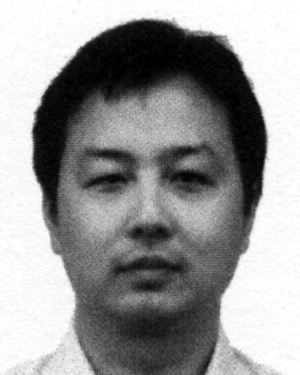 Haitian Xu合作论文数13
 Sven Ewan Shepstone合作论文数Bang & Olufsen A/S;c;Bang & Olufsen A/S13
 Daniel Michelsanti合作论文数Institut for Elektroniske Systemer12Xiaodong Duan合作论文数10
 Morten Kolbæk合作论文数Department of Electronic Systems, Aalborg University10
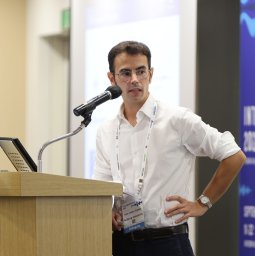 Iván López-Espejo合作论文数10
 Tomi H. Kinnunen合作论文数School of Computing, Faculty of Science, Forestry and Technology, University of Eastern Finland10Xiao-lin REN (任晓林)合作论文数9Nicolai Bæk Thomsen合作论文数9
 John Leth合作论文数9P. Dalsgaard合作论文数Aalborg University9
 Asger Heidemann Andersen合作论文数Oticon A S Smørum8
 Petar Popovski合作论文数Department of Electronic Systems, The Technical Faculty of IT and Design, Aalborg University8
 Mads Græsbøll Christensen合作论文数Department of Electronic Systems, Aalborg University8Paul Dalsgaard合作论文数Aalborg University8
 Michael Syskind Pedersen合作论文数IMM, Technical University of Denmark8
 Deividas Eringis合作论文数Department of Electronic Systems, Aalborg University7
 Rafael Wisniewski合作论文数Department of Electronic Systems, Technical Faculty of IT and Design, Aalborg University7
 Mihaly Petreczky合作论文数Eindhoven University of Technology, The Netherlands Johns Hopkins University7
 Md Sahidullah合作论文数Institute for Advancing Intelligence, TCG CREST;Academy of Scientific and Innovative Research7
 Mojtaba Farmani合作论文数School of Electrical and Computer Engineering, University of Tehran7
 Sarthak Yadav合作论文数Department of Electronic Systems, Aalborg University;Pioneer Center for Artificial Intelligence6
 Morten Højfeldt Rasmussen合作论文数Capturi6
 Dennis Alexander Lehmann Thomsen合作论文数6
 Miklas S Kristoffersen合作论文数Laboratory for Intelligent and Safe Automobiles, University of California San Diego6Hong Yu合作论文数College of Computer Science and Technology, Chongqing University of Posts and Telecommunications6
 Swati Prasad合作论文数High Technology Center, University of Bergen6
 Jinghao Xue合作论文数Department of Statistical Science, University College London6
 Cristian Jesus Vaca Rubio合作论文数5
 Holger Severin Bovbjerg合作论文数5
 Poul Hoang合作论文数Oticon A/S5
 Kevin Wilkinghoff合作论文数Fraunhofer FKIE5
 Elisabeth De Carvalho合作论文数EURECOM Institute5
 Pejman Mowlaee合作论文数Signal Process Speech Commun Lab, Univ of Technol Graz5Mohamed Abou-Zleikha合作论文数Department of Artificial Intelligence, University of Damascus5
 Rahim Saeidi合作论文数Centre for Language and Speech Technology, Radboud University Nijmegen5A. Pnevmatikakis合作论文数Athens Information Technology5
 Dongliang Chang (常东良)合作论文数School of Artificial Intelligence, Beijing University of Posts and Telecommunications4




