Abstract The Proto-Indo-European root of the word ‘language’ is dnghū, which means ‘tongue’. Though the concept of ‘translanguaging’ has received enormous research enthusiasm in recent years in both theoretical conceptualization and pedagogical applications, most research has focused on its prefix ‘trans-ʼ (i.e., the boundary-breaking ideology) and its suffix ‘-ing’ (i.e., the on-going process), while its stem ‘-language-’, that is, the ‘tongue’ itself has received less attention. In the current paper, we aim to explore how translanguaging is enacted in the Macanese food (e.g., Fat Tea, or Chá Gordo in Portuguese) through absorbing and mixing multiple flavors or tongues, including Portuguese, Malaysian, Indian, Japanese, Cantonese and some African cuisines. In particular, we highlight their diversifying fusion tastes by tracing the Portuguese maritime expansion itinerary routes alongside their multilingual naming practices (Bacalhau, Minchi, African Chicken) in tandem with the transcending memories (from the past to the present). Overall, it is argued that through the analytical lens of the translanguaging perspective, the tongues between the tastes of the food and the languages spoken allow us to peer into the critical values, identities and relationships of the multilingual Macanese group in Macao.
Dear Professor MacWhinney, many thanks for accepting our invitation for the interview. Edward and Hassan: Let’s begin with some background. Could you please share with us your journey into the field of psycholinguistics? In other words, what sparked your original interest in this area of research in the first place? For example, were there any specific persons, experiences, or events that influenced your decision to pursue psycholinguistics/psychology, and how has your background in cognitive psychology shaped your approach to studying language acquisition and processing?
In recent years, language portraits (LPs) have emerged as a valuable tool for visually representing multilingual learners' linguistic repertoires. However, previous studies have primarily relied on traditional methods of inviting participants to sketch their language portraits on paper using pens and crayons. In this paper, we propose the use of digital methods to collect and analyze data on language portraits to examine the translingual practices and negotiations of meaning among multilingual individuals. By utilizing Synchronic Computer-Mediated Communication platforms, participants can actively deploy and mobilize multi-linguistic and multi-semiotic resources in lived experiences, engaging in interactive translanguaging practices. In this particular case study, data were collected through a biographic survey and a sketch of the language portraits in digital form, which were then further supported by follow-up interviews. Four participants' LPs and oral narratives during the interviews were then subjected to qualitative multimodal analysis and discourse analysis. The results revealed that these digital language portraits (DLPs) possess significant features such as digital affordance and multimodality. They tap into the translanguaging spaces that emerge from the creative and critical meaning-making process, enabling multilingual individuals to visualize their linguistic repertoires through digital visual strategies. Furthermore, it was discovered that DLPs can foster creative performance and discursive negotiations, thereby enhancing participants' expressive abilities in developing their language perceptions.
Drawing on the emerging literature in translanguaging theory and research, the Element provides a comprehensive analysis of the embedded model of translanguaging-in-interpreting and interpreting-in-translanguaging from theoretical and practical perspectives, buttressed by evidence from an exploratory empirical investigation. To achieve this goal, the authors first trace the emergence and historical development of the key concepts and basic tenets of translanguaging and interpreting separately and then combined. This is followed by reviews of relevant literature, synthesizing how translanguaging theories and research methods can be applied in specific domains of interpreting studies, such as community and public service interpreting. An integrated account of translanguaging and interpreting is proposed and elaborated. The theoretical and methodological implications of this integrative perspective are teased out, with a view to illuminating interpreting theory, pedagogy and instruction.
This current study explores the influence of learners' working memory capacity (WMC) on the facilitation effect of an instructor's presence during video lectures. Sixty-four undergraduates were classified into high and low WMC groups based on their performance in an operation span task. They watched three types of video lectures on unfamiliar topics in a random order: video lectures with an instructor's voiceover but without presence (VN), video lectures with the instructor's face picture (VP), and video lectures with the same instructor talking (VV). We collected their eye movement data during the video lectures and their learning performance in the comprehension tests following each video. Two-way ANOVA and post-hoc analyses showed that the instructor's presence significantly improved comprehension performance in only the low WMC group. They allocated more attention to the instructor's face picture and talking head than the high WMC group. Our results highlight the value of the instructor's presence as a social cue in video lectures, which is particularly beneficial for learners with a low WMC.
Drawing on recent developments from translanguaging theory, we argue in this chapter that translating and interpreting are by default translanguaging practices of meaning-making, during which process multilayered “translanguaging spaces” are being constantly and accumulatively created by dynamic interactional “moments” (Li, 2011) between the translator/interpreter and the external environment within the broader social–cultural contexts. These emerging insights from the key tenets of the translanguaging lens give rise to the construction of a unified theory of translating and interpreting aptitude consisting of a Macro level, Meso level, and Micro level (i.e., the 3M model), each level subsuming multiple interplaying elements interacting dynamically to generate multilayered translanguaging spaces of meaning-making.
Research in intercultural communication studies has demonstrated that social networking (SN) can affect language minority learners' cultural adaptation/identity process. Furthermore, internet usage preferences play an important role in the cultural adaptation of mobility groups. Drawing on these two lines of development, the current paper aims to further examine the role of SN in the home and host cultural adaptation/identity process of Chinese language-minority learners in Portugal. Through collecting and analyzing questionnaires focusing on three cultural identity dimensions, participants' use of SN for academic purposes, and their cultural adaptation and language minority learning, we found that the affordances provided by SN contribute positively to enhancing both the host and the home cultural identity. Furthermore, the academic purpose of language use on SN indicated a positive relationship between the use of SN and cultural identity. The findings shed new light on factors that influence participants' Portuguese language learning during study abroad.
Working memory (WM) refers to our cognitive capacity to temporarily and simultaneously store and process a limited amount of information in our mind to complete ongoing mental tasks. Extending previous studies applying cognitive WM models and perspectives, in this chapter we argue that an alternative approach, namely, affective WM, may be able to shed new light on WM-task-based language teaching (TBLT) explorations. To this end, we propose to incorporate an affective working memory (AWM) perspective on conceptualizing and measuring WM in second language acquisition (SLA) and TBLT research. In line with this proposal, we first elaborate on the affective WM theories and measurement procedures and demonstrate their potential implications for TBLT research. We then move on to discuss the design and construction of some sample AWM tests that can be readily implemented in future TBLT research. Overall, we argue that affect and emotion are essential parts of mental representations held in WM that are likely to influence second language (L2) processing and acquisition in TBLT.
The present study sets out to investigate how multilingual youth perceive and represent their linguistic repertoires. To achieve this goal, we introduced a computer-vision-aided analytical method to deal with the obtained visual data, which comprised digital images of language portraits created by a group of young multilingual speakers. An OpenCV module is used to build and complete the graphic data processing, enabling quantitative evaluations of participants’ colored clusters and linguistic codes that express their language repertoires. In combination with oral narratives provided in their language portraits, the findings demonstrate that Macanese heritage speakers show a higher degree of “scope” than the Chinese mainland sojourners in Macao but a lower degree of “access”. Follow-up interviews further corroborated the self-perceptions of their linguistic resources across different registers. Overall, the computer-vision-aided analysis of language portraits enhances the current understanding of the “scope” and “access” of multilingual repertoires in lived experience.
We are pleased to announce the latest edition of this special issue of LTRQ in honour of Professor Diane Larsen-Freeman to celebrate her landmark achievements and enormous influence in language teaching, language learning, second language development, and teacher education. As the major papers we assembled in this special issue have provided a comprehensive review of Diane’s celebratory career as a language teacher, researcher, book author, journal and book editor, and teacher educator, in this editorial, we will just briefly discuss and summarize the different sections of papers that are targeting the major themes of areas where Diane’s long-lasting influence has been felt.
The Past and the Future of Language Learning and Teaching: An Interview with Diane Larsen-Freeman.
Through the lens of translanguaging theory and the complex, dynamic system theory (CDST) approach, the interpreting process is considered a highly complex and dynamic activity that engages the interpreter's cognition, emotion, and action during successive "translanguaging moments" of meaning-making. Meanwhile, the two dominant types of interpreting, namely, simultaneous interpreting, and consecutive interpreting are assumed to entail distinct time sensitivity and consume different amounts of cognitive resources at different stages. Based on these assumptions, the present study analyzes interpreters' momentary engagement during the distinct workflow tasks associated with these two modes of interpreting, with a view to probing their underlying non-linearity, self-organization and emergence dynamics from a micro-level perspective. Furthermore, we triangulated the textual description with multimodal transcription to portray these "translanguaging moments," which are augmented with a follow-up emotional survey that corroborated our findings.
This book presents comprehensive, thorough and updated analyses of key cognitive individual difference factors (e.g., age, intelligence, language aptitude, working memory, metacognition, learning strategies, and anxiety) as they relate to the acquisition, processing, assessment, and pedagogy of second or foreign languages. Critical reviews and in-depth research syntheses of these pivotal cognitive learner factors are put into historical and broader contexts, drawing upon the multiple authors' extensive research experience, penetrating insights and unique perspectives spanning applied linguistics, teacher training, educational psychology, and cognitive science. The carefully crafted chapters provide essential course readings and valuable references for seasoned researchers and aspiring postgraduate students in the broad fields of instructed second language acquisition, foreign language training, teacher education, language pedagogy, educational psychology, and cognitive development.
This special issue sets out to revisit major bilingual and multilingual education policy and planning issues in key cities across the dynamic Greater Bay Area (GBA) of China (including Guangdong, Hong Kong, and Macau), as informed by the emerging insights from translanguaging theory (Li in Appl Linguist 39(1):9–30, 2018). Specifically, contributions are invited from the GBA and beyond to trace the milestone developments of relevant language policy and planning (LPP) initiatives featuring governmental policies on the language of instruction (e.g., English as Medium of Instruction, Chinese as Medium of Instruction) and the daily use of multiple linguistic resources or repertoires (e.g., language learner's L1 or mother tongue) in foreign/second language classrooms and/or in content-based classroom instruction. As such, major papers in the special issue not only set out to provide historical and analytical reviews of these related LPP issues across Hong Kong, Macau, and Guangdong Province but also reflect upon the language use and behaviors of the residents, showcasing their identity and attitudes and ideological stance toward the multiple languages that are being taught or used in daily life. Toward the end, we outline our research agendas for future endeavors in broader domains in the GBA and beyond through the translanguaging analytical tools. Overall, our position is that the GBA presents itself as an evolving, complex, and superdiverse zone of “Translanguaging Spaces” within which key LPP issues may need to be reconceptualized and implemented in such a way so as to fully reflect the dynamic and fluid multilingual, multicultural, and multisemiotic lived reality of the residents in this megapolis region.
Although emotional or affective working memory (WM) is quite well established in general psychology, not much research has looked into its potential implications for the language sciences and bilingualism and second language acquisition (SLA) research until recently. To fill this gap, this paper aims to propose that WM has not just cognitive implications, but its affective dimension may also make complementary and unique contributions to language and bilingualism/SLA research. Towards this end, we first briefly synthesize the cognitive views of WM conceptions and assessment procedures in the current language sciences and bilingualism/SLA research. Next, we turn to discuss the theoretical models and assumptions of affective WM and explore their theoretical implications for bilingualism/SLA research based on emerging empirical evidence. Then, we propose a conceptual framework integrating cognitive and affective WM perspectives and further provide guidelines for designing affective WM span tasks that can be used in future affective WM–language research, focusing on the construction procedures of several emotion-based affective WM span tasks (e.g., the emotional reading span task, the emotional operation span task, and the emotional symmetry span task) as examples. Overall, we argue that affective feelings are also an integral part of the mental representations held in WM and future research in the language sciences and bilingualism/SLA should incorporate both cognitive and affective WM dimensions.
Note-taking skills are critical to consecutive interpreting. As an important construct of translation competence and an essential skill of interpreting performance, note-taking merits rigorous and systematic investigations as well as reliable and valid assessment instruments and procedures. In the present study, we aim to further validate the note-taking fluency scale developed by Zhou and Dong (2019), focusing on four dimensions, the coordination between listening and note-taking, the timing of taking notes, the systematic nature of notes, and the use of notes. We evaluated the note-taking skills of a group of Master in Translation and Interpreting (MTI) students majoring in Chinese-Portuguese interpretation in Macao. The fluency scale was administered twice, at the beginning and the end of the training program respectively. The results corroborated the development of note-taking proficiency along with note-taking training in three cognitively less demanding dimensions, i.e., the timing of taking notes, the systematic nature of notes and the use of notes, while the more “stagnant/attractor” aspect of the coordination between listening and note-taking remained unchanged after several months' training. We conclude the paper by outlining specific pedagogical implications tailor made for the four dimensions of note-taking skills for future Chinese-Portuguese interpreting training.
The current paper is an interview with Professor Richard Sparks, who has contributed his teaching, research, and consultancy service to academia and the broader community at large for over 40 years. In this paper, the two guest editors of this special issue (Edward and Hassan) had prepared a list of questions and invited Prof Sparks to answer them in written form. Key issues covered in the interview include some general background information, as well as more in-depth discussions of specific academic issues related to the major themes included in the special issue.
According to George Miller (1956), a pioneer of the ‘cognitive revolution’ and proponent of the buzzword concept of the “magical number seven,” cognitive science in the modern sense had only started in the 1950s and gradually took shape in the mid-1970s. Based on Miller’s (2003) historical account, cognitive science as a scientific field of study was originally comprised of six core disciplines, spanning psychology, linguistics, and neuroscience, as well as anthropology, artificial intelligence, and philosophy. Over the last half century, cognitive scientists have probed into the underlying mechanisms and processes of human cognition, encompassing perception, attention, consciousness, reasoning, planning, learning, and memory, among many other topics. The six constituting disciplines have all flourished and complement each other, giving rise to a new set of interdisciplinary research agendas subsuming language acquisition and cognitive development, psycholinguistics and language processing, second language acquisition and bilingualism/multilingualism, etc.
In this introductory chapter, we first provide a brief overview of research paradigms of language aptitude testing and theory construction in the past six decades, summarizing the major achievements and innovations in research methodologies. Following this, we discuss the background and rationale of the current volume, highlighting the key contents of each chapter and evaluating their potential contributions to enhancing our understanding of language aptitude theory and practice. We conclude the introduction by calling upon scholars to work concertedly towards building an integrated language aptitude theory that will allow us to diagnose, predict, and explain the second language learning process and outcomes. Overall, the current volume calls for a paradigm shift of language aptitude research from its previous focus on aptitude testing to theory construction and practical applications.Keywords: Language aptitude, MLAT, Hi-LAB, LLAMA, the Staged Model, aptitude complexes, working memory, the P/E model
 Han Lili合作论文数14
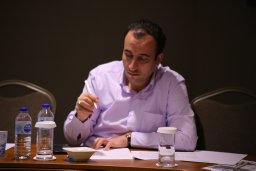 Hassan Mohebbi合作论文数European Knowledge Dev Inst5
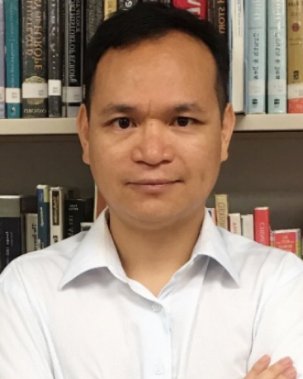 Mark Feng Teng (滕锋)合作论文数Faculty of Languages and Translation, Macao Polytechnic University4
 Sparks Richard合作论文数Department of Special Education, College of Mt. St. Joseph3
 Mohammad Javad Ahmadian合作论文数3Peter Skehan合作论文数Department of Pharmacology and Oncology Research Group, University of Calgary3
 John W. Schwieter合作论文数3
 Siqing Mu合作论文数2
 Jing Yang (杨静)合作论文数School of International Studies, Zhejiang University2
 Adriana Biedron合作论文数2Yuyang Zhang合作论文数1
 Lu Shen合作论文数1
 Alan James Runcieman合作论文数University of Vic1
 Guangwei Hu合作论文数Department of English and Communication, The Hong Kong Polytechnic University1
 Lawrence Zhang (张军)合作论文数School of Education and Social Practice, Faculty of Arts and Education, The University of Auckland1
 Wei Li (李嵬)合作论文数Centre for Applied Linguistics, Institute of Education, University College London1
 Shaofeng Li合作论文数1
 Yong Zeng合作论文数Concordia Institute for Information Systems Engineering, Concordia University1
 Diane Larsen-Freeman合作论文数English Language Institute, University of Michigan;School of Education and Linguistics, University of Michigan1
 Paula Winke合作论文数Department of Linguistics and Languages, Michigan State University1Michael F. Bunting合作论文数Department of Psychological Sciences, University of Missouri1
 Brian MacWhinney合作论文数Department of Psychology, Carnegie Mellon University;Child Language Data Exchange System1
 Mailce Borges Mota合作论文数Universidade Federal de Santa Catarina1
 Arthur Mcneill合作论文数Department of Education and Society, Institute of Science, Innovation and Culture, Rajamangala University of Technology Krungthep1
 Alan Juffs合作论文数English Language Institute, University of Pittsburgh1




