We study sample-efficient reinforcement learning (RL) under the general framework of interactive decision making, which includes the Markov decision process, partially observable Markov decision process, and predictive state representation (PSR) as special cases. We propose a novel complexity measure, the generalized eluder coefficient (GEC), which characterizes the fundamental trade-off between exploration and exploitation in online interactive decision making in the context of function approximation. We show that RL problems with low GECs form a remarkably rich class, which subsumes low Bellman eluder dimension problems, bilinear class, low witness rank problems, Partially observable bilinear (PO-bilinear) class, and generalized regular PSR, where generalized regular PSR, a new tractable PSR class identified by us, includes nearly all known tractable partially observable RL models. Furthermore, in terms of algorithm design, we propose a generic posterior sampling algorithm, which can be implemented in both model-free and model-based fashions, under both fully observable and partially observable settings. We prove that the proposed generic posterior sampling algorithm is sample efficient by establishing a sublinear regret upper bound in terms of the GEC. In summary, we provide a new and unified understanding of both fully observable and partially observable RL.
We study reserve price optimization in multi-phase second price auctions, where seller's prior actions affect the bidders' later valuations through a Markov Decision Process (MDP). Compared to the bandit setting in existing works, the setting in ours involves three challenges. First, from the seller's perspective, we need to efficiently explore the environment in the presence of potentially nontruthful bidders who aim to manipulates seller's policy. Second, we want to minimize the seller's revenue regret when the market noise distribution is unknown. Third, the seller's per-step revenue is unknown, nonlinear, and cannot even be directly observed from the environment. We propose a mechanism addressing all three challenges. To address the first challenge, we use a combination of a new technique named "buffer periods" and inspirations from Reinforcement Learning (RL) with low switching cost to limit bidders' surplus from untruthful bidding, thereby incentivizing approximately truthful bidding. The second one is tackled by a novel algorithm that removes the need for pure exploration when the market noise distribution is unknown. The third challenge is resolved by an extension of LSVI-UCB, where we use the auction's underlying structure to control the uncertainty of the revenue function. The three techniques culminate in the $\underline{\rm C}$ontextual-$\underline{\rm L}$SVI-$\underline{\rm U}$CB-$\underline{\rm B}$uffer (CLUB) algorithm which achieves $\tilde{ \mathcal{O}}(H^{5/2}\sqrt{K})$ revenue regret when the market noise is known and $\tilde{ \mathcal{O}}(H^{3}\sqrt{K})$ revenue regret when the noise is unknown with no assumptions on bidders' truthfulness.
Discrete diffusion models have recently emerged as a compelling alternative for language generation, enabling efficient non-autoregressive sampling while achieving strong empirical performance. A key design choice in discrete diffusion---absent in most continuous diffusion formulations---is the forward corruption kernel, with masked/absorbing corruption now dominating practice. Despite this empirical preference, there is limited statistical theory explaining when and why masking should outperform alternative kernels such as uniform replacement. In this paper, we take a step toward closing this gap from a statistical learning perspective. Our analysis establishes generalization bounds and, through an explicit comparison across different forward corruption kernels, reveals a central advantage of masking: it scales with the effective data support rather than the full ambient state space, thereby mitigating the curse of state space cardinality. We further derive structure-aware refinements that capture how concentration and sparsity in real sequential data sharpen the sample complexities. Together, these results offer a principled explanation for the empirical strength of masked diffusion and provide guidance for forward-kernel design in discrete generative modeling.
Understanding how structured internal structure emerges during neural network training is central to the study of deep learning. We investigate this phenomenon through the group composition task, where a two-layer neural network is trained to predict g_1 ⋆ g_2 for elements of a finite group G. By lifting the projected gradient flow to the Fourier domain, we demonstrate that the training dynamics are governed by a Riemannian gradient ascent on a representation-theoretic energy functional. We prove that, under random initialization, this flow drives each neuron to converge almost surely toward a single irreducible representation, while the cross-layer Fourier coefficients achieve a rotational rank-one alignment. This framework provides a representation-theoretic account of feature learning and characterizes a novel low-rank compression phenomenon for matrix-valued group representations. Moreover, for Abelian groups, we provide a complete population-level description: random initialization promotes uniform diversification across nontrivial representations and induces Haar-uniform phases, jointly approximating the indicator via a majority-vote mechanism. We further prove that both phase alignment and representation competition emerge with exponential convergence rates.
We study the challenge of achieving theoretically grounded feature recovery using Sparse Autoencoders (SAEs) for the interpretation of Large Language Models. Existing SAE training algorithms often lack rigorous mathematical guarantees and suffer from practical limitations such as hyperparameter sensitivity and instability. We rethink this problem from the perspective of neuron activation frequencies, and through controlled experiments, we identify a striking phenomenon we term neuron resonance: neurons reliably learn monosemantic features when their activation frequency matches the feature's occurrence frequency in the data. Building on this finding, we introduce a new SAE training algorithm based on ``bias adaptation'', a technique that adaptively adjusts neural network bias parameters to ensure appropriate activation sparsity. We theoretically prove that this algorithm correctly recovers all monosemantic features when input data is sampled from our proposed statistical model. Furthermore, we develop an improved empirical variant, Group Bias Adaptation (GBA), and demonstrate its superior performance against benchmark methods when applied to LLMs with up to 2 billion parameters. This work represents a foundational step in demystifying SAE training by providing the first SAE algorithm with theoretical recovery guarantees and practical effectiveness for LLM interpretation.
Self-evolution offers a scalable path to stronger reasoning: a pretrained language model improves itself with only minimal external supervision. Yet existing methods either depend on extensively curated or teacher-generated training data, or, when the generator runs unsupervised, reward it by a difficulty heuristic that need not improve the solver. We introduce INFUSER, an iterative co-training framework with two co-evolving roles: a Generator that drafts questions and reference golden answers from a pool of unstructured, automatically collected documents, and a Solver that improves by training on them. The solver is trained with standard correctness rewards against the generator-provided answers, while the generator is rewarded by an optimizer-aware influence score that measures whether each proposed question would actually improve the solver on the target distribution. Because this continuous, noisy influence score is poorly served by standard GRPO, we propose DuGRPO, a dual-normalized variant of GRPO, for generator training. Together, these turn the document pool into an adaptive curriculum that favors questions useful to the current solver, not just hard ones. On Qwen3-8B-Base, INFUSER outperforms strong self-evolution baselines with over 20
Large language models built on autoregressive Transformers excel at next-token prediction, but it is unclear how their internal computations capture the latent hierarchical dependencies that often underlie language. We study this question in a controlled formal-language setting based on probabilistic context-free grammars (PCFGs), where sequences are generated by a latent hierarchical process. Empirically, standard autoregressive Transformers can be trained to accurately match the grammar-induced next-token distribution. Using probing analyses, we find that Transformer hidden states contain information used by classical parsing algorithms. Moreover, this information emerges through a layer-wise progression, revealing a local-to-global mechanism: early layers accumulate local patterns, while later layers aggregate them into a compact summary for next-token prediction. Complementing these empirical findings, we provide an explicit construction of Transformers that can parse binary PCFGs with depth \emph{logarithmic} in the grammar's sequence length. Surprisingly, trained Transformers in this setting exhibit prediction behavior and internal representations that closely mirror our construction. Together, our results offer a mechanistic account of how Transformers integrate hierarchical parsing with autoregressive generation.
Operations Research (OR) provides a rigorous framework for high-stakes decision-making, but effective OR modeling requires substantial domain knowledge, mathematical abstraction, and solver expertise. Recent LLM-based systems automate parts of this pipeline, yet remain limited by low accuracy on complex problems, opaque outputs, and narrow solver support. We propose COOPA (COoperative OPerations Agent), a modular LLM-agent architecture for interpretable and scalable OR decision support. It combines three components: iterative confidence-based modeling, which generates multiple candidate formulations, self-evaluates them across modeling dimensions, and selects one using a max-min confidence criterion; element-level provenance and confidence explanations, which link variables, parameters, constraints, and objectives to quoted source text and provide an audit trail for human verification; and multi-solver routing to specialized optimizer agents for different OR problem classes. Across three OR benchmarks, eight LLM backbones, and four baselines under identical conditions, COOPA achieves the best macro-average accuracy on six of eight backbones and improves over the strongest baseline by up to 6.7 percentage points. A within-system ablation isolates the contribution of iterative confidence-based modeling, while additional analyses and case studies illustrate the value of source traceability and multi-solver dispatch.
Vulnerability localization is a fundamental step in software security, requiring models to reason over large codebases and iteratively identify vulnerable implementations. We present Antares, a family of compact language models (350M, 1B, and 3B parameters) for agentic vulnerability localization. Based on IBM Granite base models, Antares is trained through a two-stage pipeline that combines supervised fine-tuning on cybersecurity reasoning and repository exploration data with reinforcement learning from verifiable rewards over vulnerable repositories. Across extensive evaluations, Antares-3B approaches GPT-5.5 while outperforming open-weight models over 200x larger in size. The Antares family further enables fast, low-cost local inference, completing a full 500-task evaluation sweep in approximately 15 minutes on a single H100 GPU, corresponding to an amortized evaluation time of under 2 seconds and less than $0.002 per task.
Recent benchmarks for VLMs largely assess single- or limited-view perception, leaving untested the core cognitive ability to integrate observations across viewpoints into a coherent, world-centric (allocentric) 3D mental model. We introduce MultiView-Bench, a diagnostic benchmark expressly designed to evaluate multi-view integration for holistic 3D scene comprehension. Unlike existing datasets that focus on pixel-level mapping or camera-relative navigation, MultiView-Bench requires models to decouple object positioning from transient perspectives and ground them in a fixed global coordinate system. This capability serves as a prerequisite for VLMs before being deployed for downstream tasks such as mechanical part assembly. Our systematic evaluation of frontier VLMs reveals consistent failure modes: strong performance on 2D planar relations from a single image, but marked difficulty with 3D spatial relations and with aggregating information across views. We further identify biases in VLMs, such as struggles with unconventional axis directions and sensitivity to object colorways and texture variations. Acknowledging these limitations, we propose ViewNavigator, a multi-agent framework that actively selects informative viewpoints, perceives, and fuses multi-view evidence, improving diverse base models on MultiView-Bench even under a strict budget-matched comparison (and by 3-5x for the full agent).
The Muon optimizer is consistently faster than Adam in training Large Language Models (LLMs), yet the mechanism underlying its success remains unclear. This paper demystifies this mechanism through the lens of associative memory. By ablating the transformer components optimized by Muon, we reveal that the associative memory parameters of LLMs, namely the Value and Output (VO) attention weights and Feed-Forward Networks (FFNs), are the primary contributors to Muon’s superiority. Motivated by this associative memory view, we then explain Muon’s superiority on real-world corpora, which are intrinsically heavy-tailed: a few 'head' classes are extremely frequent, while a vast number of 'tail' classes are individually rare. The superiority is explained through two key properties: (i) its update rule consistently yields a more isotropic singular spectrum than Adam; and as a result, (ii) on heavy-tailed data, it optimizes tail classes more effectively than Adam. Beyond empirical evidence, we theoretically confirm these findings by analyzing a one-layer associative memory model under class-imbalanced data. We prove that Muon consistently achieves balanced learning across classes regardless of feature embeddings, whereas Adam can induce large disparities in learning errors depending on embedding properties. In summary, our empirical observations and theoretical analyses reveal Muon’s core advantage: its update rule aligns with the outer-product structure of linear associative memories, enabling more balanced and effective learning of tail classes in heavy-tailed distributions than Adam.
We present Foundation-Sec-8B-Reasoning, the first open-source native reasoning model for cybersecurity. Built upon our previously released Foundation-Sec-8B base model (derived from Llama-3.1-8B-Base), the model is trained through a two-stage process combining supervised fine-tuning (SFT) and reinforcement learning from verifiable rewards (RLVR). Our training leverages proprietary reasoning data spanning cybersecurity analysis, instruction-following, and mathematical reasoning. Evaluation across 10 cybersecurity benchmarks and 10 general-purpose benchmarks demonstrates performance competitive with significantly larger models on cybersecurity tasks while maintaining strong general capabilities. The model shows effective generalization on multi-hop reasoning tasks and strong safety performance when deployed with appropriate system prompts and guardrails. This work demonstrates that domain-specialized reasoning models can achieve strong performance on specialized tasks while maintaining broad general capabilities. We release the model publicly at https://huggingface.co/fdtn-ai/Foundation-Sec-8B-Reasoning.
AI agents are increasingly being developed to accelerate scientific discovery, yet their practical capabilities in real research settings remain poorly understood. Existing benchmarks for AI agents rarely capture the complexity, heterogeneity, and extended reasoning required by scientific work, whereas benchmarks for scientific tasks often reduce research to static, direct problems and provide limited support for interactive evaluation. Here, we introduce SciAgentArena, a systematic benchmark for evaluating AI agents in real-world scientific research scenarios drawn from emerging needs across multiple domains. SciAgentArena comprises approximately 200 tasks with stepwise verification and an interactive, agent-agnostic environment for assessing diverse AI agents. Using this benchmark, we find that current agents can contribute effectively to well-specified data-analysis workflows, particularly when the task structure and evaluation criteria are clear. However, their performance remains uneven across scientific contexts: agents struggle to generate genuinely novel insights, sustain self-directed exploration, and formulate robust solutions for open-ended research questions. We further characterize common failure modes across agents and identify opportunities for improving their reliability, autonomy, and scientific reasoning. Together, SciAgentArena provides a practical framework for measuring progress in AI agents for science and for guiding the design of future agents capable of addressing complex scientific challenges. Full codes, tasks, and datasets can be accessed via this link: https://sciagentarena.github.io/.
Transformers have demonstrated remarkable in-context learning abilities, adapting to new tasks from just a few examples without parameter updates. However, theoretical understanding of this phenomenon typically assumes fixed dependency structures, while real-world sequences exhibit flexible, context-dependent relationships. We address this gap by investigating whether transformers can learn causal structures -- the underlying dependencies between sequence elements -- directly from in-context examples. We propose a novel framework using Markov chains with randomly sampled causal dependencies, where transformers must infer which tokens depend on which predecessors to make accurate predictions. Our key contributions are threefold: (1) We prove that a two-layer transformer with relative position embeddings can implement Bayesian Model Averaging (BMA), the optimal statistical algorithm for causal structure inference; (2) Through extensive experiments and parameter-level analysis, we demonstrate that transformers trained on this task learn to approximate BMA, with attention patterns directly reflecting the inferred causal structures; (3) We provide information-theoretic guarantees showing how transformers recover causal dependencies and extend our analysis to continuous dynamical systems, revealing fundamental differences in representational requirements. Our findings bridge the gap between empirical observations of in-context learning and theoretical understanding, showing that transformers can perform sophisticated statistical inference over structural uncertainty.
Bilateral bargaining under incomplete information provides a controlled testbed for evaluating large language model (LLM) agent capabilities. Bilateral trade demands individual rationality, strategic surplus maximization, and cooperation to realize gains from trade. We develop a structured bargaining environment where LLMs negotiate via tool calls within an event-driven simulator, separating binding offers from natural-language messages to enable automated evaluation. The environment serves two purposes: as a benchmark for frontier models and as a training environment for open-weight models via reinforcement learning. In benchmark experiments, a round-robin tournament among five frontier models (15,000 negotiations) reveals that effective strategies implement price discrimination through sequential offers. Aggressive anchoring, calibrated concession, and temporal patience correlate with the highest surplus share and deal rate. Accommodating strategies that concede quickly disable price discrimination in the buyer role, yielding the lowest surplus capture and deal completion. Stronger models scale their behavior proportionally to item value, maintaining performance across price tiers; weaker models perform well only when wide zones of possible agreement offset suboptimal strategies. In training experiments, we fine-tune Qwen3 (8B, 14B) via supervised fine-tuning (SFT) followed by Group Relative Policy Optimization (GRPO) against a fixed frontier opponent. These stages optimize competing objectives: SFT approximately doubles surplus share but reduces deal rates, while RL recovers deal rates but erodes surplus gains, reflecting the reward structure. SFT also compresses surplus variation across price tiers, which generalizes to unseen opponents, suggesting that behavioral cloning instills proportional strategies rather than memorized price points.
While deep reinforcement learning has achieved tremendous successes in various applications, most existing works only focus on maximizing the expected value of total return and thus ignore its inherent stochasticity. Such stochasticity is also known as the aleatoric uncertainty and is closely related to the notion of risk. In this work, we make the first attempt to study risk-sensitive deep reinforcement learning under the average reward setting with the variance risk criteria. In particular, we focus on a variance-constrained policy optimization problem where the goal is to find a policy that maximizes the expected value of the long-run average reward, subject to a constraint that the long-run variance of the average reward is upper bounded by a threshold. Utilizing Lagrangian and Fenchel dualities, we transform the original problem into an unconstrained saddle-point policy optimization problem, and propose an actor-critic algorithm that iteratively and efficiently updates the policy, the Lagrange multiplier, and the Fenchel dual variable. When both the value and policy functions are represented by multi-layer overparameterized neural networks, we prove that our actor-critic algorithm generates a sequence of policies that finds a globally optimal policy at a sublinear rate. Further, We provide numerical studies of the proposed method using two real datasets to back up the theoretical results.
In-context reinforcement learning (ICRL) leverages the in-context learning capabilities of transformer models (TMs) to efficiently generalize to unseen sequential decision-making tasks without parameter updates. However, existing ICRL methods rely on explicit reward signals during pretraining, which limits their applicability when rewards are ambiguous, hard to specify, or costly to obtain. To overcome this limitation, we propose a new learning paradigm, In-Context Preference-based Reinforcement Learning (ICPRL), in which both pretraining and deployment rely solely on preference feedback, eliminating the need for reward supervision. We study two variants that differ in the granularity of feedback: Immediate Preference-based RL (I-PRL) with per-step preferences, and Trajectory Preference-based RL (T-PRL) with trajectory-level comparisons. We first show that supervised pretraining, a standard approach in ICRL, remains effective under preference-only context datasets, demonstrating the feasibility of in-context reinforcement learning using only preference signals. To further improve data efficiency, we introduce alternative preference-native frameworks for I-PRL and T-PRL that directly optimize TM policies from preference data without requiring reward signals nor optimal action labels.Experiments on dueling bandits, navigation, and continuous control tasks demonstrate that ICPRL enables strong in-context generalization to unseen tasks, achieving performance comparable to ICRL methods trained with full reward supervision.
Large Language Models (LLMs) have revolutionized AI services, but a critical tension emerges: while personalization improves model performance, it consumes scarce computational resources that users must share. When should a user invest in expensive Supervised Fine-Tuning (SFT) versus lightweight In-Context Learning (ICL)? How does congestion from other users' personalization choices reshape these incentives? And what strategies should platforms adopt when offering multiple personalization algorithms? We develop a tractable framework for LLM serving that captures the statistical-economic trade-offs users face. Our analysis yields several surprising insights. First, we show that ICL and SFT dominate in different regimes, determined by an interplay between pretraining coverage and data signal-to-noise ratios, but congestion can flip these rankings. Second, equilibrium resource consumption exhibits pronounced non-monotonicity: improving pretraining precision reduces the congestion, while broader pretraining coverage and harder tasks sometimes increase it. Third, we prove that offering both personalization methods never hurts the platform's maximal profits, despite potentially increasing computational load. Experiments with GPT-2 on linear regression tasks validate our theoretical predictions about algorithm performance. Complementing these results, our review of documentation from 21 major AI platforms shows that the share offering both SFT and ICL increased from 9.5
We present a comprehensive analysis of how two-layer neural networks learn features to solve the modular addition task. Our work provides a full mechanistic interpretation of the learned model and a theoretical explanation of its training dynamics. While prior work has identified that individual neurons learn single-frequency Fourier features and phase alignment, it does not fully explain how these features combine into a global solution. We bridge this gap by formalizing a diversification condition that emerges during training when overparametrized, consisting of two parts: phase symmetry and frequency diversification. We prove that these properties allow the network to collectively approximate a flawed indicator function on the correct logic for the modular addition task. While individual neurons produce noisy signals, the phase symmetry enables a majority-voting scheme that cancels out noise, allowing the network to robustly identify the correct sum. Furthermore, we explain the emergence of these features under random initialization via a lottery ticket mechanism. Our gradient flow analysis proves that frequencies compete within each neuron, with the "winner" determined by its initial spectral magnitude and phase alignment. From a technical standpoint, we provide a rigorous characterization of the layer-wise phase coupling dynamics and formalize the competitive landscape using the ODE comparison lemma. Finally, we use these insights to demystify grokking, characterizing it as a three-stage process involving memorization followed by two generalization phases, driven by the competition between loss minimization and weight decay.
Muon improves training efficiency over Adam in large language-model training by about two times, but the local geometric source of this advantage remains unclear. Our work takes a first step toward demystifying Muon's superiority over Adam from a curvature perspective. First, we apply a second-order Taylor approximation to the training landscape and show that Muon achieves a larger one-step loss decrease than Adam at matched validation loss. The two optimizers have comparable first-order gains, but Muon consistently incurs a smaller second-order curvature penalty. Second, we decompose this curvature penalty into the squared update norm and Normalized Directional Sharpness (NDS). We find that Muon and Adam have comparable update norms, so Muon's smaller curvature penalty is driven by lower NDS, not update scale. Third, we study how training data and model structure shape Muon's NDS advantage. Using Zipf-Probabilistic Context-Free Grammar (PCFG) data with controlled imbalance, we show that data imbalance amplifies Muon's NDS advantage over Adam. A within-/cross-layer decomposition further shows that, in the middle and late stages of training, Muon's lower NDS is mainly sustained by smaller within-layer curvature. Beyond empirical evidence, we analyze stylized quadratic problems with heterogeneous curvature and gradient alignment toward high-curvature modes. We prove that Muon attains a smaller average NDS than GD by balancing update energy across curvature groups; when curvature heterogeneity is sufficiently strong, this also yields lower local quadratic loss after the same number of steps.
 Zhaoran Wang合作论文数Departments of Industrial Engineering & Management Sciences, Northwestern University;Departments of Computer Science, Northwestern University156
 Siyu Chen (陈思宇)合作论文数Department of Statistics & Data Science, Faculty of Arts and Sciences, Yale University21
 Kaiqing Zhang合作论文数Department of Electrical and Computer Engineering, A. James Clark School of Engineering, University of Maryland, College Park;Institute for Systems Research, University of Maryland, College Park18
 Qi Cai合作论文数AXQ Capital16
 Fengzhuo Zhang (张丰卓)合作论文数National University of Singapore15
 Zuyue Fu合作论文数Meta13
 Yufeng Zhang (张羽丰)合作论文数Northwestern University13
 Shuang Qiu合作论文数Department of Computer Science, City University of Hong Kong;Department of Systems Engineering, College of Engineering, City University of Hong Kong13
 Tong Zhang (张潼)合作论文数Siebel School of Computing and Data Science, The Grainger College of Engineering, University of Illinois Urbana-Champaign13
 Michael I. Jordan (迈克尔·乔丹)合作论文数Department of Electrical Engineering and Computer Sciences, University of California, Berkeley;Department of Statistics, University of California, Berkeley;Department of Industrial Engineering and Operations Research, University of California, Berkeley13
 Tamer Başar合作论文数Center for Advanced Study, Department of Electrical and Computer Engineering, The Grainger College of Engineering Electrical & Computer Engineering, University of Illinois Urbana-Champaign;Coordinated Science Laboratory, University of Illinois Urbana-Champaign;Information Trust Institute, University of Illinois Urbana-Champaign13
 Han Liu合作论文数Department of Computer Science, McCormick School of Engineering, Northwestern University;Department of Statistics, Northwestern University12
 Lingxiao Wang合作论文数Meta12
 Han Zhong (钟涵)合作论文数Center for Data Science, Peking University12
 Mingyi Hong合作论文数Department of Electrical and Computer Engineering, University of Minnesota12
 Mengdi Wang (王梦迪)合作论文数Department of Electrical and Computer Engineering, Princeton University;Center for Statistics and Machine Learning, Princeton University9
 Xiaohan Wei合作论文数Facebook9
 Tianhao Wang合作论文数Department of Statistics and Data Science, Yale University9
 Hoi-To Wai (韋凱滔)合作论文数Department of Systems Engineering and Engineering Management, The Faculty of Engineering, The Chinese University of Hong Kong9
 Chenjia Bai (白辰甲)合作论文数Institute of Artificial Intelligence, China Telecom8
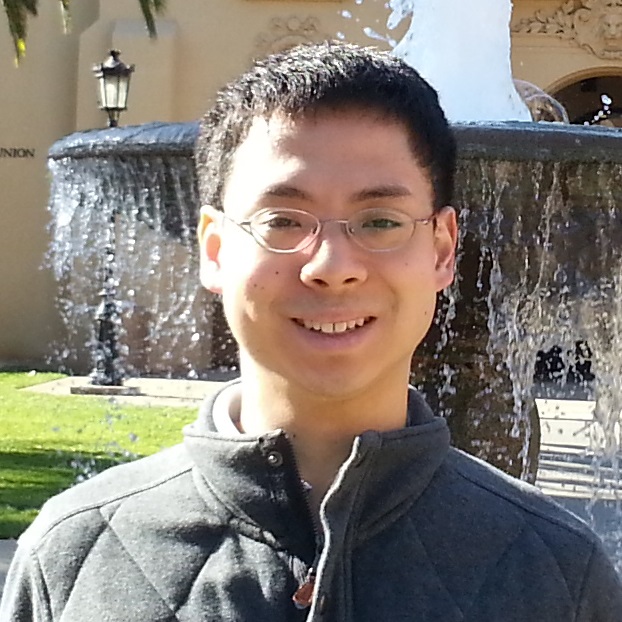 Jason D. Lee合作论文数Department of Electrical Engineering and Computer Sciences, University of California, Berkeley8
 Mladen Kolar合作论文数Booth School of Business, University of Chicago;Department of Statistics, University of Chicago8
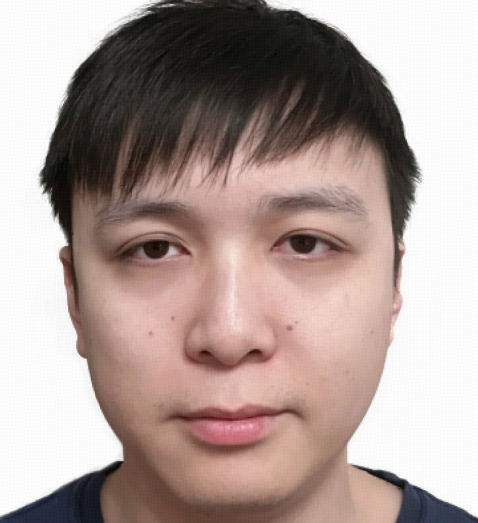 Boyi Liu合作论文数Snowflake7
 Dirk Bergemann合作论文数Department of Economics, Yale University;School of Management, Yale University;School of Engineering, Yale University;Center for Algorithm, Data and Market Design, Yale University7
 Jianqing Fan (范剑青)合作论文数Department of Operations Research and Financial Engineering, School of Engineering and Applied Science, Princeton University6
 Minshuo Chen (陈旻硕)合作论文数Princeton University6
 Yan Fu Vincent Tan (陈延福)合作论文数Department of Electrical and Computer Engineering, National University of Singapore;Department of Mathematics, National University of Singapore6
 Jieping Ye (叶杰平)合作论文数Alibaba Group6
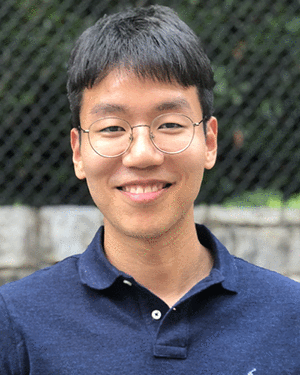 Heejune Sheen合作论文数5
 Yixuan Wang合作论文数Aurora5
 Tom Fei合作论文数School of Operations Research and Information Engineering, Cornell University5
 Ethan X. Fang合作论文数Department of Biostatistics & Bioinformatics, Duke University School of Medicine;Rhodes Information Initiative, Duke University;Fuqua School of Business, Duke University5
 Miao Lu合作论文数Department of Management Science & Engineering, Stanford University5
 Tuo Zhao (赵拓)合作论文数H. Milton Stewart School of Industrial and Systems Engineering, College of Engineering, Georgia Institute of Technology;Center for Statistical Science, Interdisciplinary Program, Georgia Institute of Technology;Algorithms & Randomness Center, Georgia Institute of Technology5
 Zhihan Liu合作论文数Department of Industrial Engineering and Management Sciences, Northwestern University5
 Ji Liu合作论文数Department of Electrical and Computer Engineering, Stony Brook University5
 Sirui Zheng (郑思锐)合作论文数Department of Industrial Engineering & Management Sciences, McCormick School of Engineering and Applied Science, Northwestern University5Qiaomin Xie合作论文数5
 Qi Zhu合作论文数Department of Electrical and Computer Engineering, Robert R. McCormick School of Engineering and Applied Science, Northwestern University;Department of Computer Science, Robert R. McCormick School of Engineering and Applied Science, Northwestern University5
 Boxiang (Shawn) Lyu合作论文数Point724
 Chuanhao Li (李传浩)合作论文数清华大学工业工程系4
 Chi Jin (金驰)合作论文数Department of Electrical and Computer Engineering, Princeton University;OpenAI4
 Chao Du合作论文数Sea AI Lab4
 Yongxin Chen合作论文数School of Aerospace Engineering, Georgia Institute of Technology;Institute for Robotics and Intelligent Machines, Georgia Institute of Technology;Machine Learning Center, Georgia Institute of Technology4
 Wei Xiong (熊伟)合作论文数University of Illinois Urbana-Champaign4
 Chao Huang合作论文数School of Electronics and Computer Science, University of Southampton4
 Krishna Balasubramanian合作论文数Graduate Group in Applied Mathematics, Department of Statistics, University of California, Davis4
 Liwei Wang (王立威)合作论文数Department of Machine Intelligence, School of Electronics Engineering and Computer Science, Peking University;School of Intelligence Science Technology, Peking University4
 Tianyu Pang (庞天宇)合作论文数Tencent Hunyuan4




