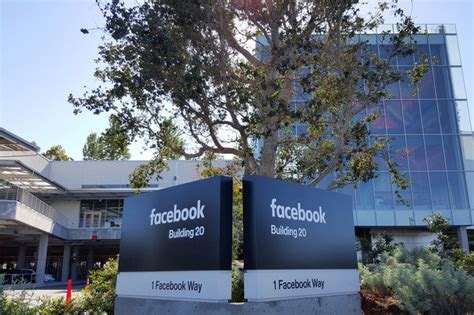
Facebook, Inc. (stylized as FACEBOOK) is an American social media conglomerate corporation based in Menlo Park, California. It was founded by Mark Zuckerberg, along with his fellow roommates and students at Harvard College, who were Eduardo Saverin, Andrew McCollum, Dustin Moskovitz and Chris Hughes, originally as TheFacebook.com—today's Facebook, a popular global social networking website. Facebook is one of the world's most valuable companies. It is considered one of the Big Five technology companies along with Microsoft, Amazon, Apple, and Google. Facebook offers other products and services beyond its social networking platform, including Facebook Messenger, Facebook Watch, and Facebook Portal. It also has acquired Instagram, WhatsApp, Oculus VR, Giphy and Mapillary, and has a 9.9% stake in Jio Platforms.

Knowledge distillation improves large language model (LLM) reasoning by compressing the knowledge of a teacher LLM to train smaller LLMs. On-policy distillation advances this approach by having the student sample its own trajectories while a teacher LLM provides dense token-level supervision, addressing the distribution mismatch between training and inference in off-policy distillation methods. However, on-policy distillation typically requires a separate, often larger, teacher LLM and does not explicitly leverage ground-truth solutions available in reasoning datasets. Inspired by the intuition that a sufficiently capable LLM can rationalize external privileged reasoning traces and teach its weaker self (i.e., the version without access to privileged information), we introduce On-Policy Self-Distillation (OPSD), a framework where a single model acts as both teacher and student by conditioning on different contexts. The teacher policy conditions on privileged information (e.g., verified reasoning traces) while the student policy sees only the question; training minimizes the per-token divergence between these distributions over the student's own rollouts. We demonstrate the efficacy of our method on multiple mathematical reasoning benchmarks, achieving 4-8× token efficiency compared to reinforcement learning methods such as GRPO and superior performance over off-policy distillation methods.
Large Language Models (LLMs) have shown great potential in reasoning tasks through test-time scaling methods like self-consistency with majority voting. However, this approach often leads to diminishing returns in accuracy and high computational overhead. To address these challenges, we introduce \textbf{Deep Think with Confidence (DeepConf)}, a simple yet powerful method that enhances both reasoning efficiency and performance at test time. DeepConf leverages model-internal confidence signals to dynamically filter out low-quality reasoning traces during or after generation. It requires no additional model training or hyperparameter tuning and can be seamlessly integrated into existing serving frameworks. We evaluate DeepConf across a variety of tasks and the latest open-source models, including Qwen3 and GPT-OSS series. Notably, on challenging benchmarks such as AIME 2025, DeepConf@512 achieves up to 99.9\% accuracy and reduces generated tokens by up to 84.7\% compared to full parallel thinking. Our code is available at https://github.com/facebookresearch/deepconf
The rapid advancement of Large Multimodal Models (LMMs) for 2D images and videos has motivated extending these models to understand 3D scenes, aiming for human-like visual-spatial intelligence. Nevertheless, achieving deep spatial understanding comparable to human capabilities poses significant challenges in model encoding and data acquisition. Existing methods frequently depend on external depth sensors for geometry capture or utilize off-the-shelf algorithms for pre-constructing 3D maps, thereby limiting their scalability, especially with prevalent monocular video inputs and for time-sensitive applications. In this work, we introduce VLM-3R, a unified framework for Vision-Language Models (VLMs) that incorporates 3D Reconstructive instruction tuning. VLM-3R processes monocular video frames by employing a geometry encoder to derive implicit 3D tokens that represent spatial understanding. Leveraging our Spatial-Visual-View Fusion and over 200K curated 3D reconstructive instruction tuning question-answer (QA) pairs, VLM-3R effectively aligns real-world spatial context with language instructions. This enables monocular 3D spatial assistance and embodied reasoning. To facilitate the evaluation of temporal reasoning, we introduce the Vision-Spatial-Temporal Intelligence benchmark, featuring over 138.6K QA pairs across five distinct tasks focused on evolving spatial relationships. Extensive experiments demonstrate that our model, VLM-3R, not only facilitates robust visual-spatial reasoning but also enables the understanding of temporal 3D context changes, excelling in both accuracy and scalability.
Reinforcement learning (RL) has become central to training large language models (LLMs), yet the field lacks predictive scaling methodologies comparable to those established for pre-training. Despite rapidly rising compute budgets, there is no principled understanding of how to evaluate algorithmic improvements for scaling RL compute. We present the first large-scale systematic study, amounting to more than 400,000 GPU-hours, that defines a principled framework for analyzing and predicting RL scaling in LLMs. We fit sigmoidal compute-performance curves for RL training and ablate a wide range of common design choices to analyze their effects on asymptotic performance and compute efficiency. We observe: (1) Not all recipes yield similar asymptotic performance, Details such as loss aggregation, normalization, curriculum, and off-policy algorithm primarily modulate compute efficiency without materially shifting the asymptote, and (3) Stable, scalable recipes follow predictable scaling trajectories, enabling extrapolation from smaller-scale runs. Combining these insights, we propose a _best-practice_ recipe, ScaleRL, and demonstrate its effectiveness by successfully scaling and predicting validation performance on a single RL run scaled up to 100,000 GPU-hours. Our work provides both a _scientific framework_ for analyzing scaling in RL and a practical recipe that brings RL training closer to the predictability long achieved in pre-training.
The progress of AI is bottlenecked by the quality of evaluation, making powerful LLM-as-a-Judge models a core solution. The efficacy of these judges depends on their chain-of-thought reasoning, creating a critical need for methods that can effectively optimize this reasoning process. In this work, we introduce J1, a reinforcement learning framework for teaching LLM judges to think before making decisions. Our core contribution lies in converting all judgment tasks for non-verifiable and verifiable prompts into a unified format with verifiable rewards, enabling direct optimization of evaluation quality while mitigating positional bias. We then use RL to train thinking-judges at scales of 8B, 32B, and 70B and show that they obtain state-of-the-art performance across multiple benchmarks. In particular, J1-Qwen-32B, our multitasked pointwise and pairwise judge also outperforms o1-mini, o3, and a much larger 671B DeepSeek-R1 on some benchmarks, while only training on synthetic data. Through comprehensive ablations of pairwise, pointwise, and multitask J1 variants, we demonstrate the effectiveness of our approach across seed prompts, reward strategies, and training recipes. Qualitative analysis reveals that J1 develops systematic evaluation strategies, including dynamic criteria generation, reference answer creation, iterative self-correction of initial assessments, and feedback generation for low-quality responses.





