
Maritime transportation accounts for approximately 3.1
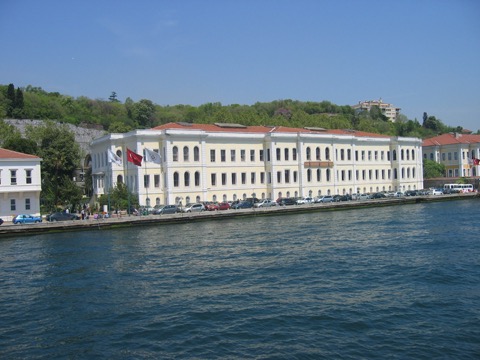
Hydrographic surveys are essential for safe navigation and coastal management; however, conventional vessel-based methods are fuel-intensive and produce significant carbon emissions. This study assesses the carbon footprint of hydrographic surveys in T & uuml;rkiye and evaluates Satellite-Derived Bathymetry (SDB) combined with machine learning as a low-carbon alternative. Annual emissions from the hydrographic fleet of Istanbul University's Institute of Marine Sciences and Management are estimated at 3850 tCO(2)e. Bathymetric data derived from Sentinel-2 imagery were processed using machine learning models including KNN, RF, SVM, and LR. Case studies in Samsun (Black Sea), Izmir Bay (Aegean Sea), and Iskenderun Bay (Mediterranean Sea) showed strong agreement between SDB outputs and in situ measurements (R & sup2; >= 0.98; RMSE: 0.55-0.89 m). Results confirm compliance with IHO S-44 standards and demonstrate that SDB is cost-effective and significantly less carbon-intensive than traditional methods, supporting sustainable hydrography.
Using a multi-layered approach and an ontological security perspective, this article examines qualitative data from Bundestag plenary sittings and interviews with political elites to identify specific historical narratives and recurring schematic narrative templates. The study argues that Germany's foreign policy during Russia's war on Ukraine is shaped not only by strategic or material considerations but also by the organisation of collective memory and the emotional repertoires embedded within it. Each template provides emotional and mnemonic framework that supports or contests policy change while maintaining identity continuity. Collectively remembered events, including the Holocaust, the Holodomor, and the Babyn Yar massacres, as well as binary characterisations serve to anchor emotionally resonant historical narratives. The analysis shows how schematic narrative templates, as carriers of affective memory and connected to culturally sanctioned feeling rules, function as mechanisms of emotional continuity, enabling Germany to maintain ontological security while recalibrating foreign policy. Emotional and mnemonic structures reaffirm Germany's identity as a morally transformed actor seeking redemption, or as a pacifist, even when supplying heavy weaponry or increasing military spending. Overall, the analysis demonstrates that collective memory and emotions are co- constitutive, guiding Germany in navigating apparent contradictions between identity and foreign policy and sustaining ontological security.
Computer-Supported Collaborative Learning (CSCL) has grown into a multidisciplinary field, yet persistent conceptual fragmentation limits cumulative knowledge building and newcomer entry. We frame paradigm formation in CSCL as a wicked problem that requires collective action. We report outcomes from the half-day CSCL Paradigm-Building Workshop at the ISLS conference 2025, preceded by anonymous online pre-workshop exchanges. Twenty participants and panel members from diverse disciplines and cultural backgrounds identified priority tensions around defining CSCL, integrating theories, and the future of the field. Across small-group and panel discussions, participants concluded that building a shared CSCL paradigm was neither feasible nor desirable. Participants highlighted weak communication across paradigms and the absence of shared descriptors for phenomena and analytic approaches. To counter the negative effects of co-existing paradigms, participants proposed a community-maintained CSCL taxonomy that tags and guides contributions along key dimensions of collaborative learning, instructional support, context, and epistemic stance. Such an approach will serve both the need to bridge paradigms and continuous community building. We close with a roadmap for collaboratively refining a proposed first draft of such a taxonomy and sustaining paradigm-building through ongoing workshops and community-based research.
This cross-sectional study examines the relationships among social media addiction, fear of missing out (FoMO), loneliness, and life satisfaction among young adults. Data were collected from 700 participants aged 18-29 years via an online survey administered between May and June 2024. Validated scales were used to assess key variables: the Bergen Social Media Addiction Scale, the Fear of Missing Out Scale, the UCLA Loneliness Scale, and the Satisfaction with Life Scale. Structural Equation Modeling revealed that life satisfaction was positively associated with loneliness. Social media addiction was strongly associated with FoMO, while FoMO had an indirect negative effect on life satisfaction through social media addiction. These findings shed light on the underlying mechanisms between social media addiction, FoMO, loneliness, and life satisfaction. Such insights can provide significant implications for developing interventions (e.g., digital well-being programs) to help young adults manage their social media use more effectively. Promoting mindful and balanced social media engagement may contribute to enhancing life satisfaction and overall mental well-being.





