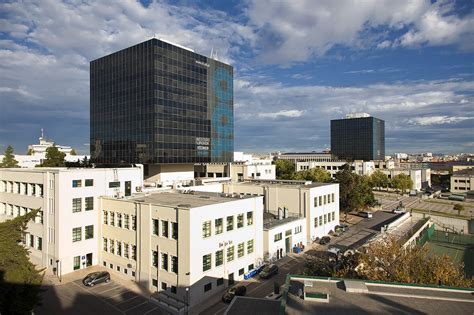
Instituto Superior Técnico MHSE • MHIP (IST, also known colloquially as Técnico, and stylized TÉCNICO LISBOA) is a public school of engineering and technology, part of University of Lisbon. It was founded as an autonomous school in 1911, and integrated in the Universidade Técnica de Lisboa in 1930. IST is the largest school of engineering in Portugal by number of enrolled students, faculty size, scientific production and patents. IST has three campi, all located in the Lisbon metropolitan area: Alameda in Lisbon, Taguspark in Oeiras and Tecnológico e Nuclear Campus in Loures, and consists of ten departments that are responsible for teaching the undergraduate and postgraduate programs. Each department is organized in sections, which group together specific subjects within its scientific area. In addition, the laboratories of the several departments support the teaching and research activities carried out at IST. It offers 18 undergraduate programmes attended by more than 6,000 students—covering a wide range of areas of knowledge—including not only all the traditional engineering specializations, but also emerging scientific areas such as Biomedical Engineering, Aerospace, and Physics Engineering. Over 4,500 students are enrolled in 32 masters, 33 doctoral and several specialized programs. IST has produced 1292 PhD holders.

The 35Cl(n, p)35S reaction plays a key role in neutron dosimetry for Boron Neutron Capture Therapy, in the synthesis of the isotope 36S, whose astrophysical origin remains unresolved, and in the design of next-generation molten-salt reactors. Its relevance has motivated its inclusion in the High Priority Request List (HPRL) of NEA. The goal of this work is to determine the 35Cl(n, p)35S cross-section from thermal energy to 120 keV for the first time ever in a single measurement, thus reducing systematic uncertainties related to the normalization to the thermal value. This had been a subject of concern in previous evaluations of this reaction. We made use of the Time-of-Flight technique with microMEGAS detectors at Experimental Area 2 (EAR-2) of n_TOF facility at CERN. The 10B (n, α ) 7Li and 235U(n, f) reactions were used as references. Rutherford Back-scattering Spectrometry was performed at Centro Nacional de Aceleradores (CNA) in Sevilla, in order to accurately determine the masses of the irradiated samples. We obtained a thermal cross-section of 0.470 ± 0.009 barns. The 1/v energy dependence of the cross-section is observed up to the first resonance at 0.398 keV, the resonances up to 120 keV are analyzed and resonance parameters extracted using SAMMY. Maxwellian Averaged Cross-Section (MACS) was calculated for k_B T from 1 to 100 keV, and lower values compared to estimations from ENDF were found, e.g., 1.07 ± 0.20 mb at k_BT=30 keV. The thermal cross-section and first two resonances are in agreement with the latest evaluation in ENDF/B-VIII.1, while remarkably lower resonance strengths were found for high energy resonances.
Learning high-quality text representations is fundamental to a wide range of NLP tasks. While encoder pretraining has traditionally relied on Masked Language Modeling (MLM), recent evidence suggests that decoder models pretrained with Causal Language Modeling (CLM) can be effectively repurposed as encoders, often surpassing traditional encoders on text representation benchmarks. However, it remains unclear whether these gains reflect an inherent advantage of the CLM approach or arise from confounding factors such as model and data scale. In this paper, we address this question through a series of large-scale, carefully controlled pretraining ablations, training a total of 38 models ranging from 210 million to 1 billion parameters, and conducting over 15,000 fine-tuning and evaluation runs. We find that while training with MLM generally yields better performance across text representation tasks, CLM-trained models are more data-efficient and demonstrate improved fine-tuning stability. Building on these findings, we experimentally show that a biphasic training strategy that sequentially applies CLM and then MLM, achieves optimal performance under a fixed computational training budget. Moreover, we demonstrate that this strategy becomes more appealing when initializing from readily available pretrained CLM models, reducing the computational burden needed to train best-in-class encoder models. We release all project artifacts at \url{https://hf.co/MLMvsCLM} to foster further research.
Abstract The couplings of the 125 GeV Higgs are being measured with higher precision as the Run 3 stage of LHC continues. Models with multiple Higgs doublets allow potential deviations from the SM predictions. For more than two doublets, there are five possible types of models that avoid flavor changing neutral couplings at tree level by the addition of a symmetry. We consider a softly broken ℤ 2 × ℤ 2 three-Higgs doublet model with explicit CP violation in the scalar sector, exploring all five possible types of coupling choices and all five mass orderings of the neutral scalar bosons. The phenomenological study is performed using a Machine Learning black box optimization algorithm that efficiently searches for the possibility of large pseudoscalar Yukawa couplings. We identify the model choices that allow a purely pseudoscalar coupling in light of all recent experimental limits, including direct searches for CP-violation, thus motivating increased effort into improving the experimental precision.
Repurposing of oil and gas wells for geothermal energy involves several critical steps, including assessing the well’s structural integrity, evaluating the reservoir’s thermal properties, and modeling the potential energy output. The development of geothermal systems is naturally uncertain due to sub-state conditions, thermal conductivity, and inequalities in fluid flow behavior. Reliable performance forecasting and optimal well design depend on this rigorous modeling and simulation. As a result, global interest in sustainable energy has accelerated the use of abandoned oil and gas wells as viable resources for geothermal energy production. This study investigates the feasibility of repurposing abandoned oil wells in the Volve oil field in the North Sea as geothermal energy sources. This research shows the effects of petrophysical properties (i.e., permeability and porosity) on enthalpy production derived from reservoir modeling, and examines the uncertainty in these properties to achieve more accurate reservoir characterization and modeling. The following methodological framework was employed: First, reliable and coherent three-dimensional models of petrophysical properties were developed using geostatistical sequential simulations to improve well log data and spatial patterns as revealed by spatial covariances and variograms. Next, these models were updated to align with historical production data. After validation, the models were utilized to forecast enthalpy production. Based on the results, the Volve reservoir can produce an average of 2,094 MWh of geothermal energy each year, yielding a total energy output of about 41,877 MWh over a 20-year operating period.
JPEG AI is an emerging learning-based image coding standard developed by Joint Photographic Experts Group (JPEG). The scope of the JPEG AI is the creation of a practical learning-based image coding standard offering a single-stream, compact compressed domain representation, targeting both human visualization and machine consumption. Scheduled for completion in early 2025, the first version of JPEG AI focuses on human vision tasks, demonstrating significant BD-rate reductions compared to existing standards, in terms of MS-SSIM, FSIM, VIF, VMAF, PSNR-HVS, IW-SSIM and NLPD quality metrics. Designed to ensure broad interoperability, JPEG AI incorporates various design features to support deployment across diverse devices and applications. This paper provides an overview of the technical features and characteristics of the JPEG AI standard.





