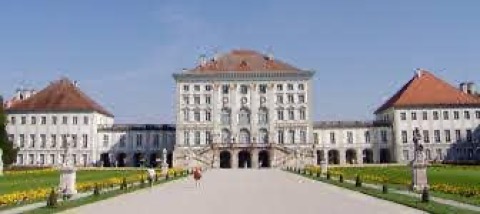
路德维希-马克西米利安-慕尼黑大学(德文:Ludwig-Maximilians-Universität München),简称LMU或慕尼黑大学,建校于1472年,是坐落于德国巴伐利亚州首府慕尼黑市中心的一所世界一流大学。 慕尼黑大学自15世纪建校以来便是欧洲乃至世界最具声望综合性大学之一,在德国大学中综合指数排名最高,也是首批入选德国“常春藤”之称的德国精英大学的三所之一,德国U15大学联盟、欧洲研究型大学联盟和全球大学高研院联盟成员,其社会科学(政治学、商科、社会学等)、人文科学(语言学、哲学等)及物理、化学、医学、数学,计算机语言学等领域均在国际上享有盛名 。其在政治学 、文学、医学、物理、化学等多个领域拥有崇高的学术地位及广泛的影响力,被公认为是当今世界最顶尖的高等教育机构之一。其中政治学第17位,生命科学第23位,物理学第22位,艺术及人文科学第21位,临床医学及健康科学第32位,商学及经济学第16位,计算机第55位。 慕尼黑大学人才辈出,名声斐然,以42名诺贝尔奖得主在全球院校诺奖排名中位列16名。马克斯·普朗克、马克斯·韦伯、沃纳·海森堡,欧姆,赫兹,贝时璋等都曾在此求学任教。 在2019-2020泰晤士高等教育世界大学排名中,慕尼黑大学位列德国第一,世界第32位 ,在TIMES全球大学毕业生就业排名世界第26位,慕尼黑大学位列2020QS世界大学排名第63位。

Mutations in the RNA-binding protein roquin-1 are known to result in humoral autoimmunity. Heissmeyer and colleagues show that MALT1 cleavage of roquin and regnase-1 downstream of TCR signaling releases cooperatively repressed targets to promote T H 17 cell differentiation
Large Language Models (LLMs) have demonstrated impressive capabilities across a wide range of NLP tasks, but they remain fundamentally stateless, constrained by limited context windows that hinder long-horizon reasoning. Recent efforts to address this limitation often augment LLMs with an external memory bank, yet most existing pipelines are static and heuristic-driven, lacking a learned mechanism for deciding what to store, update, or retrieve. We present Memory-R1, a reinforcement learning (RL) framework that equips LLMs with the ability to actively manage and utilize external memory through two specialized agents: a Memory Manager that learns structured operations, including ADD, UPDATE, DELETE, and NOOP; and an Answer Agent that pre-selects and reasons over relevant entries. Both agents are fine-tuned with outcome-driven RL (PPO and GRPO), enabling adaptive memory management with minimal supervision. With only 152 training QA pairs, Memory-R1 outperforms strong baselines and generalizes across diverse question types, three benchmarks (LoCoMo, MSC, LongMemEval), and multiple model scales (3B–14B).
We present OpenDriveVLA, a Vision-Language Action (VLA) model designed for end-to-end autonomous driving, built upon open-source large language models. OpenDriveVLA generates spatially-grounded driving actions by leveraging multimodal inputs, including both 2D and 3D instance-aware visual representations, ego vehicle states, and language commands. To bridge the modality gap between driving visual representations and language embeddings, we introduce a hierarchical vision-language alignment process, projecting both 2D and 3D structured visual tokens into a unified semantic space. Furthermore, we incorporate structured agent–environment–ego interaction modeling into the autoregressive decoding process, enabling the model to capture fine-grained spatial dependencies and behavior-aware dynamics critical for reliable trajectory planning. Extensive experiments on the nuScenes dataset demonstrate that OpenDriveVLA achieves state-of-the-art results across open-loop trajectory planning and driving-related question-answering tasks. Qualitative analyses further illustrate its superior capability to follow high-level driving commands and robustly generate trajectories under challenging scenarios, highlighting its potential for next-generation end-to-end autonomous driving.
LBA5500 Background: Optimal timing of cytoreduction in non-frail patients (pts) with seemingly resectable stage IIIB-IVB ovarian, tubal, and peritoneal carcinoma (OC) remains controversial. Methods: TRUST is an international randomized multicenter phase III trial in pts with stage IIIB-IVB OC and good performance status (ECOG 0/1) comparing primary cytoreductive surgery (PCS) followed by 6 cycles of intravenous (iv) chemotherapy to 3 cycles of neoadjuvant iv chemotherapy (NACT) followed by interval cytoreductive surgery (ICS) and 3 further iv cycles. Maintenance treatment with bevacizumab and/or PARP inhibitors was allowed if selection criteria was similar for both arms. Pts were eligible for the study if preoperative clinical and radiologic assessment identified them as potential candidates for PCS. To ensure surgical quality, participating centers complied with an onsite surgery quality assurance audit, had adequate infrastructure, surgical proficiency (complete resection rates ≥50% in PCS) and sufficient volume (≥36 PCS/year). The intent to treat analysis population included all eligible pts with confirmed stage IIIB-IVB disease. The primary endpoint was overall survival (OS). Superiority was tested using a two-sided stratified log-rank test with significance level 0.05. Secondary endpoints were progression-free survival (PFS) and surgical complications. Results: A total of 688 eligible pts (median age: 63y; range: 32-83) underwent randomization: 345 were assigned to PCS and 343 to NACT/ICS. 91% had high-grade serous histology. Complete resection was achieved in 61.7%/62.9% of all randomized/all operated pts in the PCS group and 72%/76.6% in the ICS group. Median PFS was 22.2 months in the PCS group, and 19.7 months in the ICS group (HR 0.80 95%CI: 0.66-0.96; p=0.02). Median OS was 54.3 months in the PCS group and 48.3 months in the ICS group (HR 0.89 95%CI: 0.74-1.08; p=0.24). Pts with complete cytoreduction after PCS had the most favorable outcome, with a median PFS and OS of 27.9 and 67.0 months, respectively. A long-term benefit from PCS was seen in all analyzed subgroups. The benefit of PCS was most prominent in stage III pts (n=468): median PFS for PCS vs ICS, 26.3 vs 21.4 mos; median OS for PCS vs ICS, 63.7 vs 53.2 months. Major postoperative complication rates were acceptable, with a 30-day postoperative mortality rate of < 1% in both groups. Conclusions: In expert centers with proven surgical quality, PCS followed by iv chemotherapy resulted in a significantly longer median PFS and a numerically longer OS compared to NACT/ICS in non-frail OC pts. Although statistical significance in the primary endpoint was not reached, this is the first randomized trial to show a benefit of PCS over ICS. This benefit is likely to be associated with the high complete resection rate, reinforcing PCS as a standard of care in non-frail pts with seemingly resectable advanced OC. Clinical trial information: NCT02828618 .





