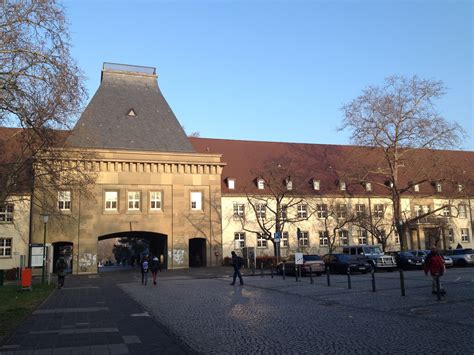
美茵茨大学,英文名Johannes Gutenberg-Universität Mainz。

Digital transformation has become a central topic in management research over the past decades. This systematic review of 109studies from 2000 to 2025 clarifies the role of organizational design in digital transformation. Synthesizing insights from the literature, we identify eight organizational design dimensions and integrate them into a framework of three interdependent stages of digital transformation. The Align stage connects digital leadership, digital governance, and digital culture; the Execute stage mobilizes digital strategy, digital organization, as well as digital resources and capabilities; and the Transform stage establishes digital operating and business models. Our analysis further reveals a distinct tradeoff at each stage: balancing control and autonomy during alignment, stability and adaptability during execution, and optimization and reconfiguration during transformation. We build on these insights to develop a research agenda and derive implications for managerial practice.
While ferromagnetism and antiferromagnetism are well-established classes of magnetic order, a third class of collinear magnetic order, termed altermagnetism, has recently attracted scientific interest. We measured magnetic circular dichroism (MCD) in core-level photoemission (XPS) at the Ru 2p3/2 and 2p1/2 core levels in epitaxial RuO2(110)/TiO2(110) films using circularly polarized x rays at 6 keV, as well as x-ray magnetic circular dichroism (XMCD) in resonant x-ray absorption at the Ru M3,2 (3p3/2 and 3p1/2) edges. Charge transfer multiplet calculations show that the MCD-XPS and the XMCD can be explained by an altermagnetic locking of Ru magnetic moments and a distorted crystal field orientation. The distortion is caused by the epitaxial strain. The collinear magnetic moments in RuO2 occupy sublattice sites with distorted octahedral crystal fields that are rotated by 90 degrees with respect to each other. A change in the sign of the MCD-XPS at different sample positions indicates the presence of altermagnetic domains with the size of around hundreds of micrometers.
Recently, the unusual copolymerization behavior of propylene oxide (PO) with ethylene oxide (EO) and glycidyl methyl ether (GME) using double metal cyanide (DMC) catalysis was demonstrated. Inspired by these results, the DMC-catalyzed copolymerization of PO with a large variety of alkyl and aryl epoxides, as well as other glycidyl ethers and -esters, was investigated by in situ1H NMR spectroscopy. This revealed a strong influence of the substituent of the epoxide monomer on the reactivity. With increasing steric demand of the alkyl or aryl group at the oxirane ring, the reactivity difference to PO increased drastically. Reactivity ratios for the copolymerization with PO for butylene oxide (BO) (rPO = 4.7, rBO = 0.21), 1,2-epoxyhexane (HexO) (rPO = 16, rHexO = 0.063), 3-methyl-1,2-epoxybutane (MEB) (rPO = 29, rMEB = 0.034) and styrene oxide (SO) (rPO = 21, rSO = 0.047) were determined. Due to the high steric demand of 3,3-dimethyl-1,2-epoxybutane (DMEB) in the copolymerization experiment with PO, only homopolymerization of PO was observed. Additionally, the copolymerization behavior of PO with various glycidyl ethers (GE) was investigated. This revealed similar reactivity ratios for all glycidyl ethers in a range of rPO = 9.2-21 and rGE = 0.11-0.048. Further investigation of the two glycidyl esters, glycidyl methacrylate (GMA) (rPO = 20, rGMA = 0.050) and glycidyl benzoate (GBz) (rPO = 33, rGBz = 0.031), was conducted as well. The extensive studies give insight into the compatibility of different comonomers in DMC catalysis and confirm its high substrate selectivity, specifically for the PO monomer. The influence of steric demand and electronic structure of individual monomers was assessed using %VBur, Hirshfeld partial charges, and Delta N (electron transfer to Zn2+) and discussed in the context of comonomer reactivity relative to PO under DMC catalysis.
Telomerase biogenesis is a multistep process requiring the coordinated action of several accessory factors. In the fission yeast Schizosaccharomyces pombe, the telomerase RNA TER1 undergoes spliceosome-mediated 3'-end processing, followed by association with the Pof8/Bmc1/Thc1 complex, which facilitates binding of the Lsm2-8 complex. Lsm2-8 protects TER1 from nucleolytic degradation and promotes recruitment of the catalytic subunit Trt1. Here, we identify Pop6, Pop7, and Pop100, three subunits of the RNase P/MRP complex, as components of the active telomerase holoenzyme. These proteins associate with a stem-loop-stem structure near the TER1 pseudoknot that resembles the P3 domain found in RNase P/MRP RNAs. A single-nucleotide change within this P3-like loop disrupts Pop protein binding, resulting in reduced telomerase activity and severe telomere shortening. This mutation also impairs the assembly of key telomerase subunits and alters the folding of the template-pseudoknot region of TER1. Our findings reveal a critical role for Pop6, Pop7, and Pop100 in chaperoning TER1 into a conformation that promotes functional telomerase assembly and underscore the remarkable evolutionary plasticity of telomerase biogenesis.
Altermagnetism is a collinear compensated magnetically-ordered phase with a d, g or i-wave anisotropy and alternating spin polarization of the electronic structure in the position and momentum space. Its recent discovery was in part motivated by the research of compensated magnets towards highly scalable spintronic technologies. Simultaneously, altermagnetism shares the anisotropic higher-partial-wave nature of ordering with unconventional superfluid phases which have been at the forefront of research for the past several decades. These examples illustrate the interest in altermagnetism from a broad range of science and technology perspectives. After summarizing the diverse research context, we turn the focus of this review to the symmetry, microscopy and spectroscopy signatures of altermagnetism. We start from the description of spontaneously broken and retained symmetries which delineate the compensated altermagnetic ordering as a distinct magnetic phase. Next we focus on microscopic signatures and ordering mechanism of the altermagnetic phase. We highlight crystal-structure realizations of a characteristic ferroic order of anisotropic higher-partial-wave components of atomic-scale spin densities in altermagnets, ranging from weakly-interacting metals to strongly correlated insulators. The symmetry and microscopy signatures of altermagnetism are directly reflected in spin-dependent electronic spectra and responses. We review salient band-structure features originating from the altermagnetic ordering, and from its interplay with spin-orbit coupling and topological phenomena. Throughout the review we compare altermagnetism to traditional ferromagnetism and Neel antiferromagntism, and to the currently intensely explored magnetic phases with non-collinear symmetry-protected compensated spin orders. We accompany the theoretical discussions by references to relevant experiments.





