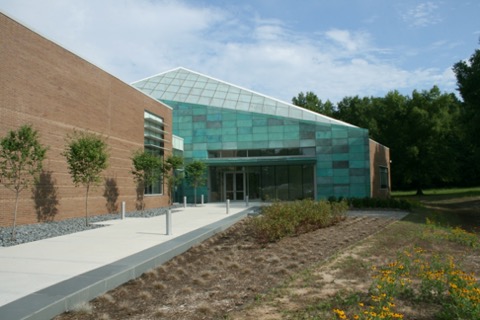
三角研究园毗邻北卡罗莱纳州的罗利(Raleigh)、达勒姆(Durham)和教堂山(Chapel Hill),处在三座城市夹成的三角研究区域中。其中罗利有北卡罗来纳州立大学,达勒姆有杜克大学,教堂山有北卡罗来纳大学教堂山分校。三角研究园内有超过130家研发设施,超过39,000名雇员为总共157家组织工作。

To successfully perform quantum computations, it is often necessary to first accurately characterize the noise in the underlying hardware. However, it is well known that fundamental limitations prevent the unique identification of the noise. This raises the question of whether these limitations impact the ability to predict noisy dynamics and mitigate errors. Here, we show, both theoretically and experimentally, that when learnable parameters are self-consistently characterized, the unlearnable (gauge) degrees of freedom do not impact predictions of noisy dynamics or error mitigation. We use the recently introduced framework of gate set Pauli noise learning to efficiently and self-consistently characterize and mitigate noise of a complete gate set, including state preparation, measurements, single-qubit gates and multi-qubit entangling Clifford gates. We validate our approach through experiments with up to 92 qubits and show that while the gauge choice does not affect error-mitigated observable values, optimizing it reduces sampling overhead. Our findings address an outstanding issue involving the ambiguities in characterizing and mitigating quantum noise.
The role of cytochrome P450-derived epoxy-oxylipins and their metabolites in human inflammation and resolution is unknown. We report that epoxy-oxylipins are present in blood of healthy, male volunteers at baseline and following intradermal injection of UV-killed Escherichia coli, an experimental model of acute resolving inflammation. At the site of inflammation, cytochrome P450s and epoxide hydrolase (EH) isoforms, which catabolise oxylipins to corresponding diols, are differentially upregulated throughout the inflammatory response, as is the biosynthesis of epoxy-oxylipins. GSK2256294, a selective sEH inhibitor specifically elevates 12,13-EpOME and 14,15-EET. While inhibition of sEH hastens pain resolution, it has no effect on tissue heat, redness and swelling. GSK2256294, however, significantly reduces numbers of circulating intermediate monocytes that expand during inflammation. We find that 12,13-EpOME blocks the transition of classical to intermediate monocytes in a p38 MAPK-dependent manner, results that are recapitulated when blocking p38 MAPK in vitro and when administering the p38 MAPK inhibitor losmapimod in vivo to healthy volunteers. Furthermore, fewer intermediate monocytes are observed at the site of inflammation, accompanied by reduced tissue CD4 T cells. Hence, we have mapped the expression, activity and function of epoxy-oxylipins in human inflammation revealing new mechanisms of monocyte differentiation and resolution biology. Here they demonstrate a therapeutic intervention elevating levels of CYP450-derived lipids to control the expansion of intermediate monocytes in tissue and peripheral blood, presenting a first in class therapeutic approach for treating chronic inflammatory disease.
Nature-based solutions (NBS) are increasingly promoted in agricultural and forestry policy, yet their effectiveness depends on technical assistance providers (TAPs) who translate policy guidelines into land management decisions. Drawing on Diffusion of Innovations and Value–Belief–Norm frameworks, this study examines how TAPs’ professional backgrounds, organizational affiliations, regional contexts, and management experiences shape their knowledge, perceived importance, and promotion of NBS. A web-based survey of 101 TAPs in North Carolina was analyzed using Spearman correlations and logistic regression. While 79
This initial emergence of smart digital spaces in the contemporary care setting has brought about novel aspects of automation, personalization, and staggering analysis discoveries that have never been documented before. Nonetheless, the data interactions, model behavior and the heterogeneous device ecosystems have become more complicated thus the need to have unrelenting overseers working outside of the conventional frames of rule based or compliance based has increased. The present paper presents the Neuro-Sovereign Adaptive Governance System (NSAGS), which is a form of meta-intelligent autonomic controller that is aimed at ensuring that behavioral stability, risk predictability, and operational integrity are upheld across distributed health technologies. NSAGS works by means of four interrelationships, where a Neuro-Sovereign Policy Kernel dynamically recalibrates governance parameters, an Autonomic Hazard Anticipation Grid predicts instability with latent risk topology modelling, a Sovereign Ledger of Intent reflects non-sensitive intent-level metadata to ensure transparent accountability, and a Reflexive Quality Modulation Loop imposes real-time corrective fine-tuning. Working side by side with current digital systems, NSAGS continuously predicts hazards, reduces the effects of algorithmic drift, improves the reliability of the decision and provides consistent and traceable results without disrupting the work of the clinics. Evidence of the experiment indicates that the framework could be useful in enhancing the stability and consistency in the trust in the large-scale intelligent health systems. NSAGS exhibits a route towards self-controlling and ethically in harmony and resilient digital structures that can adjust to the swiftly changing operational environments. The suggested NSAGS attains an overall accuracy of 96.8 percent, indicating robust stability, detecting reliability, and governing alignment under all assessed scenarios.
The 2023 wildfires in Canada resulted in substantial emissions to air. In this work, we used predicted concentrations of hazardous air pollutants (HAPs), fine particulate matter (PM2.5), and ozone across the U.S. and Canada to estimate the potential impacts of 2023 Canadian wildfire smoke on human health. HAPs from Canadian wildfires were estimated to increase lifetime population-weighted cancer inhalation risk by 1-in-1 million (500 excess cancer cases) and noncancer risk by a hazard index (HI) of 0.05 across the domain. The additional risk from HAPs in smoke was predicted to exceed a cancer risk of 100-in-1 million for 1,300 people and a HI of 1.0 for 110,000 people, all in Canada. In addition, 360,000 people in Canada were predicted to experience an increase in annual-mean PM2.5 of at least 5 μg m-3. Nearly 63 million people, 76% of which were in the U.S., were predicted to experience an increase in seasonal maximum daily 8-hour average ozone greater than 1 ppb. In Canada, ozone and PM2.5 associated with the 2023 fires were estimated to result in over 3x more attributable deaths per year than wildfire smoke in years 2013 through 2018.





