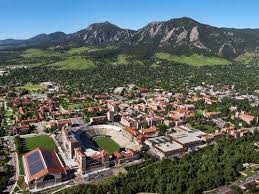
The University of Colorado (CU) is a system of public universities in Colorado consisting of four campuses: University of Colorado Boulder, University of Colorado Colorado Springs, University of Colorado Denver in downtown Denver and at the Anschutz Medical Campus in Aurora. It is governed by the elected, nine-member Board of Regents of the University of Colorado.

Cellulose aerogel-based phase change materials (CA-PCMs) combine the latent heat storage capability of phase change materials (PCMs) with the hierarchical porous architecture, low density, and structural stability of cellulose aerogels (CA), providing a promising platform for sustainable thermal energy storage. This review critically examines recent advances in CA-PCMs from a materials-by-design perspective by correlating fabrication strategies, thermophysical properties, and structure-property-performance relationships. A comparative assessment of impregnation, in situ polymerization, encapsulation, and direct mixing establishes the influence of fabrication route on PCM loading, latent heat retention, thermal conductivity, mechanical stability, and cycling durability. Furthermore, graphene-, MXene-, CNT-, polymer-, and other cellulose-based hybrid systems are critically compared, demonstrating that conductive nanofillers can enhance thermal conductivity by 50-200% while introducing important trade-offs between heat transfer, latent heat storage, multifunctionality, and manufacturing scalability. Unlike previous reviews, this work integrates comparative performance analysis, commercialization perspectives, and emerging computational approaches into a unified materials design strategy for rational CA-PCM development. Finally, the review identifies key challenges, including long-term durability, scalable manufacturing, sustainable processing, and multifunctional integration, and proposes a research roadmap to accelerate the industrial translation of next-generation CA-PCMs.
Abstract While humanitarian engineering (HE) programs increasingly emphasize preparing students to engage in social change—from addressing inequitable access to infrastructure and technology in marginalized communities to challenging biases in the workplace and examining norms in engineering organizations that perpetuate inequality—there remains a limited understanding of how these experiences build students’ confidence to engage in social justice activism. This study investigates how HE graduate education influences students’ social justice self-efficacy (SJSE)—their perceived ability to create positive social change across personal, interpersonal, community, and institutional dimensions. Drawing from 88 interviews with 22 students across six HE graduate programs during their first year, we identify a distinct three-phase developmental pattern. Specifically, students often experience (1) a critical exposure phase in fall term coursework that dramatically increased personal SJSE while often decreasing community and institutional dimensions; (2) an integration phase in spring term experiences where students developed more balanced SJSE by identifying specific approaches to social impact while maintaining critical awareness; and (3) a testing phase during summer fieldwork where students confronted the challenges of applying their developing SJSE in real-world contexts. Rather than developing uniformly, students experienced nonlinear, asymmetric growth across SJSE dimensions, often maintaining optimism in one area despite challenges in others. These findings suggest HE education may benefit from providing targeted support during these critical transitions, encouraging specific, more focused engagement in social justice advocacy rather than system-wide transformation, creating opportunities for social justice advocacy practice, and having more of a focus on students’ interpersonal SJSE. This research advances understanding of how HE programs can foster advocates for making engineering more equitable, inclusive, and responsive to marginalized communities’ needs.
The NCCN Clinical Practice Guidelines in Oncology (NCCN Guidelines) for Vaginal Cancer outline the recommended diagnostic workup, staging considerations, and treatment options for this rare malignancy. Because vaginal cancer is uncommon and shares many biologic and clinical characteristics with cervical cancer, several management recommendations, particularly systemic therapy, are extrapolated from evidence and practices established for cervical cancer. This guideline excerpt summarizes key components of management, including diagnostic evaluation and workup, principles of staging, pathology considerations, radiation therapy principles, and primary treatment recommendations for both early-stage and advanced disease. It also details approaches to manage relapses, including locoregional recurrence and distant metastases, and provides an in-depth overview of systemic therapy recommendations for vaginal cancer. J Natl Compr Canc Netw 2026;24(3):101-126 doi:10.6004/jnccn.2026.0011
James Webb Space Telescope (JWST) has revealed a population of 'Little Red Dots' (LRDs): compact, red objects at redshifts z = 2-9 with 'v'-shaped spectral energy distributions, broad permitted lines, and, often, hydrogen Balmer absorption. We use NIRSpec/IFS data from the BlackTHUNDER survey to study the H alpha line in the LRD Abell2744-QSO1 at z = 7 . 04 , which is a confirmed active galactic nucleus (AGN) due to time-variable equivalent width (EW) in its broad emission lines. The H alpha spectral profile is non-Gaussian, requiring at least two Gaussian components. We also detect a narrow-line Gaussian component, and strong H alpha absorption (EW relative to the continuum similar to 22(+12)(-7) & Aring;), confirming a connection between the strong Balmer break and line absorption. The absorber is at rest with respect to broad H alpha , suggesting that the gas cannot be interpreted as an inflow or outflow, forming instead a long-lived structure. Its velocity dispersion is Q(abs) = 110(-10)(+20) km s(-1), consistent with the value inferred from the analysis of the Balmer break. Based on H alpha , we infer a black hole mass of log(M-center dot/M-circle dot) = 7 . 2 , smaller but close to the previous estimates based on H . The Eddington ratio is 0.09. Combining the high signal-to-noise ratio of the narrow H alpha line with the spectral resolution R = 3 , 700 of the G395H grating, we infer a narrow-line intrinsic dispersion Q(n) = 22(-6)(+5) km s(-1) , which places a stringent constraint on the black hole-to-dynamical mass ratio of this system to be M-center dot/M-dyn= 0 . 15-1 . 2 , confirming the overmassive nature of the black hole and potentially leaving little room for a host galaxy.
Post-earnings-announcement drift (PEAD) has declined significantly over time. The prevailing explanation for this decline from prior work is an increase in arbitraging activities. We propose a new explanation based on a decline in the informativeness of current earnings news in predicting future earnings news ("signal informativeness"). We show that declining signal informativeness, particularly for smaller firms, plays a much more important role in the decline of PEAD than increasing arbitrage trading. In fact, when we account for declining signal informativeness alone, the downward trend in PEAD is no longer significant. Finally, we find that an increasing prevalence of firms with volatile earnings contributes most to declining signal informativeness, with the rise of special items playing a relatively minor role.





