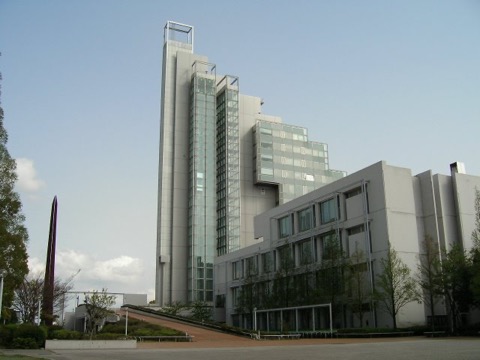
北九州市立大学(日文平假名:きたきゅうしゅうしりつだいがく;英语:The University of Kitakyushu),旧称为北九州大学、简称为北九大,是日本顶尖的公立大学,入选日本文部科学省颁布的牵引国际化人才大学计划 。外国语专业排名位列九州和四国地区第一位、全日本国公立大学第四位。学校成立于1946年,坐落于九州福冈县。 北九州市立大学不仅是继东京都立大学、大阪市立大学之后,在本科生规模上的日本第三大公立大学 ;同时也是日本除县都(省会)所在城市之外设立的规模最大的公立大学。学校前身(北九州外国语大学)是日本第三所国公立外国语类大学,而现在的北九大已经拓展成坐拥两个校区、六个本科生学院和四个研究生院的综合性公立大学。 北九州市立大学位列日本文部科学省颁布的牵引国际化人才大学计划中顺位排序第27位 。北九州市立大学并与九州大学等知名学府组成了九州六大学棒球联盟,同时该校亦是日本公立大学协会的成员;校内教员佐木隆三、东山彰良等荣获直木奖(日本文学界最高奖),高伟俊教授获位日本工程院院士 。在日本经济新闻社的大学地域贡献度排行(2006-2015)的10回评选中北九大9次跻身前10位 。

Peat fires contribute to global warming and environmental destruction. Once ignited, the fires tend to spread deep, underground and are difficult to extinguish using solely water. Mixtures of soap-based firefighting agents and water are expected to improve suppression efficiency by enhancing the permeability of water, a cooling material. Nevertheless, peat fire suppression is rarely studied. We performed peat fire extinguishing experiments in Palangkaraya, Indonesia to evaluate the efficiency of an environmentally friendly soap-based agent; and we conducted field experiments on 1.5 m × 1.5 m as well as 7 m × 7 m of peatlands. We conducted firefighting activities by applying (1) groundwater as well as (2) a solution of groundwater and 1 vol% of a soap-based firefighting agent. Surface temperatures of peat fires were approximately 160°C and 66°C after initial firefighting activities using solely water and a 1 vol% soap-based solution, respectively. The quantity of water required to extinguish the fires was 7.2 L/m 2 using solely water, and decreased to 3.6 L/m 2 using the soap-based solution. The soap-based solution exhibited a higher heat removal effect on the peat soil surface and higher permeability into peat soil than solely water, and can therefore be used to quickly extinguish peat fires. 10 months after the experiment, experimental sites sprayed with the soap-based solution demonstrated recovery of vegetation to the same degree as the sites sprayed solely with water. Thus, the soap-based firefighting agent is environmentally friendly, has promising firefighting properties, and is a reasonable tool for mitigating peat fires.
This research explores how the park's design features and temporal conditions, such as weather and season, affect user activity in parks near neighborhood communities. The hypothesis is that user behavior patterns are influenced by complex interactions between spatial and non-spatial characteristics, including the park's physical layout, park features, demographic composition, weather conditions, and temporal variations. This study has two main goals: to analyze the spatial distribution of activities and temporal variations of activities occurring in walking paths, open areas, playground amenities, and benches across four parks located in the neighborhood communities of Kitakyushu using real-world datasets collected over summer and autumn in 2024. Activity patterns have been evaluated by user spatial patterns with similar activity and location and relabel activity zone and park feature performances. Results reveal that certain locations emerge as activity nodes or “hotspots” for particular activities, depending on the season and time of day, emphasizing the dynamic interaction between park design and user engagement. This study provides insights supporting the adaptability and responsive approach to park design and planning, considering both spatial temporal dynamics in understanding and optimizing park usage patterns.
Public health has become a focal point in urban development, particularly in developing countries where peri-urban areas exhibit a complex integration of urban and rural characteristics. This unique spatial configuration presents challenges in achieving balanced and integrated development. Accordingly, this research examines the spatial distribution of the built environment from a health-spatial perspective to advance the concept of a healthy city in the peri-urban context of Pathum Thani province, Thailand. Utilizing Moran’s I and Getis-Ord Gi∗ statistics, the analysis reveals that while medium to large cities demonstrate similar patterns of health service distribution due to urbanization dynamics, smaller cities experience significant accessibility constraints. The fragmentation of green spaces and limited availability of recreational facilities further impede opportunities for physical activity. To address these disparities, the research highlights the necessity of expanding public parks and promoting active mobility, including walking and cycling, as fundamental strategies for improving health outcomes. The findings emphasize the importance of equitable urban planning to enhance accessibility through integrated transport networks. Additionally, they highlight the need to incorporate diverse activities (e.g., healthcare services, green spaces, and mobility infrastructure) within the broader community framework. This integrative approach fosters inclusivity, enhances social cohesion, and supports sustainable urban growth by ensuring equitable access to essential services and promoting overall well-being.
This study evaluated the thermal performance of interior insulation retrofits in residential bedrooms with eliminated balconies in the hot-summer and cold-winter (HSCW) region. Field measurements of temperature, relative humidity, and cooling energy consumption under intermittent operation were used to assess retrofit effectiveness. The results demonstrated that interior insulation stabilized indoor temperatures, reduced vertical and temporal variations, and mitigated humidity fluctuations, thereby enhancing thermal comfort and energy efficiency. Exterior-to-interior wall temperature differences reached up to 8 degrees C, with peak daily cooling energy savings of 43%. However, common local modifications that integrate balconies into bedrooms reduced the retrofit's effectiveness, particularly in the former balcony areas. These findings emphasize the importance of evaluating energy retrofit performance in the context of residents' self-initiated spatial modifications, providing practical guidance for optimizing comfort and energy efficiency in real-world residential settings.
The interaction between Pt and Zn caused by loading Pt on Zn sites incorporated in zeolite has been focused on for enhancing the catalytic properties in the dehydrogenation of light alkanes. In this study, Pt loaded on Zn-containing zeolite catalysts were developed and applied to the dehydrocyclization of n-pentane. Among the zeolite catalysts, Pt loaded on Zn-containing MFI zeolite (Pt/Zn-MFI), whose zeolite was synthesized through the pre-heating of a silica source in a basic medium and followed by the hydrothermal treatment, exhibited remarkably high catalytic performances for the dehydrocyclization of n-pentane to mainly produce cyclopentadiene (CPD). Silica sources used in the synthesis of Zn-MFI influenced the catalytic properties; silica sources containing no other element such as tetraethyl orthosilicate, fumed silica, and Silicalite-1 were effective in promoting the catalytic activity for the dehydrocyclization. In addition, small-sized Pt complex as a Pt source was also effective in enhancing the productivity of CPD because Pt species were accessible to Zn sites in the zeolite for the interaction between Pt and Zn. The Zn sites in the zeolite were specifically active for the dehydrocyclization of n-pentane even with no Pt species, while no enhancement of the catalytic activity was observed over the physical mixture of Zn-MFI and Pt loaded on Silicalite-1. Furthermore, the increase in the Zn and Pt contents improved the catalytic activity, suggesting that anchoring Pt on Zn sites in the zeolite played an important role in improving the catalytic performances for the dehydrocyclization of n-pentane to CPD.





