B is a necessary trace element for human and animals, but the excess intake of B caused poison. Thus, it is very important to determination of B in foods and water. The target of this study is development of a new, sensitive and selective resonance Rayleigh scattering energy transfer (RRS-ET) for the determination of B. The combination of energy transfer with resonance Rayleigh scattering (RRS) has developed a new technology called RRS-ET, which can realize selective and sensitive detection of boric acid. The gold nanorods in diameter of 12 nm and length of 37 nm were prepared by the seed growth procedure. In pH 5. 6 NH4 Ac-HAc buffer solution and in the presence of azomethine-H (AMH), the gold nanorod particles exhibited a strong resonance Rayleigh scattering (RRS) peak at 404 nm. In the presence of boric acid, it reacts with AMH to form AMH-boric acid (AMH-B) complexes. When the complexe as a receptor close to the gold nanorod as a donor, the resonance Rayleigh scattering energy transfer (RRS-ET) take placed that resulted in the Rayleigh scattering signal quenching. With the increase of the concentration of boric acid, the formed complexes increased, the scattering light energy of gold nanorod transfer to the complexes increased, resulting in the Rayleigh scattering intensity linearly reduced at 404 nrn. The decreased RRS intensity responds linearly to the concentration of boron over 10~750 ng . mL-1 B, with a regress equation of ΔI404 nm =3. 53c+24 and a detection of 5 ng mL-1 B. The influence of coexistence substances on the RRS-ET determination of 2. 3 X 10(-7) mol . L-1 B was considered in details. Results showed that this new RRS-ET method is of high selectivity, that is, 4 X 10(-4) mol . L-1 Mn2+, Cd2+, Zn2+, Bi+, Na+, Al3+, glucose, Hg2+, IO3-, F-, SO(2-)3, SiO3-, NO3-, CIO4-, H2O2, mannitol, glycerol, and ethylene glycol, 4X 10(-5) mol . L-1 L-tyrosine, and 2 X 10(-4) mol . L-1 L-glutamic acid do not interfere with the determination. Based on this, a new sensitive, selective, simple and rapid RRS-ET method has been developed for the determination of trace boron in six mineral water samples that contain 24. 9, 29. 3, 57. 9, 59. 0, 84. 9, and 105. 1 ng . mL-1 B, with relative standard deviation of 1. 6%~ 4. 1% and recovery of 95. 61~9. 6%.
In 0.19 mol/L acetic acid (HAc), a click reaction of 8-chloroquinoline/azide/phenylacetylene take places in aqueous solution without Cu(I) as a catalyst. 8-Chloroquinoline (CQN) exhibited a strong fluorescence peak at 430 nm that was quenched linearly as the concentration of azide increased from 20 to 1000 ng/mL. This quenching was due to consumption of CQN in the click reaction and a decrease in the number of efficiently excited photons due to the presence of triazole-quinoline ramification molecules with strong hydrophobicity. Using blue nanosilver sol as the substrate, CQN absorbed onto the surface of nanosilver particles, showing a strong surface-enhanced Raman scattering (SERS) peak at 1585 cm(-1) that decreased linearly as the azide concentration increased from 8 to 500 ng/mL; the detection limit was 4 ng/mL. Thus, two new, simple and sensitive fluorescence and SERS methods have been developed for the determination of azide via the click reaction.
The operation modes of open laboratory were discussed to improve the students’ skills in applying knowledge and solving problems. Combining the undergraduate experimental teaching, open time, open contents and open objects of open laboratory were practiced and a good effect was achieved. The running effects of open laboratory were evaluated from three aspects of student’s knowledge ability, practice ability and innovation ability. The practice results showed that open laboratory was very helpful to stimulate students’ curiosity and enthusiasm, to expand students’ knowledge and to cultivate students’ ability of solving problems.
通过对《环境生态学》教材选择和内容取舍,充分利用本地案例及图片视频教学资源,采用多元化教学方式,加强实践教学等教学环节进行创新改革,取得了较好的教学效果。实践表明,环境生态学课程教学的创新改革实践,对激发学生的求知欲望和学习热情,扩大学生的知识面,培养学生分析问题和解决问题的能力是非常有益的。
In the 0.02 mol/L HCl medium solution, berberine (BB) cationic ion and AuI2- combine to BB-AuI2 association complex molecule. These complex molecules self-aggregate to (BB-AuI2)n association particles. It exhibits a fluorescence peaks at 470 nm. A new and sensitive fluorescence method has been proposed for the determination of trace amounts of BB in the range of 10-800 ng/ml. The detection limit is 3ng/ml BB. The method has been applied to the determination of trace berberine in real samples, with satisfactory results. The cause of the fluorescence was also discussed.
In pH 5.5 2-(N-morpholino)-ethanosulfonic acid buffer solution containing 0.25 M NaCl at 80 °C, the single-stranded substrate DNA hybridizes with the enzyme DNA to form double-stranded DNA (dsDNA). The substrate chain of dsDNA could be cracked catalytically by UO2 2+ to produce a short single-stranded DNA (ssDNA) that adsorbed on the nanogold (NG) surface to form a stable nanogold–ssDNA conjugate and then further combine with rhodamine 6G (RhG) to form a NG–ssDNA–RhG conjugate that can be monitored by the surface-enhanced resonance Raman scattering (SERRS) spectral technique at 1,360 cm−1. Under the selected conditions, the increased SERRS intensity ΔI 1360 was linear to UO2 2+ concentration in the range of 5–125 nmol/L, with a detection limit of 1.6 nmol/L. Using a 0.5-μmol/L Hg2+ as enhancer, a 2.5–100-nmol/L UO2 2+ can be determined.
In the medium of HCl containing KI, acridine red (AR) exhibited a fluorescence peak at 550 nm, and acridine ornage (AO) has a fluorescence peak at 520 nm. Upon addition of IO 3 - , it reacts with excessive I - to form I 3 - . The AR and I 3 - combine to form an association particle that caused fluorescence quenching at 550 nm. IO 3 - concentration in the range of 5.0-120×10 -7 mol/L can be determined by AR fluorescence quenching method.
In the HCl medium, rhenium (VII) or Re nanoparticles exhibited strong catalytic effect on the slow Te particle reaction between Te(VI) and Sn(II) at 70°C. The product of formed Te particles shows two strong resonance Rayleigh scattering peaks at 778 nm and 540 nm. The RS intensity at 778 nm enhanced linearly with Re concentration. The enhanced RS intensity was linear Re concentration in the range of 0.01–2.0 nmol · L −1 , with a detection limit of 0.005 nmol · L −1 Re. This method was applied to the analysis of Re in ore sample, and the results were in agreement with that of the spectrophotometry.
In pH 8.4 Tris–HCl buffer solutions, alcohol dehydrogenase catalyzed the reaction between ethanol and nicotinamide adenine dinucleotide to produce acetaldehyde. In the medium of HCl, acetaldehyde reduced HAuCl4 to form gold particles that exhibited a strong resonance scattering (RS) peak at 600 nm. The RS peak increased with ethanol concentration. The increased RS intensity at 600 nm (ΔI 600 nm) was proportional to the ethanol concentration (C) from 0.068 to 10.2 mmol/L, with a regression equation of ΔI 600 nm = 35.59 C + 16.1, and a detection limit (3σ) of 3.2 μmol/L. This proposed method was applied to detect ethanol in saliva and plant cell culture medium samples, with satisfactory results.
In acidic condition, NO2- combined with p-aminobenzene sulfonic acid by diazotization, and then reacted with α-naphthylamine to form purple azo dye. The resonance Rayleigh scattering (RRS) signal of the color system was detected by nanogold probe. Under the chosen conditions, the decreased RRS intensity ΔI (ΔI= Ib - I) at 500 nm was linear to the NO2- concentration in the range of 7.0×10⁻²-42.0μmol/L, with a regression equation of ΔI=6.72 C - 6.93, a correlation coefficient of 0.9982 and a detection limit of 2.6×10⁻⁴ mol/L NO2-.
In HCl solution, the Se (IV) was reduced to SeH2 by NaBH4, and absorbed by solution of ethanol-AgNO3. The Ag+ was reduced to nanosilver that exhibited surface plasmon resonance absorption (SPR) peaks at 292 nm and 420 nm. Under the selected conditions, the value at 292 nm was linear to the concentration of Se (IV) in the range of 0.08-2.0 μg/mL, a detection limit of 0.04 μg/mL. The proposed method was applied to detect Se (IV) in water samples, with satisfactory results.
Under the conditions of HCl-KI, acridine red (AR) has a max absorption peak at 540 nm, the max absorption peak of acridine orange (AO) at 480 nm. When there is IO3-, it reacts with excessive I-to form I3-. The AR and I3-all combine to form an association particle that caused the absorption decreasing. I03-concentration in the range of 5-90×10-7mol/L can be determined by the pectrophotometry.
The small nanosilver was prepared by the sodium borohydride procedure. The aptamer was used to modify nanosilver to obtain a nanosilver-aptamer (AgssDNA) SERS probe for the determination of melamine. In pH 6.6 phosphate buffer solution and in the presence of NaCl, the AgssDNA probe specifically combined with melamine to release nanosilver particles that were aggregated to nanosilver clusters, which exhibited SERS effect at 240 cm-1. When melamine concentration increased, the nanosilver clusters increased, and the SERS intensity at 240 cm-1 increased. The increased SERS intensity ?I240 cm-1 is linear to melamine concentration in the range of 6.3403.6 mu g center dot L-1, with a detection limit of 1.2 mu g center dot L-1. This assay was applied to determination of melamine in milk, with satisfactory results.
In pH 5.5 2-(N-morpholino)-ethanosulfonic acid buffer solution containing 0.0125 M NaCl at 80 °C, the single-stranded substrate DNA hybrid with enzyme DNA to form double-stranded DNA (dDNA). The substrate chain of dDNA could be cracked catalytically by UO 2 2+ to produce a short single-stranded DNA (ssDNA) that adsorbed on the nanogold (NG) surface to form stable NGssDNA conjugate, and the unadsorbed NG take place aggregation to produce the NG aggregations in blue color. Both NG and NGssDNA exhibited strong catalytic activity on the gold particle reaction between HAuCl4 and ascorbic acid that can be monitored by resonance scattering (RS) spectral technique at 620 nm. However, the catalytic effect of NG aggregation was very weak and it cannot be separated from the cracked reaction solution. When the UO 2 2+ concentration increased, the ssDNA increased, the NGssDNA increased, the formed gold particles increased, and the RS intensity at 620 nm increased. The increased RS intensity ΔI 620 nm was linear to UO 2 2+ concentration in the range of 3.35–23.45 pM, with a regression equation of ΔI 620 nm = 27.6C + 29.1, and detection limit of 0.1 pM. This new RS assay was applied to analysis of UO 2 2+ in water sample with satisfactory results.
γ-Secretase-mediated cleavage of amyloid precursor protein (APP) results in the production of Alzheimer disease-related amyloid-β (Aβ) peptides. The Aβ42 peptide in particular plays a pivotal role in Alzheimer disease pathogenesis and represents a major drug target. Several γ-secretase modulators (GSMs), such as the nonsteroidal anti-inflammatory drugs (R)-flurbiprofen and sulindac sulfide, have been suggested to modulate the Alzheimer-related Aβ production by targeting the APP. Here, we describe novel GSMs that are selective for Aβ modulation and do not impair processing of Notch, EphB2, or EphA4. The GSMs modulate Aβ both in cell and cell-free systems as well as lower amyloidogenic Aβ42 levels in the mouse brain. Both radioligand binding and cellular cross-competition experiments reveal a competitive relationship between the AstraZeneca (AZ) GSMs and the established second generation GSM, E2012, but a noncompetitive interaction between AZ GSMs and the first generation GSMs (R)-flurbiprofen and sulindac sulfide. The binding of a (3)H-labeled AZ GSM analog does not co-localize with APP but overlaps anatomically with a γ-secretase targeting inhibitor in rodent brains. Combined, these data provide compelling evidence of a growing class of in vivo active GSMs, which are selective for Aβ modulation and have a different mechanism of action compared with the original class of GSMs described.
Gold ruthenium (AuRu) nanoparticles were modified by single strand DNA (ssDNA) to prepare an aptamer AuRu nanoprobe (AuRussDNA) for Hg2+. The nanoprobe reacted with Hg2+ to form double-stranded T-Hg2+-T mismatches, and the released AuRu nanoparticles aggregated to big particles, which induced an increase in the resonance scattering (RS) signal at 592 nm. The RS signal was linear to the concentration of Hg2+ in the range of 0.0067–3.3 nmol L−1. Using the AuRussDNA in filtration solution as a catalyst, a new catalytic RS assay was proposed for detection of trace Hg2+. This method was applied for the determination of Hg2+ in real samples.
Nanogold in the size of 10 nm was used to label rabbit-anti-human chorionic gonadotropin (RHCG) to obtain an immunonanogold probe (AuRHCG) for human chorionic gonadotropin (HCG). In pH 5.2 citric acid-Na2HPO4 buffer solution and in the presence of polyethylene glycol 10000 (PEG 10000), HCG reacted with AuRHCG to form an AuRHCG-HCG immunocomplex that can be removed by centrifuging; AuRHCG in the supernatant was measured by graphite furnace atomic absorption spectrometry (GFAAS). The results showed that the gold absorption value at 242.8 nm decreased as the concentration of HCG increased, and the decreased value was linear to HCG in the range of 0.2–10 µg/mL, with a detection limit of 0.05 µg/mL HCG. The new immunonanogold GFAAS assay was applied to determination of HCG in serum samples, with satisfactory results.
The Au/Ru nanoparticle, in a molar ratio of 5:1 of Au to Ru, was modified by aptamer to prepare an aptamer AuRu nanoprobe(AptAuRu) for Pb2+, and the AptAuRu probe was stable in pH =7.0 Na2HPO4-NaH2PO4 buffer solution and in the presence of 85 mmol/L NaCl. Upon addition of Pb2+, the nanoprobe reacted with Pb2+ to form very stable G-quadruplex, and the released AuRu nanoparticles aggregated to big particles, which resulted in the resonance scattering(RS) peak at 592 nm increasing. The increased RS intensity was linear to the concentration of Pb2+ in the range of 1.2-240 pmol/L. After filtration, the unreacted AptAuRu nanoprobe in filtration solution exhibited strong catalytic effect on the slow particle reaction of NaClO3-NaI-TDMAC, and the association complex particle appeared a resonance scattering peak at 472 nm. When the concentration of Pb2+ increased, the amount of AptAuRu nanoprobe in filtration solution decreased, and the catalysis weak, that result to the resonance scattering intensity at 472 nm decreasing. The decreased intensity Delta I-472 (nm) was linear to the Pb2+ concentration in the range of 0.12-60 pmol/L, with a regression equation of Delta I-472 (nm) = 3.1c + 7.3, and a detection limit of 0.08 pmol/L Pb2+. The RS assay was applied to the analysis of Pb2+ in waste water, with a satisfactory result.
Nanogold of 10 nm was used to label carcinoembryonic antigen antibody (CEAAb) to prepare a probe (Au-CEAAb) for carcinoembryonic antigen (CEA). In a Na2HPO4–NaH2PO4 buffer solution of pH 6.8, CEA reacted with Au-CEAAb to form a big Au-CEAAb–CEA immunocomplex that can be removed by centrifugation. The unreacted Au-CEAAb in the centrifugal supernatant exhibited catalytic effect on the Cu2O particle reaction, and the Cu2O particles displayed a resonance scattering (RS) peak at 602 nm. When CEA increased, the RS intensity at 602 nm decreased, and the decreased RS intensity (ΔI 602 nm) was linear to CEA concentration (C CEA) in the range of 0.02–12 ng mL−1, with the regression equation of ΔI 602 nm = 27.1 C CEA + 3.3, correlation coefficient of 0.9978 and detection limit of 3 pg mL−1 CEA. The proposed method was applied to detect CEA in real samples, with satisfactory results.
The resonance scattering spectral probe for Pb2+ was obtained using aptamer-modified AuPd Nanoalloy. In the pH 7.0 Na2HPO4–NaH2PO4 buffer solution, the aptamer interacted with AuPd nanoalloy particles to form stable aptamer-AuPd nanoalloy probe for Pb2+ that is stable in high concentration of salt. The probe combined with Pb2+ ions to form a G-quadruplex and to release AuPd nanoalloy particles that aggregate to form big particles which led the resonance scattering (RS) intensity enhancing. The reaction solution was filtered by 0.15 μm membrane to obtain the filtration containing aptamer-AuPd nanoalloy probe that has strong catalytic effect on the electrodeless nickel particle plating reaction between Ni(II) and PO 2 3− that exhibited a strong RS peak at 508 nm. The RS intensity at 508 nm decreased when the Pb2+ concentration increased. The decreased intensity (ΔI 508nm) is linear to the concentration of 0.08–42 nM Pb2+, with regress equation of \( \Delta {I_{{5}0{\rm{8nm}}}} = {16}.{3}\,c + {1}.{5} \), correlation coefficient of 0.9965, and detection limit of 0.04 nM Pb2+. The RS assay was applied to the analysis of Pb2+ in wastewater, with satisfactory results.
 Zhiliang Jiang (蒋治良)合作论文数College of environment and resources, Guangxi University25
 Guiqing Wen (温桂清)合作论文数广西师范大学环境与资源学院15
 Aihui Liang合作论文数Department of Material and Chemical Engineering, Guilin University of Technology15
 Qingye Liu (刘庆业)合作论文数广西师范大学环境与资源学院8
 Daniel Holsworth合作论文数6
 Michael A. Stier合作论文数6Jeremy J. Edmunds合作论文数Pfizer Global Research and Development, Michigan Laboratories5
 Noel A Powell合作论文数5Dennis M. Downing合作论文数4
 Derek Barton合作论文数Texas A&M University4Fuxin Zhong合作论文数4John Bryant合作论文数4
 Aparna Kasani合作论文数4Mehran Jalaie合作论文数4Erli Zhang合作论文数4samarendra n maiti合作论文数3Rajendra Subedi合作论文数3xuemin cheng合作论文数3Eric Hall合作论文数3Wayne L. Cody合作论文数3Yanghe Luo (罗杨合)合作论文数Hezhou University3Samarendra N. Maiti合作论文数3Cuiman Cai合作论文数3Noe Erasga合作论文数3
 Patrick I. Mcconnell合作论文数Department of Physiology;New York Medical College;Department of Physiology, New York Medical College3Mohammad Rahim合作论文数2Wendy Collard合作论文数2Ji-yun XIE (谢济运)合作论文数2Fang LI (李芳)合作论文数2Michael Ryan合作论文数2Fang Li合作论文数2ZhongWei Feng合作论文数2XiangHui Yi (义祥辉)合作论文数2LiJuan Yu (余丽娟)合作论文数2Ye Lingling合作论文数2
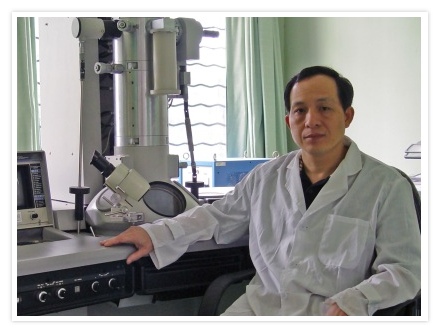 Xinghui Zhang (张杏辉)合作论文数广西师范大学环境与资源学院2
 Hong Liang (梁宏)合作论文数School of Chemistry and Pharmacy Sciences, Guangxi Normal University2Chitase Lee合作论文数2
 Rajeshwar Singh合作论文数NAEJA Pharmaceutical Inc.2Yanyan Fan合作论文数2
 Douglas S Johnson合作论文数2
 Mianwu Meng (蒙冕武)合作论文数广西师范大学环境与资源学院2Suzie Ferreira合作论文数2Tuan P. Tran合作论文数1brian morgan watson合作论文数1magnus waldman合作论文数1kim paulsen合作论文数1Kim M. Hutchings合作论文数1




