In order to reduce traffic delays caused by traffic incidents,an new AID(automatic incident detection) algorithm,SVM-AID algorithm,was proposed based on support vector machines(SVM).Using actual traffic data of the I-880 database,the classification performance of the SVM-AID algorithm was tested,and the effects of the parameters in SVM on the classification were analyzed.The experimental results show that the parameters should be chosen carefully because they have great effects on the classification.The correct classification rate of the proposed algorithm is more than 98% and its mean time to detect is less than 5 s to indicate a better performance over other AID algorithms based on artificial neural networks.
The point contact between the two elastic bodies is a classical elastic mechanics problem.There are several methods for solving this problem.A comparative study of the methods of Harmrock & Brewe,Brewe & Hamrock,Greenwood,Markho,the single sharing,Dyson,Houpert,Tanaka,Antoine,and the self-developed full numerical method show that the calculation form of these methods of Harmrock & Brewe,Brewe & Hamrock and Markho is simple.However,these methods all have their application range.According to the need,we can select a method of these when there is no computer for programming.Although the Antoine′s method have high precision and wide application range,the calculation process is more complicated without computer.The Dyson′s method not only can obtain accurate results,but the programming is simple,which is applicable to the high precision calculation,and is suitable to be promoted when there is a computer for programming.In these algorithms,the full numerical method need not to transform the formulas,and completely rely on the original formula to solve the problem,with the most accurate results.
A two-dimensional axisymmetric model of friction hydro pillar processing (FHPP) was established base on Gambit software. Using the commercial computational fluid dynamics software Fluent, the numerical simulation of plastic metal flow pattern was carried out in steady phase of FHPP. While keeping the other parameters constantly during the process of numerical simulation, the velocity field and static pressure field distribution change of ideal metal plastic fluid during the forming process were analyzed by changing only one critical parameter respectively, such as the radial clearance between metal stud and the base hole, the material viscosity, the rotary speed of metal stud, the feed rate of metal stud and the bottom shape of the base hole. The result show that the static pressure distribution of plastic metal is affected remarkably by the feed rate (i.e. the axial force) and the material viscosity of metal stud, and has little to do with the rotary speed and the radial clearance. Although the feed rate and the radial clearance have little influence on the velocity distribution of plastic metal, the effect of rotary speed is relatively remarkable, especially for the material neighboring to the wall of the velocity inlet and nearby the metal stud. The flow condition of the plastic metal material can be improved by changing the bottom shape of the base hole, which can also reveal the reason why there exist some defects at the bottom of the hole. The above-mentioned research can provide some guidance to the future experimental study adopting appropriate parametric combination, and can also lay solid foundation for the future numerical simulation by thermo-mechanical coupling.
This paper introduces a novel approach for human motion recognition via motion feature vectors collected by A Micro Inertial Measurement Unit (µIMU). First, µIMU that is 56x23x15mm3 in size was built. The unit consists of three dimensional MEMS accelerometers, gyroscopes, a Bluetooth module and a Micro Controller Unit (MCU), which can transmit human motion information through a serial port to a computer. Second, a human motion database was setup by recording the motion data from the µIMU. The motions include fall, walk, stand, run and step upstairs. Third, Support Vector Machine (SVM) training process was used for human motion multi-classification. FFT was used for feature generation and optimal parameter searching process was done for the best SVM kernel function. Experimental results showed that for the given 5 different motions, the total correct recognition rate is 92%, of which the fall motion can be classified from others with 100% recognition rate.
基于视频的车辆跟踪技术已经成为车辆跟踪技术的主要研究方向。能否在复杂的交通场景下,鲁棒地、实时地对车辆进行跟踪成为衡量跟踪方法优劣的重要标准。本文介绍了四种主要的基于视频的车辆跟踪方法,并分别讨论了这些方法在复杂交通场景下的适用性和性能。文章着重介绍了一种基于区域特征匹配的车辆跟踪算法,运用该跟踪算法能有效地对交叉路口的车辆进行跟踪。
Video-based vehicle tracking techniques have become the main research direction of vehicle tracking. The studies of vehicles tracking focus on how to obtain robust and real-time vehicle tracking in complex traffic scenes. In this paper, four mainstream methods are introduced for video-based vehicle tracking, and the applicability and tracking capability of these methods are discussed in complex traffic scenes. Additionally, a vehicle tracking algorithm based on regional characteristic matching is mainly introduced, which can track vehicles efficiently at traffic intersections.
基于视频的运动车辆检测技术已经成为车辆检测技术的主要研究方向。随着这种技术的不断发展,能否在复杂背景下快速而准确地检测出运动车辆成为衡量基于视频的车辆检测技术的重要标准之一。本文着重介绍了三种主流的基于视频的运动车辆检测方法,并着重分别讨论了这些方法在复杂背景下的适用性和检测能力。文章的最后,详细地介绍了混合高斯背景建模算法的原理以及工作流程。
传统交通事件自动检测(AID)算法存在检测率较低、误报率较高、平均检测时间长等不足,未能在城市智能交通系统中获得成功应用。概述两种传统AID检测算法的基本原理,着重介绍了基于不同神经网络结构和支持向量机的AID算法及其性能分析比较。针对城市复杂交通场景,比较分析各种AID算法的优缺点和局限性。结果表明结合模糊理论和支持向量机AID技术有可能为城市交通事件自动检测提供解决方案。
 Yuexian Zou (邹月娴)合作论文数School of Electronic and Computer Engineering, Peking University;Advanced Data & Signal Processing Laboratory, Peking University6
 Yiyan Wang (王以燕)合作论文数4Hua Yang (杨华)合作论文数清华大学4
 Weirong Chen (陈维荣)合作论文数School of Electrical Engineering, Southwest Jiaotong University;Institute of Hydrogen & Energy Storage Technologies, Southwest Jiaotong University;National Rail Transit Electrification and Automation Engineering Technology Research Center3
 Jiaqing Chen (陈家庆)合作论文数School of Mechanical Engineering, Beijing Institute of Petrochemical Technology2
 Guangyi Shi合作论文数2LIU Zhi-gang合作论文数1Hui Gao (高辉)合作论文数1
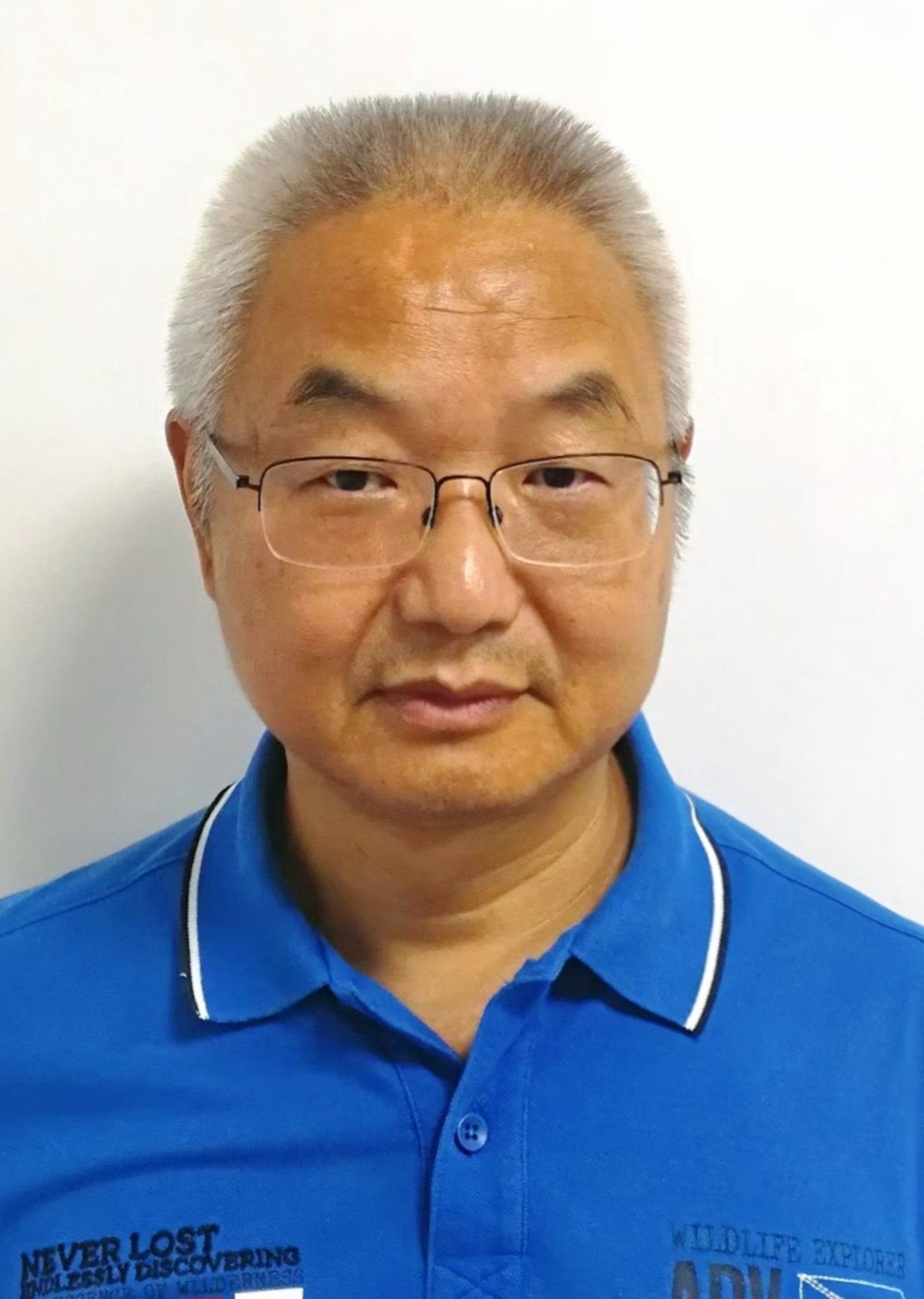 Yufeng Jin (金玉丰)合作论文数School of Electronic and Computer Engineering, Peking University1
 Canfeng Zhou (周灿丰)合作论文数Beijing Institute of Petrochemical Technology1Zhonghai Chen (陈忠海)合作论文数1
 Wen Jung Li (李文榮)合作论文数Department of Mechanical Engineering, College of Engineering, City University of Hong Kong;Department of Systems Engineering, College of Engineering, City University of Hong Kong1
 Xiangdong Jiao (焦向东)合作论文数Beijing Institute of Petrochemical Technology1




