Myocardial ischemia-reperfusion injury increases myocardial microvascular permeability, leading to enhanced microvascular filtration and interstitial fluid accumulation that is associated with greater microvascular obstruction and inadequate myocardial perfusion. A burst of reactive oxygen species and inflammatory mediators during reperfusion causes myosin light chain kinase (MLCK)-dependent endothelial hyperpermeability, which is considered a preventable cause of reperfusion injury. In the present study, a single intravenous injection of MLCK peptide inhibitor PIK7 (2.5 mg/kg or 40 mg/kg) was found to suppress the vascular hyperpermeability caused by ischemia/reperfusion injury in an in vivo rat model. The antiedemic effect of PIK7 is transient and ceases within 90 min of reperfusion. The early no-reflow detected for the first time after 30 min ischemia in this model of myocardial infarction reduces the area accessible for PIK7. Electron microscopy has shown membrane-bound blebs of endotheliocytes, which partially or completely obturate the capillary lumen, and few capillaries with signs of intercellular gap formation in samples obtained from the center of the early no-reflow zone in control and PIK7-injected rats. Co-injection of PIK7 with NO donor sodium nitroprusside (SNP) increases blood flow in the zone of early no-reflow, while reducing the increased vascular permeability caused by SNP.
Adsorption of curcumin on the fumed silica from water/ethanol solutions has been studied using UV–Vis spectroscopy and advanced quantum-chemical calculations. The adsorption value of curcumin increases with increasing the water content in ethanol solutions and linearly correlates with their dielectric constant. According to quantum chemical calculations, an increase in the polarity of the solvent leads to an increase in its polarizing effect on the curcumin molecule and, consequently, to a redistribution of the electron density. As a result, the electron-donating ability of the oxygen atom of the carbonyl group increases, which leads to a proportional increase in curcumin adsorption on the surface of fumed silica. The adsorption isotherm of curcumin belongs to the L4-type, which characterizes the transition from monomolecular to polymolecular adsorption, in this case, to the adsorption of curcumin aggregates formed in solutions at a concentration of ССur > 1.5 × 10⁻⁴ М. The value of the conditional molar extinction coefficient of adsorbed curcumin was determined (εS434 nm = 3.44 × 10⁵ g mol−1 cm−1). The found spectral characteristics of adsorbed (λmax = 432–434 nm) and precipitated (λmax = 500 nm) curcumin were used as a criterion for distinguishing two types of curcumin in the solid phase of the sorbent. The revealed patterns of adsorption are important in the preparation of nanocomposites based on silica and curcumin.
Hyperglycemia is a hallmark of type 2 diabetes implicated in vascular endothelial dysfunction and cardiovascular complications. Many in vitro studies identified endothelial apoptosis as an early outcome of experimentally modeled hyperglycemia emphasizing cell demise as a significant factor of vascular injury. However, endothelial apoptosis has not been observed in vivo until the late stages of type 2 diabetes. Here, we studied the long-term (up to 4 weeks) effects of high glucose (HG, 30 mM) on human umbilical vein endothelial cells (HUVEC) in vitro. HG did not alter HUVEC monolayer morphology, ROS levels, NO production, and exerted minor effects on the HUVEC apoptosis markers. The barrier responses to various clues were indistinguishable from those by cells cultured in physiological glucose (5 mM). Tackling the key regulators of cytoskeletal contractility and endothelial barrier revealed no differences in the histamine-induced intracellular Ca2+ responses, nor in phosphorylation of myosin regulatory light chain or myosin light chain phosphatase. Altogether, these findings suggest that vascular endothelial cells may well tolerate HG for relatively long exposures and warrant further studies to explore mechanisms involved in vascular damage in advanced type 2 diabetes.
The tautomerism of curcumin (Cur) in water-ethanol solutions in the presence of fumed silica was studied by UV-visible spectroscopy. The results showed that the enol tautomer exists at an ethanol concentration in solution >50%, and with an increase in the water content, the tautomeric equilibrium shifts towards the formation of the keto tautomer. Quantum-chemical calculations (solvation model SM 5.42/6-31G (d), GAMESSPLUS) of various curcumin isomers confirmed that the existence of curcumin keto tautomer in aqueous solution is more thermodynamically favorable. The ratio of keto and enol forms also depends on the dielectric constant of water-ethanol solutions: at ε < 45, only the enol form of curcumin exists, while at ε > 45, the relative amount of the keto tautomer increases in proportion to the dielectric constant. Curcumin tautomers adsorb on fumed silica in different ways. At a low curcumin concentration in the initial solutions (<1.5 × 10⁻⁴ M), only the enol tautomer forms a monolayer on the sorbent surface, apparently due to its planar structure. The keto tautomer, characterized by a bent structure, begins to adsorb only at a concentration of Cur > 1.5 × 10⁻⁴ M, being a component of molecular aggregates with coplanar geometry.
The peculiarities of the interaction in the supramolecular system: the natural hydrophobic polyphenol curcumin - the antiseptic cationic surface-active substance decamethoxin - highly dispersed silica was revealed by the spectrophotometric method. It was established that significant changes in the spectral characteristics of curcumin in aqueous solutions and on the surface of the sorbent depend on the concentration of this cationic surfactant, which can exist in the solution in the form of monomers, associates, and micelles. The PM7 method and the COSMO solvation model, implemented in the MOPAC2016 software package were used to determine the mechanism of adsorption of the supramolecular complex of curcumin (in ketone or enol form) with decamethoxine on the silica surface. The distribution of electrostatic and hydrophobic potentials of the studied molecules, calculated by the FieldView 2.0.2 method (Flare software package), indicates a significant contribution of hydrophobic interactions in the formation of supramolecular complexes of curcumin with decamethoxin in solution and on the surface of silica. The obtained results are of practical importance and can be used in the development of new more effective drugs containing bioactive curcumin, antiseptic decamethoxine and enterosorbent silicon dioxide.
Hypercholesterolemia significantly increases the risk of myocardial infarction associated with COVID-19. Along with pharmacological treatment, the possibility of the excretion of excess cholesterol from an organism by adsorption is also of great interest. The interaction of cholesterol with the surface of partially hydrophobized silica in aqueous solutions of bile acids was investigated by the PM7 method using the COSMO (COnductor-like Screening MOdel) solvation model. The distribution of electrostatic and hydrophobic potentials of molecules and complexes was calculated. The values of free Gibbs energy adsorption of bile acids on the surface of silica correlate with the distribution coefficients in the n-octanol-water system. The energy of interaction of cholesterol with bile acids affects its adsorption on silica. The stronger the bond of cholesterol with the molecules of bile acids, the less it is released from the primary micelles in solution and adsorbed on the surface.
The aim of the work was to identify the main components of orchid extracts and to study their interaction with silica. Composition of sixteen orchid extracts was investigated by means of high performance liquid chromatography and laser desorption/ionization mass spectrometry; as it was shown in this study, flavonoids and phenolic acids were the main bioactive compounds available in the extracts. The interaction between various phenols and silica silanol groups was studied by quantum chemical method. Results show that the strength of interaction of phenols with silica increased in the following order: ferullic, feruloylquinic and fertaric acids< kaempferol, apingenin<< chlorogenic and caffeic acids, rhamnetin, quercetin, luteolin, epicatechin gallate. The common feature of compounds characterized by the strongest interaction with silanol groups is the presence of a phenol ring with two neighbouring hydroxyl groups. The hydrogen bonds formed between these groups and silanol groups are much shorter (about 0.17 nm) than those formed by other hydroxyl groups of phenols (up to 0.28 nm).
Желатин -це, як відомо, природний біополімер, що широко використовується в фармацевтичній промисловості для приготування водорозчинних лікарських форм.Такі форми можуть бути виготовлені, наприклад
Myosin activation contributes to the contractile forces that induce disturbances in the vascular endothelial integrity and promote protein-rich edema of the underlying tissues. Myosin light chain kinase (MLCK) and Rho-associated protein kinase (ROCK) have been reported to phosphorylate myosin regulatory light chains (RLC) for myosin activation. However, the relative contribution and roles of these kinases are debatable and not understood in very detail. In this study, using a combinational inhibitory analysis of MLCK, ROCK, and their antagonist, myosin light chain phosphatase (MLCP), we show that the MLCK-dependent RLC mono-(Ser19)phosphorylation (P-RLC) is sufficient to induce the FITC-dextran hyperpermeability in EA.hy926 endothelial cells (EC) in response to thrombin. However, MLCK relies on the ROCK assistance that attenuates MLCP activity. On the other hand, MLCK supplies P-RLC myosin as an intermediate substrate to ROCK thus adding to a faster accumulation of di-(Thr18/Ser19)phosphorylated RLC (PP-RLC) by the latter kinase. ROCK also produces P-RLC but is solely responsible for the thrombin-induced PP-RLC generation in EA.hy926 EC and other cell types. Still, as a direct myosin activator, ROCK contributes less to endothelial hyperpermeability than MLCK. Our findings are consistent with a concerted complementary mutual interplay between ROCK and MLCK to activate endothelial myosin and elicit the thrombin-mediated EC barrier dysfunction.
Three extracts of Stevia rebaudiana (Bertoni) were prepared using different types of raw materials: leaves of plants grown ex situ, leaves of plants grown in vitro, callus culture formed on damaged leaves. Composition of the extracts was studied by means of high-performance liquid chromatography and laser desorption/ionization mass spectrometry; total phenol content was estimated using Folin–Ciocalteau method. Flavonoids and hydroxycinnamic acids were found to be the main groups of phenol antioxidants available in the Stevia leaves, with the amount of these compounds in the extract being dependent on the type of raw material. The reducing properties of phenol compounds identified in the extracts were characterized using quantum chemical method; flavonoids and hydroxycinnamic acids were found to have similar redox parameters. Silver nanoparticles (AgNPs) colloids were synthesized using three Stevia extracts; AgNPs size distribution were characterized by means of scanning electron microscopy. All the extracts revealed significant activity in AgNPs synthesis; the nanoparticles of predominantly spherical shape with the average sizes of 16–25 nm were formed. The reducing properties of the extracts were found to correlate with total phenol content; the activity of extracts from the leaves of plants grown ex situ and from callus culture in Ag+ ions reduction was similar to each other and exceeded the activity of extract from the leaves of plants grown in vitro.
series of M_xO_y/SiO_2 (where M = Ni, Zn and Mn) nanocomposites were synthesized at different M_xO_y contents (0.2, 1 and 3 mmol per 1 g SiO_2) using a deposition method. The samples were characterized using nitrogen adsorption–desorption, X-ray diffraction, Fourier transform infrared spectroscopy, high resolution transmission electron microscopy and photon correlation spectroscopy. The heat of immersion in water ( Q_w) and n -decane ( Q_d) were measured using a microcalorimetry method, and the corresponding values of the hydrophilicity index K_h=Q_w/Q_d were analysed. The formation of M_xO_y on a silica surface leads to diminishing of the Q_w and Q_d values (calculated per 1 g of nanocomposites) because of the specific surface area reduction. However, the Q_w values calculated per 1 m^2 increase for Zn_xO_y/SiO_2 and Mn_xO_y/SiO_2 in comparison with the unmodified silica, and it remains unchanged for Ni_xO_y/SiO_2 . Silica modification with M_xO_y significantly changes the pH dependence of zeta potential and affects the surface charge density. A shift of the isoelectric point (pH_IEP) and a character of the zeta potential ζ (pH) curve are affected by the M_xO_y phase, and pH_IEP shifts toward higher values as follows Mn < Zn < Ni.
A series of $$\hbox {M}_{{x}}\hbox {O}_{{y}}/\hbox {SiO}_{{2}}$$ (where M = Ni, Zn and Mn) nanocomposites were synthesized at different $$\hbox {M}_{{x}}\hbox {O}_{{y}}$$ contents (0.2, 1 and 3 mmol per 1 g $$\hbox {SiO}_{2})$$ using a deposition method. The samples were characterized using nitrogen adsorption–desorption, X-ray diffraction, Fourier transform infrared spectroscopy, high resolution transmission electron microscopy and photon correlation spectroscopy. The heat of immersion in water ( $$Q_{\mathrm{w}})$$ and n-decane ( $$Q_{\mathrm{d}})$$ were measured using a microcalorimetry method, and the corresponding values of the hydrophilicity index $$K_{\mathrm{h}}=Q_{\mathrm{w}}/Q_{\mathrm{d}}$$ were analysed. The formation of $$\hbox {M}_{{x}}\hbox {O}_{{y}}$$ on a silica surface leads to diminishing of the $$Q_{\mathrm{w}}$$ and $$Q_{\mathrm{d}}$$ values (calculated per 1 g of nanocomposites) because of the specific surface area reduction. However, the $$Q_{\mathrm{w}}$$ values calculated per 1 $$\hbox {m}^{2}$$ increase for $$\hbox {Zn}_{{x}}\hbox {O}_{{y}}/\hbox {SiO}_{{2}}$$ and $$\hbox {Mn}_{{x}}\hbox {O}_{{y}}/\hbox {SiO}_{{2}}$$ in comparison with the unmodified silica, and it remains unchanged for $$\hbox {Ni}_{{x}}\hbox {O}_{{y}}/\hbox {SiO}_{{2}}$$ . Silica modification with $$\hbox {M}_{{x}}\hbox {O}_{{y}}$$ significantly changes the pH dependence of zeta potential and affects the surface charge density. A shift of the isoelectric point $$(\hbox {pH}_{\mathrm{IEP}})$$ and a character of the zeta potential $$\zeta $$ (pH) curve are affected by the $$\hbox {M}_{{x}}\hbox {O}_{{y}}$$ phase, and $$\hbox {pH}_{{\mathrm{IEP}}}$$ shifts toward higher values as follows Mn < Zn < Ni.
Оригінальний метаболітотропний препарат -елгацин: квантово-хімічні властивості та особливості фармакологічної діїПредставлено членом-кореспондентом НАН України І
Enoxil-silica composites with various Enoxil-to-silica ratios were prepared by mechanical mixing of the biologically active Enoxil and fumed silica powders. The hygroscopic properties of the composites were studied by the gravimetric method. It has been shown that the use of Enoxil in composites with silica may significantly reduce the Enoxil ability to absorb water from the gas phase and, therefore, improve its storage stability. The strongest hygroscopicity reduction is observed for the composites with Enoxil-to-silica ratio of (0.15/0.35):1, which corresponds to an approximate monolayer distribution of the Enoxil biomolecules on the silica surface.
Silica–gelatin films with different proportions of gelatin and silica have been prepared on the basis of gelatin and hydrophilic or hydrophilic–hydrophobic silica. The wettability of the hybrid materials, their swelling in aqueous media, and the thermal desorption of water from the obtained films are studied. It is shown that the presence of hydrophilic silica in the material gives rise to inhibition of swelling of the gelatin films and to a decrease in their affinity to water, while the replacement of hydrophilic silica by hydrophilic–hydrophobic silica allows one to additionally increase the hydrophobicity of hybrid materials.
The influence of the structure of flavonolignans (silybin, silychristin), flavonoids (quercetin and taxifolin) on the antioxidant properties of silymarin - a standardized herbal extract obtained from the milk thistle seeds (lat. Silybum marianum), which contains a mixture of these compounds has been studied. Molecular structure was optimized at HF/6-31G(d,p) level of theory by means of the GAMESS program package. The O–H bond dissociation enthalpies for all OH groups and ionization potentials of molecules were calculated using density functional theory approach with B3P86 functional and 6-31G(d,p) basis set to analyze the redox properties. The solvation model IEF PCM was used to account for the solvent effects. It has been shown that the OH groups of the side phenolic ring give the maximum contribution to the hydrogen atom transfer mechanism (HAT). СН 2 ОН groups and OH groups of flavonoids moieties of silybin and silycristin weakly participate in the HAT (high dissociation enthalpies). The presence of 2,3-double bond in the flavonoid moiety affects the redistribution of charge and increases the contribution of the 3-OH group to a HAT mechanism for the quercetin molecule compared to taxifolin. The contribution of the electron transfer mechanism to the antioxidant activity is reduced in a series of quercetin > silychristin > taxifolin > silybin.
Thermochemical studies of hydroxycinnamic acid derivatives and their surface complexes are important for the pharmaceutical industry, medicine and for the development of technologies of heterogeneous biomass pyrolysis. In this study, structural and thermal transformations of caffeic acid complexes on silica surfaces were studied by UV-Vis spectroscopy, thermogravimetric analysis, temperature programmed desorption mass spectrometry (TPD MS) and quantum chemical methods. Two types of caffeic acid surface complexes are found to form through phenolic or carboxyl groups. The kinetic parameters of the chemical reactions of caffeic acid on silica surface are calculated. The mechanisms of thermal transformations of the caffeic chemisorbed surface complexes are proposed. Thermal decomposition of caffeic acid complex chemisorbed through grafted ester group proceeds via three parallel reactions, producing ketene, vinyl and acetylene derivatives of 1,2-dihydroxybenzene. Immobilization of phenolic acids on the silica surface improves greatly their thermal stability. (C) 2016 Elsevier Inc. All rights reserved.
 Oksana Stavinskaya合作论文数Institute of Surface Chemistry, National Academy of Sciences of Ukraine12I. V. Laguta合作论文数8I.S. Chekman合作论文数8
 Vladimir M. Gun'ko合作论文数Department of Physics and Chemistry of Surface, Chuiko Institute of Surface Chemistry7
 E. F. Voronin合作论文数Institute of Surface Chemistry, Ukrainian Academy of Sciences6Н. О. Горчакова合作论文数5P. A. Kuzema合作论文数4Asker Y Khapchaev合作论文数Natl Med Res Ctr Cardiol4
 P. O. Kuzema合作论文数O.O. Chuiko Institute of Surface Chemistry, the National Academy of Sciences of Ukraine4
 Iryna Laguta合作论文数Institute of Surface Chemistry, National Academy of Sciences of Ukraine4M.I. Zahorodnyi合作论文数3Natalia Lipkovska合作论文数3Valentyna Barvinchenko合作论文数3Vladimir P. Shirinsky合作论文数3V. K. Pogorelyi合作论文数3
 Zarko Vladimir合作论文数3Valentina N. Barvinchenko合作论文数3
 Wladyslaw Janusz合作论文数Faculty of Chemistry, Maria Curie-Skłodowska University3Volodymyr Gun’ko合作论文数2Pavlo Kuzema合作论文数2I. Laguta合作论文数2N.V. Guzenko合作论文数2R. Leboda合作论文数2тетяна володимирівна звягінцева合作论文数2ганна олегівна сирова合作论文数2Halina Waniak-Nowicka合作论文数2Tudor Lupascu合作论文数2т ю небесна合作论文数2Aa Chuiko合作论文数2дмитро степанович кравець合作论文数2
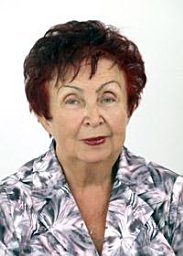 Nadie Aleksandrovna Gorchakova合作论文数2
 R.V. Ivannikov合作论文数M. M. Gryshko National Botanical Garden2V. V. Turov合作论文数2
 E. M. Pakhlov合作论文数Institute of Surface Chemistry, 17 General Naumov Street, Kiev 03164, Ukraine2
 Olena Goncharuk合作论文数2N. A. Lipkovskaya合作论文数2
 Igor F. Belenichev合作论文数2
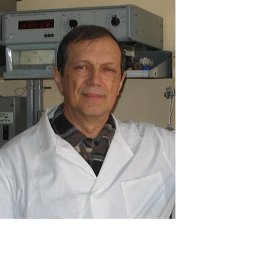 Viktor. M. Bogatyrov合作论文数Institute of Surface Chemistry, the National Academy of Sciences of Ukraine2
 Ewa Skwarek合作论文数2
 Tetiana Kulik合作论文数Institute of Surface Chemistry, 17 General Naumov Street, Kiev 03164, Ukraine2Olena Oranska合作论文数2J. Skubiszewska-Zięba合作论文数2
 Mariia Galaburda合作论文数O.O. Chuiko Institute of Surface Chemistry, the National Academy of Sciences of Ukraine2R.S. Dovgan合作论文数1V. F. Shatornaya合作论文数1D. S. Kravets合作论文数1L.I. Buyun合作论文数1V.V. Dudnik合作论文数1B.B. Palyanytsya合作论文数1




